

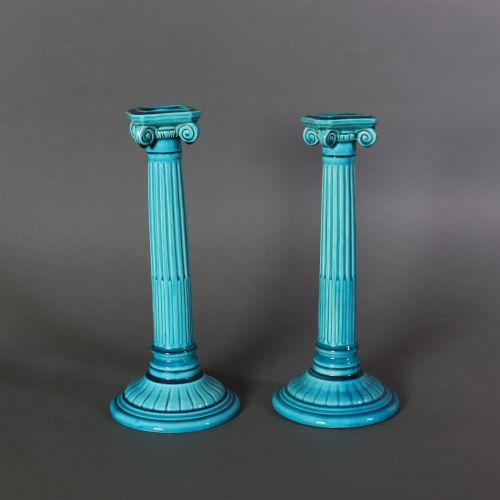
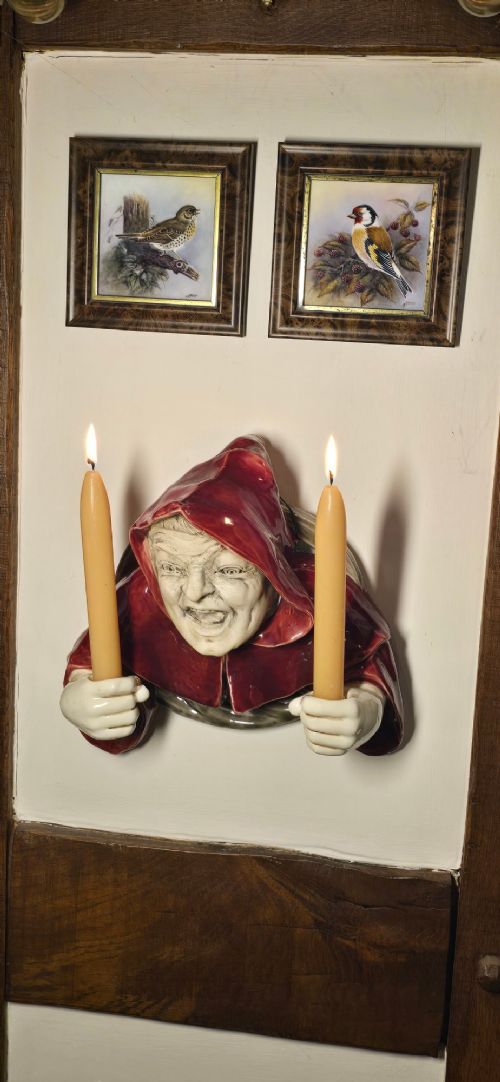
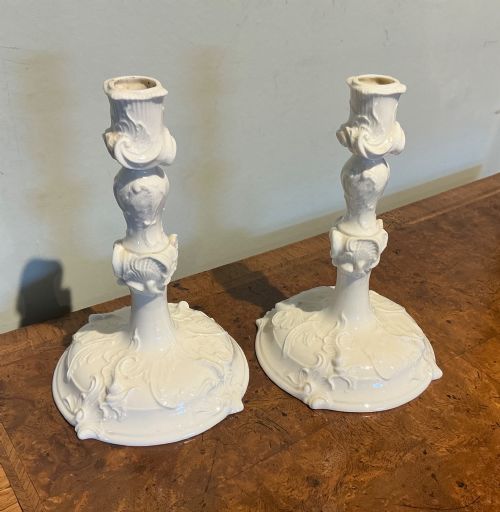
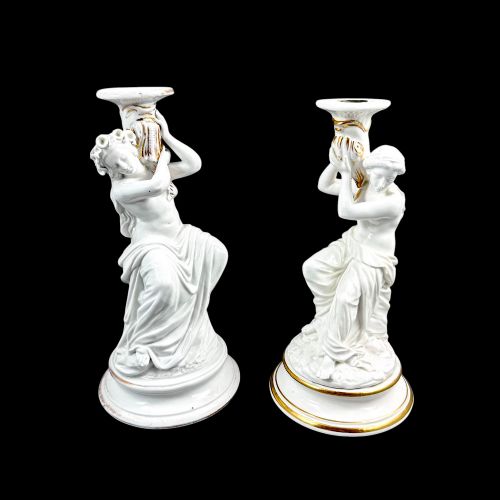


Glazed Ceramic Candle Holders
These glazed ceramic candle holders bring functional light and sculptural form to a room, spanning periods from the eighteenth century to the twentieth.
Glazed Ceramic Candle Holders
When you search for glazed ceramic candle holders, you encounter items designed to support tapers or pillar candles safely while displaying the potter's art. The selection encompasses practical chambersticks equipped with finger loops, paired candlesticks for mantlepieces, and figural wall sconces.
The forms extend from simple nineteenth-century utilitarian chamber sticks to elaborate eighteenth-century Dutch polychrome Delft figures and nineteenth-century figural pairs. These pieces combine utilitarian function with ornamental styles ranging from Rococo Revival and Regency to Arts and Crafts and Chinese Export.
How they were made
Maker's workshops formed these objects using ceramic, pottery, and hard-paste porcelain, shaping the clay by hand or in moulds before firing. The surfaces received lead or tin glazes, sometimes enriched with polychrome pigments or gilding to accentuate the modelled details.
Techniques varied from the delicate slip casting of porcelain figures to the robust throwing and hand-modelling of earthenware pottery. Kiln firing fixed the glaze, creating waterproof and lustrous finishes that protected the underlying ceramic body.
Glazed Ceramic Candle Holders Retail Price Guide 2026
Typical asking prices for glazed ceramic candle holders among the pieces listed under this phrase on Sellingantiques today, from the lower quarter to the upper quarter. They describe what is for sale here now, not the wider market.
Materials recorded across the inventory include hard-paste porcelain, glazed ceramic, and polychrome Delft pottery.
What varies in quality
Quality rests upon the crispness of the modelling in figural pieces and the depth of the glaze. Finer examples display carefully hand-painted polychrome details or pristine blanc de chine surfaces without glaze pooling or firing cracks.
The distinction between standard production items and superior works lies in the ambition of the design and the execution of applied elements such as flowers, putti, or animals. Weight, balance, and the precision of the potter's finishing touches define the upper tier of the range.
Nymphenburg·Derby·Royal Doulton·Minton·Decoro England·Royal Bayreuth
The Glazed Ceramic Candle Holders Glossary
- Chamberstick
- A low portable candlestick featuring a pan to catch dripping wax and a handle or thumbpiece for carrying from room to room. These domestic items were essential before electric lighting.
- Blanc de Chine
- A French term for white porcelain originating from China, later adopted by European potteries to describe uncoloured white glazed wares. It highlights the purity of the ceramic body and the skill of the modeller.
- Polychrome
- Decoration employing several colours on ceramics, applied under or over the glaze before firing. This technique creates vibrant pictorial or patterned surfaces.
- Hard-paste porcelain
- A durable ceramic composition made from kaolin and petuntse fired at high temperatures. It produces a dense, resonant material that resists scratching.
- Candelabra
- A branched candlestick holding multiple lights on a single base. These grander forms often served as centrepieces on dining tables or sideboards.
Glazed Ceramic Candle Holders: Frequently Asked Questions
How do I clean my ceramic candle holder?
Remove old wax by placing the holder in warm water, allowing the wax to float to the surface without using abrasive tools.
Dry the ceramic gently with a soft cloth to protect any delicate glazes or gilding.
What is the difference between a candlestick and a chamberstick?
Candlesticks stand upright on flat surfaces such as tables and mantelpieces to provide stationary illumination.
Chambersticks include a saucer base and a side loop for carrying safely by hand through darkened corridors.
How can I tell the period of a glazed ceramic candle holder?
Examine the base, the style of the glaze, and any factory marks to determine the likely era of manufacture. Victorian and eighteenth-century pieces often display distinct potting techniques and stylistic motifs characteristic of their time.
Comparing the modelling style to known manufacturer records helps narrow down the decade.
Can I still use antique candle holders for burning candles?
These pieces function well with standard tapers, provided the socket diameter matches the candle size.
Take care to extinguish the flame before it burns down to the ceramic or glaze to prevent thermal shock.