


White Ceramic Candle Holders
White ceramic candle holders bring the bright, reflective weight of porcelain and glazed earthenware to any room.
White Ceramic Candle Holders
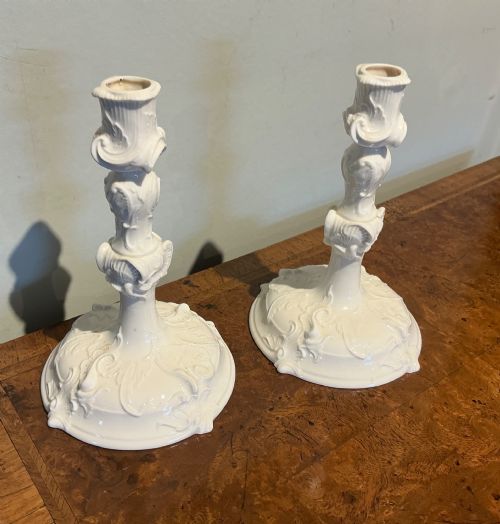
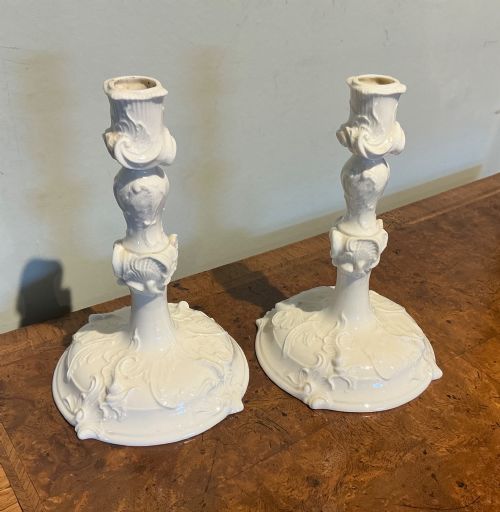
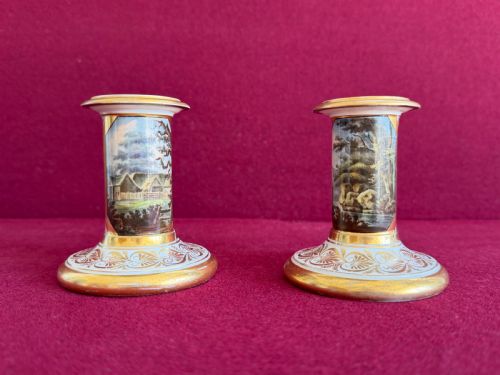
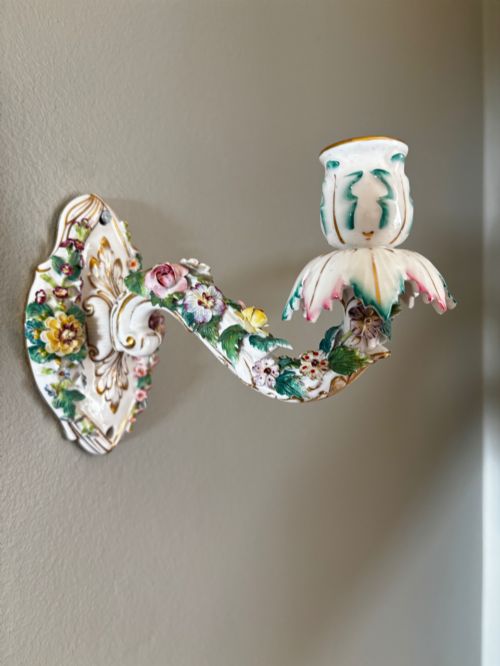
White ceramic candle holders appear across this page in forms ranging from single chambersticks and candlesticks to grander multi-light candelabra and wall sconces. These pieces span the eighteenth, nineteenth, and early twentieth centuries, drawing on stylistic vocabularies that include Georgian Rococo, Victorian Neoclassical, and Chinese Export.
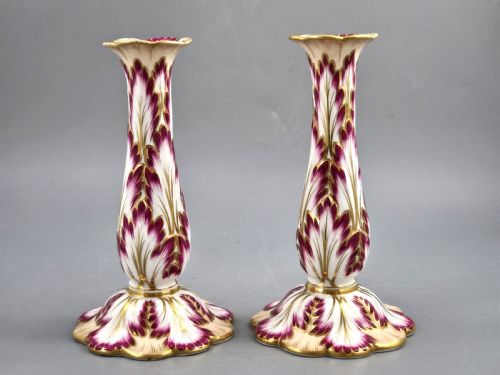
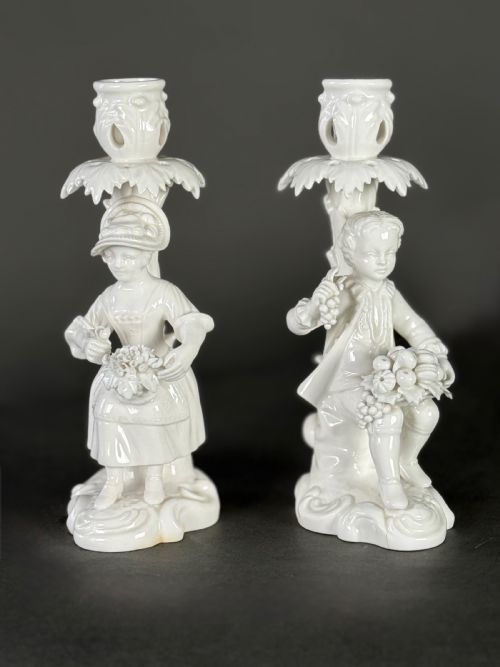
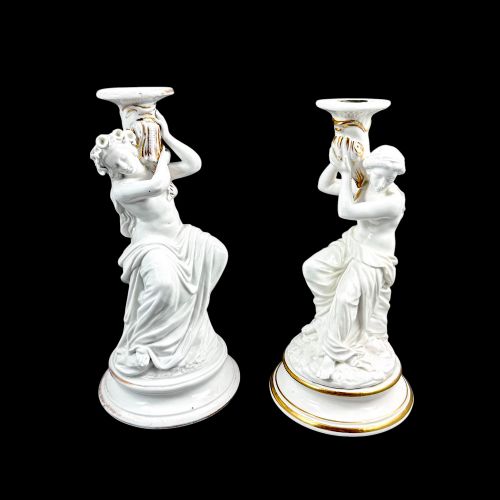
The most frequent finds among these listings are pairs of porcelain candlesticks and figural pieces modelled as putti, animals, or human figures. Makers from English factories like Derby, Minton, and Worcester sit alongside European porcelain houses such as Meissen, Nymphenburg, and Sitzendorf.
Buyers encounter everything from utilitarian go-to-bed chambersticks to highly decorative polychrome and gilt-accented showpieces. Each object reveals the specific moulding and painting techniques of its period, whether produced in hard-paste porcelain, soft-paste porcelain, or Delft earthenware.
How they were made
Potters shaped these pieces using hard-paste or soft-paste porcelain and earthenware, often applying an opaque white glaze to create a smooth surface. Artisans then refined the forms by hand, adding intricate details such as moulded foliage, figures, or structural socket elements.
Decoration relied on manual enamel painting and selective gilding using gold leaf. Kiln firing fixed these pigments and glazes, while later pieces incorporated applied touches of polychrome or metallic highlights to accentuate the moulded relief.
A porcelain kneeling bishop and a collection of mischievous putti quietly hold up lights across the centuries.
What varies in quality
The application of enamel and gilding further distinguishes finer work, with master painters achieving subtle shading and clean lines. Consistency in the white glaze without heavy pooling or pitting marks the work of premier European and English factories.
Nymphenburg·Ridgway·Barr Flight and Barr·Meissen·Derby·Chelsea·Minton·Wedgwood·Royal Worcester Hadley·Dresden·Sitzendorf
The White Ceramic Candle Holders Glossary
- Chamberstick
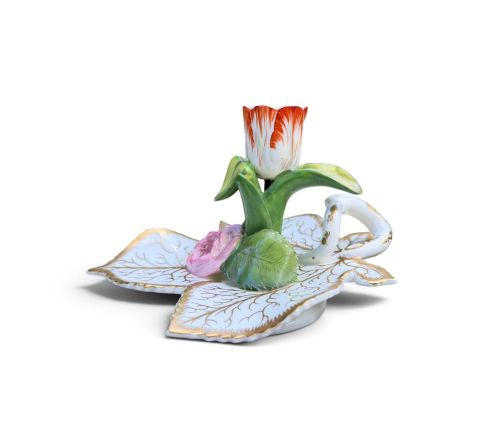
- A low candlestick fitted with a pan to catch dripping wax and a handle for carrying from room to room. These practical items often date from the Georgian and Victorian eras.
- Candelabra
- A branched candlestick holding multiple lights on a single base. They frequently feature elaborate figural or botanical modelling.
- Hard-Paste Porcelain
- A dense ceramic composition fired at high temperatures using kaolin and petuntse. It yields a durable, vitrified body with a bright white appearance.
- Jasperware
- A fine stoneware developed by Josiah Wedgwood, characterised by a matte surface and moulded white classical reliefs against a coloured or white ground.
- Polychrome
- Decoration employing several colours in the hand-painted enamel design. This technique brings depth to figurative subjects and floral motifs.
White Ceramic Candle Holders: Frequently Asked Questions
How do I clean antique porcelain candle holders?
Dust these pieces gently with a soft brush to protect delicate glazes and gilding. Avoid harsh chemical cleaners that can damage the nineteenth-century enamel.
Keep them away from direct heat sources and open flames that produce heavy soot deposits. Warm water and mild soap suffice for occasional washing when handled with extreme care.
What is the difference between a candlestick and a chamberstick?
Candlesticks are stationary holders designed to stand upright on tables, mantels, or furniture. They focus entirely on vertical elevation and decorative presence.
Chambersticks incorporate a flat saucer base and a loop handle for safe transport through dark hallways. They reflect the domestic habits of periods before widespread electric lighting.
How can I tell eighteenth-century pieces from nineteenth-century ones?
Early pieces often display softer paste bodies, hand-mixed pigments, and organic irregularities from wood-fired kilns. Stylistic cues like asymmetrical Rococo scrollwork also point to earlier dates.
Nineteenth-century items frequently show industrial standardisation, brighter machine-ground enamels, and clearer factory marks stamped into the ceramic base.
Are figural candle holders safe to use with real candles?
Many antique figural pieces are structurally sound for use with slender tapers that match the original socket diameter. However, thermal shock can crack antique ceramics if a flame burns down too close to the glaze.
Consider using fitted metal inserts or unlit display if the piece shows old hairline cracks or delicate protruding porcelain limbs.