


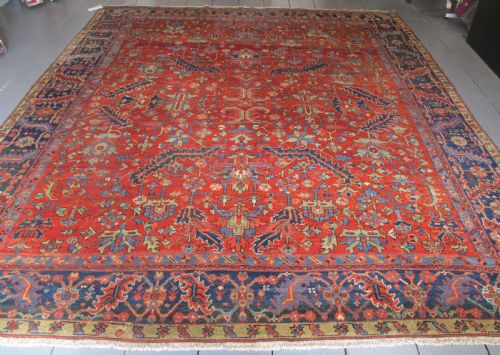


Victorian Era Rug
These pieces known as a victorian era rug bring woven warmth into a room through rich wool and traditional patterns.
Victorian Era Rug
A victorian era rug encompasses nineteenth-century floor coverings from origins such as Persia, Turkey, Central Asia, and India. These textiles display distinct regional styles, ranging from Persian tribal patterns to Ottoman Anatolian designs.
Buyers are most likely to encounter pieces bearing traditional motifs created during the latter half of the nineteenth century. Examples include rugs from Fereghan, Ushak, and various Baluch weaving traditions.
The selection includes large carpets and smaller runner rugs suited to different interior spaces. Each piece reflects the textile arts of its specific period and geographic origin.
Materials and construction
Makers utilised natural materials including wool, hand-spun wool, cotton, and silk to construct these textiles. These fibres provided the foundation for durable pile carpets and flat-woven suzanis.
Weavers employed traditional knotting and weaving techniques passed down through generations in tribal and workshop settings. The integration of cotton foundations with wool piles allowed for structural stability in large carpets.
Victorian Era Rug Retail Price Guide 2026
Typical asking prices for victorian era rug among the pieces listed under this phrase on Sellingantiques today, from the lower quarter to the upper quarter. They describe what is for sale here now, not the wider market.
Certain Baluch carpets hide whimsical border details stitched by weavers who clearly enjoyed breaking away from rigid symmetry.
Assessing quality and character
Quality rests upon the fineness of the weave and the clarity of the design motifs. Pieces originating from established weaving centres like Fereghan or Agra display precise execution in their overall patterns.
The choice of materials contributes to the longevity and tactile appeal of the textile. Hand-spun wool and natural dyes yield depth in appearance that distinguishes finer examples from standard productions.
The Victorian Era Rug Glossary
- Suzani
- An embroidered tribal textile originating from Central Asia, often featuring bold floral motifs on a light ground.
- Chuval
- A large tent bag produced by Turkmen tribes, used for storage and featuring characteristic guls.
- Gul
- A medallion-like design motif repeated across Turkmen and Central Asian carpets.
- Runner
- A long, narrow carpet format traditionally utilised in hallways or corridors.
- Pile
- The cut or uncut loops of yarn that form the usable surface of a carpet.
Victorian Era Rug: Frequently Asked Questions
What defines a victorian era rug?
These pieces comprise nineteenth-century woven textiles originating from Persian, Anatolian, Central Asian, and Indian regions.
They reflect the diverse aesthetic traditions and weaving techniques of their specific geographic provenances during the Victorian period.
Where were these rugs made?
The pieces originate from workshops and nomadic communities across Persia, Uzbekistan, Turkey, Afghanistan, and India.
Each region contributed distinct stylistic elements such as tribal geometries or intricate floral workshop designs.
How do I care for an antique rug?
Maintenance involves gentle vacuuming without a rotating brush and professional cleaning when necessary.
Keeping the textile away from direct sunlight preserves the natural dyes utilised in the wool and cotton fibres.
What materials appear in these textiles?
Weavers utilised wool, hand-spun wool, cotton, and silk depending on the regional tradition and the specific type of rug.
Cotton foundations frequently supported wool piles, while silk added fine detail to specific decorative panels.