




South Caucasian Carpet
A south caucasian carpet brings the geometric strength of tribal weaving into a room, offering rich natural dyes and distinctive village artistry.
South Caucasian Carpet
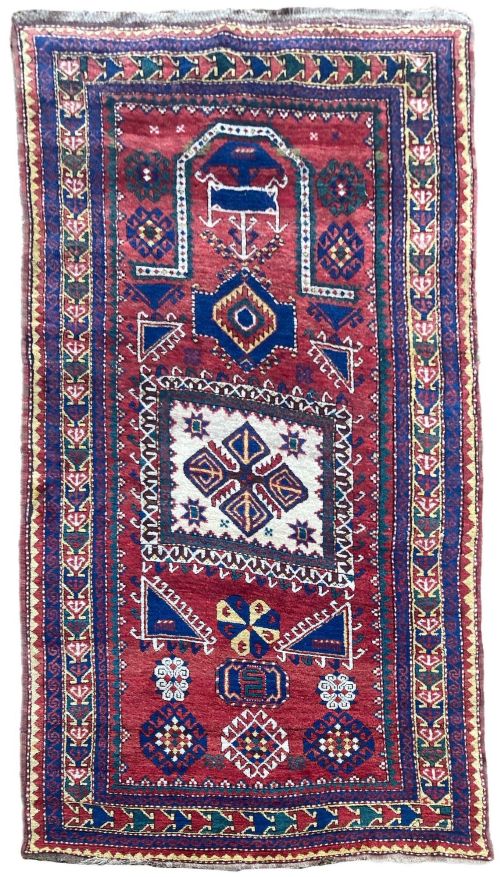
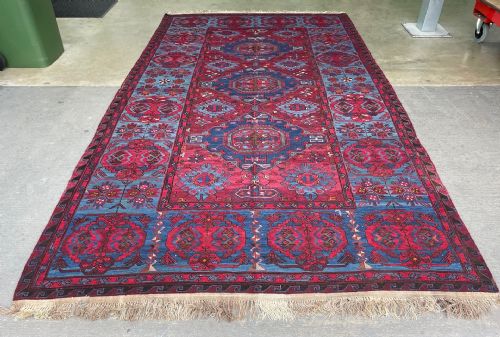
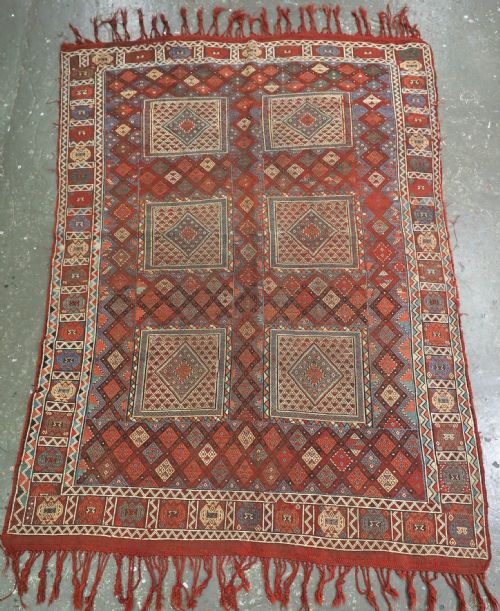
A south caucasian carpet encompasses a diverse range of tribal and village weaving traditions from the Caucasus region, spanning runner rugs, prayer rugs, and flatweaves. These pieces often feature bold geometric motifs, latch hook medallions, and striking field colours like scarce yellow grounds.
Most examples encountered on this page originate from the late nineteenth and early twentieth centuries, specifically around the 1880 to 1920 period. Makers range from specific regional groups such as the Kazak, Talysh, Karabagh, and Shahsavan to Kurdish and Afshar weavers.
Forms vary significantly, from long corridor runners and compact storage bags to complete mafrash sides and fine weave kilims. The designs reflect the deep cultural heritage of the region, utilising traditional tribal iconography adapted through generations of village weavers.
Materials and construction
These textiles rely predominantly on wool and hand-spun wool for the pile and surface decoration, offering durability and a tactile finish. Cotton is also utilised in the construction, providing structural stability to the foundations of many pieces.
Weaving techniques range from standard pile knots to brocaded flatweaves and slit-weave kilim structures. Specialised methods like the brocaded verneh or zili technique create intricate surface textures without a raised pile.
Nomadic weavers occasionally embedded stray animal hairs straight into the wool pile, leaving a tiny, permanent signature of the flocks past.
Assessing quality and character
Quality in these textiles rests upon the clarity of the design, the saturation and depth of the natural dyes, and the fineness of the weave. Pieces with uncommon ground colours or particularly crisp latch hook medallions stand apart in visual impact.
Structural integrity and the survival of original borders and flatweave ends also define the better examples. A tighter knot count and well-preserved wool condition elevate an individual piece above standard village production.
The South Caucasian Carpet Glossary
- Kazak
- A regional style known for bold geometric designs, primary colours, and strong latch hook medallions. These rugs are typically woven by tribal groups in the southern Caucasus.
- Kilim
- A flatwoven textile made without a pile, created by tightly interlocking the warp and weft threads. They often feature sharp geometric patterns and lighter portability.
- Mafrash
- A large rectangular storage bag used by nomadic tribes for bedding and household goods, usually comprising four side panels and a base.
- Talysh
- A specific design and weaving attribution associated with narrow corridor rugs originating from the south-east Caucasus. They generally display spacious central fields flanked by simple borders.
- Verneh
- A type of brocaded flatweave distinguished by intricate supplementary weft-wrapping techniques. These pieces often present repeating animal or geometric motifs across the surface.
South Caucasian Carpet: Frequently Asked Questions
How do I clean a wool rug?
Wool naturally resists dirt thanks to its lanolin content, requiring mostly gentle vacuuming without the beater bar to protect the structure.
Professional specialist cleaning remains essential for addressing deeper soil or spills without damaging the historical dyes and fibres.
Where should I place a runner?
Corridor runners suit narrow spaces such as hallways, entryways, or alongside a bed where their elongated format can be fully appreciated.
Ensure you use a quality underlay beneath the textile to prevent slipping and reduce friction against hard flooring.
How do I identify a flatweave?
Flatweaves lack the raised pile of traditional carpets, possessing a smooth, tapestry-like surface created entirely by the interweaving of warp and weft.
They generally feel thinner underfoot and serve well as decorative wall hangings or summer floor coverings.