






Caucasian Kazak Carpet
These robust woven wool floor coverings bring bold geometric motifs and rich natural dyes directly from nineteenth-century tribal workshops into modern interiors.
Caucasian Kazak Carpet
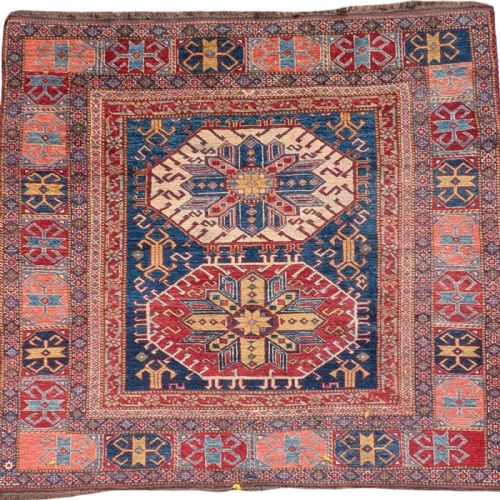
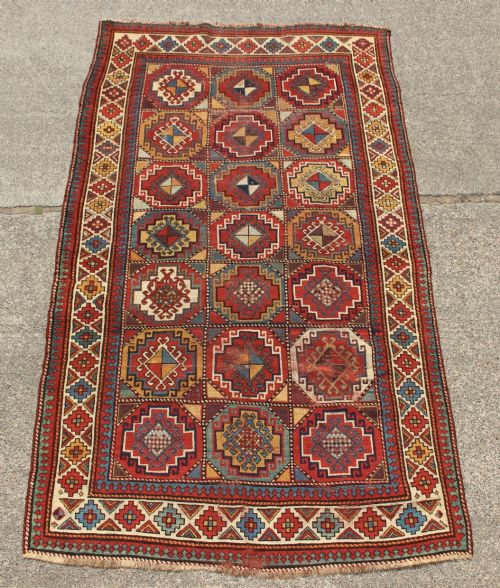
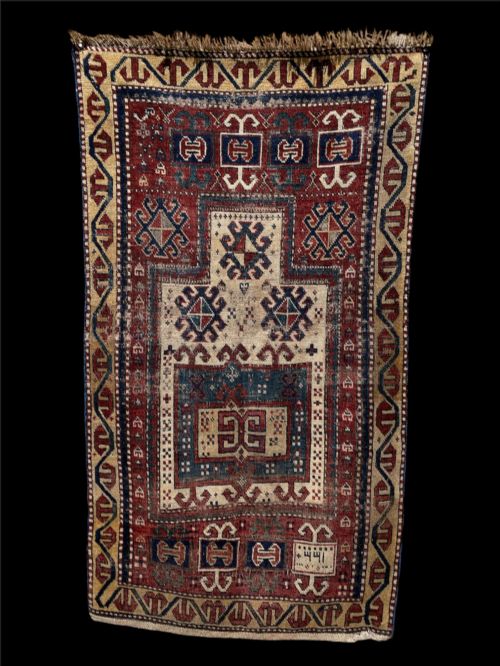
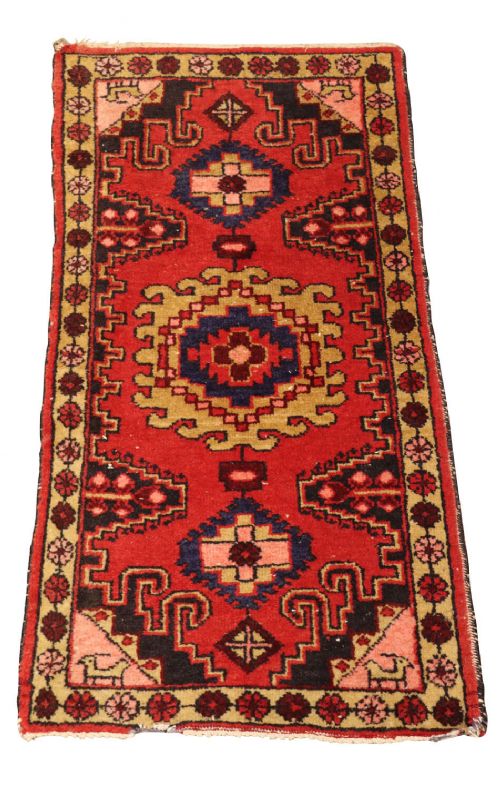
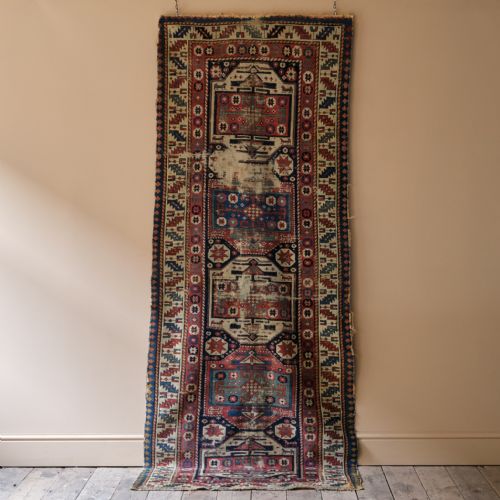
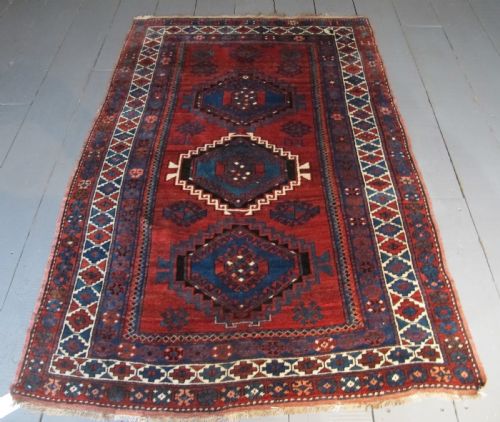
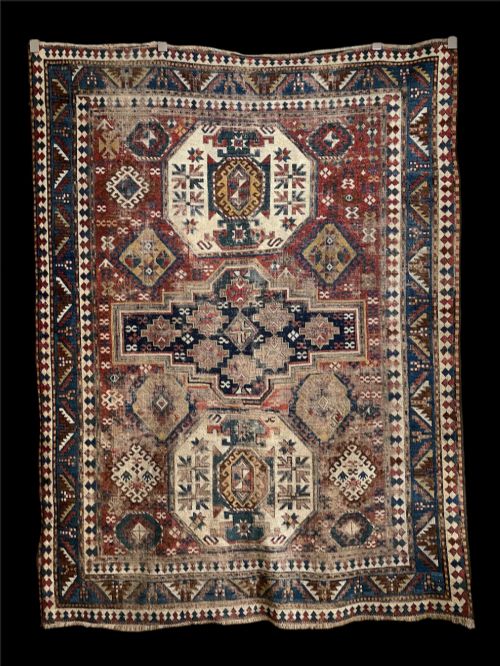
A caucasian kazak carpet represents a distinct tradition of tribal weaving originating from the Caucasus region during the nineteenth and early twentieth centuries. These floor coverings typically feature strong geometric medallions, animal motifs, and prayer arches executed in saturated primary shades.
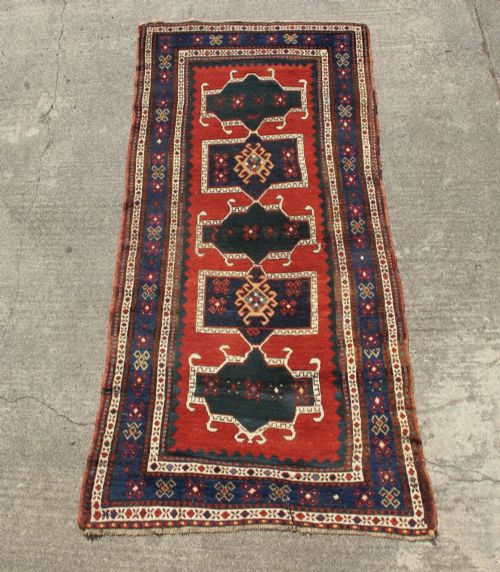
Buyers browsing this selection will frequently encounter formats ranging from standard area rugs and square prayer formats to elongated runners. Pieces span from the mid nineteenth century through to the early decades of the twentieth century, reflecting traditional regional designs.
The aesthetic is distinctly tribal and direct, utilising repeating motifs such as the boteh or hooked medallions. Surviving examples include specific regional types like Fachralo, Borchalu, Karachov, and Moghan pieces.
Materials and construction
Weavers constructed these carpets using hand-spun wool for the pile and warps, frequently incorporating cotton foundations in later examples. Natural dyes derived from local plants and minerals provided the deep reds, blues, and greens that stabilise over time.
The pile is hand-knotted firmly onto the foundation, creating a dense and durable textile designed for daily wear. Wool quality varies slightly by region, yielding surfaces that feel either substantial and heavy or supple underfoot.
Caucasian Kazak Carpet Retail Price Guide 2026
Typical asking prices for caucasian kazak carpet among the pieces listed under this phrase on Sellingantiques today, from the lower quarter to the upper quarter. They describe what is for sale here now, not the wider market.
Several runners proudly display a wonderfully crooked geometry where the village weaver simply let the walls of the room dictate the line.
Assessing quality and character
Quality in these textiles rests upon the clarity of the geometric drawing and the saturation of the natural dyes. Strong contrast between the central field and the borders indicates careful planning by the weaver.
Condition plays a role in evaluation, with surviving pile depth and intact original selvedges preserving the structural integrity of the piece. Minor historical repairs are common in genuine tribal rugs of this age and do not detract from their decorative presence.
The Caucasian Kazak Carpet Glossary
- Prayer rug
- A small format textile featuring a mihrab or arch design at one end, traditionally used for personal devotion. The arch directs the eye towards the central field motifs.
- Boteh
- A stylised almond or pear-shaped motif representing a floral shoot or cypress tree. This ancient symbol appears frequently across various regional Caucasian designs.
- Medallion
- A large central decorative ornament set within the field of the rug. These geometric shapes anchor the composition of tribal weaves.
- Natural dyes
- Colourants extracted from organic sources such as madder root and indigo prior to the introduction of synthetic alternatives. They yield complex, mellow tones that age gracefully.
- Selvedge
- The reinforced outer edge binding that prevents the side cords from unravelling. Original wrapped selvedges indicate a well-preserved textile.
Caucasian Kazak Carpet: Frequently Asked Questions
How do I clean an antique rug?
Professional specialist cleaning is essential for nineteenth-century wool textiles to protect fragile natural dye foundations.
Regular gentle surface vacuuming without a beater bar removes trapped dust effectively between washes.
Are these rugs suitable for heavy traffic?
Hand-knotted wool construction provides exceptional durability, making these textiles well-suited for hallways and living spaces.
Using a quality underlay prevents slipping and cushions the foundation against premature wear.
How do I identify regional types?
Specific medallion configurations, colour palettes, and border patterns distinguish subgroups like Karachov or Fachralo.
Comparing central motifs against documented regional examples clarifies the likely place of origin.
Why do some rugs appear slightly uneven?
Handmade tribal weaving naturally incorporates minor irregularities in width and straightness along the edges.
These slight deviations reflect independent village production rather than factory standardisation.