


Victorian Equestrian Print
These Victorian equestrian print pieces capture nineteenth-century racing, hunting and sporting life through framed paper and canvas works.
Victorian Equestrian Print
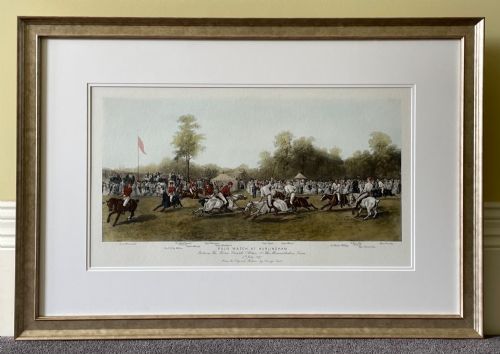
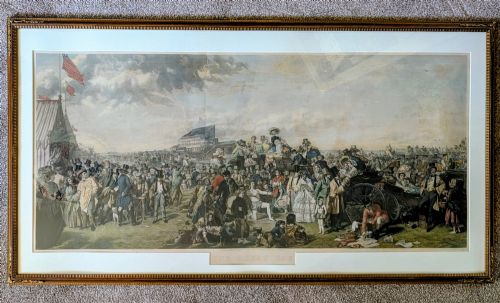
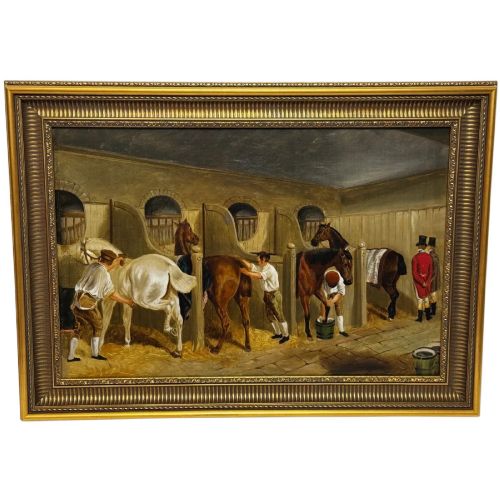
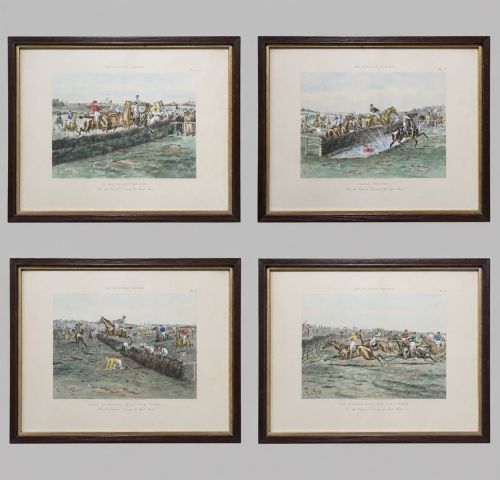
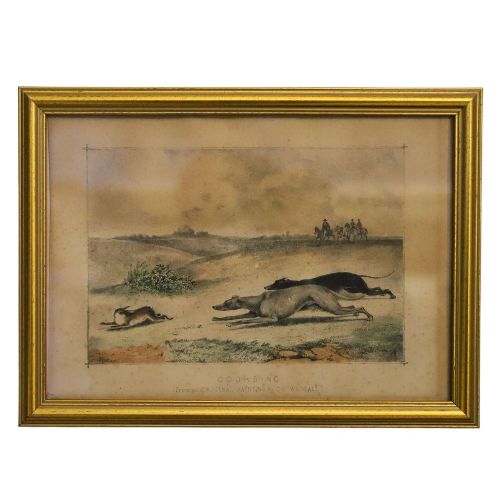
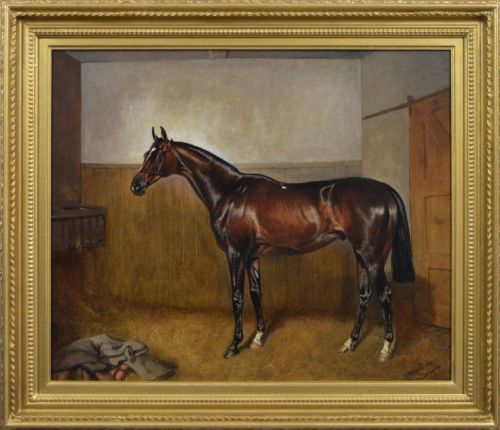
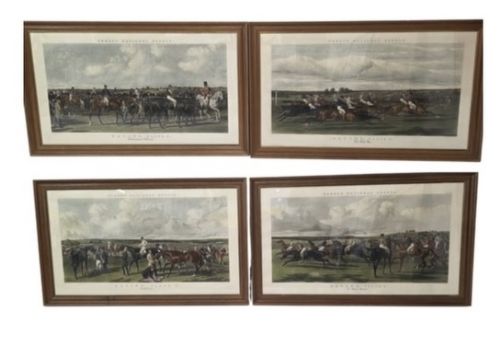
A victorian equestrian print brings nineteenth-century sporting life directly into a room through depictions of horse racing, hunting scenes and horse portraits. These works record field sports, polo matches and coaching meets as observed by contemporary artists and publishers.
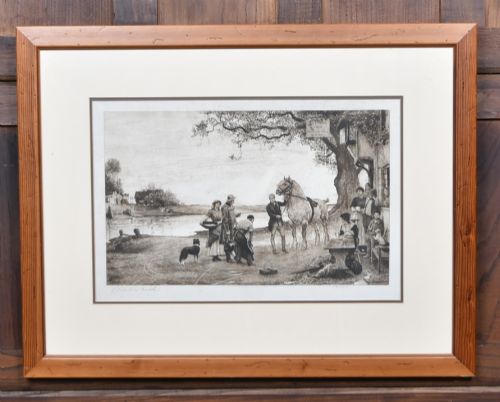
Framed prints and engravings dominate the selections, alongside etchings, lithographs and chromolithographs housed behind glass in wood or giltwood frames. Collectors also encounter original oil paintings and watercolours depicting similar subject matter from the same periods.
The material spans paper works with ink, chromolithography and hand-colouring, complemented by gilt frames and occasional photographic or crystoleum items. Dating stretches across the nineteenth century into the early twentieth century, capturing Victorian and Edwardian aesthetics.
Materials and techniques
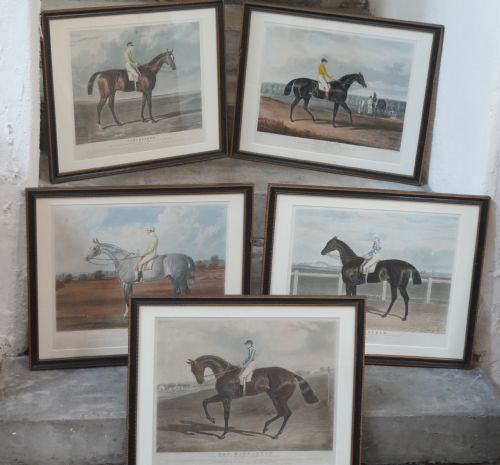
Printmakers utilised paper, ink and sometimes colour washes to produce engravings, etchings, aquatints and lithographs after original paintings. Publishers employed lithographic stones and engraved metal plates to distribute popular sporting imagery widely.
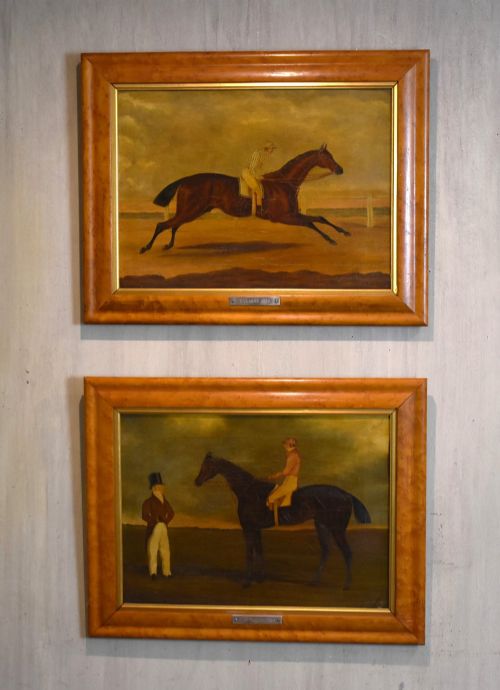
Framing involved wood mouldings finished with gold leaf or gilt paint to house the works behind protective glass. Painters worked with oil on canvas or watercolours on paper to create individual portraits of racehorses and hunting scenes.
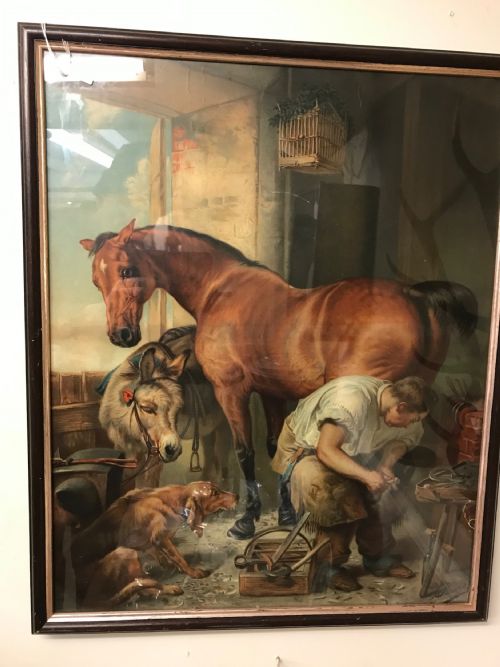
Several prints record the specific expressions of exhausted hounds and determined jockeys mid-race.
Assessing quality
Quality rests upon the crispness of the impression on paper and the fidelity of the engraving or lithographic work. Stronger examples retain vibrant ink tones and careful hand-colouring without excessive fading or paper discolouration.
The distinction between a mass-produced reproduction and an original period print or painting governs value and visual impact. Original frames finished in gold leaf or period wood also contribute to the integrity of the piece.
William Powell Frith·Robert W. Macbeth·George Finch Mason·C. H. Weigall·John Alfred Wheeler·Edwin Henry Landseer·John Frederick Herring Snr·Herbert Dicksee·Alken·Charles Faulkner·Alfred Wheeler·Frank Dadd·Charles Hunt·Francis Calcroft Turner·Edward Lloyd
The Victorian Equestrian Print Glossary
- Aquatint
- A printmaking technique that produces tonal areas resembling watercolours through acid etching on a copper plate. It allowed publishers to replicate the soft washes of sporting paintings.
- Chromolithograph
- A multicoloured print produced using multiple lithographic stones, one for each colour applied. This method brought vivid hues to nineteenth-century journal plates and standalone prints.
- Crystoleum
- A method of applying a transparent hand-coloured photograph or print to glass, convexing it, and painting the reverse. The technique gained popularity around the turn of the twentieth century.
- Etching
- A process where lines are bitten into a metal plate with acid to hold ink for printing. Artists used this method to achieve fine, expressive detail in animal and human figures.
- Lithograph
- A planographic print made from stone or metal plates treated to repel ink everywhere except where the drawing exists. It served as a primary medium for reproducing popular nineteenth-century art.
Victorian Equestrian Print: Frequently Asked Questions
What subjects do these prints show?
The selections depict horse racing, fox hunting, polo matches, coaching meets and individual portraits of notable racehorses. Scenes often capture hounds, huntsmen, jockeys and rural field sports.
Publishers captured popular pastimes of the nineteenth century, reflecting the era's deep cultural engagement with horses and sporting events.
How should I hang them at home?
These framed works suit studies, hallways and living rooms, often grouped together in pairs or sets of four to create a gallery wall. Matching the dark wood or gilt frames helps unify mixed groupings.
Keep them away from direct sunlight to protect the paper and ink from fading over time.
What is a Vanity Fair print?
Vanity Fair was a British weekly magazine known for publishing caricatures and chromolithograph portraiture of notable figures and cultural scenes. Equestrian-themed double-page prints from the publication often feature racing or hunting subjects.
These prints are collected for their humorous yet accurate social commentary on Victorian life.