
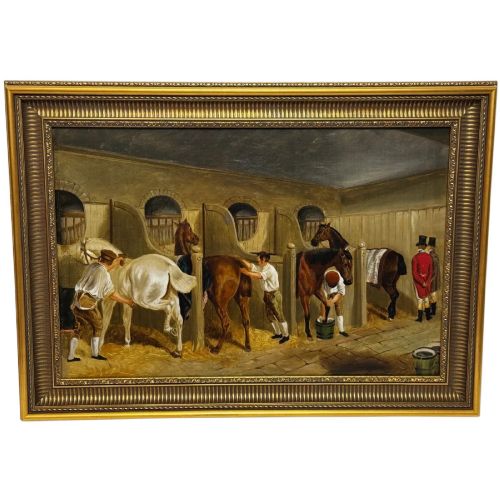
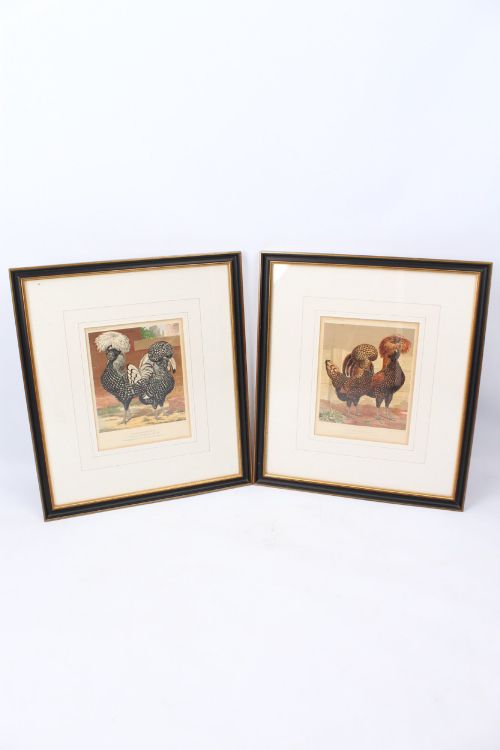
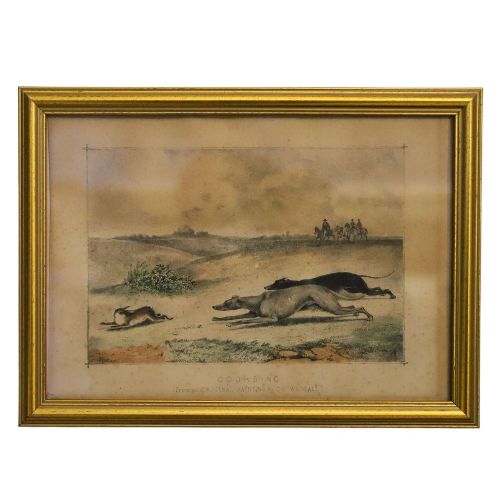
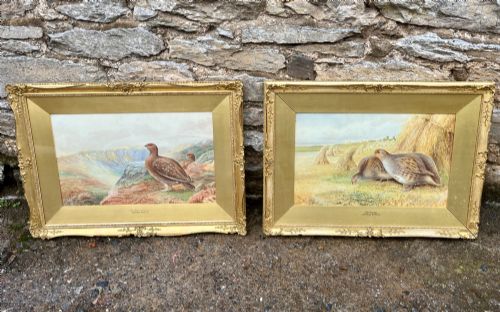
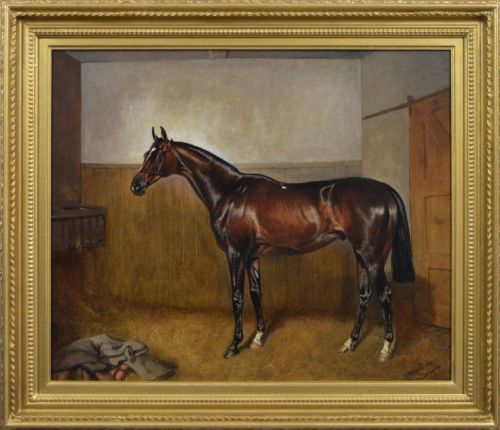
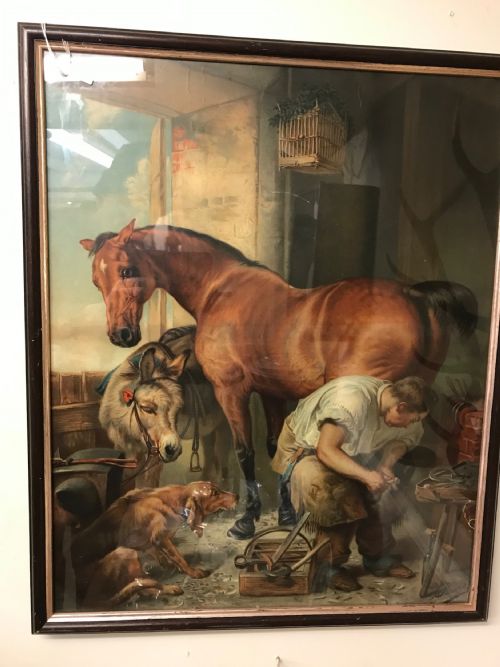
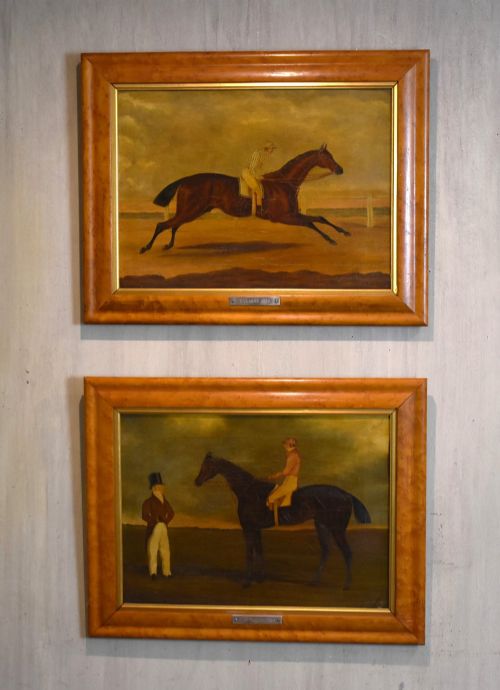


Country House Art Print
These country house art print selections bring the character of historic estates to your walls through period works.
Country House Art Print
A country house art print captures the traditional pursuits, architecture and sporting life associated with historic estates. When you search for a country house art print, you encounter a mix of framed prints, engravings and watercolours that reflect British field sports and rural scenery.
The selection on this page ranges from Georgian depictions through Victorian sporting scenes to Edwardian works. You are most likely to meet hand-coloured engravings, lithographs and watercolours depicting horses, hounds, game birds and historic houses.
Domestic subjects also appear alongside the dominant sporting themes, including botanical studies and pastoral architecture. These pieces served historically to decorate the reception rooms and corridors of large country residences.
Materials and technique
Paper serves as the primary ground for the engravings, lithographs and etchings, often housed behind protective glass within wooden and giltwood frames. Many early examples feature hand-applied watercolour washes over monochrome printed lines.
Original paintings utilise oil on canvas or pure watercolour pigment, capturing fine detail in animal and architectural subjects. Framing incorporates gold leaf and gilt wood to complement the domestic display style of the period.
Listings span from the Georgian era through Victorian equestrian subjects to Edwardian and 1930s works, executed in oil, watercolour and engraved paper.
Assessing quality and condition
Quality rests upon the crispness of the original impression and the precision of any hand colouring applied to the print. Stronger works display clear plate marks and vibrant pigments that have resisted fading over the decades.
The integrity of the framing contributes significantly to the overall merit of the piece. Contemporary or period frames that match the age of the artwork command greater interest than later replacements.
C. H. Weigall·George Rankin·John Alfred Wheeler·Edwin Henry Landseer·John Frederick Herring Snr·Robert Sayer·John Atkinson·Charles Hunt·Francis Calcroft Turner·Sam. Howitt·Snaffles·Archibald Thorburn
The Country House Art Print Glossary
- Lithograph
- A planographic printing method using a flat stone or metal plate. This technique allows for fluid lines and subtle tonal variations.
- Mezzotint
- A printmaking process of the intaglio family where the artist works from dark to light. It produces rich tones and smooth gradations.
- Engraving
- A method of cutting design lines into a metal plate to hold ink. It yields sharp, precise details visible under close inspection.
- Etching
- A process where acid bites lines into a metal plate covered with a protective ground. Artists use this to achieve expressive, free-flowing marks.
- Giltwood
- Wood carved and covered with a thin layer of gold leaf. This material frequently appears on traditional frames for period artwork.
Country House Art Print: Frequently Asked Questions
What subjects feature in these prints?
The subjects focus heavily on nineteenth-century sporting art, including fox hunting, horse portraits, game birds and coursing scenes. Architectural views of historic country houses and estates also appear.
Agricultural livestock, cattle and domestic animal portraits complete the typical range of rural subjects found in these collections.
Are these works original period pieces?
The selections include original nineteenth and early twentieth-century prints, engravings and hand-coloured lithographs. Each item originates from the period stated in its description rather than being a modern reproduction.
Watercolours and oil paintings listed are also period originals created by the named artists or within the specified decades.
How should I frame and display them?
Many pieces arrive already within period wooden or giltwood frames that suit their age and character. Preserving these original housings maintains the historic context of the artwork.
Keep them away from direct sunlight to protect the paper grounds and any hand-applied watercolours from fading over time.
How do I distinguish engravings from lithographs?
Engravings show distinct plate marks where the metal edge pressed into the paper, producing fine, sharp lines. Lithographs present a smoother tonal transition without the characteristic depression of an engraved plate.
Magnification reveals the fine dot pattern of lithography compared to the continuous inked grooves of an engraved line.