




Spy Vanity Fair Print
A spy vanity fair print captures the satirical portraits of Victorian and Edwardian society that defined a generation.
Spy Vanity Fair Print
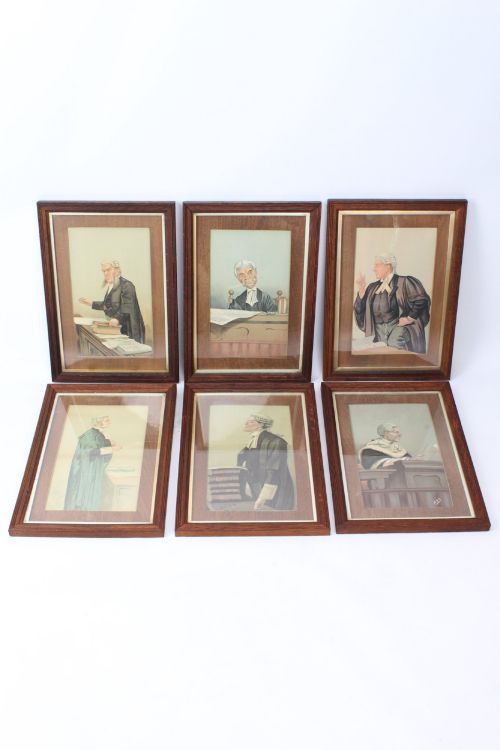
A spy vanity fair print represents the caricatures published in the weekly periodical, capturing notable figures from politics, law, military, royalty, and sport. Buyers frequently encounter these works grouped in sets or presented individually, spanning the Victorian and Edwardian periods.
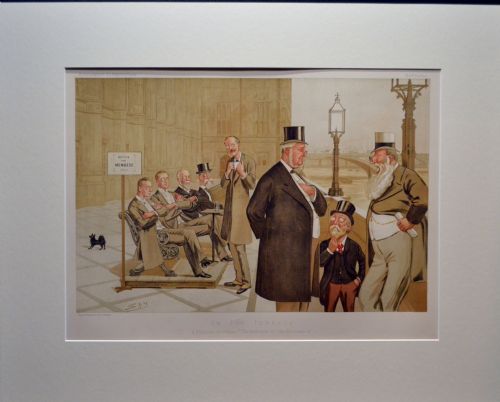
The material form includes single pages, double-page formats, and chromolithographs, often preserved within mount board and framed behind glass. Subjects range from politicians of empire to racing scenes, parks, and hunting.
Pieces from this category vary from standalone portraits to themed collections such as politicians or military figures. The surviving examples reflect the prominent public figures of the nineteenth and early twentieth centuries.
Materials and production
Production relied upon paper, ink, and cardboard, utilising chromolithography to achieve the characteristic rich colour palettes seen in double-page prints. Wood, glass, and mount board frequently comprise the contemporary or later framing materials protecting these works.
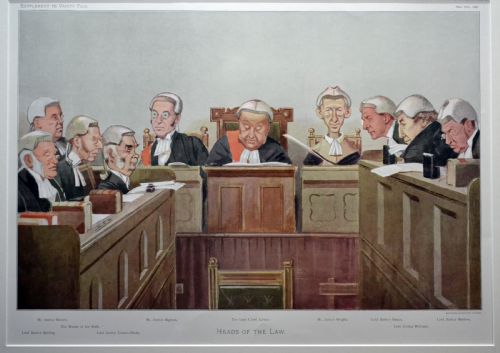
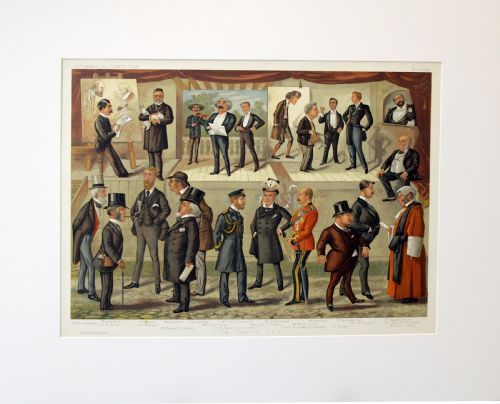
Printers applied coloured inks onto paper sheets, sometimes unfolding into larger double-page formats for significant group caricatures. Preservation often involves card backing and wooden frames to safeguard the fragile paper surfaces.
Spy Vanity Fair Print Retail Price Guide 2026
Typical asking prices for spy vanity fair print among the pieces listed under this phrase on Sellingantiques today, from the lower quarter to the upper quarter. They describe what is for sale here now, not the wider market.
The inventory includes paper, ink, wood, glass, cardboard, and metal across Victorian and Edwardian periods.
Factors of quality
Quality depends upon the vibrancy of the ink and the preservation of the paper sheet, with unfolded double-page examples often commanding greater visual impact. The clarity of the chromolithographic colour separation directly influences the definition within each caricature.
The integrity of the framing materials, including glass, wood, and mount board, affects the long-term condition of the paper. Completeness within structured sets of military, political, or legal figures also shapes the overall presentation.
The Spy Vanity Fair Print Glossary
- Chromolithography
- A planographic colour printing technique using multiple limestone blocks for each ink layer. This process enabled the vivid publication formats characteristic of nineteenth-century periodicals.
- Double page
- A larger format sheet folded within the original magazine binding. Unfolded examples present the complete composition without a centre crease.
- Mount board
- Heavy paperboard used to frame and support artworks. It separates the print surface from the protective glass.
- Caricature
- A portrait exaggerating physical characteristics for satirical effect. These form the primary artistic output associated with the search phrase.
Spy Vanity Fair Print: Frequently Asked Questions
What subjects do these prints show?
The subjects cover prominent figures in politics, law, military service, royalty, and sport from the Victorian and Edwardian eras. Collectors often find themed groups dedicated to racing, hunting, and empire.
Characters range from single portraits to large double-page group scenes capturing society figures of the period.
How were they originally published?
These works appeared as weekly satirical plates within a prominent London periodical of the nineteenth and early twentieth centuries. Subscribers collected or framed them individually.
Double-page formats provided space for larger group gatherings and comprehensive satirical scenes.
Are they original period items?
The inventory consists of genuine period print publications originating from Victorian and Edwardian printing presses. Materials include original paper, ink, and chromolithographic sheets.
Framed presentations often combine these period papers with wood, glass, and mount board.
How should I display them?
Display requires protection from direct sunlight to prevent fading of the delicate ink colours on paper. Utilising stable framing with glass and mount board helps maintain the condition.
Grouping sets by theme, such as military or legal subjects, reflects historical collection habits.