


Victorian Earthenware Statues
Victorian earthenware statues bring the parlour portraits, theatrical heroes and canine companions of the nineteenth century straight to the mantelpiece.
Victorian Earthenware Statues
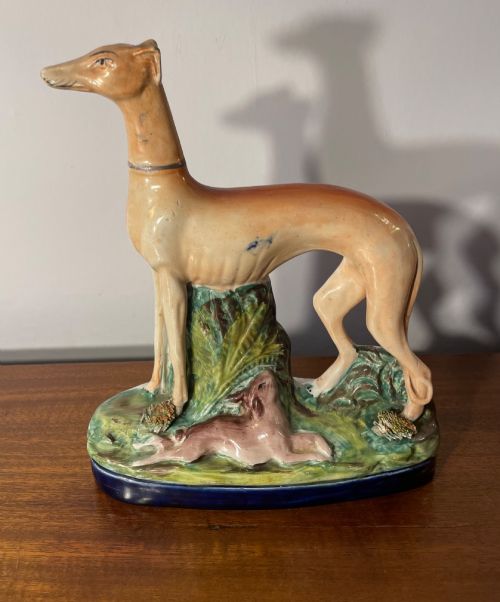
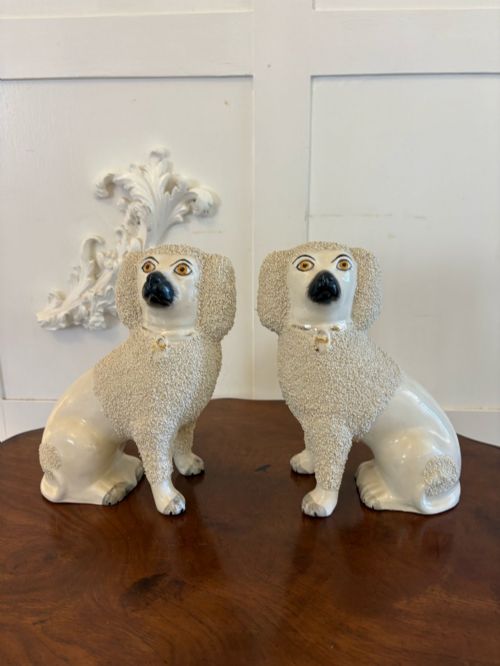
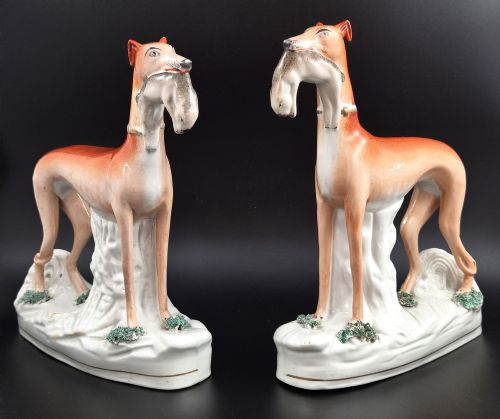
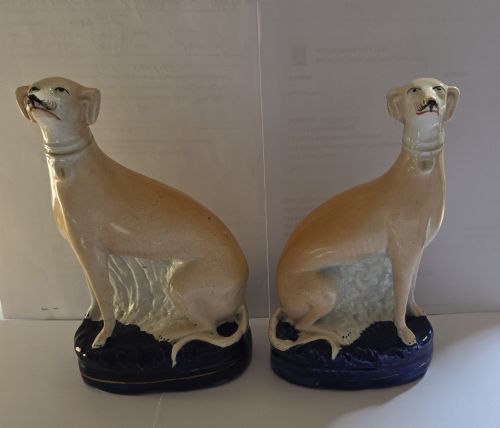
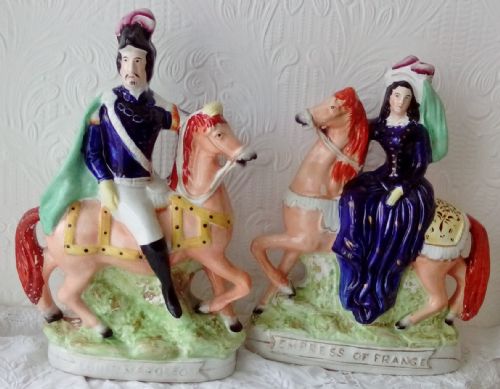
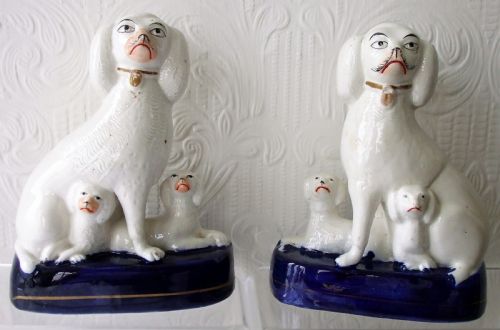
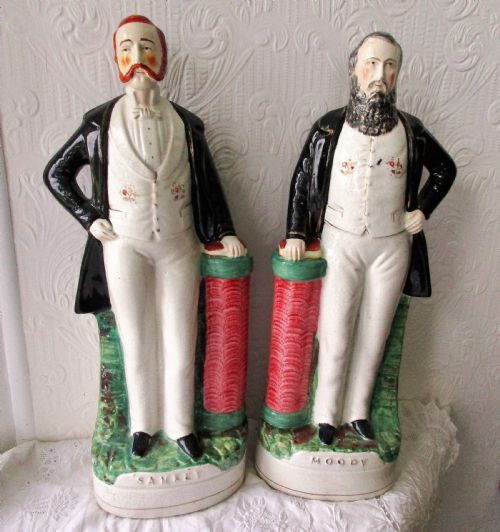
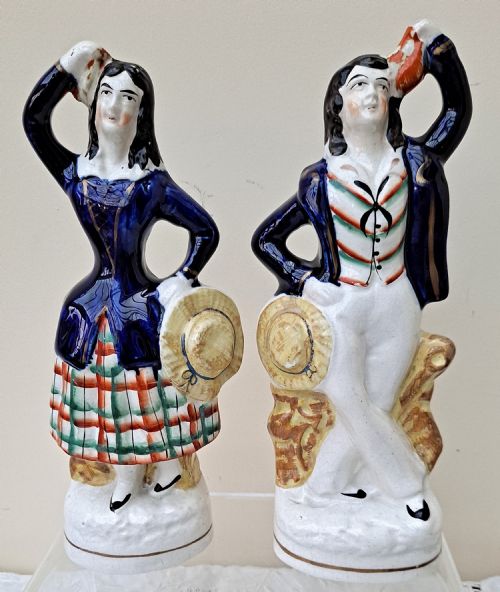
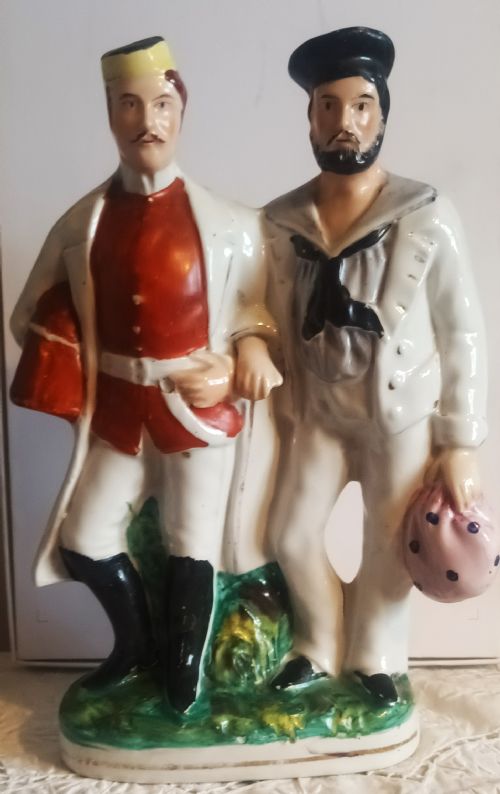
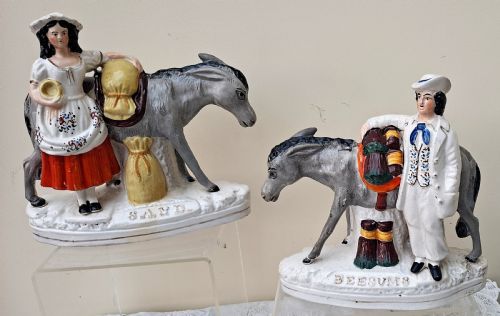
Victorian earthenware statues comprise a diverse group of moulded pottery figures, portrait subjects, theatrical characters and animal pairs produced during the nineteenth century. The most common examples encountered on this page are Staffordshire figures, ranging from seated spaniels and greyhounds to royal portraits and historical pairs.
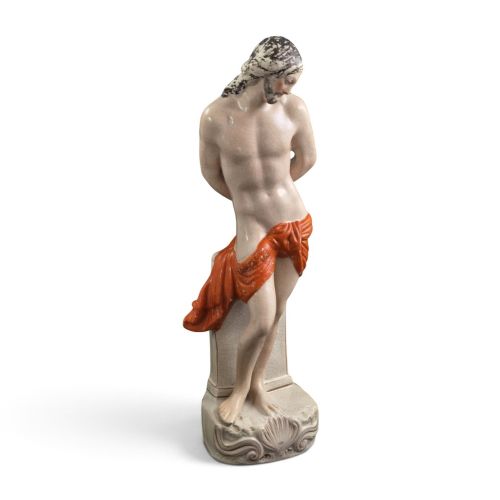
The subjects span domestic animals like poodles and pugs alongside literary heroes, historical figures such as Queen Victoria and Joan of Arc, and allegorical scenes. Makers modelled these pieces to sit on shelves or flank clock sets in homes across Britain.
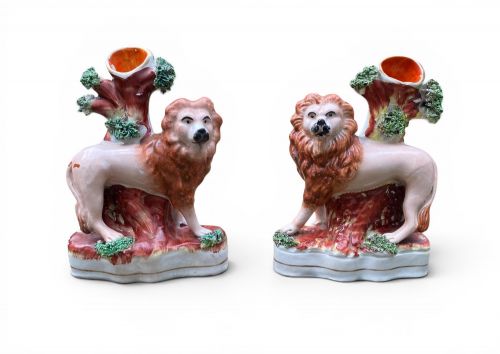
Forms include single standing figures, paired animals, spill vases and quill holders intended for functional use on a desk or mantel. These works capture the popular taste and social interests of the Victorian era through accessible ceramic sculpture.
Methods and Materials
Many examples feature hand-painted touches over a white or cream glaze, complemented occasionally by gold leaf accents on collars, bases and decorative borders. The underside typically reveals the porous earthenware body characteristic of nineteenth-century Staffordshire production.
A zebra takes its place among the Staffordshire poodles and lions, proving potters looked well beyond the British farmyard for inspiration.
Judging Quality
Matched pairs display uniform sizing, symmetrical modelling and consistent glaze application that indicate they were fired and painted together rather than assembled later. Original details such as undamaged gilding and intact lead glazes preserve the intended visual impact of the work.
Bernard Bloch·Lancaster and Sons·Wooley
The Victorian Earthenware Statues Glossary
- Earthenware
- Porous pottery fired at a relatively low temperature, forming the primary ceramic body for the majority of these figures. It requires a glaze to become impermeable to liquids.
- Spill Vases
- Hollow pottery cylinders attached to figures, designed to hold wooden spills used for lighting pipes, lamps or fires. They frequently appear alongside animal groups.
- Enamel Paint
- Vitreous coloured composition applied over the fired glaze and subjected to a secondary low-temperature firing to fuse it to the surface. It provides the bright primary colours seen on costumes and animal markings.
- Lead Glaze
- A glossy coating containing lead oxide that produces a smooth, glassy finish when melted in the kiln. It protects the porous earthenware beneath and deepens the underlying colours.
- Biscuit
- Unglazed ceramic ware that has undergone its initial firing. Figures are painted and glazed only after this preliminary stage.
Victorian Earthenware Statues: Frequently Asked Questions
What subjects do these statues represent?
The subjects range from domestic dogs and lions to royal portraits, theatrical personalities and historical figures like Joan of Arc. Many were produced in pairs to flank household items.
Potters drew inspiration from contemporary news, royalty and popular literature to appeal to Victorian households.
How were Staffordshire dog figures used?
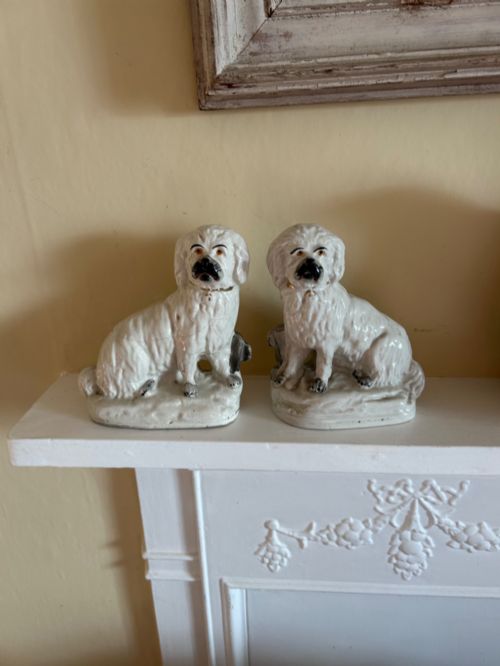
Seated spaniels, greyhounds and pugs typically sat on either side of the fireplace mantelpiece in nineteenth-century homes. Their outward-facing gazes created a balanced display.
Some variants incorporated functional elements such as spill vases for matches or quill holders for writing desks.
How do I date a Victorian earthenware figure?
Dating relies on stylistic clues, costume details, the type of earthenware body and the characteristics of the glaze or enamel colours. Mid-nineteenth-century pieces often show sharper moulding and careful hand-painting.
Markings are uncommon, so comparison with documented historical portrait subjects provides a reliable guide to the period.
Are these figures usually found in pairs?
Many animal figures, particularly greyhounds, lions and spaniels, were moulded and painted as opposing pairs for mantelpiece symmetry. Portrait subjects and theatrical figures also frequently appear as matched pairs.
Finding an original matching pair enhances the historical integrity of the set.