



Nineteenth Century Staffordshire
Nineteenth century staffordshire encompasses earthenware figures, spill vases, and blue and white transfer plates that bring character and narrative to any collection.
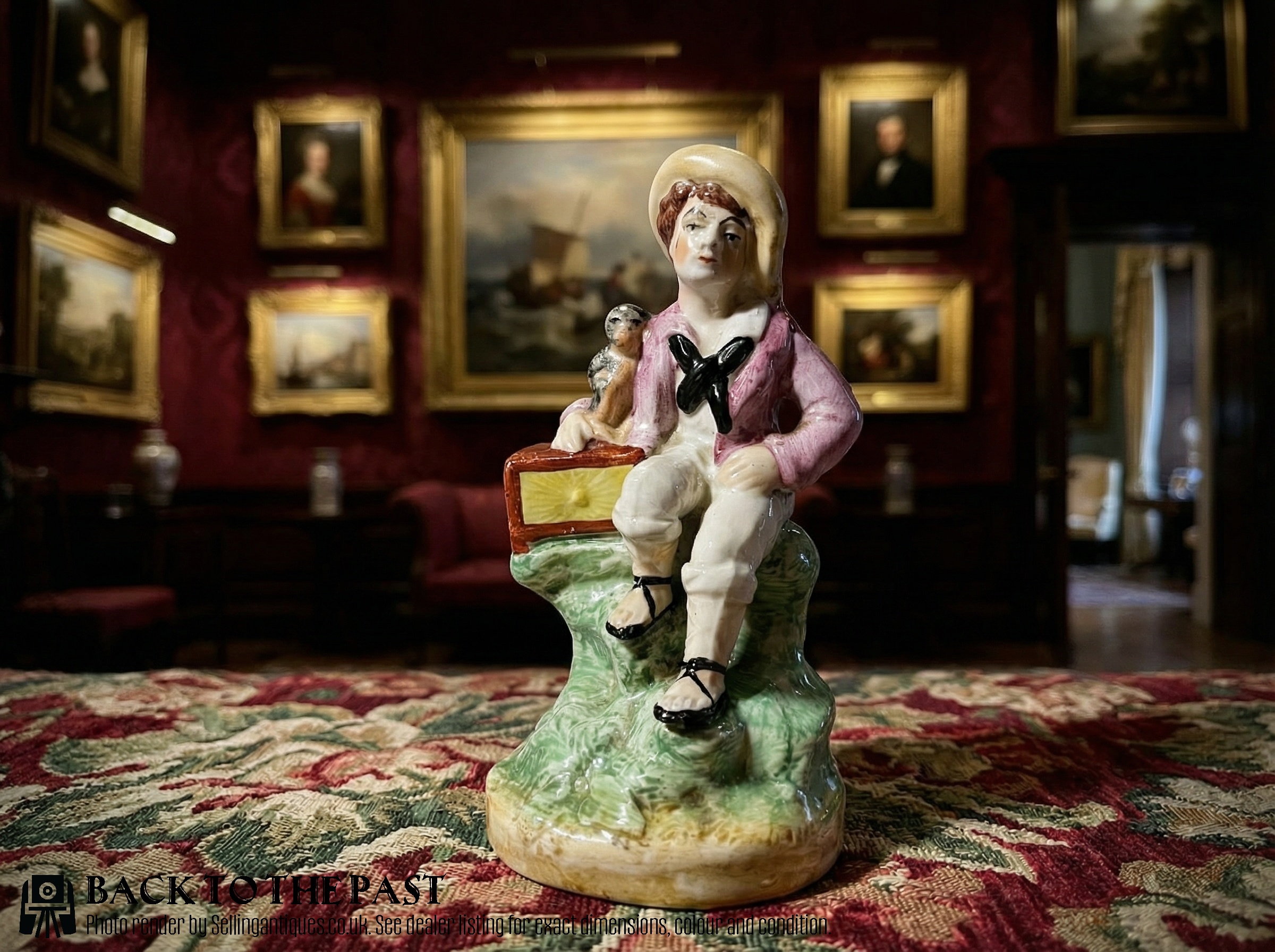
Nineteenth Century Staffordshire
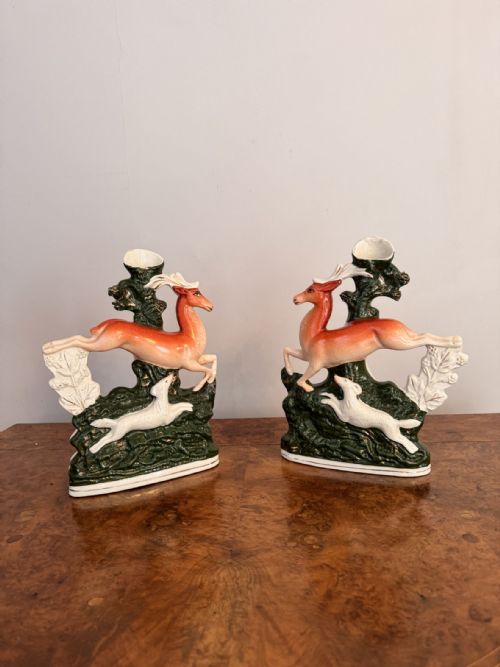
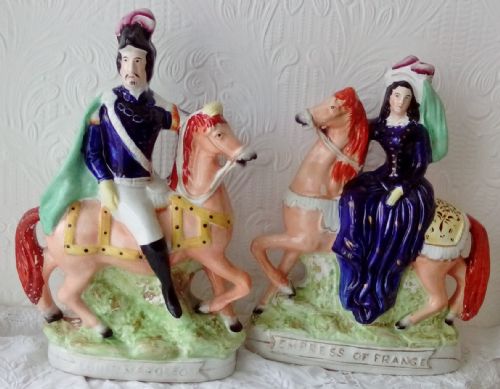
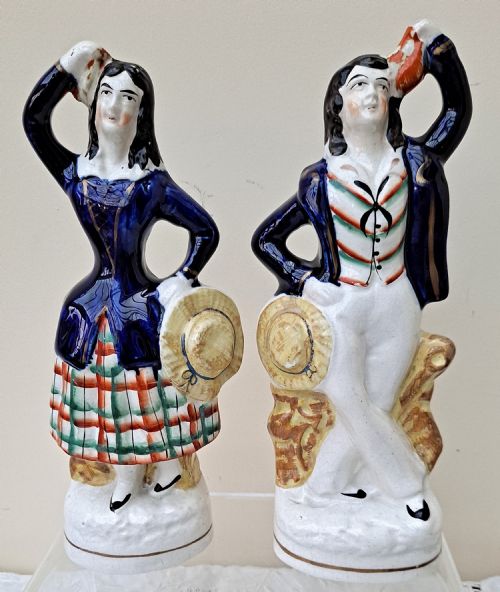
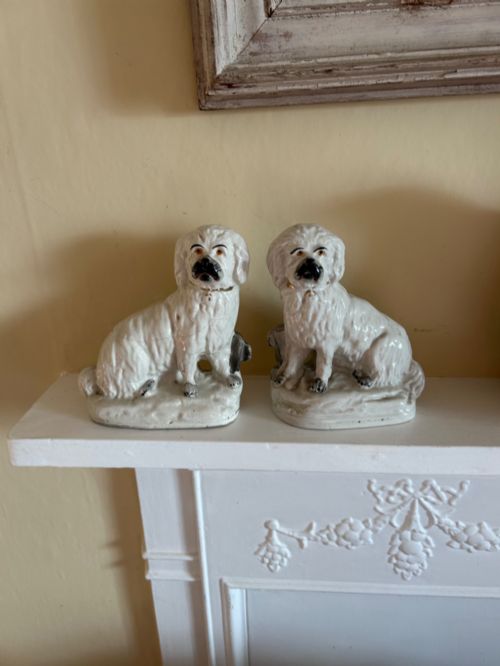
Nineteenth century staffordshire comprises earthen figures, spill vases, jugs, plates, and animal models produced across the Victorian and Georgian periods. Buyers encounter pairs of spaniels, theatrical figures, historical personages, and pastoral animals modelled in varied poses.
The objects span utilitarian serving plates and money boxes alongside purely decorative figurines and mantel ornaments. Many pieces reflect contemporary interests, depicting literary characters, exotic animals, or political figures of the era.
How they were made
Potters shaped these objects from earthenware, pearlware, and ceramic bodies, often applying a clear glaze or lead glaze over the surface. Coloured enamels, purple transfer decoration, and touches of gold leaf provide the surface detail on many figural models.
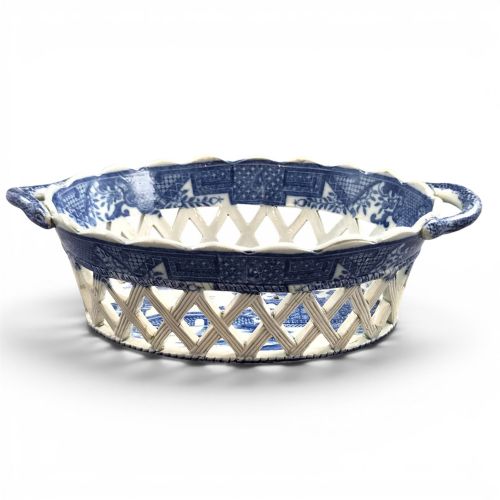
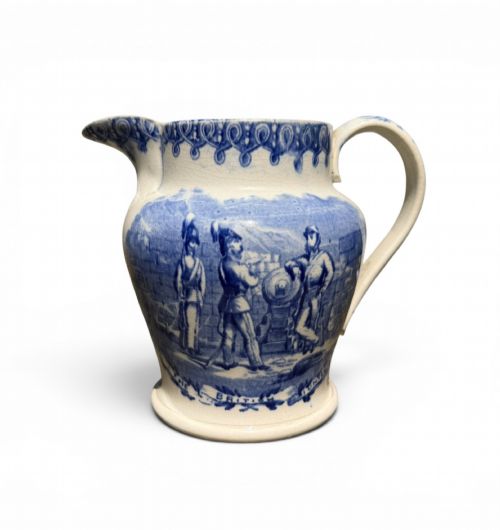
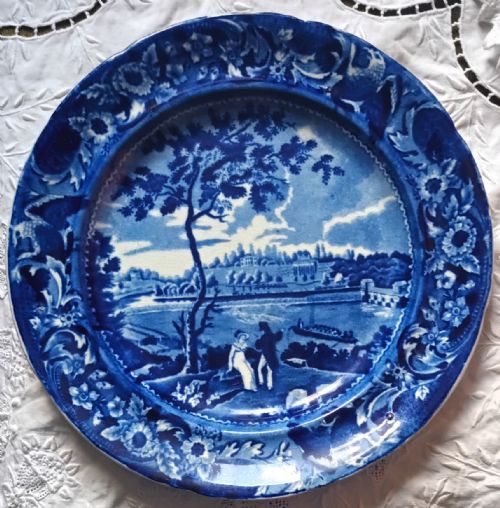
Blue and white transfer printing dominated the production of plates, dishes, and serving vessels, transferring intricate topographical or pictorial patterns onto the ceramic base before glazing and firing.
Listings feature earthenware, pearlware, and ceramic materials shaped into figurines, spill vases, jugs, plates, and chestnut baskets.
What varies in quality
Quality rests in the crispness of the moulding and the precision of the hand-painted enamel colours or transfer prints. Finer figural models capture facial expressions and anatomical details with greater realism and care.
The depth and uniformity of the glaze, alongside the preservation of delicate additions such as gold leaf and spill vase apertures, distinguish superior examples from standard production pieces.
Spode·Stubbs·William Adams·J. & R. Clews·John Rogers & Son·Minton
The Nineteenth Century Staffordshire Glossary
- Pearlware
- A refined earthenware developed in the late eighteenth century featuring a faint bluish tinge in the glaze where it pools. This glaze formulation made the underlying ceramic body appear whiter than standard creamware.
- Spill vase
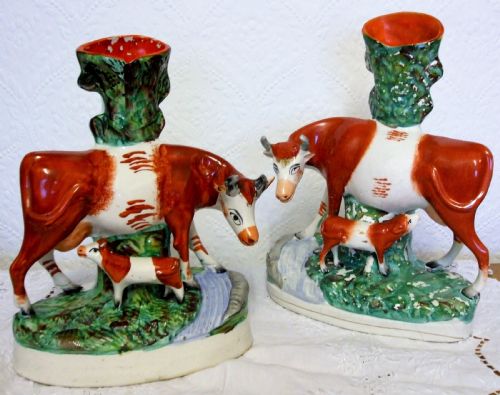
- A hollow figural or cylindrical vessel designed to hold wooden spills used for lighting pipes, fires, and candles. These objects often take the form of tree trunks beside animals or human figures.
- Transfer printing
- A decoration technique where an engraved copper plate transfers a design onto tissue paper, which is then pressed onto the ceramic body. This method allowed intricate blue and white patterns to be replicated consistently.
- Treacle glaze
- A rich, dark brown lead glaze that produces a glossy, translucent finish resembling molasses. Potters utilised this glaze to coat animal figures and utilitarian wares.
- Gaudy Welsh
- A distinctive style of earthenware pottery characterised by cobalt blue transfer underglaze combined with vivid hand-painted overglaze enamels, particularly pink lustre and copper accents.
Nineteenth Century Staffordshire: Frequently Asked Questions
How do I identify pearlware?
Pearlware is identified by a subtle blue tint in the glaze, particularly visible where the liquid pooled in crevices or around the base. This refined earthenware body bridged the gap between creamware and later white earthenwares.
Potters utilised this formulation to create a whiter background for transfer-printed and enamelled designs. It appears commonly on early nineteenth-century plates, jugs, and figures.
What is a spill vase used for?
A spill vase incorporates a tubular holder alongside a figural or decorative ceramic sculpture to contain thin tapers of wood. These spills were ignited from the hearth fire to carry flame to candles and oil lamps.
Victorian households placed them on mantelpieces where they combined practical utility with ornamental display. The vases often depict animals, birds, or human characters standing beside the vertical receptacle.
How are transfer printed plates dated?
Transfer printed plates are dated by examining the specific blue and white patterns, backstamps, and the characteristics of the ceramic body. Potters often named their views or series in the transfer print, aiding historical attribution.
Changes in glaze composition, such as the shift from pearlware to harder white earthenware, provide further chronological markers. Collectors also reference recorded registry marks and maker signatures stamped into the base.