


Orange Staffordshire Figures
These orange staffordshire figures are nineteenth-century ceramic ornaments that bring robust Victorian character and animal subjects directly to your mantelpiece.
Orange Staffordshire Figures
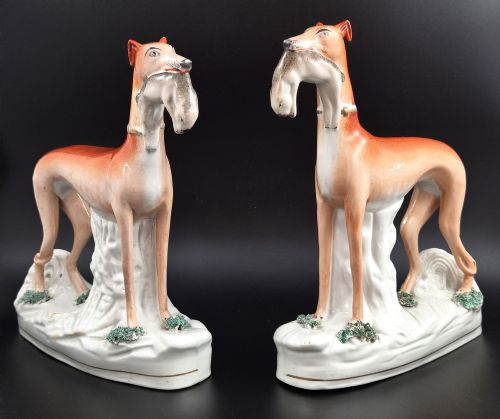
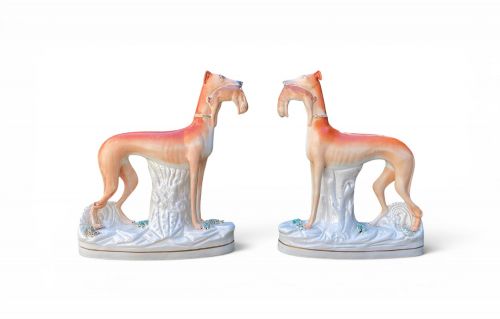
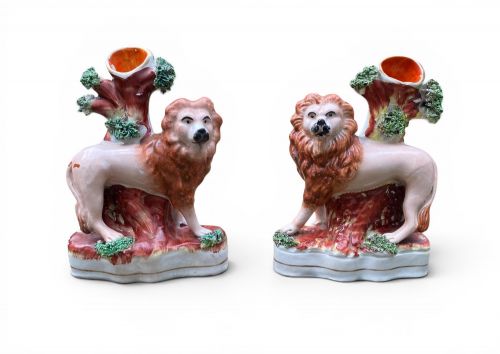
When you search for orange staffordshire figures, you are looking at nineteenth-century earthenware objects including pairs of greyhounds, lions, cats, spaniel dogs, and spill vases shaped as deer. These pieces originate from Victorian England and frequently take the form of decorative ornaments, bookends, and figurative sculptures.
The versions you are most likely to meet on this page span the Victorian period from around eighteen-fifty through to eighteen-ninety. They include specific subjects such as royal children on horseback, actors, a leopard hunter, and Little Red Riding Hood rendered in glazed ceramic.
Makers such as Thomas Parr contributed to this tradition, producing pottery figures that captured popular Victorian themes and domestic animal pairs. Collectors prize these earthenware sculptures for their charming depiction of both wildlife and human figures in a distinct nineteenth-century aesthetic.
Materials and technique
Potters shaped these nineteenth-century pieces from earthenware clay, applying lead glaze to seal the porous ceramic body and provide a glossy protective surface. This traditional method formed the sturdy baseline for figures of animals, dogs, and lions.
Artisans finished the fired pottery using enamel paint and enamel glaze to render details like facial expressions, clothing, and naturalistic markings. Select highlights received touches of gold leaf to enhance the decorative impact of the Victorian ornaments.
Nineteenth-century potters expected spaniel dogs and greyhounds to guard your bookshelf just as faithfully as real hounds guarded the estate.
Judging quality
Scale and format also influence the distinction, as unusually large examples or balanced pairs demonstrate greater ambition in the kiln. The deft application of surface highlights, including enamel paint and gold leaf, separates ordinary pottery from the finest Victorian work.
Thomas Parr
The Orange Staffordshire Figures Glossary
- Earthenware
- A type of porous pottery fired at lower temperatures than stoneware or porcelain. It serves as the primary body for nineteenth-century Staffordshire figures.
- Spill vase
- A hollow ceramic cylinder attached to a figure, designed to hold taper candles used for lighting pipes or lamps. These practical vessels often depict animals like deer or lions.
- Lead glaze
- A glossy coating containing lead oxide applied to pottery before firing. It gives Victorian figures their characteristic shiny protective surface.
- Enamel paint
- Opaque vitreous colours fused to the ceramic surface during a secondary low-temperature firing. This medium provides the bright coats and clothing details seen on figures.
- Bookend
- A heavy ceramic object weighted to support upright volumes on a shelf. Victorian examples frequently utilise pairs of recumbent lions or greyhounds for stability.
Orange Staffordshire Figures: Frequently Asked Questions
What subjects appear on these figures?
The listings show a variety of subjects including greyhounds, lions, deer, cats, and spaniel dogs. You will also find figurative pieces depicting actors, a leopard hunter, and royal children on horseback.
Animal pairs dominate the selection, often modelled as bookends or companion ornaments for a Victorian mantelpiece.
How do I date these ceramics?
Most pieces date from the Victorian era across the nineteenth century, specifically between eighteen-fifty and eighteen-ninety. Stylistic cues and the use of earthenware with lead glaze help place them in this timeframe.
Individual pieces often bear characteristics typical of mid to late nineteenth-century English pottery production.
What is a spill vase?
A spill vase is a functional holder incorporated into the ceramic sculpture, intended to contain wooden spills used for transferring fire from hearth to candle or pipe. Makers integrated these tubes naturally behind figures like deer or lions.
They combine domestic utility with the decorative character typical of nineteenth-century Staffordshire pottery.
How should I display them?
These earthenware figures suit prominent placement on mantelpieces, bookshelves, or dedicated display cabinets where their colours and forms remain visible. Pairs of animals work well arranged symmetrically.
Keep them away from damp environments and direct heat sources to preserve the historic enamel paint and glaze.