
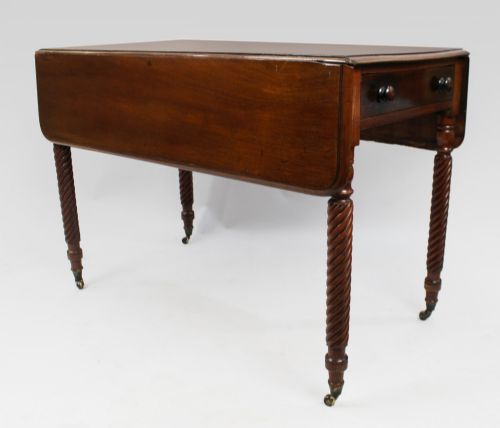

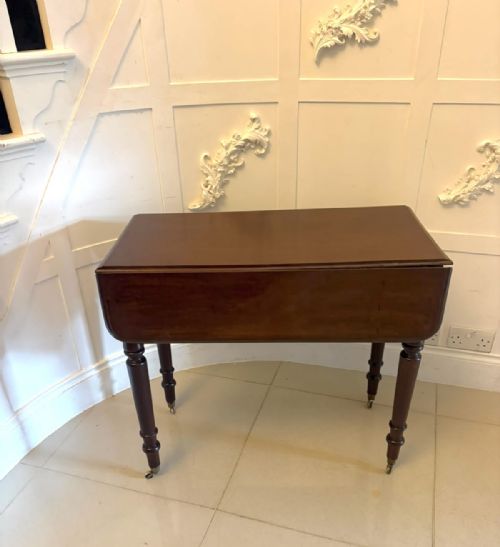
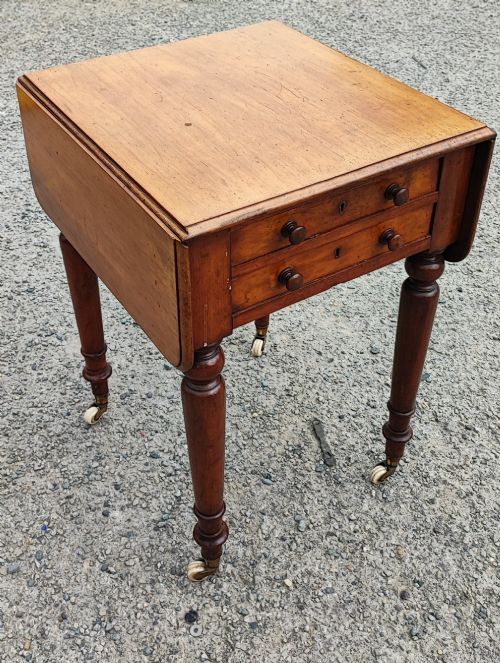
Victorian Drop Leaf Side Table
A victorian drop leaf side table is a versatile space-saving piece, and you will find these compact folding designs suited to daily living.
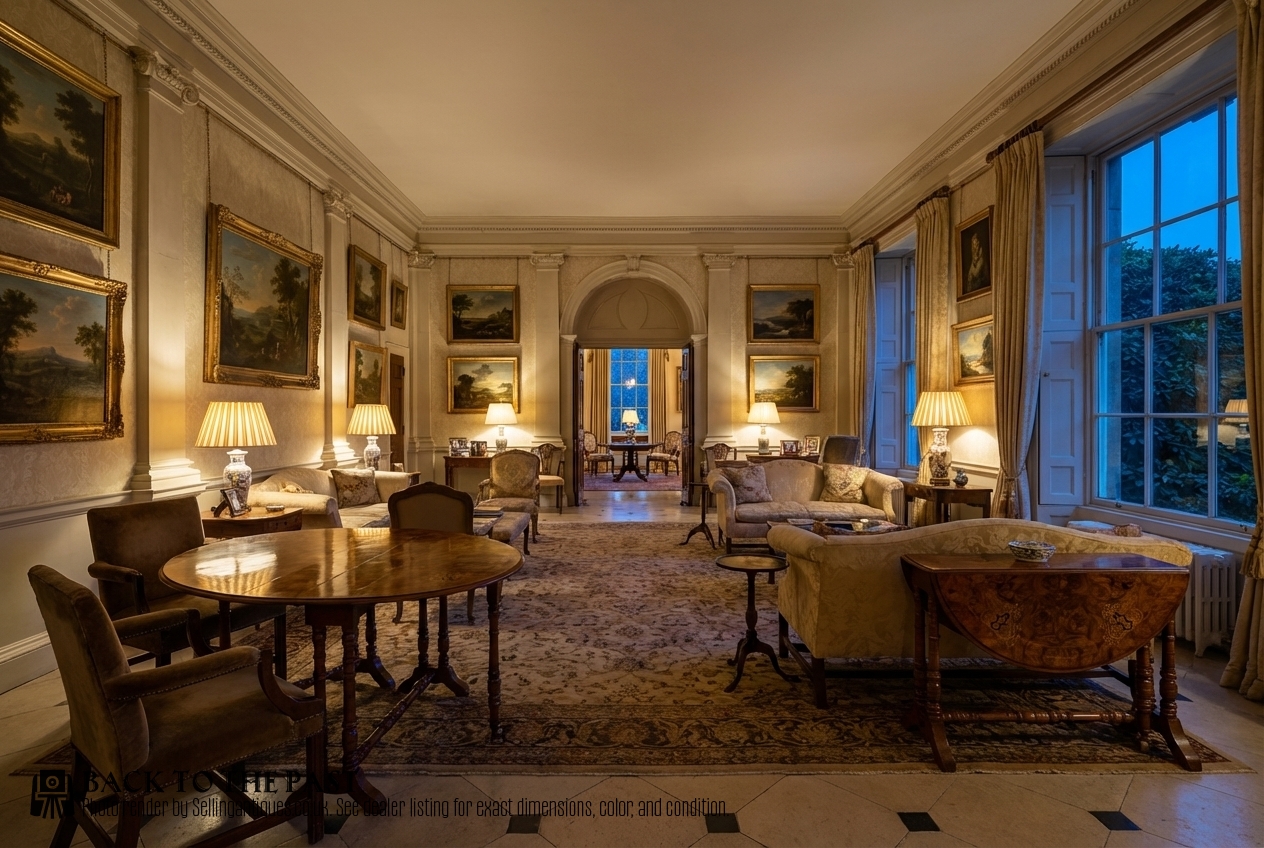
Victorian Drop Leaf Side Table
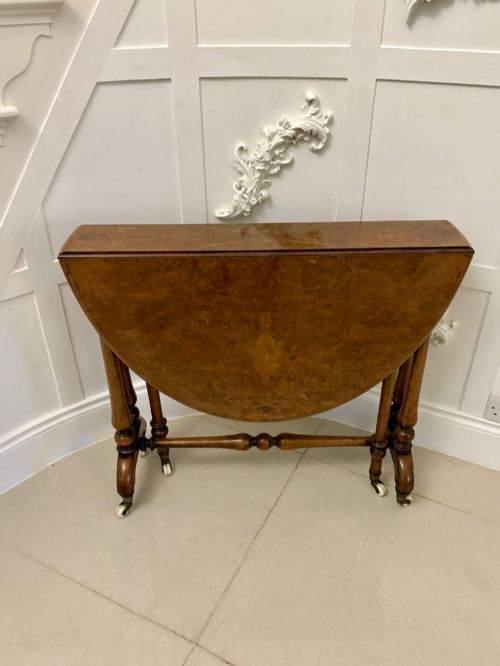
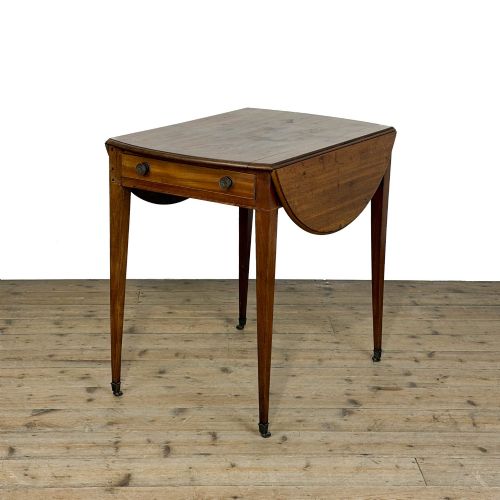
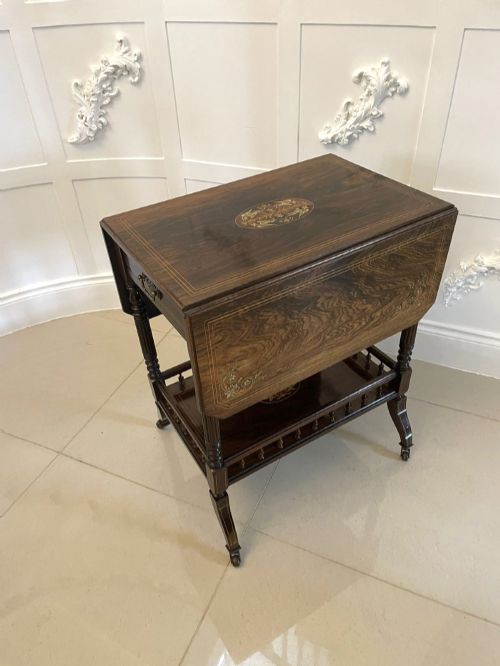
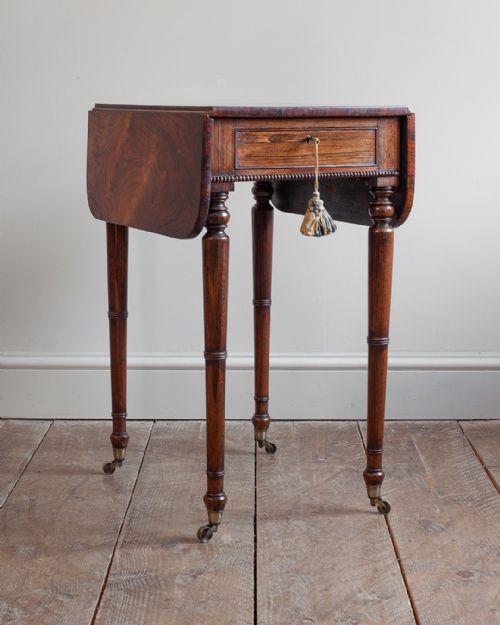
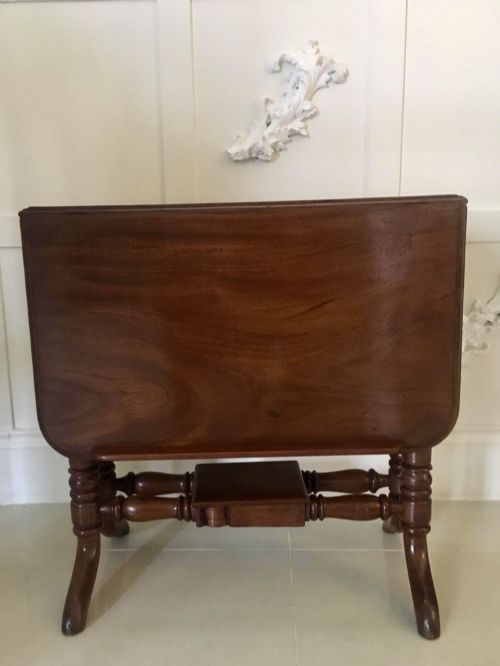
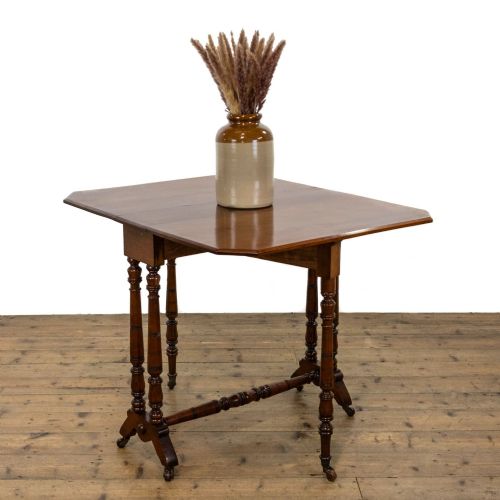
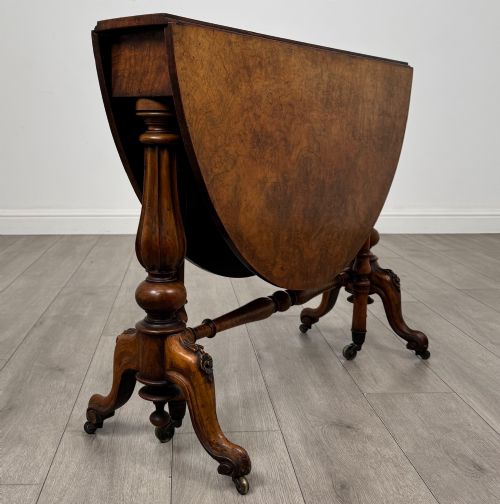
A victorian drop leaf side table encompasses forms designed to fold down when not in use and expand when surface area is required. You will frequently encounter Pembroke tables, Sutherland tables, and sofa tables originating from the nineteenth century.
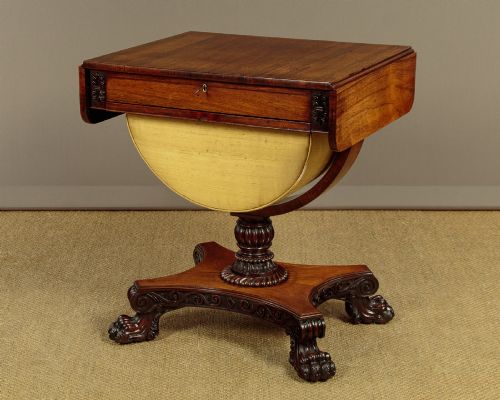
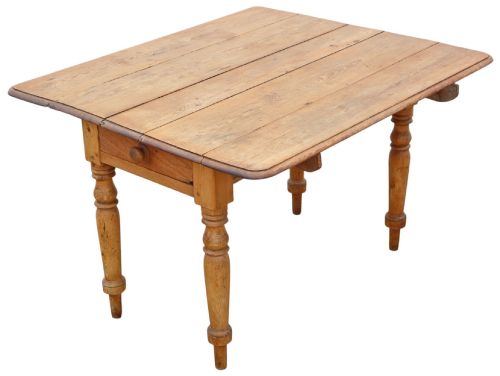
The selection ranges from robust pine kitchen tables to refined burr walnut and rosewood occasional tables. These pieces reflect the varied domestic needs of the period, from modest bedside usage to formal parlour settings.
Makers utilised styles spanning from Georgian traditions through to Victorian country, William IV, and aesthetic movement designs. This diversity ensures that the pieces fit both traditional interiors and simpler rustic spaces.
Materials and construction
Cabinet makers relied heavily on timber selection, pairing solid structural woods like mahogany, oak, and pine with decorative veneers such as burr walnut and rosewood. Brass fittings, ceramic castors, and subtle satinwood or fruitwood inlay often provide functional detail.
Folding mechanisms rely on hinged flaps supported by rule joints, gate legs, or sliding wooden brackets. The joinery accommodates the movement of timber across changing household temperatures while maintaining stability when open.
Some Victorian households deployed trifold handkerchief tables that unfold into unexpected triangular geometry for parlour games.
Assessing craftsmanship
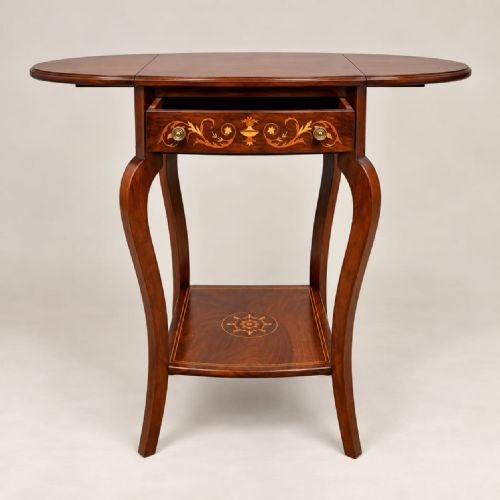
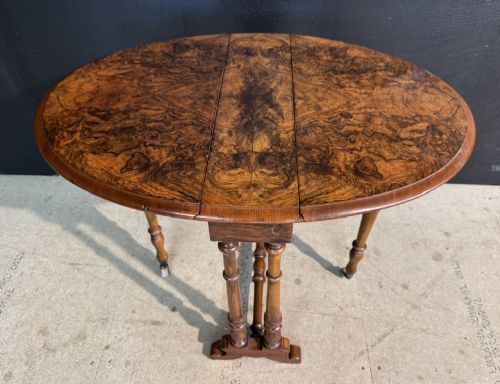
Quality rests upon the choice of timber figure and the precision of the veneer work, particularly on oval or rectangular tops featuring floral marquetry and inlay. Superior examples display carefully matched grain patterns across the folding leaves.
The integrity of the structural hinges and leg supports dictates the longevity of each piece. Finer items exhibit tight joinery, smooth drawer operations where applicable, and original brass or ceramic hardware.
Johnstone and Jeanes
The Victorian Drop Leaf Side Table Glossary
- Pembroke table
- A small table featuring two hinged drop leaves on opposite sides and usually one or two drawers. It was popular throughout the nineteenth century for occasional dining or writing.
- Sutherland table
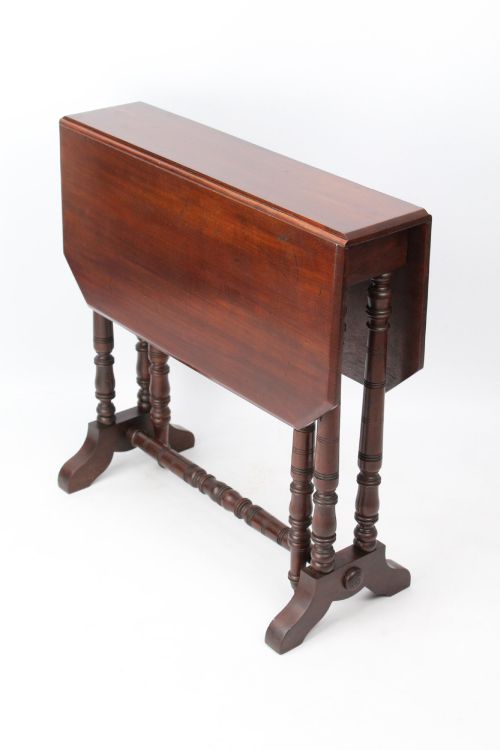
- A narrow table with exceptionally slender drop leaves that fold down almost vertically. They operate on a gate-leg principle to support the extended flaps.
- Sofa table
- A rectangular occasional table traditionally placed in front of or behind a sofa. These items typically feature end supports and drop leaves on either side.
- Rule joint
- A moulding technique used on drop leaf tables where the edge of the fixed top and the edge of the movable leaf meet. This creates a neat finish when the flap is raised.
- Marquetry
- Decorative veneer patterns formed by fitting together small pieces of different coloured woods. It appears frequently on the tops of higher-end Victorian tables.
Victorian Drop Leaf Side Table: Frequently Asked Questions
What is a Sutherland table?
A Sutherland table is a specific form of drop leaf table characterised by particularly narrow leaves and a gate-leg action. When folded down, the table takes up minimal floor space.
Cabinet makers of the nineteenth century built these pieces in woods such as burr walnut, mahogany, and rosewood. They function well today as compact side or tea tables in smaller rooms.
How do Pembroke tables differ?
Pembroke tables feature two drop leaves attached to a central fixed top, typically accompanied by one or two small drawers. The leaves are narrower than those found on larger dining tables.
These pieces were designed for versatile use as breakfast tables, desks, or lamp tables. Their mobility made them popular across various nineteenth-century domestic settings.
Where should I place a drop leaf table?
These tables suit hallways, living rooms, and bedrooms where surface space needs to adapt quickly. With both leaves dropped, they sit flush against a wall as a narrow console.
Raising one or both leaves provides extra space for lamps, books, or tea sets. Their compact footprint makes them practical for modern homes requiring flexible furniture.
How do I identify a Victorian piece?
Victorian tables often exhibit specific timber choices like rosewood, burr walnut, and rich mahogany, sometimes decorated with marquetry or satinwood inlay. Construction methods include hand-cut dovetails in drawers and traditional rule joints on the leaves.
Design influences range from early Victorian heavy proportions to lighter aesthetic movement or rustic country styles later in the century.