


Victorian Dinner Service
A victorian dinner service brings nineteenth-century dining grandeur straight to your table, offering matching plates and serving pieces shaped by period tastes.
Victorian Dinner Service
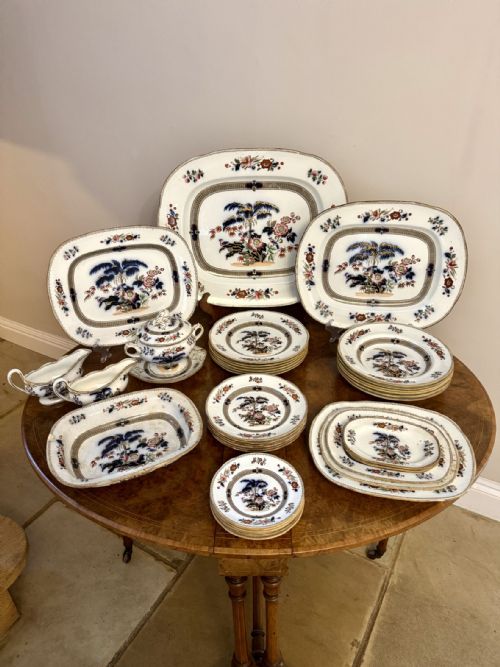
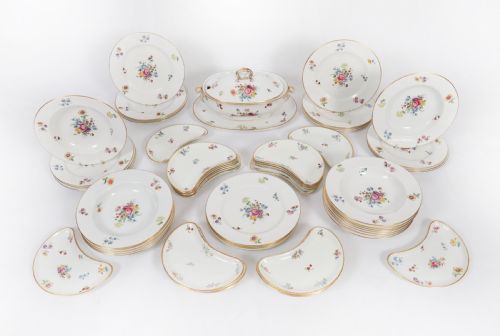
A victorian dinner service comprises matched collections of ceramic tableware designed for nineteenth-century meals, spanning large country house sets down to smaller part services and child's toy editions. You will encounter extensive earthenware and porcelain settings alongside blue and white transferware, botanical designs, and aesthetic movement patterns.
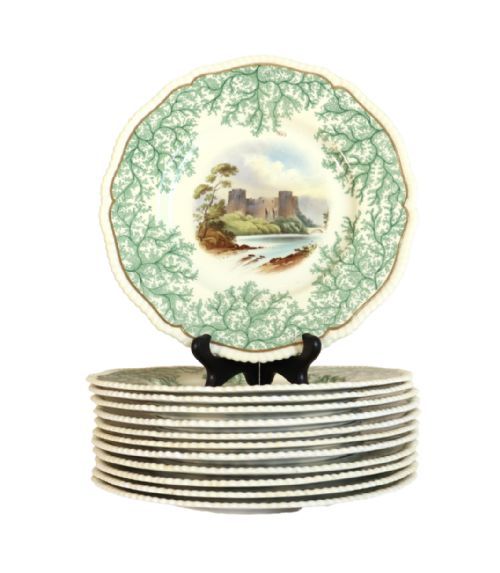
The services vary greatly in scale, ranging from substantial settings containing dozens of plates to compact part services bearing hand-painted details or gilt accents. Makers such as Wedgwood, Spode, Copeland, Doulton, Coalport, Minton, and Ashworths produced these utilitarian yet decorative works across the nineteenth century.
Materials and construction
These services employ earthenware, ironstone, bone china, and creamware bodies shaped into plates, bowls, and serving vessels, then finished with durable glazes. Decoration relies on underglaze blue printing, enamel colours, and hand-painted botanical or landscape motifs.
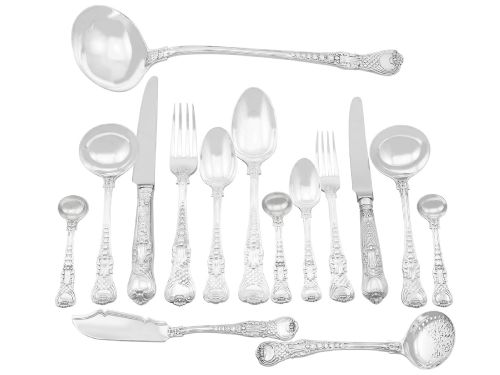
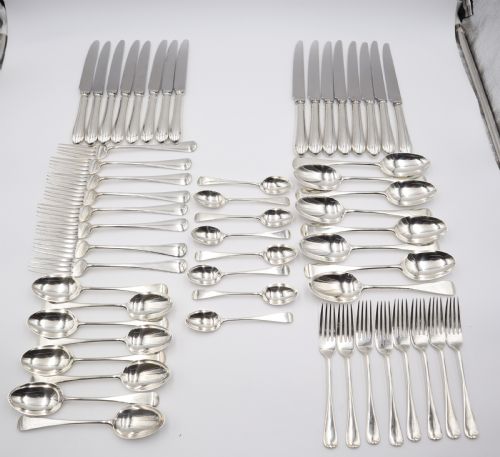
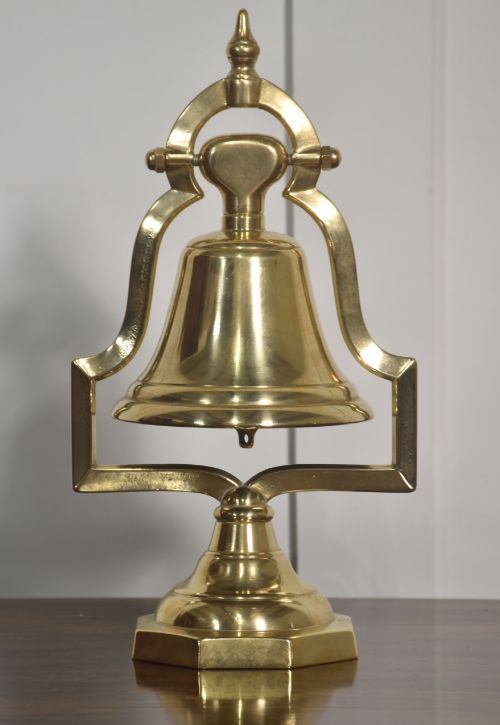
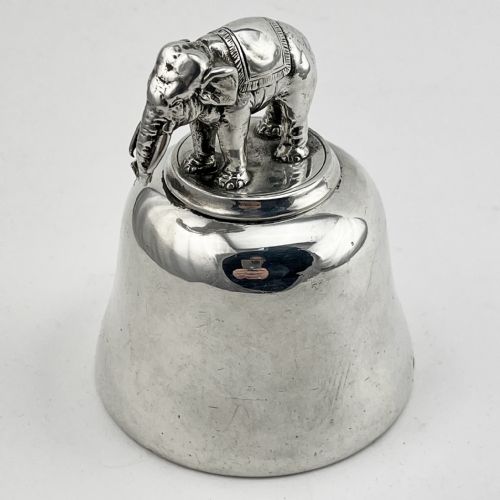
Many pieces incorporate applied gilt highlights around rims and borders, while related dining accessories utilise sterling silver, bronze, brass, and glass for table bells and cutlery sets.
Several miniature child's toy services survive, proving that even Victorian children had to practice proper country house dining etiquette.
Judging quality and completeness
Quality rests primarily on the crispness of the transfer printing or the brushwork in hand-painted botanical scenes, alongside the preservation of original gilding and enamel. Comprehensive piece counts and matching registry marks elevate the desirability of a service.
The presence of distinguished factory names or provenance adds substantial weight, whereas extensive losses to the glaze or heavy utensil wear diminish the character of the setting.
Wedgwood·Spode·Copeland·Doulton·Coalport·Minton·Ashworths
The Victorian Dinner Service Glossary
- Creamware
- A refined light-coloured earthenware developed in the eighteenth century and continued into the Victorian era.
- Flow blue
- A nineteenth-century transfer printing technique where cobalt oxide blurred intentionally into the glaze during firing.
- Ironstone
- A durable heavy earthenware patent developed to resist chipping during daily dining use.
- Gilt
- A thin layer of gold applied to ceramic rims and handles for decorative effect.
- Part service
- A reduced collection of matching tableware rather than an originally complete large setting.
Victorian Dinner Service: Frequently Asked Questions
How do I care for antique ceramic dinnerware?
Wash each piece gently by hand using mild detergent and warm water, avoiding harsh scrubbing pads or automatic dishwashers that harm old glazes and gilt.
Store plates with felt dividers between them to prevent surface scratching on the transfer-printed or hand-painted decorations.
Can I use a victorian dinner service for meals?
These antique ceramics serve well for special occasions, provided you handle them with care and avoid thermal shock from extreme temperature changes.
Glazes from the nineteenth century may contain lead, so many collectors prefer using them for display or occasional cold food service.
What is the difference between a full and part service?
A full service contains dozens of matching plates, platters, and tureens intended for multi-course nineteenth-century dining.
A part service represents a surviving subset of the original production, offering a practical option for modern display and smaller gatherings.
How do I identify the maker of a set?
Check the underside of plates and serving dishes for impressed factory marks, printed stamps, or registration diamond symbols.
These ceramic marks reveal the producing pottery and often narrow down the exact decade of manufacture.