


Antique Ceramic Tureen Set
An antique ceramic tureen set brings formal Victorian and Georgian dining room elegance directly to the modern table.
Antique Ceramic Tureen Set
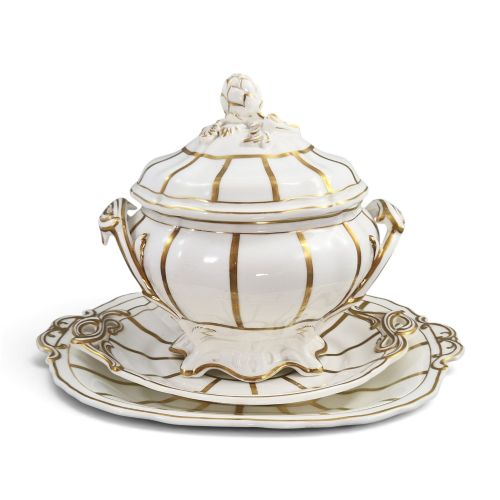
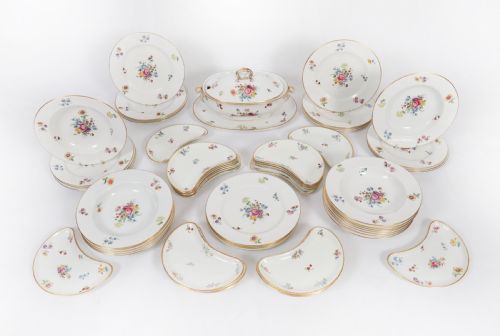
When you search for an antique ceramic tureen set, you encounter complete dinner services, smaller supper sets with lazy susans, and miniature child's services designed in the 19th century. These pieces encompass earthenware, bone china, creamware, porcelain, and ironstone forms originating from Victorian, Georgian, and Edwardian periods.
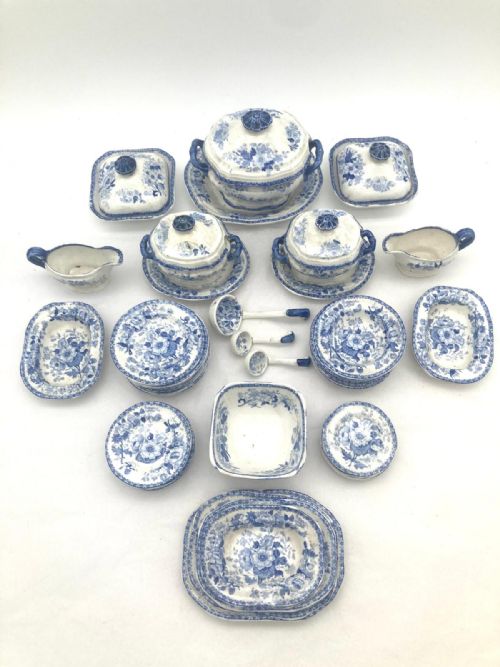
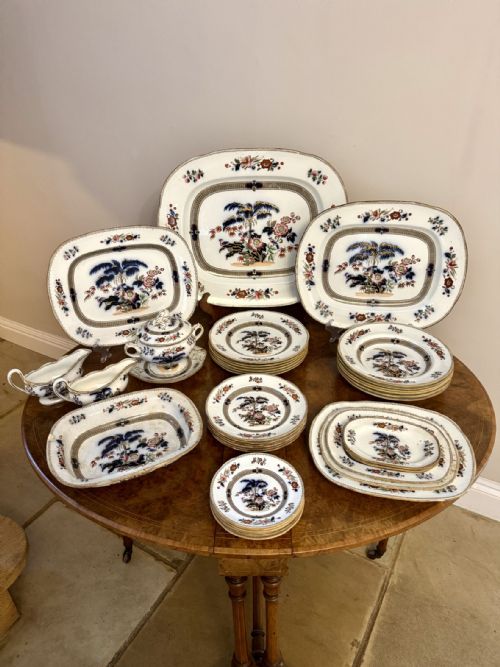
The most common versions on this page are comprehensive Victorian and 19th-century dinner services alongside child's toy dinner services featuring transfer-printed motifs. Individual saucers, sauce tureens, and larger serving vessels reflect traditional European and Regency Chinoiserie styles.
Materials and construction
Potters utilised earthenware, bone china, creamware, porcelain, and ironstone to form the body of each tureen and serving vessel. These ceramics were frequently enhanced with enamel decoration, blue and white transfer printing, and delicate gilt or gold leaf highlights.
Makers shaped these dinnerware sets through traditional moulding and throwing techniques before applying specialised glazes and firing them in kilns. Botanical patterns, floral sheet designs, and patterns like Peacock, Grasshopper, and Hibiscus were hand-painted or transfer-printed onto the ceramic surface.
Child's toy dinner services ensure that even 19th-century dolls dined with proper Victorian etiquette.
Distinctions in quality
Quality rests upon the crispness of the transfer-printed or hand-painted pattern and the refinement of the ceramic body, whether delicate bone china or robust ironstone. Finer sets display precise application of enamel and gold leaf without blurring or smudging.
The completeness and complexity of a service, such as an extensive sixty-piece set versus a smaller sauce tureen set, dictate the scope of the craftsmanship. Preservation of the original glaze and the clarity of factory marks further elevate the standing of a service.
Davenport Bone China·Minton·Wedgwood·Copeland Spode·Booths·Müller Volkstedt MV Co.·Doulton·Limoges·Masons Ironstone·Coalport Porcelain
The Antique Ceramic Tureen Set Glossary
- Creamware
- A refined earthenware with a pale yellowish-buff glaze developed in the 18th century. It provided a smooth surface for botanical and transfer-printed decoration.
- Ironstone
- A heavy, durable type of earthenware patented in the 19th century. It offered strength resembling porcelain while remaining practical for large dinner services.
- Transfer printing
- A decoration technique where an engraved copper plate transfers a design onto paper, which is then stamped onto the ceramic body before glazing. This method allowed intricate patterns like floral sheets to be reproduced consistently.
- Bone china
- A type of porcelain containing animal bone ash, resulting in a strong, highly translucent ceramic body. It became a standard material for fine 19th-century dining wares.
- Flow blue
- A cobalt blue transfer-printing style popular in the Victorian era where the colour deliberately blurred slightly into the surrounding glaze during firing. This created a soft, misty appearance on plates and tureens.
- Supper set
- A specialised arrangement of serving dishes, often including tureens grouped around a central point or fitted with a rotating lazy susan. These pieces facilitated formal dining and entertaining.
Antique Ceramic Tureen Set: Frequently Asked Questions
How were tureen sets used?
These sets served soups, sauces, and main dishes during formal Victorian and Georgian meals. Larger services accommodated multi-course dinners, while miniature child's sets were utilised for education or play.
Individual tureens held specific table condiments or gravies while matching plates and platters completed the dining presentation.
How do I care for antique ceramics?
Wash each piece gently by hand in warm water using a mild detergent, avoiding automatic dishwashers entirely. Protect the delicate glazes, enamels, and gold leaf highlights from abrasive scrubbers.
Store tureens and plates with padded dividers between items to prevent chipping along the rims during handling.
How do I date an antique set?
Examine the base of the ceramics for factory marks, pattern numbers, and impressed stamps associated with specific working periods. Stylistic clues such as Regency Chinoiserie motifs or Victorian transfer-printing techniques also indicate the era of manufacture.
Material choices, including creamware versus bone china, help narrow down the production decade when marks are absent.
Can I use these sets for dining?
Many collectors display these sets rather than utilising them for daily meals to preserve the fragile glazes and antique materials. Using them requires caution regarding thermal shock and historic wear.
Gentle service during special occasions remains possible provided you avoid modern heating appliances like microwaves.