


Vintage Ceramic Dinnerware
These vintage ceramic dinnerware sets and individual pieces offer practical service and traditional display.
Vintage Ceramic Dinnerware
Vintage ceramic dinnerware comprises plates, services, tureens, and platters spanning the nineteenth and twentieth centuries. Buyers search for these items to obtain functional tableware carrying historical periods and traditional styles.
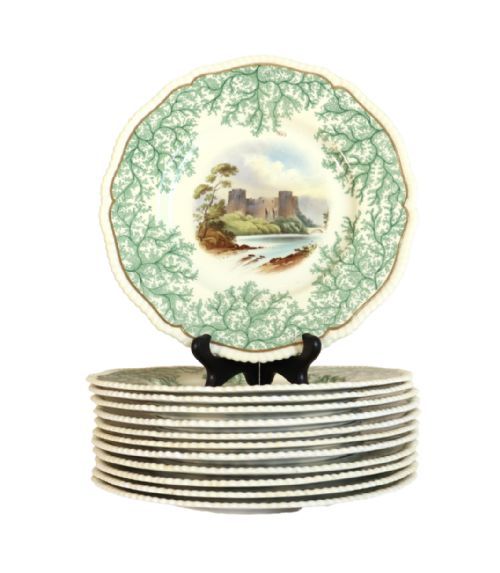
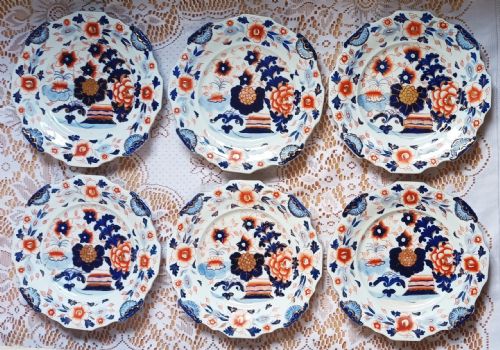
The pieces on this page include nineteenth-century earthenware and ironstone services alongside porcelain plates from the Edwardian and Victorian eras. Traditional English and European patterns dominate the offerings, from blue and white botanical designs to hand-painted scenes.
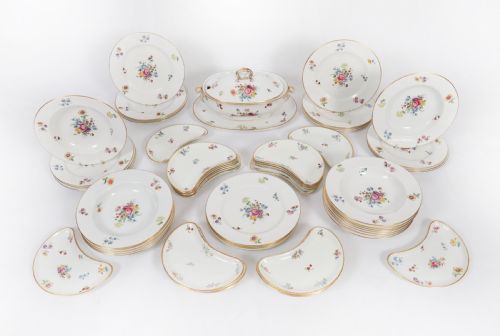
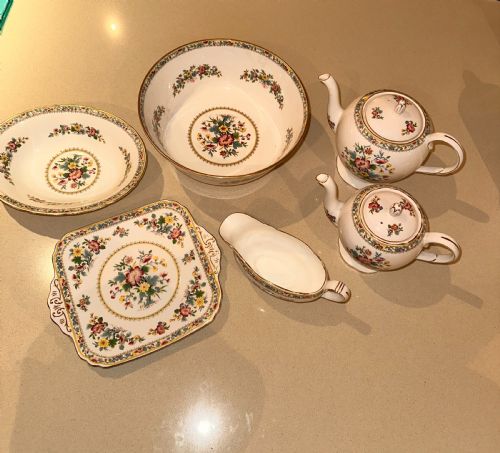
Complete dinner services sit alongside smaller sets of plates and individual decorative items. Forms range from soup tureens to large multi-piece dining sets suited for table use or display.
Materials and production methods
Makers shaped these items using ceramic materials such as earthenware, ironstone, and porcelain, frequently finishing surfaces with decorative glazes and enamel painting. Ironstone provided a durable body for heavy daily dining use.
Workshops applied gold leaf and gilt highlights to porcelain and ironstone plates, while transfer-printing and hand-painting delivered pictorial patterns like the landmark scene and Japan motifs. Firing techniques fixed the underglaze and overglaze colours permanently to the ceramic bodies.
Listings feature 19th Century, Regency, Victorian, Edwardian, and 1960s periods across earthenware, porcelain, and ironstone materials.
Factors that distinguish quality
Quality in these ceramics rests upon the crispness of the transfer print, the precision of the hand-painted brushwork, and the preservation of the glaze and gold leaf. Finer sets retain intact enamel colours without rubbing on the central motifs and borders.
The completeness of a service and the consistency of the ceramic body across all pieces elevate the standing of a set. Well-preserved ironstone and porcelain maintain clear maker marks and uniform glazing across large numbers of plates and serving vessels.
Spode·Copeland·Coalport·Booths·Müller Volkstedt·Doulton·Limoges·Elkin and Newbon·Royal Worcester
The Vintage Ceramic Dinnerware Glossary
- Ironstone
- A dense, durable type of earthenware patented in the nineteenth century. It resists chipping better than standard earthenware and served as a robust material for domestic dinner services.
- Soup Tureen
- A large, deep serving bowl with a lid and handles, used for serving soup at the dining table. Matching tureens often anchored nineteenth-century dinner services.
- Enamel
- Opaque glass-like material fused to ceramic surfaces through firing. It provides vibrant colours for painted overglaze decoration on plates and serving vessels.
Vintage Ceramic Dinnerware: Frequently Asked Questions
Can I use vintage ceramic dinnerware daily?
Many ironstone and earthenware pieces were built for robust daily dining and remain durable enough for regular use today. Hand-washing helps protect delicate gilt edges and enamel painted details over time.
Porcelain services require gentler handling due to their finer composition. Careful stacking and avoiding sudden thermal shock preserve the glaze.
How do I date a dinner service?
Pottery marks stamped or printed on the underside of plates provide the primary clue to a service's age. Stylistic markers such as nineteenth-century transfer-printing techniques and Victorian shapes also help narrow down the period.
Records associated with specific manufacturers like Spode or Mason's clarify the exact production window. Design patterns often reflect the prevailing tastes of Georgian, Regency, or Edwardian eras.
How should I store large dinner services?
Storing large services requires stable shelving with adequate weight capacity to support stacked ironstone and porcelain plates. Felt dividers between individual plates prevent scratching during removal.
Matching tureens and platters need space to sit securely without crowding. Keeping sets together in dedicated cabinets protects them from accidental knocks.