


Antique China Dinnerware Set
An antique china dinnerware set brings history to the dining table through durable ironstone, creamware and porcelain service pieces.
Antique China Dinnerware Set
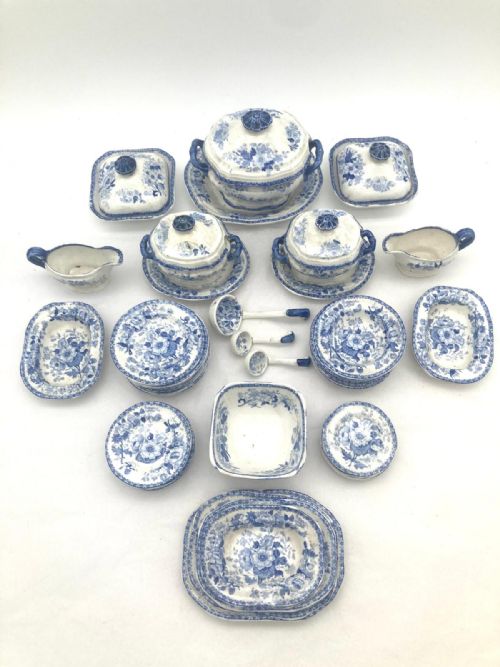
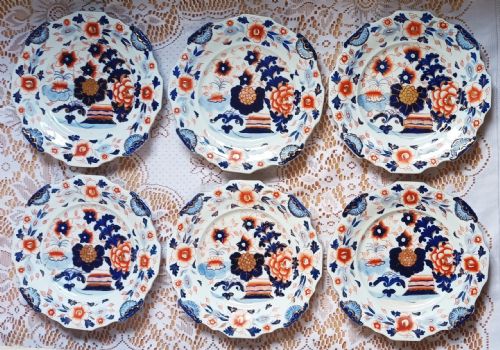
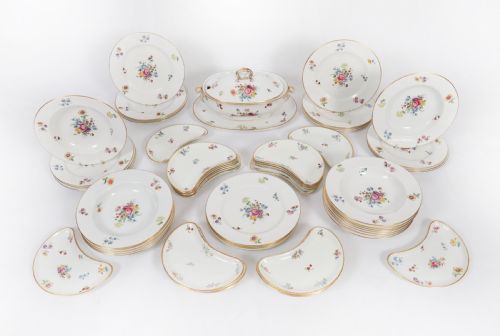
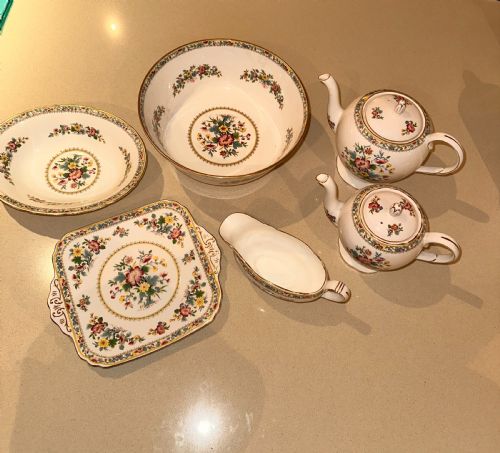
An antique china dinnerware set encompasses everything from large multi-piece services intended for grand dining to smaller matched plate gatherings and children's miniature services. You will encounter comprehensive services alongside partial table settings that have survived from the eighteenth, nineteenth and early twentieth centuries.
The services span periods including the Georgian, Regency, Victorian and Edwardian eras, reflecting changing domestic dining habits. Traditional English, French Provincial and Chinoiserie styles dominate the forms, offering both transfer-printed patterns and hand-painted botanical designs.
Materials and methods
Potters utilised earthenware, creamware, ironstone and porcelain to form the body of each vessel before applying detailed surface decoration. Cobalt blue transfer printing and meticulous hand-painting brought intricate floral, landscape and armorial patterns to life across plates, bowls and serving dishes.
Finishing touches frequently included rich enamel colours and applied gold leaf or gilt highlights around the rims and borders. Protective glazes sealed the ceramic body, ensuring the dinnerware could withstand daily use while preserving the painted details.
Distinguishing quality
Quality rests upon the crispness of the transfer print, the delicacy of the porcelain or ironstone body, and the precision of any hand-applied enamel and gilding. Superior sets retain consistent pattern registration across every single plate and serving piece without blurring.
Completeness and uniformity across a service elevate the standing of the pieces. Intact armorial crests and botanical precision demonstrate higher workshop standards during production.
Minton·Spode·Wedgwood·Booths·Coalport·Masons·Doulton·Limoges·Elkin and Newbon·Chamberlains
The Antique China Dinnerware Set Glossary
- Ironstone
- A dense, durable type of earthenware patented in the nineteenth century. It resists chipping far better than standard pottery while accepting heavy glaze.
- Creamware
- A refined light-coloured earthenware developed in the eighteenth century. Its warm buttery tone provided an ideal canvas for botanical painting.
- Transfer printing
- A method of applying intricate designs to ceramics using an engraved copper plate and tissue paper. It allowed complex patterns like the Willow pattern to be replicated consistently.
- Armorial
- A term for ceramics featuring a painted family crest or coat of arms. These bespoke services were commissioned by wealthy households.
Antique China Dinnerware Set: Frequently Asked Questions
Can I use an antique china dinnerware set daily?
Many antique sets were built for robust dining, particularly ironstone and heavy earthenware services. Hand washing helps preserve delicate gilt edges and hand-painted enamel details over time.
Thermal shock can crack older ceramics, so avoiding sudden temperature changes is essential. Warm water and mild soap keep the glaze secure.
How do I date an antique dinner service?
Makers' marks stamped or painted on the underside provide the most reliable guide to a service's age. Stylistic clues like transfer-printed motifs and shape profiles also point toward specific decades.
Comparing pattern names against known factory production years helps narrow down the timeline further. Reference books document standard factory marks used throughout the nineteenth century.
What is a child's toy dinner service?
Toy services are miniature dinnerware sets created for children's play or educational display during the Victorian era. They include tiny plates, platters and tureens scaled down from adult counterparts.
Despite their diminutive size, these sets received the same decorative attention and glazing techniques as full-sized services. They remain popular items for focused ceramic collections.
Why are some sets called ironstone?
Ironstone is a heavy, durable ceramic material designed to resist chipping during regular dining use. It bridges the gap between refined porcelain and standard earthenware.
Nineteenth-century manufacturers prized ironstone for its strength and brilliant white surface. It took transfer printing exceptionally well, making it a staple of British dining tables.