


Floral Porcelain Tureen
These floral porcelain tureen pieces combine botanical decoration with practical vessel forms, offering a decorative centrepiece for your table.
Floral Porcelain Tureen
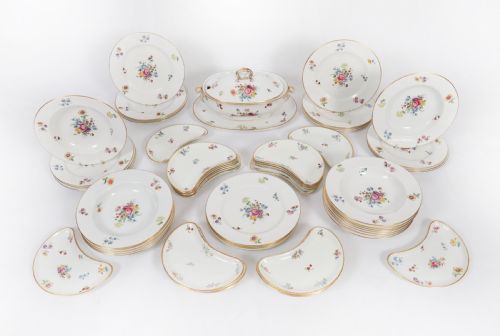
A floral porcelain tureen brings together hand-painted or transfer-printed floral motifs with shaped ceramic bodies designed for serving soup, broth or vegetables. These vessels appear in forms ranging from large soup tureens to lidded broth cups and miniature dinnerware sets.
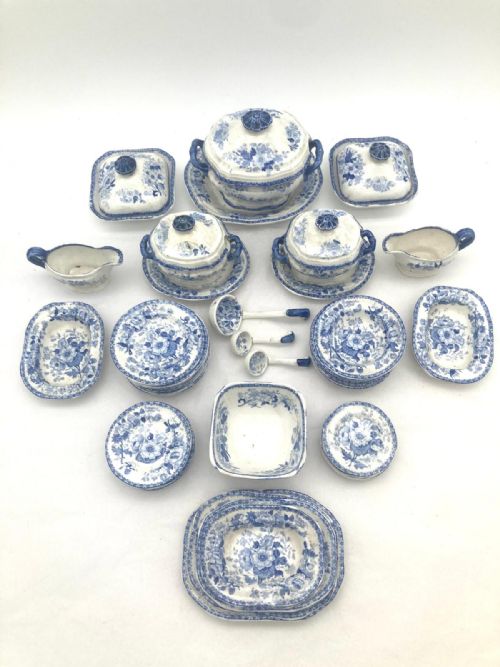
The examples on this page span several centuries and regions, including 18th-century Qianlong period Chinese export pieces, Regency English porcelain, and Victorian ironstone. You will encounter both grand French Rococo revival servers and intimate child's services within the current selection.
Materials and manufacture
Potters shaped these vessels using hard-paste and soft-paste porcelain, earthenware, and ironstone, applying vitreous glazes to seal the ceramic body. Artisans then decorated the surfaces using underglaze blue, polychrome enamels, and applied gold leaf or gilt highlights.
Many items utilise transfer printing to apply intricate floral patterns efficiently, while others feature hand-painted botanical details and moulded relief elements. Makers often fired these pieces multiple times to fix the colours and the glossy surface glaze.
Some nineteenth-century children received miniature dinner services so they could practise formal dining etiquette before graduating to full-sized tureens.
Assessing quality and execution
The refinement of the ceramic body and the precision of the modelling dictate the initial quality of a tureen. Thinner, more translucent porcelain and sharply defined moulded handles or feet distinguish finer production from heavier utility wares.
Artistic skill in the application of enamel colours and gilding separates standard production from exceptional pieces. The crispness of transfer-printed floral sheets or the delicacy of hand-painted brushwork indicates the level of craftsmanship invested in the object.
Minton·Copeland Spode·Müller Volkstedt MV Co.·Wedgwood·Flight Barr and Barr Worcester·Richard Ginori·Limoges·Coalbrookdale·Edm e Samson
The Floral Porcelain Tureen Glossary
- Porcelain
- A ceramic material made by heating raw materials, generally including clay in the form of kaolin, in a kiln. It fires at high temperatures to produce a hard, non-porous white body.
- Ironstone
- A type of earthenware developed in Britain as a durable alternative to porcelain. It is heavy, opaque, and well-suited to robust daily service.
- Gilt
- A thin layer of gold applied to the ceramic surface for decorative effect. It often highlights handles, rims, and floral borders.
- Qianlong Period
- The era of Chinese history from 1736 to 1795 characterised by intricate export porcelain made for European markets. Pieces from this time show high technical skill in blue and white painting.
- Entrée Dish
- A shallow serving vessel with a cover, used for individual courses at formal meals. These often match the design of larger tureens in a service.
Floral Porcelain Tureen: Frequently Asked Questions
What is a floral porcelain tureen used for?
These covered vessels served soups, stews, and sauces at formal dining tables during the eighteenth and nineteenth centuries. Their decorative lids kept contents warm and presented a finished aesthetic to the dining service.
Today, collectors use them as decorative centrepieces on sideboards or dining tables. They also function well for holding smaller items or serving dry goods during gatherings.
How do I date a porcelain tureen?
Dating relies on maker marks stamped, painted, or impressed on the base of the ceramic body. Stylistic indicators, such as Rococo revival moulding or Regency shapes, also help narrow down the period of manufacture.
Examining the type of glaze and the method of decoration provides further clues. Transfer-printed patterns often point to nineteenth-century industrial production, whereas hand-painted Chinese export wares suggest the eighteenth century.
Can I use antique tureens for serving food?
Many antique tureens remain structurally sound enough to hold food items for special occasions. However, historic glazes and applied gilding require gentle handling and careful hand washing.
Sudden temperature changes can crack aged ceramic bodies or craze the surface glaze. Most collectors prefer to display these pieces or use them strictly for dry presentation.
Are covers always original to the tureen?
Covers often suffered damage or separation over centuries of domestic use, leading to replacement lids during past restorations. Examining the interior rim and glaze consistency helps confirm whether the lid belongs to the base.
A matching floral pattern and identical ceramic body weight usually indicate an original pairing. Slight variations in colour or wear do occur naturally in genuine antique sets.