



Victorian Decorative Wall Dish
A victorian decorative wall dish brings centuries of rich global artistry straight into a modern interior.
Victorian Decorative Wall Dish
When you search for a victorian decorative wall dish, you encounter a varied selection of European ceramics, Asian imports, and Middle Eastern metalwork adapted for interior display. These items span decorative plates, heavy chargers, and hand-painted wall plaques originating across the nineteenth century.
The objects on this page range from English earthenware and porcelain made by factories like Minton and Copeland to grander continental porcelain and intricately hammered brass or copper vessels. Many pieces utilise hanging wires or pierced rims designed specifically for wall mounting.
You frequently meet blue and white transfer-printed ironstone, Japanese Imari porcelain, and embossed copper chargers bearing oriental or classical motifs. Each version reflects the nineteenth-century fascination with exotic craftsmanship and historical revival styles.
Materials and Techniques
Potters and ceramicists employed earthenware, bone china, and ironstone, shaping them into plates and baskets before applying hand-painted or transfer-printed scenes under glossy glazes.
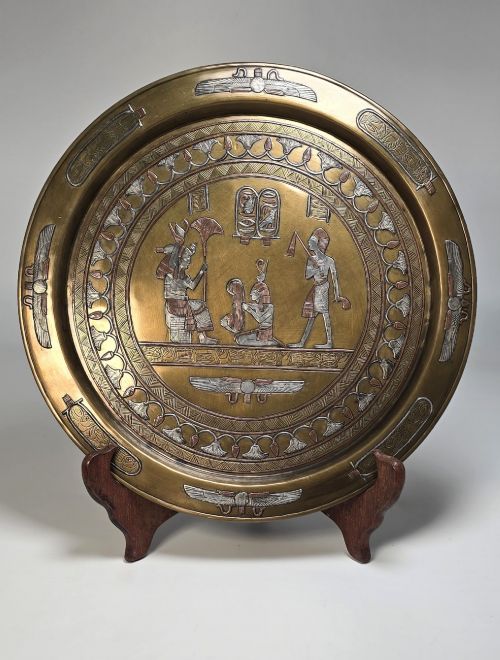
Metalworkers utilised copper, brass, and bronze, employing hammering, engraving, piercing, and silver inlay to achieve intricate relief patterns and surface textures.
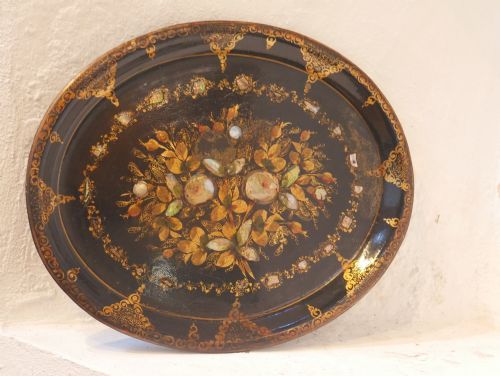
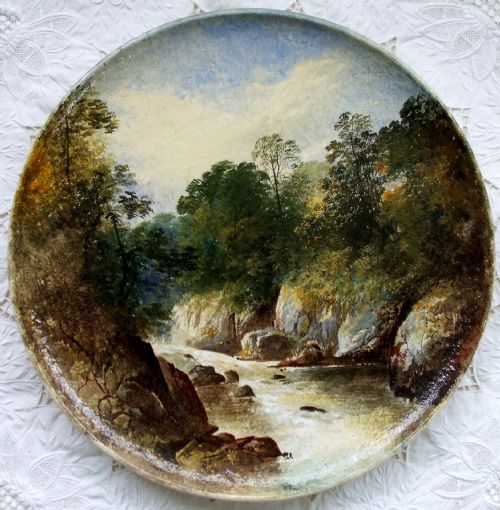
Craftsmen also worked with porcelain, glass, and papier-mâché, combining gilding, enamelling, and hand-painted portraits or landscapes onto the rigid bases.
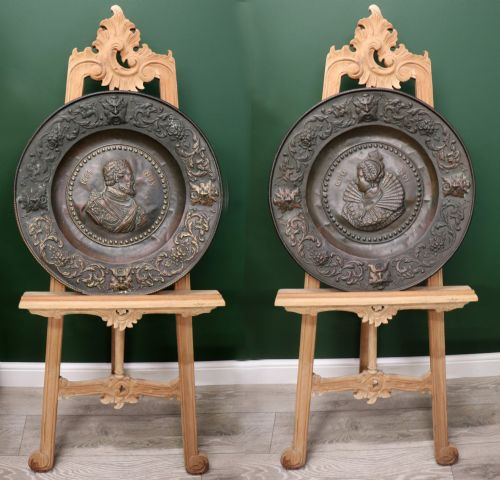
One copper charger bears the stern portraits of Henry IV and Queen Marie de' Médicis watching over the modern parlour.
Evaluating Quality
Quality rests upon the clarity of the decoration and the crispness of the modelled or engraved details, whether hand-painted brushwork on a porcelain plaque or deep repoussé relief on a heavy metal charger.
Makers known for technical rigour, such as Minton, Coalport, or Meissen, applied superior pastes, refined glazes, and steady hand-finishing that elevated standard domestic wares into cabinet pieces.
The weight of the metal and the complexity of the design separate utilitarian vessels from dedicated wall art intended for grand interiors.
Copeland Pottery·Pucher Deroche·Coalport Porcelain·Minton·Royal Vienna·Meissen·John Ridgway·Mason's Ironstone·Royal Crown Derby·Salviati Venice
The Victorian Decorative Wall Dish Glossary
- Charger
- A large decorative plate or dish, typically measuring over thirty centimetres in diameter, traditionally displayed upright on a sideboard or wall rather than used for dining.
- Ironstone
- A heavy, durable type of earthenware patented in the nineteenth century, designed to resist chipping while accepting vibrant underglaze blue and white patterns.
- Repoussé
- A metalworking technique where the artisan hammers the reverse of a sheet of copper or brass to form a raised design in relief on the front.
- Imari
- A Japanese export porcelain style featuring distinctive dark blue and iron red iron-oxide pigments, frequently highlighted with gold leaf.
Victorian Decorative Wall Dish: Frequently Asked Questions
How were these dishes hung on walls?
Many nineteenth-century chargers and plates incorporate pierced foot rings or were paired with adjustable brass spring clips designed to grip the rim securely.
Heavier metal plaques often feature integrated suspension loops or solid centres adapted specifically for wall display in Victorian drawing rooms.
Are these plates safe for serving food?
Most pieces intended for display carry nineteenth-century lead-based glazes, delicate overglaze enamel, or metallic finishes that degrade with culinary use.
Older ironstone and earthenware may also develop hairline cracks that harbour bacteria, making these items best suited for decorative display rather than dining.
How do I identify a nineteenth-century ceramic?
Inspect the base for factory impressed marks, painted pattern numbers, or printed transfer ciphers that correspond to nineteenth-century registry codes.
Examine the glaze pooling and foot rim wear for signs of age, noting the characteristic weight and paste composition of the period.
What is Cairo Ware?
Cairo Ware refers to nineteenth-century metalwork produced in Egypt during the Grand Tour era, featuring brass or copper vessels inlaid with silver and copper wire.
These pieces typically showcase intricate Islamic geometric patterns designed to appeal to European travellers exploring the Middle East.