


Victorian Decorative Glassware
Victorian decorative glassware brings vibrant colour and tactile weight to a room, offering everything from rich cranberry jugs to delicate opaline vases.
Victorian Decorative Glassware
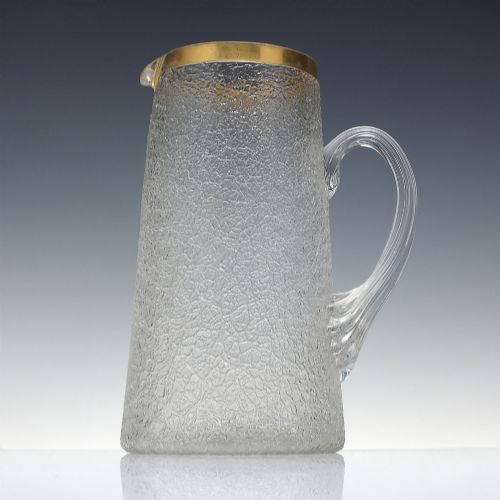
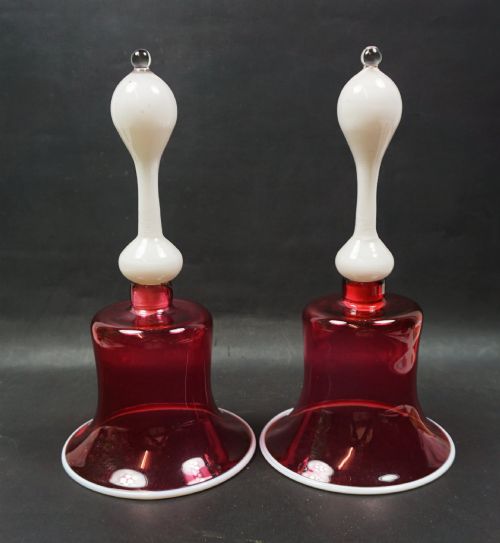
Victorian decorative glassware covers the vibrant table and mantelpiece objects produced during the nineteenth century, including vases, water jugs, hand bells, and bon bon dishes. You will frequently encounter rich cranberry glass, opaline vessels, and pieces decorated with enamel or gilding from periods spanning the middle and late nineteenth century.
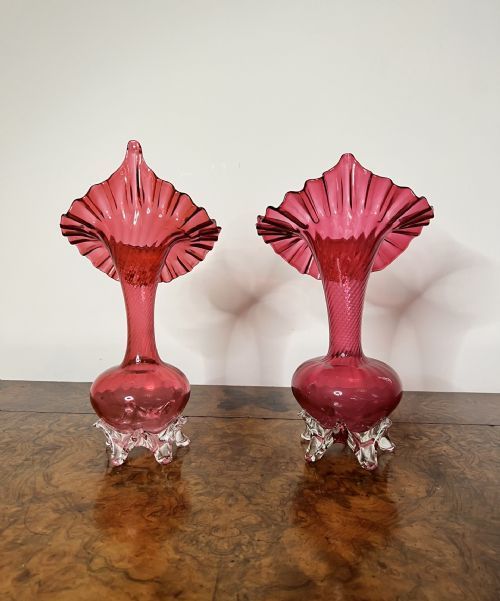
The forms range from practical table items like rummers and decanters to purely decorative ornaments such as epergne centre pieces and jack in the pulpit vases. English and Bohemian workshops dominate the selection, often pairing bold hues with applied white glass handles, gilt rims, or delicate painted scenes.
Materials and Working Methods
Glassmakers created these objects using coloured metal, molten manipulation, and applied elements such as handles or rims in contrasting glass. Technicians incorporated gold leaf, enamel painting, and acid cutting to achieve surface pattern and texture.
Cranberry, ruby, blue, and opaline glasses received their distinctive tones through metallic oxides added to the batch. Artisans then shaped vessels by free-blowing or moulding, frequently finishing them with wheel engraving or applied gilding.
Listings feature glass pieces spanning the mid-nineteenth century to the early twentieth century, incorporating materials like cranberry, opaline, milk glass, and gold leaf.
Judging Quality and Execution
The distinction between standard output and finer work lies in the crispness of the hand-painted enamelling, the evenness of the glass colour, and the precision of the gilding. Superior pieces show careful control during blowing and finishing, with balanced proportions and clean, sharp details in cameo cuts or painted figures.
Object weight and the finesse of applied details like handles or ruffled rims also signal better craftsmanship. Workshops that employed skilled decorators achieved depth and clarity that simpler mass-produced items lack.
Stevens & Williams·Mary Gregory
The Victorian Decorative Glassware Glossary
- Cranberry glass
- A transparent red glass produced by adding gold chloride to the molten batch. It became a defining material for Victorian tableware and mantel ornaments.
- Opaline glass
- An opaque or semi-translucent pale glass, often tinted in pastel shades. Makers frequently decorated it with enamel and gilt motifs.
- Mary Gregory glass
- Glassware decorated with silhouettes of children, usually painted in white enamel within a landscape. Pieces typically feature blue or cranberry grounds.
- Epergne
- A large centrepiece table ornament with multiple branching arms and trumpets for holding fruit or flowers. Victorian versions often used ruffled cranberry glass.
- Tazza
- A shallow bowl or cup elevated on a stem and foot, used for serving sweetmeats or display. Examples appear in coloured crystal and glass.
Victorian Decorative Glassware: Frequently Asked Questions
How can I tell cranberry glass from ruby glass?
Cranberry glass has a warm, pinkish-red tone derived from gold oxide, whereas ruby glass tends to be deeper and darker, often created with copper. Cranberry pieces frequently show lighter shading depending on wall thickness.
Looking through the glass towards a strong light source helps reveal these undertones. Ruby glass absorbs more light and remains dense, while cranberry retains a translucent pink radiance.
Where were these glass pieces made?
Production centred on major European glassmaking regions, with English factories in Stourbridge and Nailsea alongside prominent Bohemian workshops. French glassmakers also exported significant quantities of opaline and gilded vessels.
Regional styles often reveal origins, such as Bohemian use of heavy gilding or English proficiency in layered overshot and cameo techniques. Many domestic items, however, bear no factory mark.
Were Mary Gregory pieces painted by her?
Mary Gregory was not an artist, but rather the name associated with a decorative style depicting white enamel children silhouettes. The work was produced in quantity by various glasshouses in England and America.
Rival factories adopted the motif due to its popularity on Victorian decanters, vases, and jugs. Consequently, the attribution describes a style of decoration rather than an individual maker.