




Ruby Glass Jug
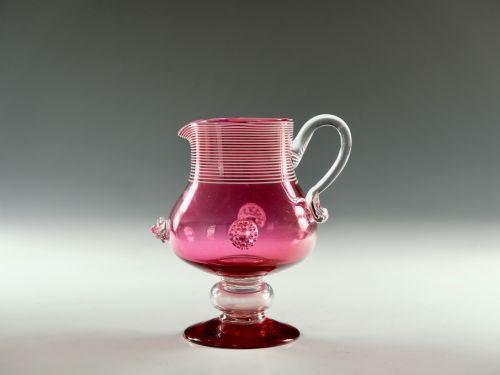
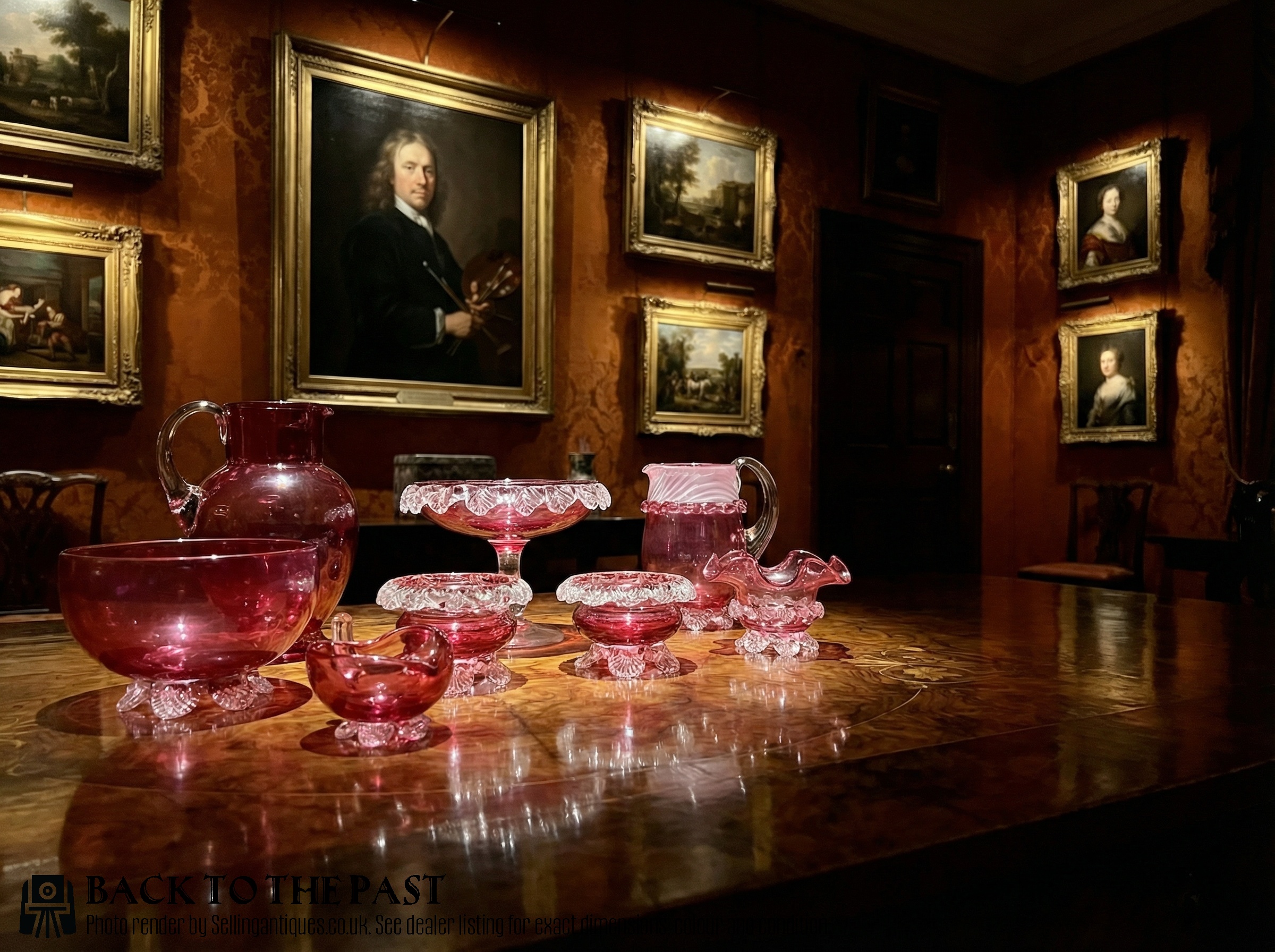
These ruby glass jug pieces bring rich nineteenth and early twentieth century colour to a table, combining deep red tones with practical glassware.
Ruby Glass Jug
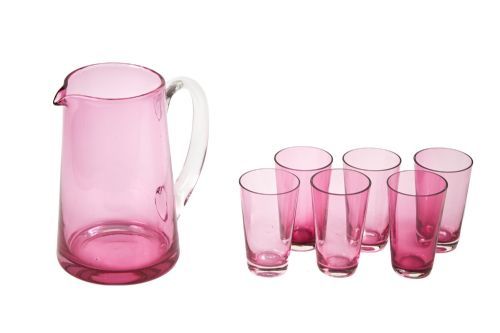
A ruby glass jug is a serving vessel shaped for wine, cream, or water, often found alongside matching tumblers or glasses. The selection on this page centres primarily on Victorian and Edwardian examples made in England.
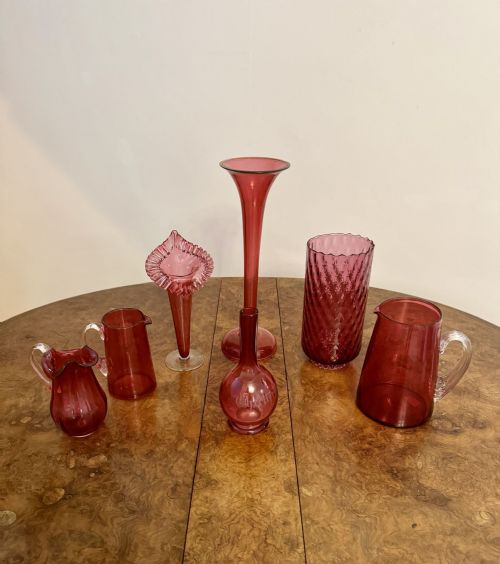
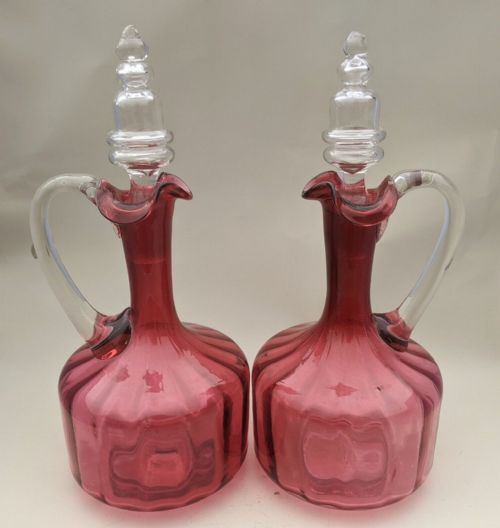
Buyers encounter forms ranging from large wine decanters and claret jugs to small cream jugs and water pitchers. Many date from the middle of the nineteenth century up to the early twentieth century.
The objects appear individually or as part of larger glassware collections and drinkware sets. They serve practical roles in dining as well as decorative purposes on a sideboard.
How they were made
These vessels are formed from glass, crystal, and cranberry glass, frequently incorporating a gold salt additive to achieve the characteristic deep red hue. Makers shape the molten material into jugs and decanters through traditional glassblowing methods.
Surface decoration includes hand engraving, such as fruiting vines cut directly into the red crystal. Some examples feature applied silver plate mounts, silver overlay, or delicate enamel details.
The listings feature Victorian and Edwardian periods, utilising cranberry glass, clear glass, silver plate, and gold salt additives.
What varies in quality
Quality depends on the depth and evenness of the colour within the glass, along with the clarity of the crystal base. Richness of tone and uniformity throughout the vessel separate standard production from finer work.
The execution of surface ornamentation plays a significant role in distinguishing pieces. Crisp hand engraving of motifs like vines, balanced proportions, and well-fitted silver plate or silver overlay mounts indicate superior craftsmanship.
The Ruby Glass Jug Glossary
- Cranberry glass
- A type of transparent glass coloured with gold salts, producing shades from pink to deep red. It forms the basis of many nineteenth century jugs.
- Claret jug
- A pouring vessel specifically designed for serving red wine at the table. These often feature decorative handles and metal mounts.
- Silver overlay
- A technique where sterling silver is bonded onto the surface of the glass in decorative patterns. It creates a striking contrast against the red body.
- Decanter
- A stoppered bottle used for holding and serving wine or spirits. Victorian examples frequently display faceted bodies and cut glass stoppers.
- Gold salt additive
- The compound introduced to the molten batch to produce ruby and cranberry colouration. Its precise proportion influences the warmth of the finished tint.
Ruby Glass Jug: Frequently Asked Questions
How do I clean an antique ruby glass jug?
Wash the vessel gently by hand in lukewarm water using a mild detergent. Avoid abrasive sponges and do not submerge pieces with silver mounts for extended periods.
Dry the glass immediately with a lint-free cloth to prevent water spots and to keep the surface bright.
Can I still use these jugs for serving drinks?
These historical pieces function well for serving wine, water, or cream at the table. Take care with sudden temperature changes to protect the older material.
Hand washing remains essential to preserve any engraved decoration, enamel work, or metal overlays.
How do I tell Victorian jugs from Edwardian ones?
Victorian pieces often display heavier proportions and rich, deep cranberry tones with elaborate cut or engraved patterns. Edwardian examples tend to show lighter, more restrained silhouettes.
Examining the overall form and accompanying glassware sets helps clarify the specific period of manufacture.
What is the difference between ruby glass and cranberry glass?
The terms are often used interchangeably to describe red glass coloured with gold, though cranberry typically denotes lighter pinkish-red hues. Ruby glass can encompass deeper, more saturated crimson shades.
Both varieties rely on gold salt additives within the molten glass mixture during production.