




Red Glass Pitcher
A red glass pitcher brings rich warmth to a table, combining deep colour with practical utility.
Red Glass Pitcher
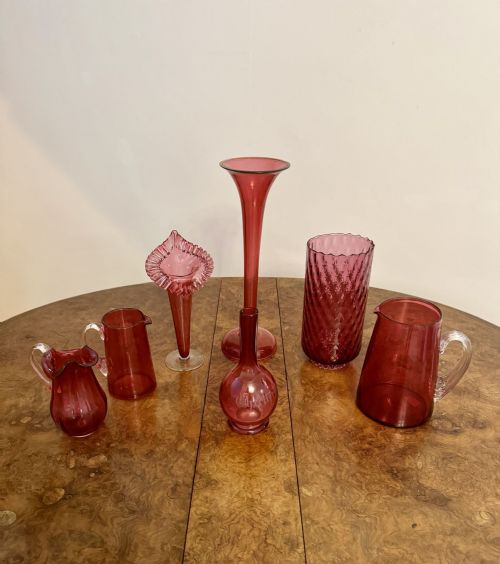
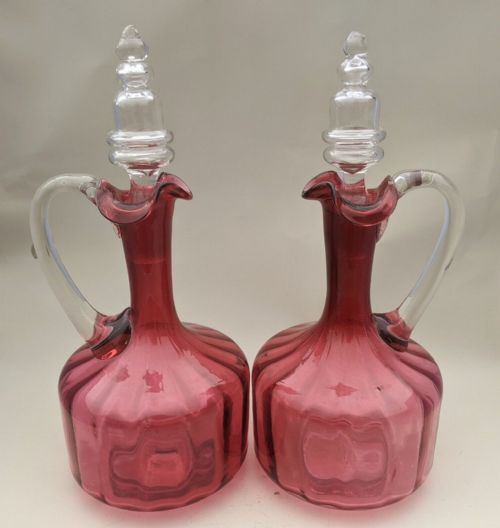
A red glass pitcher spans forms such as water jugs, wine decanters, claret jugs, and cream jugs from the Victorian and Edwardian periods. These vessels serve practical functions for pouring wine, water, or cream while acting as decorative glassware.
The pieces appearing here are predominantly made from cranberry glass, alongside ruby glass and red crystal glass. Examples date from the nineteenth century, including specific years around 1860, 1880, 1890, 1900, and 1910.
Victorian and Edwardian makers produced various designs ranging from simple cream jugs with white piping to large water jugs and paired decanters. Some vessels feature silver plate mounts or engraved fruiting vines.
How they were made
Cranberry glass and ruby glass achieve their distinctive red colour through the introduction of gold salt additive into the molten batch during manufacture. Craftsmen shaped these vessels while hot, creating smooth walls and applied handles.
Detailing on these pieces includes white piping applied to the surface and intricate engraving depicting fruiting vines on crystal glass wine jugs. Certain examples incorporate silver plate hardware for mounts and handles.
The listings show pieces spanning the Victorian and Edwardian periods, utilising cranberry glass, clear glass, and silver plate.
What varies in quality
Quality in a red glass pitcher lies in the depth and evenness of the colour achieved through the gold salt additive. Richer saturation and consistent hue across the body separate finer examples from lighter or patchier pieces.
The complexity of the form and decoration dictates the upper tier of the range. Large proportions, paired sets, crisp engraving such as fruiting vines, and the addition of silver plate or white piping elevate the piece.
The Red Glass Pitcher Glossary
- Cranberry glass
- A transparent pinkish-red glass created by adding gold to the molten batch. This material became popular during the Victorian era for tableware and decorative items.
- Claret jug
- A pouring vessel specifically designed for serving red wine. These often feature glass bodies with metal mounts, lids, and handles.
- Decanter
- A stoppered glass container used for holding and serving wine or spirits. Antique examples frequently display cut patterns or engraved motifs.
- Gold salt additive
- A chemical compound containing gold introduced into glass to produce ruby and cranberry shades. The precise amount determines the intensity of the red colour.
- Silver plate
- A thin layer of silver applied to a base metal such as copper or brass. This technique was commonly used for the mounts, collars, and handles of nineteenth-century jugs.
Red Glass Pitcher: Frequently Asked Questions
What are red glass pitchers used for?
These vessels were originally manufactured to serve water, wine, claret, or cream at the dining table. Their decorative qualities also made them suitable for display on sideboards and in cabinets.
Today, collectors use them both as functional tableware for special occasions and as decorative accent pieces in traditional or eclectic interiors.
How do I clean an antique jug?
Wash antique glass gently by hand using warm water and mild detergent. Avoid abrasive sponges or harsh chemicals that might harm applied elements like white piping or silver plate.
Dry the piece thoroughly with a soft cloth to prevent water spots and protect any metallic components from tarnishing.
How can I tell Victorian pieces apart?
Victorian examples often exhibit deep cranberry hues, hand-applied handles, and decorative details such as enamel or white piping. Edwardian pieces from around 1900 to 1910 frequently share similar cranberry and ruby glass aesthetics.
Examining the pontil mark on the base, the weight of the glass, and the style of any engraving helps determine the period and origin.