


Hand Blown Glass Pitcher
These hand blown glass pitcher examples bring tactile weight and translucent colour to the table, spanning the eighteenth to the early twentieth century.
Hand Blown Glass Pitcher
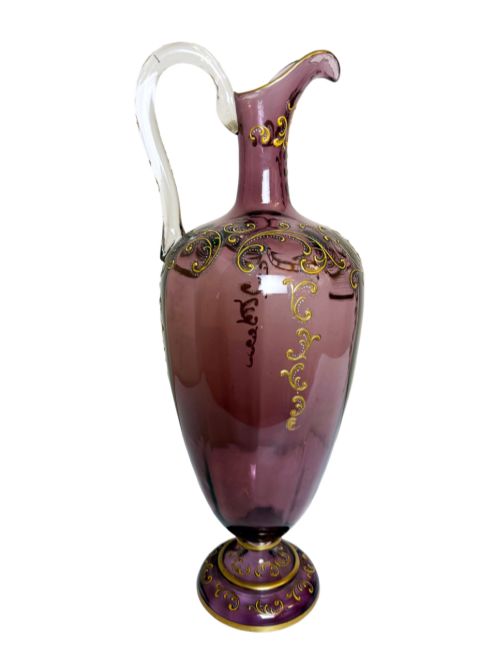
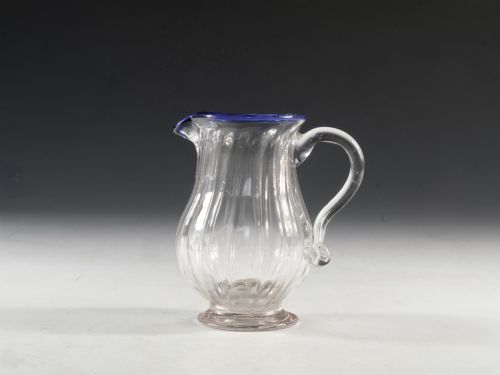
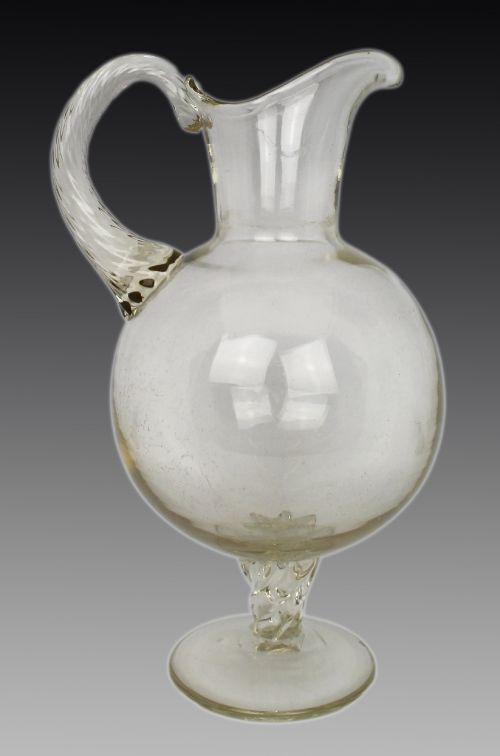
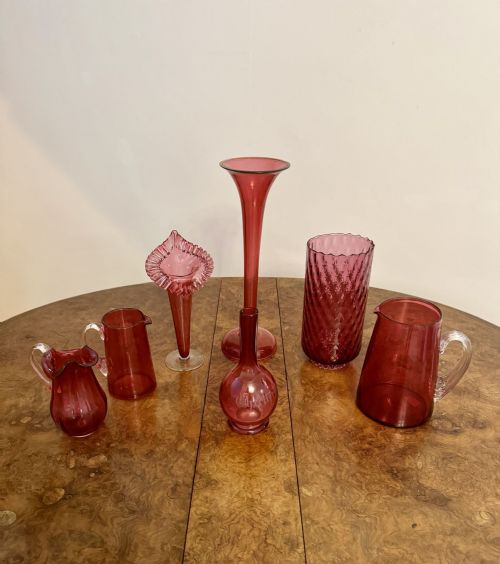
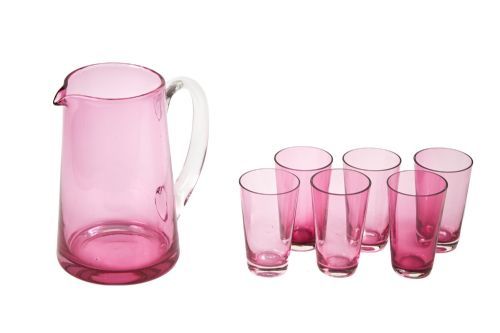
A hand blown glass pitcher search gathers utilitarian vessels and display pieces ranging from compact cream jugs to large ewers and decanters. You will frequently encounter nineteenth-century Victorian cranberry glass alongside earlier Georgian and later Edwardian examples.
Makers shaped these containers across diverse regional traditions, from English workshops to Italian furnaces and Bohemian or Scandinavian glassworks. Forms vary from simple vessels with folded feet to elaborate pieces featuring gilt applique or enamel painting.
Materials and construction
Craftsmen formed these pieces by gathering molten metal on a blowpipe and manipulating the material by hand. Lead glass and clear or coloured glass provided the foundation for free-blown or mold-blown bodies.
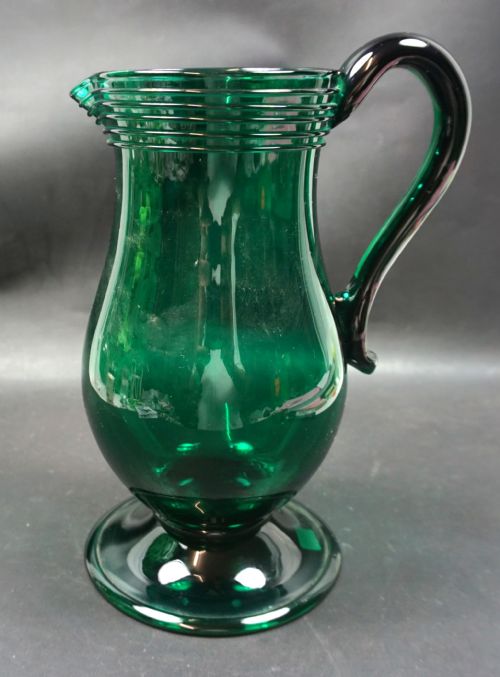
Workshops applied decorative elements while the glass remained hot, adding trail rims, handles, and folded feet. Artisans then finished certain pieces with enamel painting or gold leaf detailing.
Among the historical vessels recorded here sits a glass decanter shaped precisely as a dog, waiting patiently on the table.
Judging quality and character
Quality rests in the balance of the vessel, the clarity or rich saturation of the glass, and the skill evident in applied handle and rim work. Heavier lead content and purposeful hand-forming distinguish superior examples from standard production.
The precision of hand-painted enamel scenes and gilt application further separates finer decorative ewers from simpler utilitarian jugs.
The Hand Blown Glass Pitcher Glossary
- Ewer
- A large jug or pitcher with a wide spout and a curved handle, traditionally used for holding water or wine at the table. Many antique examples served as decorative display pieces.
- Cranberry glass
- A rich red-pink transparent glass coloured with gold chloride, popular during the Victorian period. It frequently appears in table services and decorative jugs.
- Trail rim
- A band of molten glass applied to the edge of a vessel opening for reinforcement and decoration. This technique leaves a distinct raised line around the top.
- Folded foot
- A base formed by doubling the lower glass edge back upon itself to create a stable rim. This method adds weight and durability to the bottom of the piece.
- Gilt applique
- Applied decorative metal or foil details adhered to the glass surface, often seen in nineteenth-century designs. It provides metallic contrast against coloured glass.
Hand Blown Glass Pitcher: Frequently Asked Questions
How do I clean an antique glass pitcher?
Wash the vessel gently by hand using warm water and mild soap, avoiding abrasive scrubbers that can scratch the delicate surface or damage gilt details.
Allow the piece to air dry completely on a soft cloth rather than rubbing it with heavy towels.
Are these pitchers safe for serving drinks?
Many of these historical vessels were designed for functional table use as water, wine, or cream jugs. However, older pieces containing lead or delicate enamel work require careful handling during use.
Inspect the interior and rim for stability before serving beverages to guests.
How do I date an old glass pitcher?
Examine the base for pontil marks where the pontil rod was snapped away, indicating free-blown manufacturing methods common in earlier centuries.
Stylistic markers such as Victorian cranberry colouring or Edwardian proportions help place the object within its specific period.