


Hand Blown Art Glass
Hand blown art glass pieces bring colour and texture into a room, capturing light through free-formed shapes and historical techniques.
Hand Blown Art Glass
When you search for hand blown art glass, you encounter vessels and decorative objects shaped by hand from molten material across several periods. These items range from Victorian cranberry glass to Art Deco Murano and Scottish Monart bowls.
The objects on this page include vases, decanters, oil lamps, sculptures, and ice buckets. Vases and bowls form the majority of the selection, spanning styles from Victorian and Art Nouveau to Arts and Crafts and Mid-Century Italian.
Origins stretch from British workshops like Monart and Vasart to Venetian studios, French factories, and Liberty collaborations. Each piece demonstrates the specific handling of molten material characteristic of its era.
What varies in quality
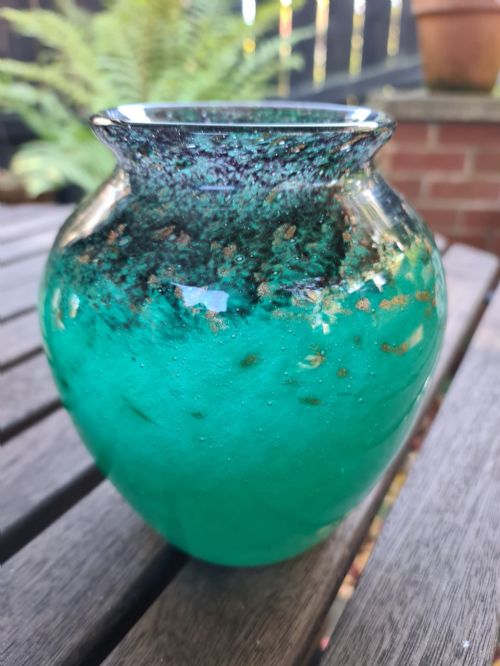
Quality rests on the control of form and the distribution of colour throughout the vessel wall. Superior examples display balanced proportions, clean rims, and intentional integration of inclusions like aventurine rather than random clouding.
The pedigree of the maker or studio influences desirability, particularly documented works from identifiable designers and factories. Unattributed domestic production differs visibly from signed or recorded studio output in its ambition of scale and colour complexity.
Listings feature items spanning from the Victorian and Edwardian eras through to 1930s Art Deco and Mid-Century Italian production.
Vasart Glass·Harry Powell·James Powell·Napoleone Martinuzzi·Monart Glass·Archibald Knox·Liberty·Vittorio Zecchin·Venini·Daum
The Hand Blown Art Glass Glossary
- Aventurine
- Glass containing suspended metallic crystals, often copper or gold, which create a glittering effect within the material. This technique requires precise temperature control during cooling.
- Cranberry glass
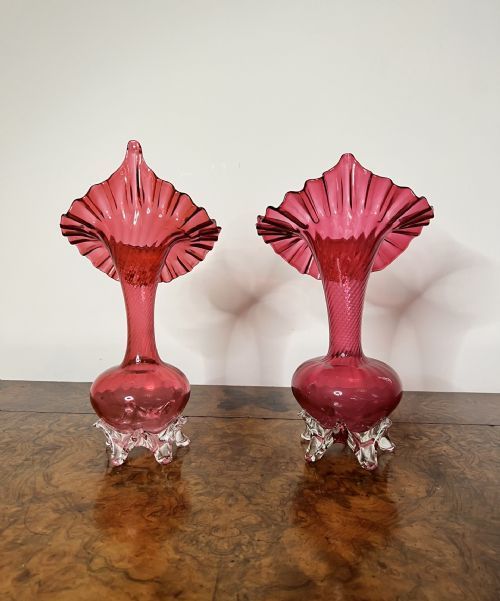
- Transparent pinkish-red glass produced by adding gold chloride to the molten batch. It gained popularity during the Victorian period for tableware and decorative vases.
- Millefiori
- A glasswork technique featuring multicoloured patterns created by slicing glass canes. The resulting cross-sections resemble floral motifs.
- Optical blowing
- A method where molten glass is inflated inside a ribbed or patterned mould to create uniform ridges or optical distortions in the body. It adds texture to decanters and vases.
- Scavo
- An artificial corroding treatment applied to glass surfaces to imitate archaeological finds recovered from the earth. Venetian makers utilised this finish during the twentieth century.
Hand Blown Art Glass: Frequently Asked Questions
What is cranberry glass?
Cranberry glass is a pinkish-red decorative material coloured with gold oxide, produced extensively during the Victorian era.
It appears frequently in tableware, posy vases, and matched sets across this page.
How do I identify Monart glass?
Monart pieces typically feature characteristic cloud-like colour swirls within heavy cased glass bodies, often without external markings.
Production dates cluster around the early twentieth century from Scottish workshops established by the Ysart family.
Can I use these lamps?
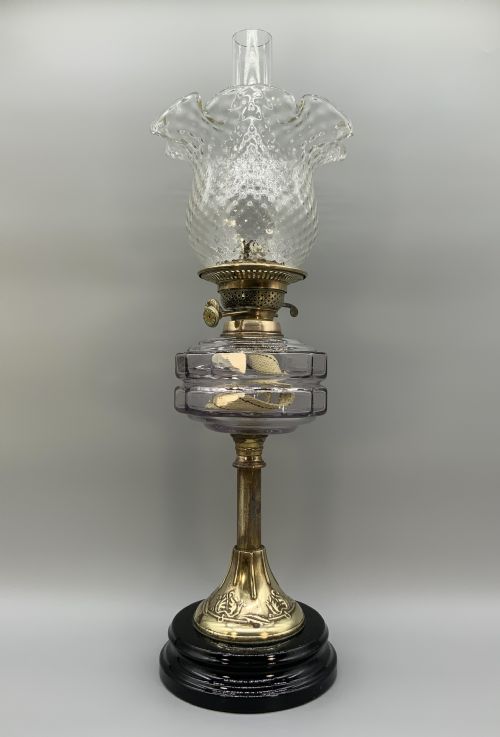
Table oil lamps and electrified glass bases require professional rewiring or safety inspection before modern domestic use.
Original burners and shades should be handled with care to preserve their fragile blown elements.