



Art Glass Jug
An art glass jug brings fluid form and colour to the table, combining functional pouring with striking period design.
Art Glass Jug
When you search for an art glass jug, you encounter functional vessels designed for serving wine, spirits or water, spanning the late Victorian era through to the modernist movements of the nineteen-thirties and nineteen-sixties. These pieces range from simple domestic pitchers to elaborate barware adorned with precious mounts.
The versions most common on this page combine blown glass bodies with metalwork, drawing on Art Nouveau, Art Deco and Arts and Crafts styles. You will find them in forms described as claret jugs, decanters, ewers and pitchers.
Origins stretch across Britain, Bohemia, Austria and Germany, capturing regional shifts in taste from organic floral motifs to geometric lines. Each piece reflects the dominant decorative ethos of its decade.
How they were made
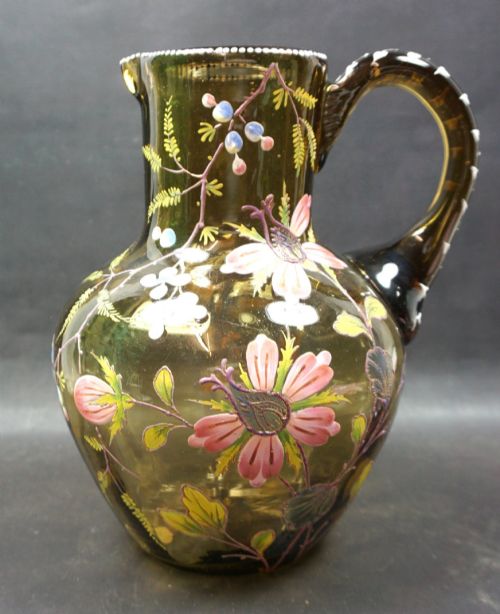
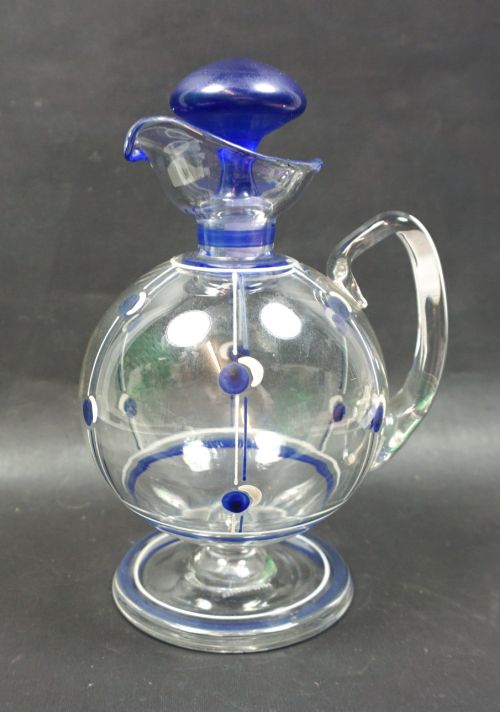
Makers formed the vessels by free-blowing or mould-blowing glass into shapes that utilised techniques such as crackle finishes, enamel decoration, engraving or layered coloration like cranberry and Burmese glass. These glass bodies were frequently paired with metal components.
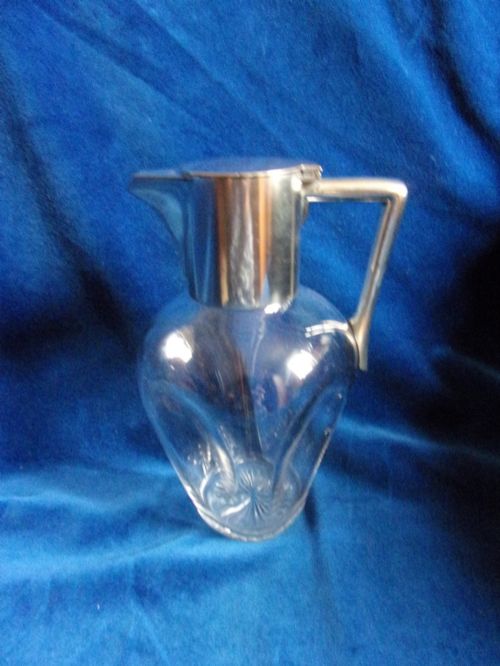
Metalwork involved silver plate, sterling silver, pewter and Tudric pewter, often cast in figural or organic shapes to encase or mount the glass. Silver-plated collars, hinged lids and handles were secured directly to the necks of the decanters.
Specialised workshops employed enamelling and acid-etching to add surface detail directly onto the glass, while makers like Tudric and WMF integrated pewter mounts to create distinct tactile contrasts.
Art Glass Jug Retail Price Guide 2026
Typical asking prices for art glass jug among the pieces listed under this phrase on Sellingantiques today, from the lower quarter to the upper quarter. They describe what is for sale here now, not the wider market.
Materials span clear glass, cranberry glass, green glass, silver plate, sterling silver, pewter and enamel decoration.
What varies in quality
Quality rests upon the harmony between the glass body and its metal mounts, where precision in fit and weight elevates the piece. Superior examples display crisp casting in the pewter or silver plate and uniform thickness in the blown glass.
Artistic execution dictates the upper tier of the range, seen in hand-engraved surface patterns, deliberate colour gradients and original stoppers that match the vessel exactly. Lesser pieces rely on standard moulded glass without individual finishing touches.
The reputation of the designer or manufacturer influences distinction, with documented works showing finer attention to proportion and finish than anonymous commercial production.
Archibald Knox for Liberty Co·Hukin and Heath·Koloman Moser for Loetz·WMF·Lobmeyr·Daum·WEBB and Son·AVEM
The Art Glass Jug Glossary
- Claret jug
- A specialised vessel designed for serving red wine, typically featuring a glass body with a metal handle, collar and hinged lid.
- Cranberry glass
- A rich red transparent glass created by adding gold chloride to the molten batch during production.
- Pewter
- A malleable metal alloy of tin mixed with copper and antimony, utilised extensively for decorative mounts during the Arts and Crafts period.
- Ewer
- A large jug with a wide spout and curved handle, historically used for pouring water but adopted for decorative drink service in the nineteenth and twentieth centuries.
- Enamel
- Opaque or translucent glass paste applied to the surface of a vessel and fired to fuse decoration directly onto the glass.
Art Glass Jug: Frequently Asked Questions
What is an art glass jug used for?
These vessels were primarily created to serve beverages such as wine, claret, whisky or water at the dining table and in domestic bars.
Over time, many transitioned into decorative display items or collectors' pieces due to their striking glass colours and metal mounts.
How do I date an art glass jug?
Dating relies on stylistic clues, such as organic floral motifs pointing to the Art Nouveau period, or clean geometric lines indicating Art Deco design.
Maker marks, metal hallmarks and the specific technique used for the glass also help narrow down the decade of production.
Are these jugs dishwasher safe?
These antique and vintage pieces require hand washing with mild soap and lukewarm water to protect delicate glass surfaces and historic metal mounts.
Harsh detergents and automatic dishwashers can damage silver plate, pewter, enamel work and aged glass.
What is cranberry glass?
Cranberry glass is a distinctive transparent red or pink glass achieved by introducing gold into the molten batch during the blowing process.
It became especially popular during the Victorian era for decorative tableware, jugs and glassware collections.