


Green Art Glass Vessel
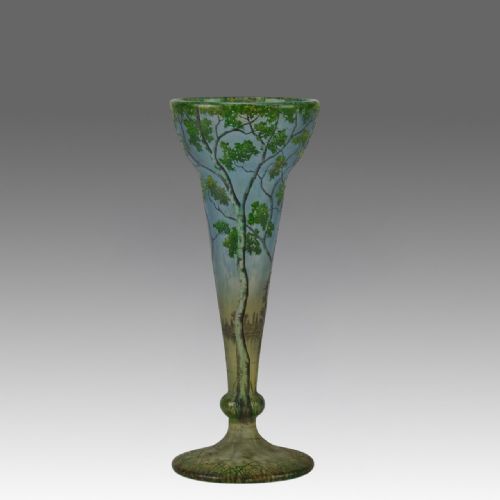
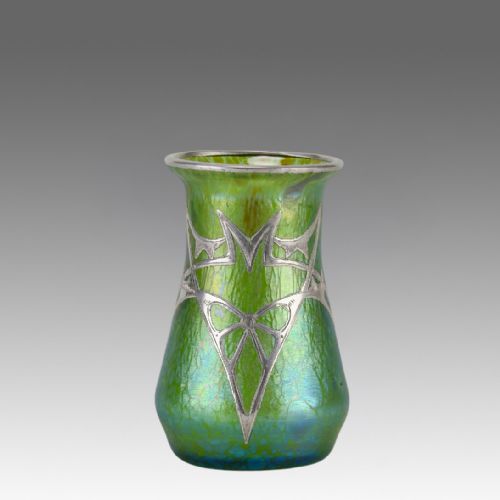
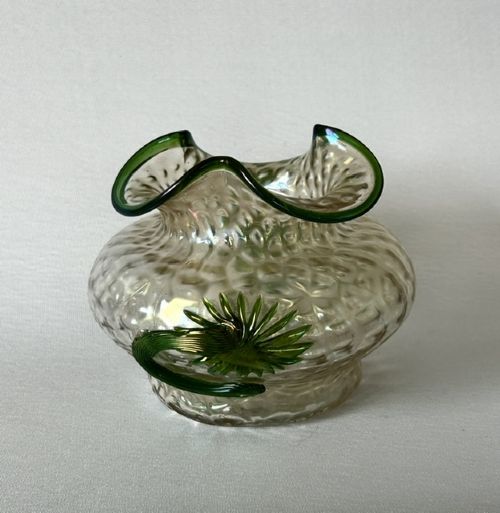
A green art glass vessel brings organic colour and fluid form into a room, spanning the stylistic shifts from Art Nouveau to Mid-Century Modern.
Green Art Glass Vessel
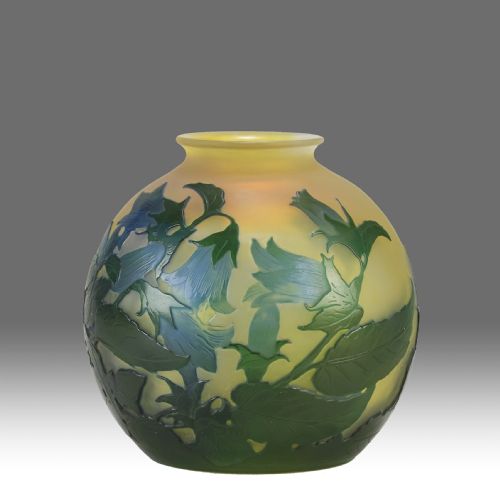
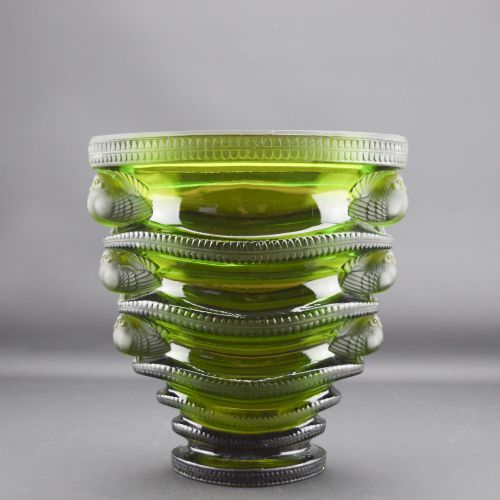
A green art glass vessel encompasses decorative glassware produced across the twentieth century, appearing predominantly as vases, bowls, decanters, and pitchers. The pieces emerge from distinct movements including Art Nouveau, Art Deco, Vienna Secession, Jugendstil, Arts and Crafts, and Mid-Century Modern.
The selection on this page centres heavily on early twentieth-century production, particularly pieces from nineteen-hundred through to the nineteen-thirties, alongside later mid-century works. Forms range from simple baluster shapes and organic vessels to elaborate cameo glass and silver-overlay pieces.
Assessing quality
Quality rests in the precision of the glassmaker's technique and the complexity of the optic or chemical effects within the material. Pieces exhibiting controlled iridescence, deep cameo carving, or sophisticated internal patterns like aventurine display superior craftsmanship.
The integration of metalwork mounts and metal overlays further distinguishes the standard of a piece. Well-executed mounts by recognised metalworkers enhance the overall cohesion and execution of the object.
Listings feature pieces from nineteen-hundred through to nineteen-sixty, spanning Art Nouveau, Art Deco, and Mid-Century Modern movements.
Emile Gallé·Rene Lalique·Vasart Glass·Amalric Walter·Daum Frères·Johann Loetz·Kralik·Loetz Witwe·Charles Graffart·Archibald Knox·Liberty Co·James Powell·Monart Glass·Stuart·Karl Palda·AVEM
The Green Art Glass Vessel Glossary
- Cameo glass
- Glass formed with multiple layers of different colours, which are then carved or etched away to create a raised design. This technique requires exceptional skill to control the depth of the layers.
- Iridescent glass
- Glass treated with metallic salts to produce a shimmering, rainbow-like sheen on the surface. Loetz and Kralik frequently utilised this effect in their nineteenth and twentieth-century production.
- Pate de verre
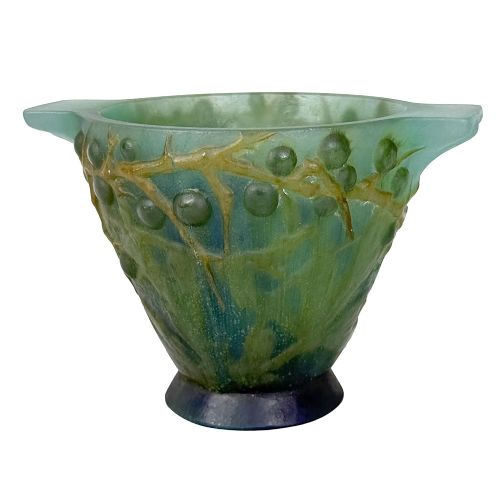
- A glass-casting method where finely crushed glass is mixed with a binder, packed into a mould, and fused in a kiln. Amalric Walter and Henry Bergé employed this technique for textured decorative objects.
- Aventurine
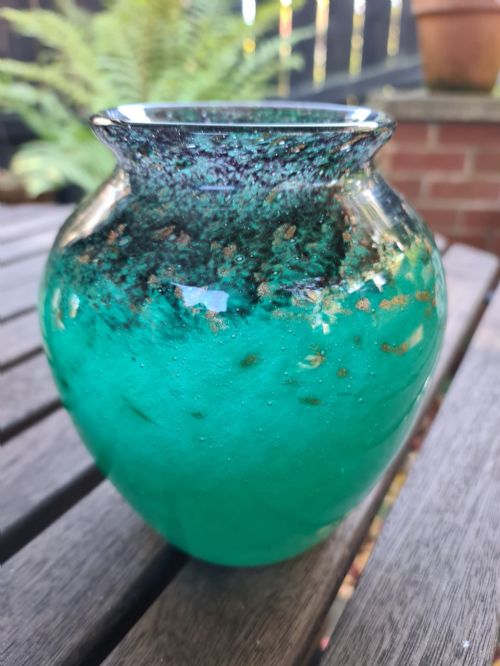
- Glass containing suspended metallic inclusions, such as copper crystals, which create a glittering appearance within the material. Monart and Vasart incorporated this technique into Scottish glass production.
- Uranium glass
- Glass containing uranium dioxide, which glows brightly under ultraviolet light. Karl Palda utilised this material in Art Deco designs alongside enamel decoration.
Green Art Glass Vessel: Frequently Asked Questions
How do I identify Art Nouveau glass?
Art Nouveau pieces display flowing, organic lines inspired by natural forms like plants and flowers. Look for iridescent surfaces, cameo floral carvings, and sinuous shapes typical of the nineteen-hundred period.
Craftsmen often integrated metal mounts in pewter or silver to complement the organic silhouettes of the vessels.
How should I display my art glass vessel?
Position your vessel near a natural light source to highlight the translucency, colour variations, and internal details of the glass. Iridescent surfaces and cameo layers respond particularly well to directional daylight.
Ensure the vessel stands on a stable, flat surface away from high-traffic areas to protect delicate rims and applied metal mounts.
What is the difference between Loetz and Kralik glass?
Both Loetz and Kralik produced iridescent art glass in Bohemia around nineteen-hundred, sharing similar organic aesthetics and butterfly-wing or papillon decors. Loetz pieces frequently carry more complex metal mounts and distinct iridescent finishes.
Kralik works often lean towards organic, asymmetrical shapes with heavily textured or martele surfaces.
How do I care for antique glass vessels?
Clean your glass gently using lukewarm water and a mild, non-abrasive detergent, avoiding harsh chemicals that might damage silver overlays or enamelled details. Dry the piece thoroughly with a soft, lint-free cloth.
Keep vessels out of direct, prolonged sunlight to prevent any fading of enamel work or degradation of sensitive glass formulations.