
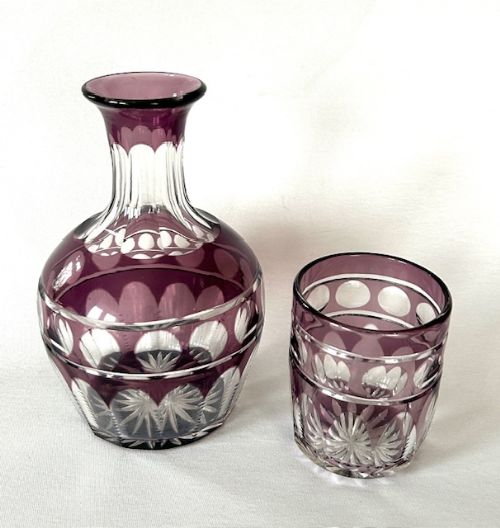


Victorian Amethyst Glass
When you handle a piece of Victorian amethyst glass, you hold a deep purple object shaped by nineteenth-century craft into decanters, scent bottles, and tableware that collectors prize for their rich colour.
Victorian Amethyst Glass
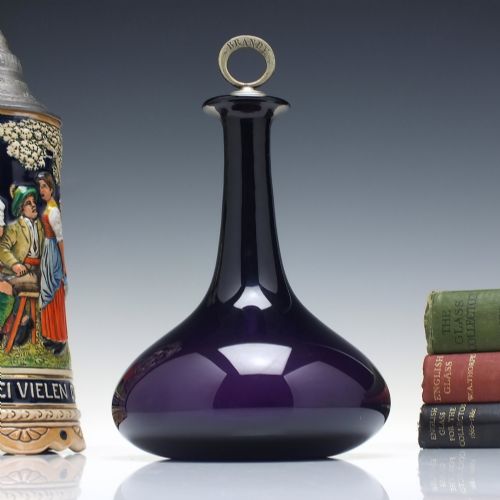
Victorian amethyst glass encompasses a range of nineteenth-century decorative and functional items, from small personal scent bottles and vinaigrettes to larger decanters, wine glasses, and mantel vases. The pieces on this page heavily feature items intended for dining, dressing tables, and personal adornment.
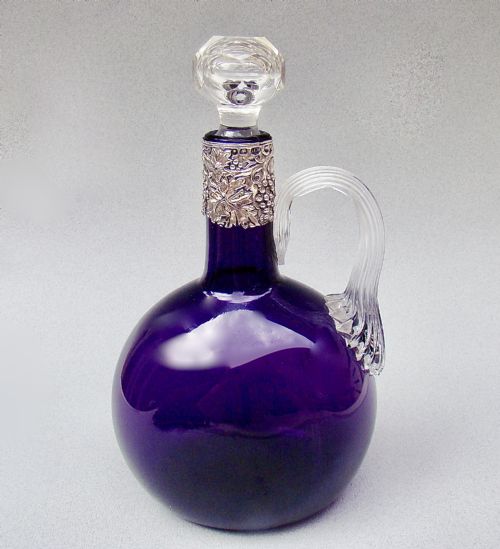
Buyers seeking this phrase most frequently encounter small silver-mounted scent bottles and drinking vessels rendered in shades ranging from light violet to dark purple. Many items pair the distinct purple glass with sterling silver collars, hinged lids, or delicate overlay work.
Origins stretch across English glasshouses, French workshops, and Bohemian makers active during the nineteenth century. Forms include bulbous carafes, stem vases, salt jars, and matching wine glass sets produced during the middle and late Victorian periods.
How victorian amethyst glass was made
Makers achieved the distinct purple hue of victorian amethyst glass by adding specific metallic oxides, principally manganese or cobalt combined with other minerals, into the molten batch during manufacture. Artisans then shaped the glass using traditional blowing techniques, free-blowing into moulds, or wheel-cutting to create faceted surfaces.
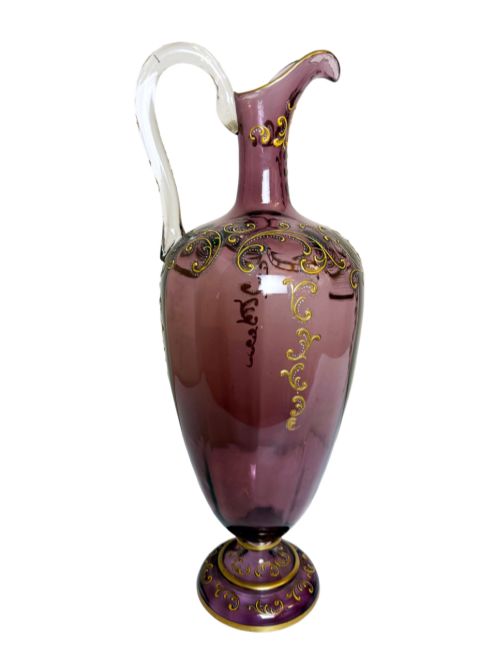
Many hollowware pieces and scent bottles received functional or decorative embellishments in sterling silver, silver plate, or 18ct gold mounts. Craftsmen also applied hand-painted enamel details, gilt appliques, and white glass overlays that were subsequently cut back to reveal the purple ground beneath.
Victorian ladies relied on tiny amethyst scent bottles to survive tight corsets and crowded, unventilated drawing rooms.
What varies in quality
The sophistication of the metal mountings often distinguishes standard production from finer examples, particularly where silversmiths added hallmarked silver collars, cornucopia shapes, or intricate repoussé work. Maker attribution through clear hallmarks adds significant distinction to silver-mounted pieces.
The depth and clarity of the purple glass itself, alongside the precision of wheel-cut facets or the delicacy of hand-painted enamel florals, mark the upper tiers of the craft. Overlay glass pieces demonstrating clean contrast between the outer clear or white layer and the amethyst base layer represent superior execution.
Henry Matthews·Thomas Stapleton·Levi and Salaman·Abrahams and Co
The Victorian Amethyst Glass Glossary
- Vinaigrette
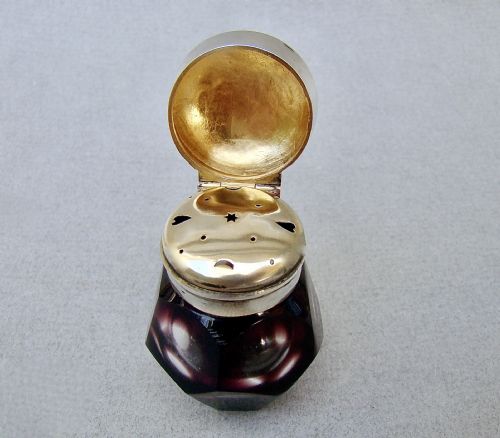
- A small ornamental box or bottle with an internal perforated grille, used during the nineteenth century to hold a sponge soaked in aromatic vinegar.
- Overlay
- A technique where a layer of coloured glass is cased over a body of contrasting glass, then selectively cut away to expose the underlayer.
- Paste
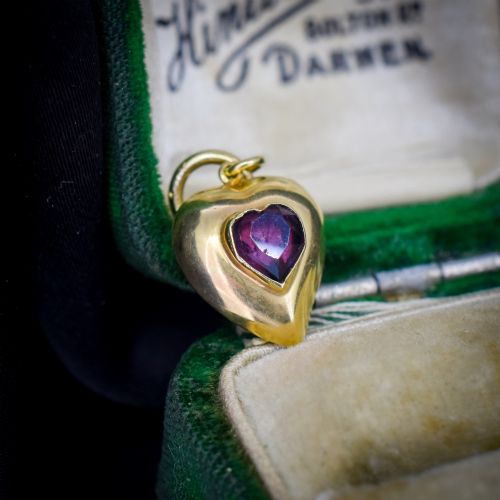
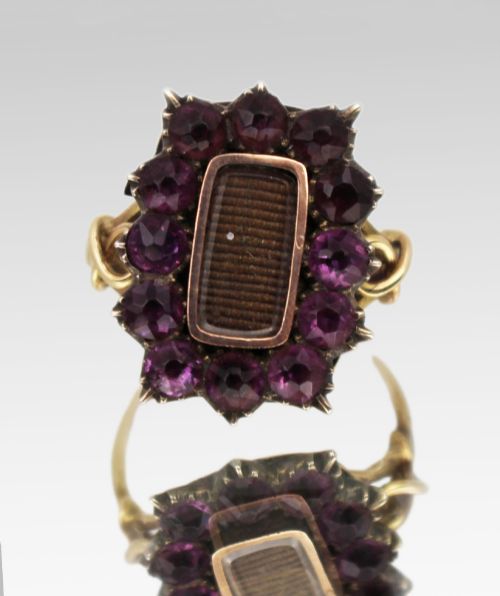
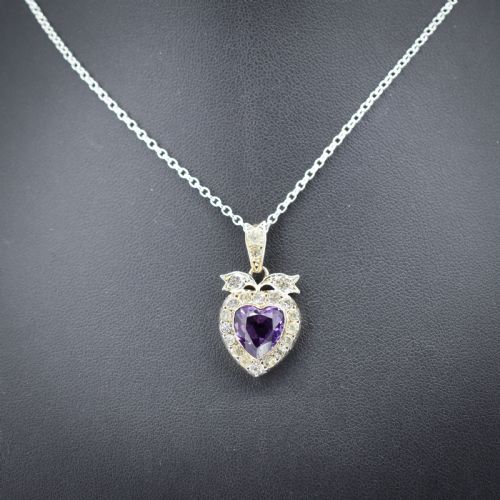
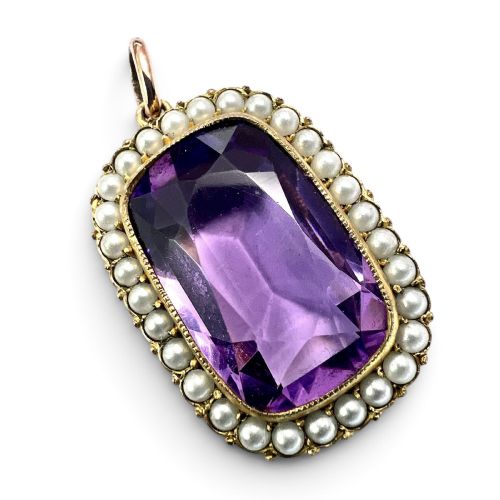
- Hand-cut lead glass used to imitate gemstones in antique jewellery and charms, set here in gold or silver.
- Fob
- A short chain or ribbon attached to a pocket watch, frequently featuring an amethyst glass charm or seal pendant.
- Bobbin stem
- A glass stem characterised by a series of rounded, bead-like nodes resembling the wooden bobbins used in lacemaking.
Victorian Amethyst Glass: Frequently Asked Questions
What is victorian amethyst glass?
Victorian amethyst glass refers to purple-tinted decorative and functional glassware produced during the nineteenth century. It encompasses tableware like wine glasses and decanters alongside personal items such as scent bottles and vanity jars.
Many of these items feature supplementary materials like sterling silver mounts, hand-painted enamel decoration, or cut glass facets. The rich purple colour stems from mineral oxides added during the glassmaking process.
How were scent bottles used?
Nineteenth-century scent bottles held liquid perfumes or smelling salts used to refresh the user or mask unpleasant odours in public spaces. Wealthy Victorians carried them in pockets or reticules as both practical health items and fashionable accessories.
Finer examples incorporated hinged silver caps, inner glass stoppers, and delicate chains or vinaigrette grilles. They sat prominently on dressing tables alongside matching carafes and trinket boxes.
How do you clean antique glass?
Antique glass requires gentle cleaning with warm water and mild soap to protect delicate surfaces, hand-painted enamel, and gilt appliques. Harsh chemicals and abrasive sponges should be avoided to prevent scratching the glass or wearing away historic decoration.
Silver mounts demand separate care using specialised silver polishes applied carefully to avoid contact with the surrounding glass. Submerging items with vintage cork stoppers or glued components should also be avoided.