
Victorian Cut Glass Decanter
These heavy Victorian cut glass decanters catch the light on the dining table and hold spirits or wine just as they did a century and a half ago.
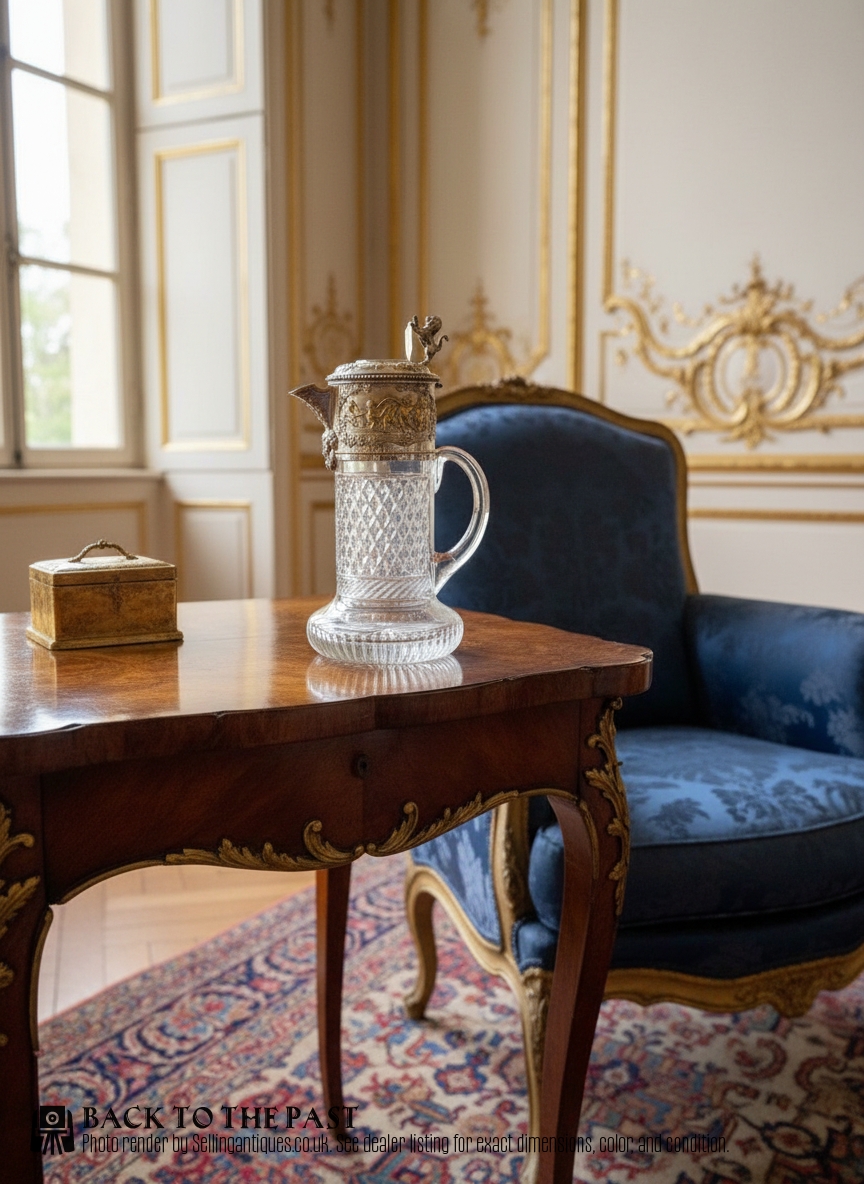
What a Victorian cut glass decanter is
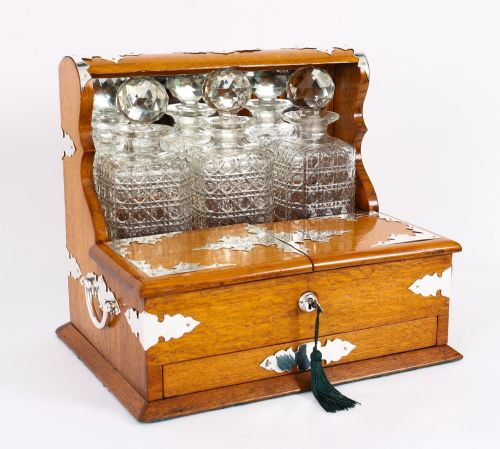
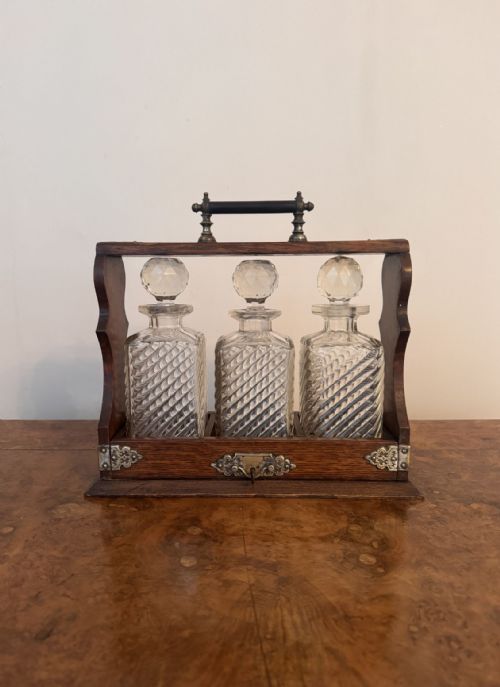
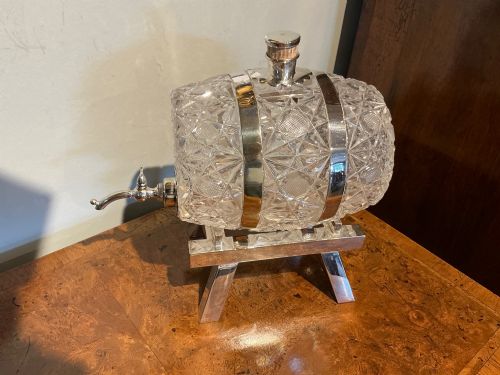
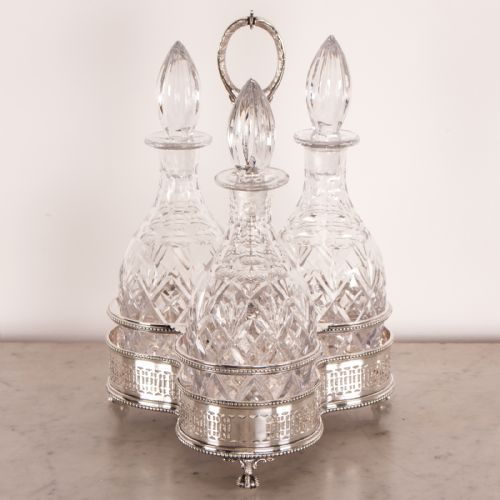
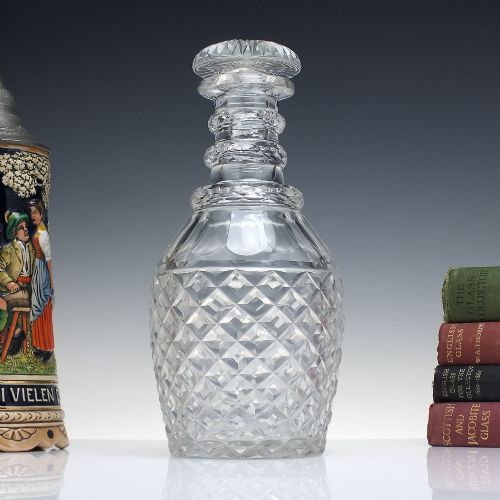
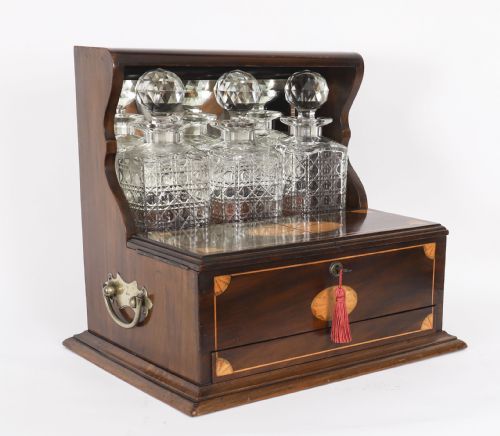
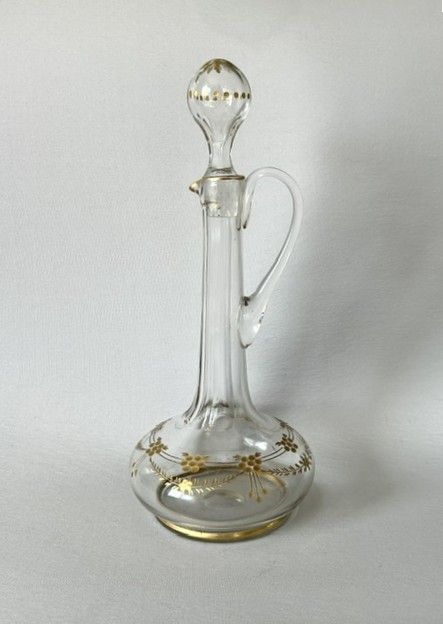
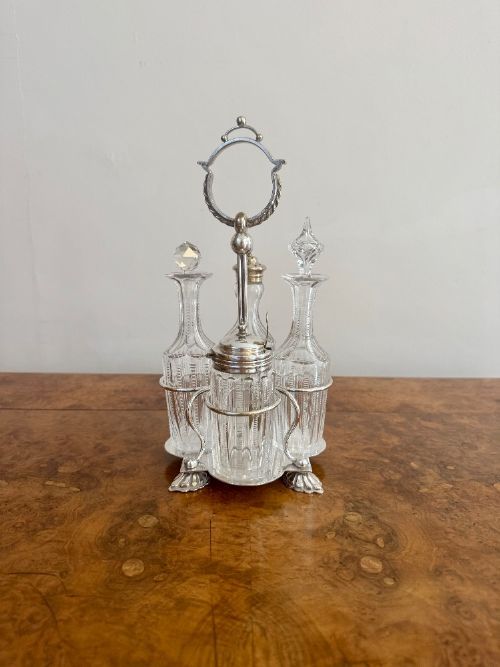
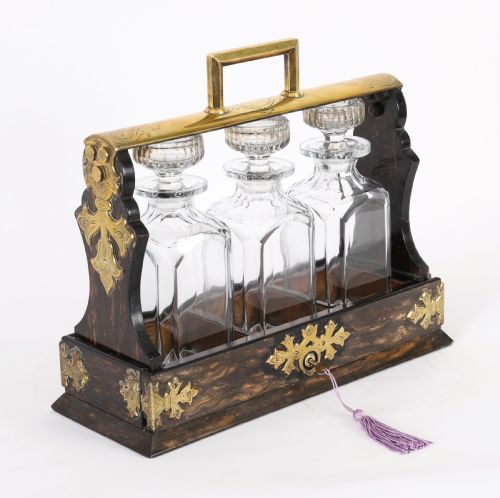
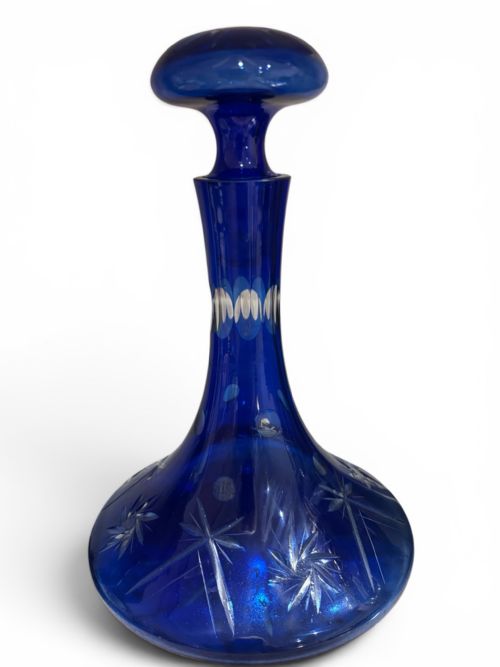
A Victorian cut glass decanter is a heavy glass vessel designed for serving and holding wine, spirits or liqueurs, most commonly found as single bottles, matched pairs or fitted into silver plated stands and tantalus frames. The forms range from bulbous globe bodies with long panelled necks to flat-bottomed ship shapes built to stay steady on a rolling sideboard.
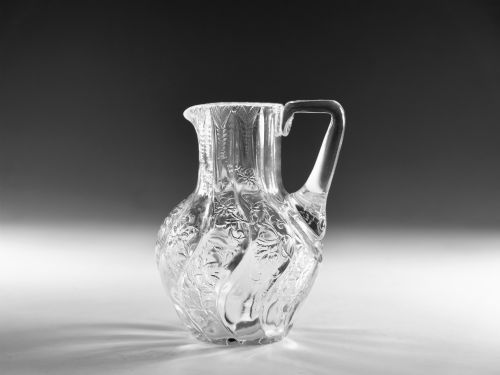
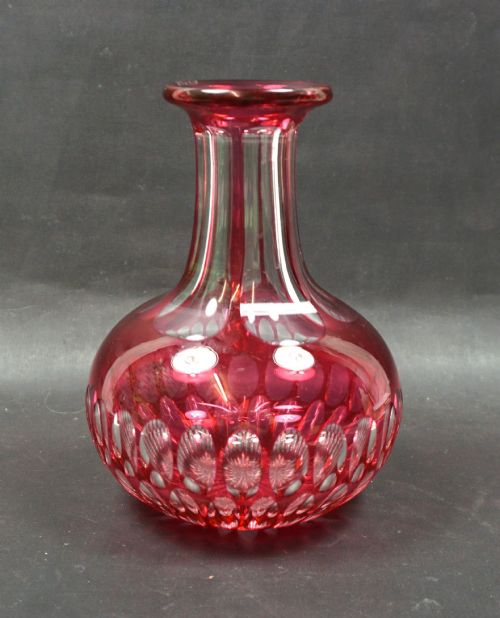
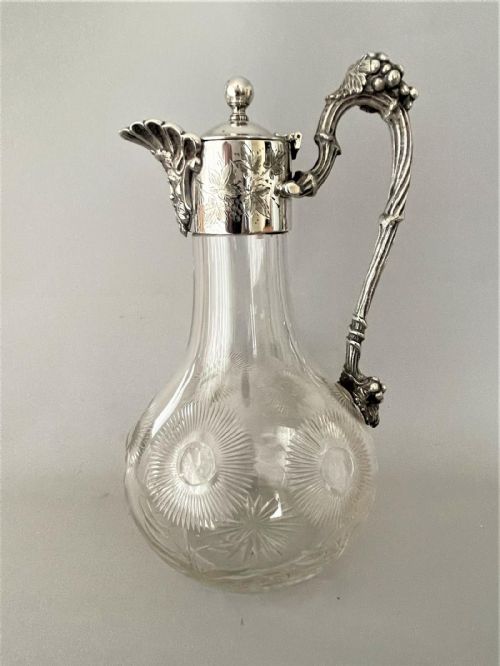
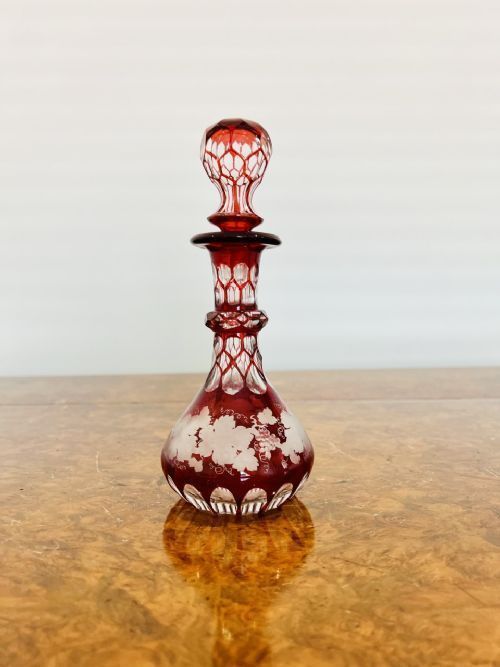
Most examples originate from the Victorian period, though the record extends from the middle years of the nineteenth century into the Edwardian era. Alongside standard spirit and wine decanters, related serving pieces such as claret jugs, water jugs and oil decanters appear frequently in clear lead crystal, ruby flashed glass, Bristol green and cranberry overlay.
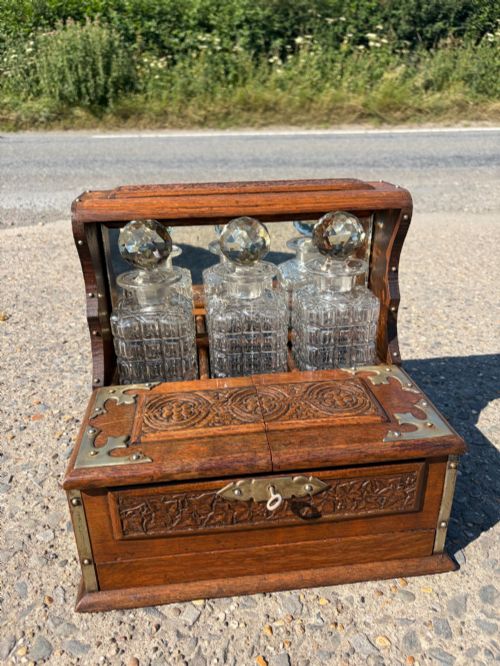
Collectors encounter these vessels either standing alone with original glass stoppers or housed within multi-bottle stands, carriers and games compendiums. The decorative surface work varies from deep star cuts and hobnail patterns to engraved birds among vines and intaglio motifs.
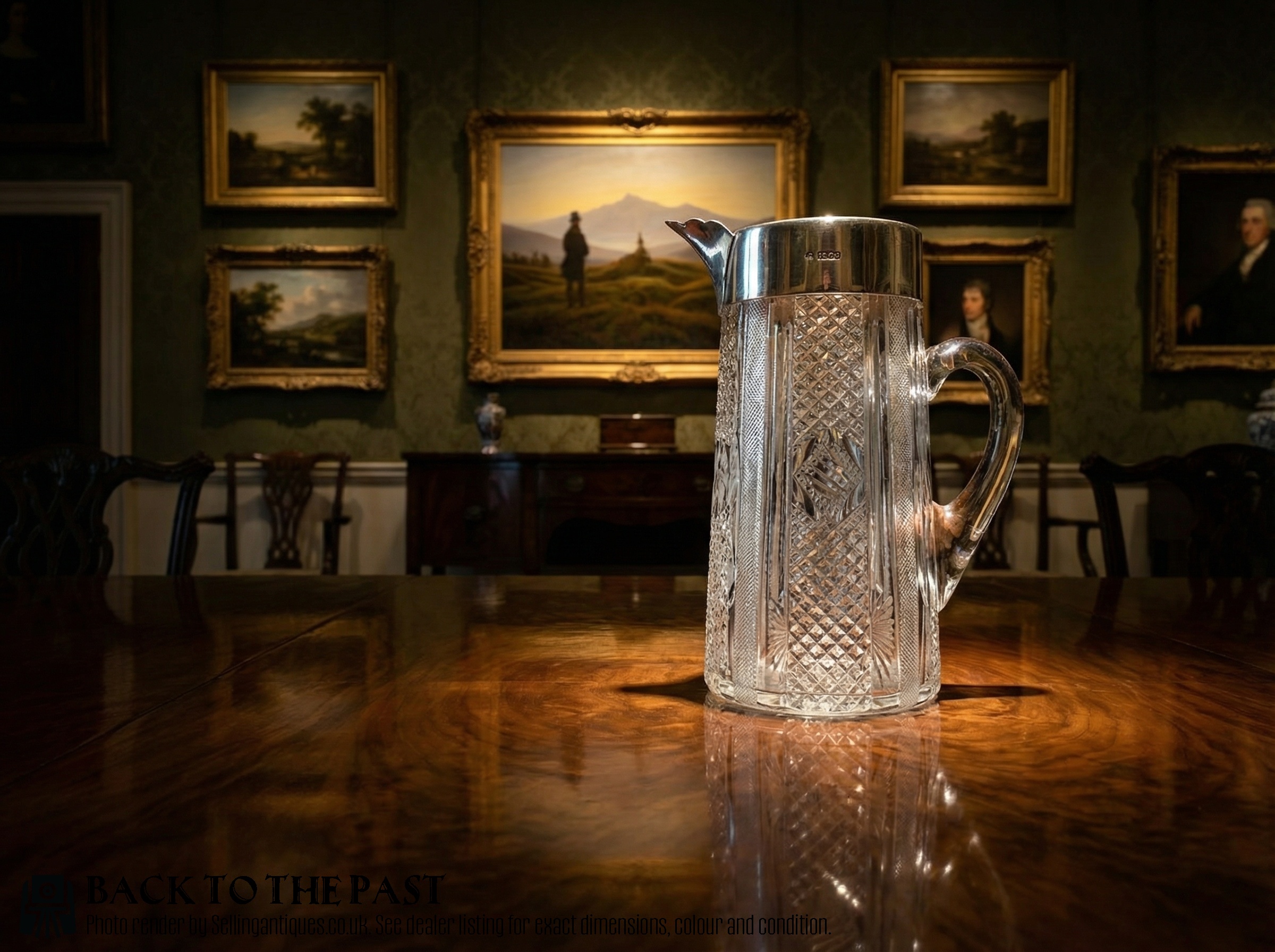
How they were made
These vessels are fashioned from lead crystal or clear cut glass, often combined with sterling silver mounts, silver plated collars, handles and pouring spouts. Coloured variants are achieved through cranberry glass, ruby flashing or green glass overlays that expose the clear crystal beneath where the wheel cuts deep into the surface.
Makers shaped the heavy glass bodies by blowing into moulds or free-blowing before cooling them sufficiently for cold-working. Artisans then applied intricate geometric patterns, long neck panels and star cuts using rotating stone and metal wheels fed with abrasive grit and water.
Fitted metalwork components, such as hinged silver plated lids and collars or hallmarked sterling silver mounts dated to specific assay offices in London, were secured to the glass necks with specialised adhesives or secure collars.
Retail Price Guide 2026
Typical UK retail prices for victorian cut glass decanter, calculated from the Sellingantiques database of over a million retail prices indexed since 2003. This retail price guide relies exclusively on Sellingantiques data; no external sources or auction records are used, so the figures do not describe the wider market.
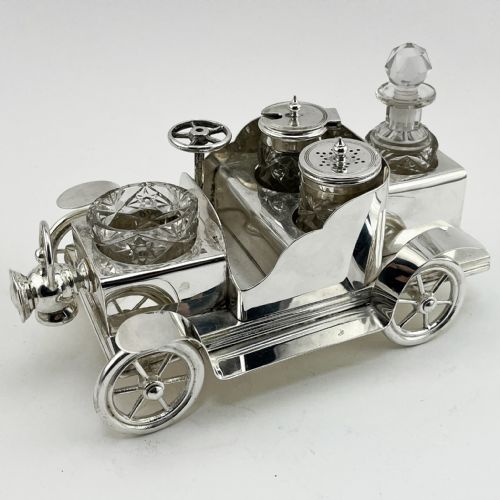
Recorded forms span standard decanters, ships decanters, claret jugs, water jugs, and multi-bottle tantalus frames.
What varies in quality
The distinction between ordinary production and the finest work rests upon the depth, crispness and precision of the wheel cutting on the glass body. Superior pieces exhibit sharp, cleanly defined facets and intricate engravings, such as detailed birds and vines, whereas lesser examples feature shallow, rounded impressions that lack dimensional brilliance.
The integration of metal mounts defines the upper tier of the range, where heavy silver plating, robust cast decanter stands and hallmarked sterling silver collars complement the heavy lead crystal rather than simply capping it. Original matching stoppers that retain the correct weight, cut pattern and fit to the specific neck also elevate the standing of the piece.
The Victorian Cut Glass Decanter Glossary
- Cut glass
- Glass decorated by holding it against a rotating wheel to grind geometric or floral patterns into the surface. This technique creates sharp facets that refract light.
- Claret jug
- A pouring vessel with a handle and spout, typically featuring a cut glass body and a silver plated or sterling silver mount designed for serving red wine.
- Tantalus
- A locked wooden frame that holds multiple decanters securely to prevent unauthorized access to the contents while still displaying the glass bottles.
- Hobnail cut
- A raised, pointed diamond pattern cut into the glass surface that provides a tactile texture and high light refraction.
- Overlay glass
- A technique where a layer of coloured glass is fused over a clear crystal body, allowing the artisan to cut through the outer colour to reveal the clear glass beneath.
Frequently Asked Questions
Are original stoppers important?
Original stoppers that match the cut pattern and fit the specific neck precisely are vital for retaining the integrity and value of the piece.
Replacements often fit loosely or feature slightly different facet depths because each Victorian neck was ground by hand to match its original stopper.
How do I date these decanters?
Dating relies on stylistic clues, the weight of the lead crystal, and hallmarks stamped on accompanying silver mounts or collars.
Mid-century pieces often feature deeper pontil marks and simpler panel cuts, while later Victorian and Edwardian examples incorporate elaborate silver plating and complex machine-assisted cutting.
Can I use them for daily serving?
These robust lead crystal vessels are fully functional and well suited for serving wine or spirits at the modern dinner table.
Hand washing is essential to protect any aged silver plating, sterling silver mounts or delicate coloured glass overlays from thermal shock and abrasive detergents.