


Victorian Covered Vases
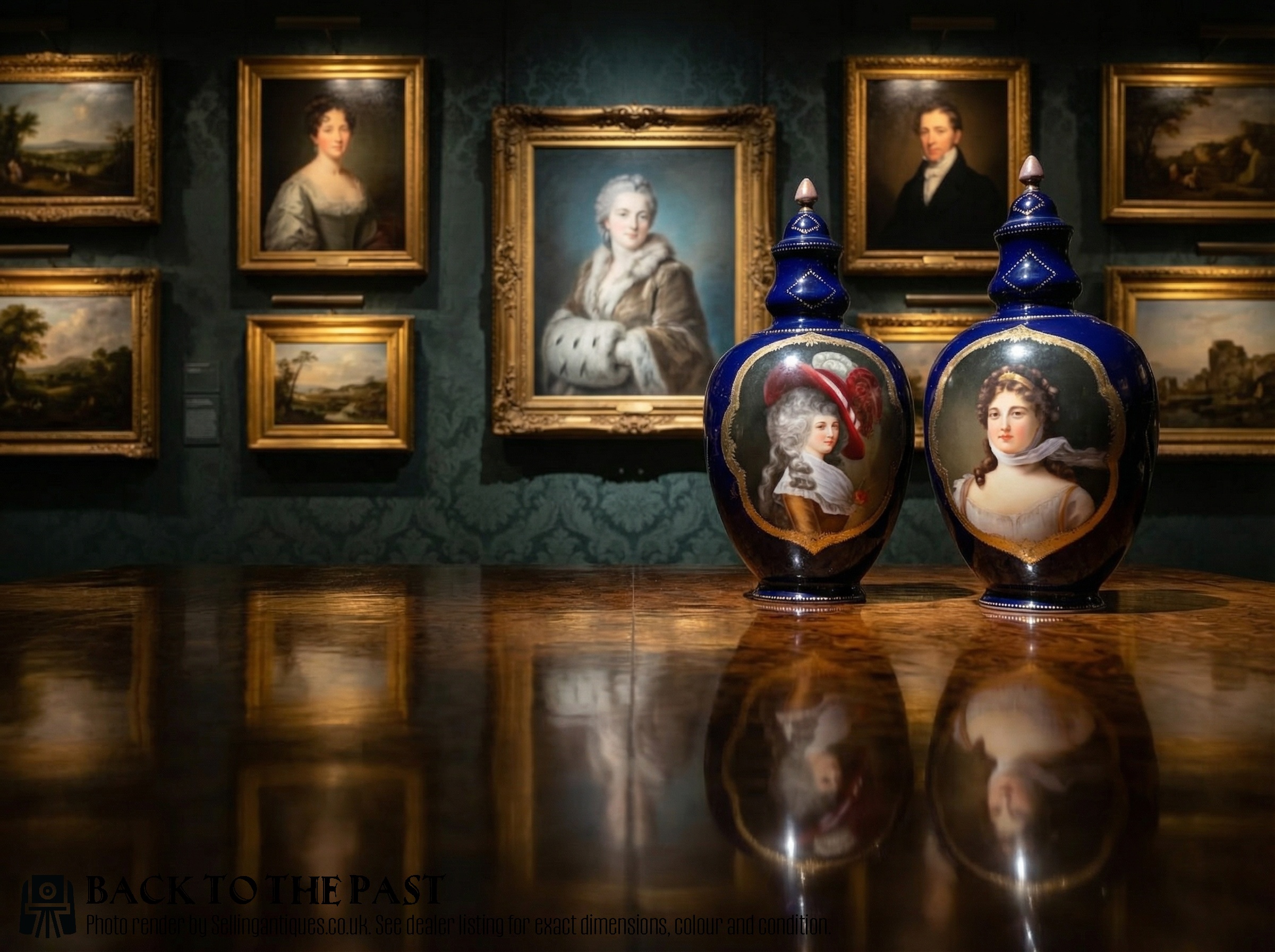
These Victorian covered vases bring grand nineteenth-century display into the room, offering lidded symmetry and painted ceramic presence.
Victorian Covered Vases
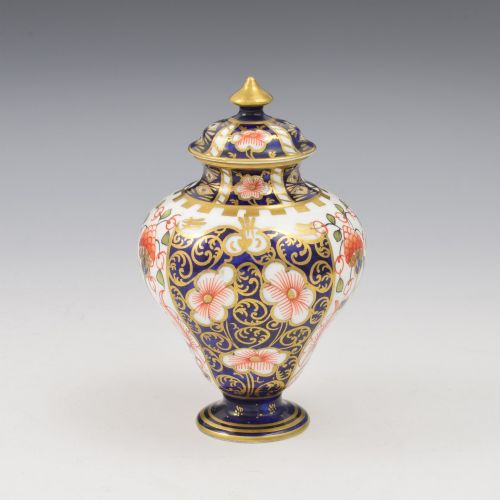
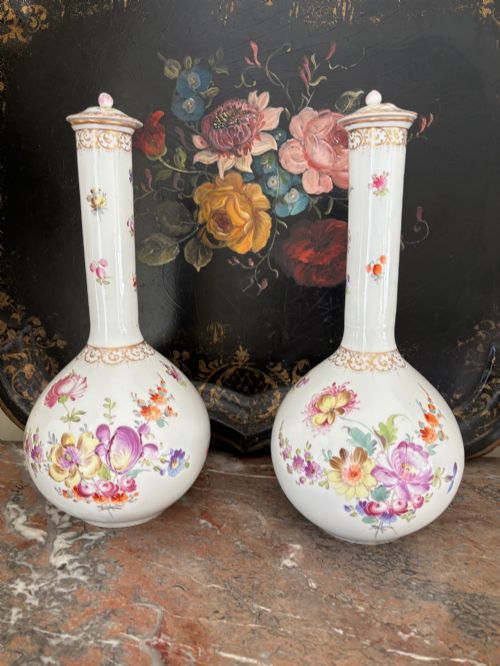
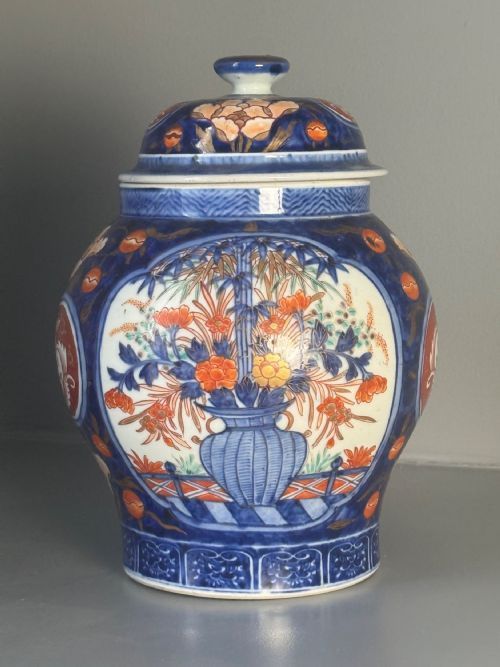
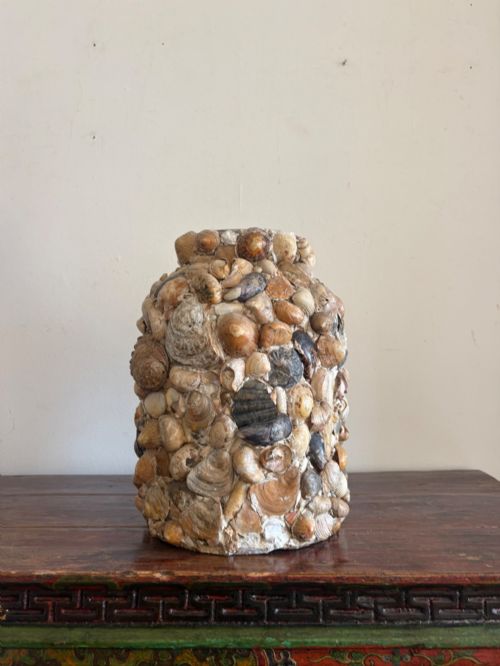
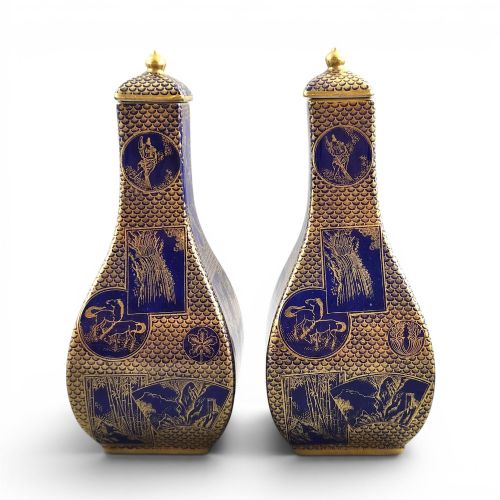
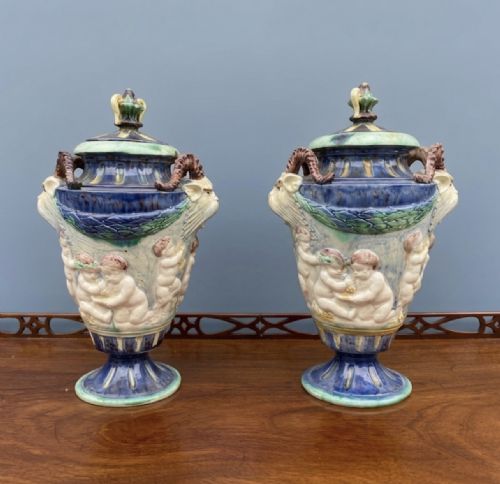
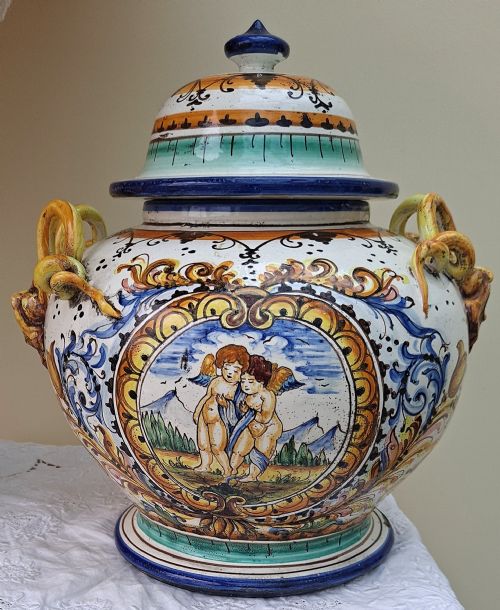
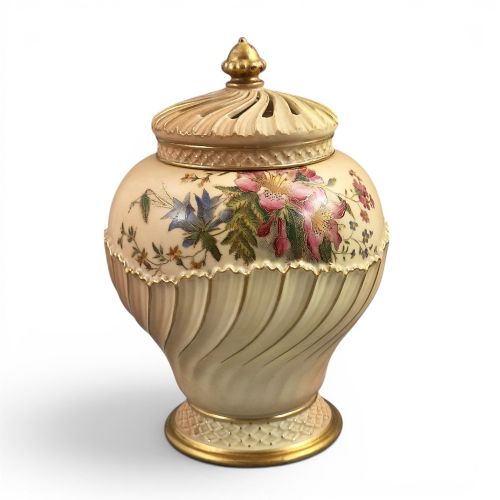
Victorian covered vases span grand earthenware urns, ginger jars, and delicate pot-pourri vessels made to hold dried petals or simply to anchor a mantelpiece. The pieces met on this page range from nineteenth-century English ironstone and porcelain to continental maiolica and Japanese Imari styles.
Forms vary from bulbous pairs to pedestal shapes and garnitures, often accompanied by matching lids or pierced crowns. Originating across England, continental Europe, and beyond, these objects reflect diverse Revivalist movements including Rococo, Neoclassical, and Chinoiserie.
Materials and methods
Potters shaped these vessels from ceramic bodies such as porcelain, ironstone, and maiolica, applying opaque or translucent glazes before firing. Many pieces received meticulous hand-painted floral, figural, or scenic decoration.
Gilding, gold leaf, and enamel work frequently highlight handles, rims, and borders. Alternative materials like lead, treen, and cut glass also appear, shaped and etched by hand.
Makers occasionally hid tiny painted insects inside pot-pourri jars to surprise anyone lifting the lid.
Judging quality
Quality rests on the crispness of the moulding and the dexterity of the hand-painted brushwork across the body and lid. Finer pieces demonstrate superior control over complex enamel palettes and heavy gilding.
The architectural harmony between the vessel and its matching cover dictates overall success. Potteries known for skilled artists achieve a depth of finish that distinguishes standard production from exceptional output.
Royal Crown Derby·Sitzendorf·Mason·Royal Worcester·Samuel Alcock·Royal Vienna·Helena Wolfsohn·Hadley
The Victorian Covered Vases Glossary
- Garniture
- A set of three or more matching vases and jars designed to be displayed together on a mantelpiece or sideboard.
- Pot-pourri
- A lidded vessel featuring a pierced or perforated cover intended to diffuse the scent of dried flowers and spices held within.
- Ironstone
- A heavy, durable type of ceramic patented in the nineteenth century to imitate Chinese porcelain.
- Maiolica
- Tin-glazed earthenware decorated with brightly coloured pigments, often referencing Italian Renaissance traditions.
- Imari
- A decorative style inspired by Japanese export wares, characterised by a palette of cobalt blue, iron red, and gold.
Victorian Covered Vases: Frequently Asked Questions
What were covered vases used for?
These lidded vessels served primarily as decorative garnitures on nineteenth-century mantelpieces and console tables, adding symmetrical presence to formal rooms.
Some specific forms, such as pot-pourri jars, were designed to hold scented dried petals behind pierced covers to freshen the domestic atmosphere.
How do I style a pair of lidded vases?
Symmetrical placement remains traditional, flanking a central clock or mirror on a prominent mantel or sideboard to create a balanced focal point.
Larger urns look best resting on sturdy wooden surfaces where their height and painted surface details can be appreciated at eye level.
How do I identify a Victorian piece?
Dating relies on stylistic clues like Rococo Revival curves, specific pattern numbers, and maker marks stamped or painted on the ceramic base.
Materials such as blush ivory porcelain and ironstone heavily point toward nineteenth-century manufacturing techniques and aesthetic preferences.
Are lids usually original to the vase?
Original lids fit the collar precisely, sharing the exact glaze tone, decorative motifs, and wear patterns of the vessel beneath.
Checking the interior rim reveals whether the cover was fired and painted alongside its companion body.