



Victorian Coastal Oil Canvas
When you search for a victorian coastal oil canvas, you enter a world of 19th-century marine art capturing shores, harbours, and maritime life.
Victorian Coastal Oil Canvas
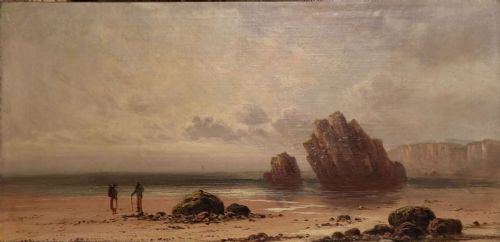
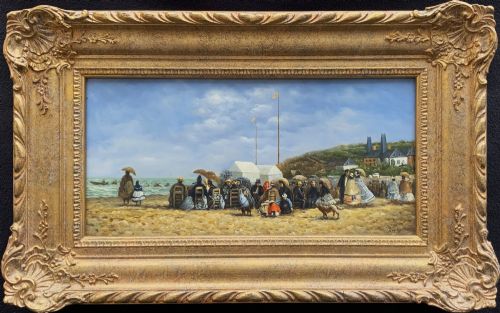
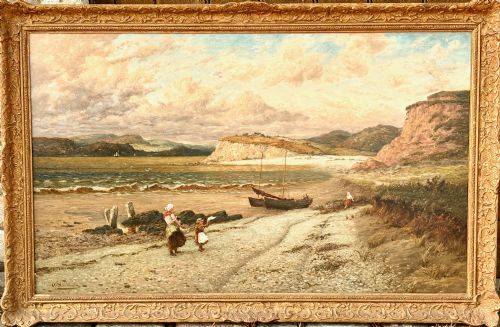
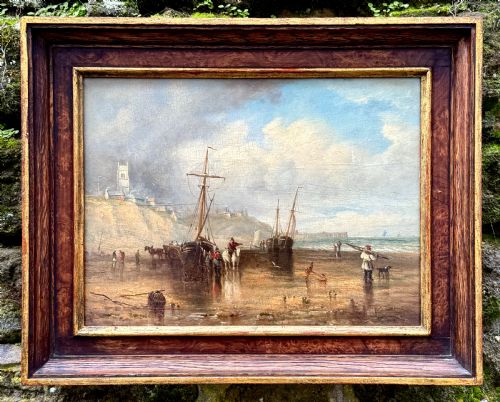
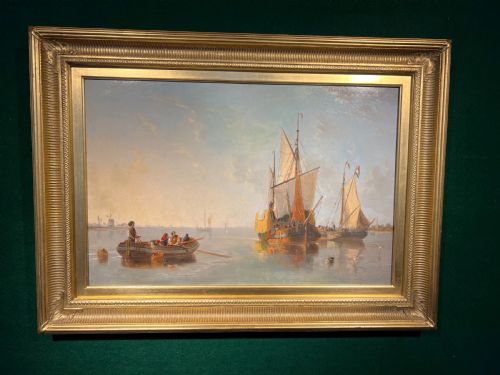
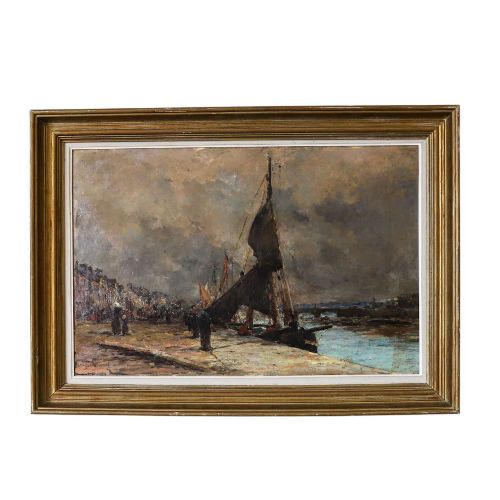
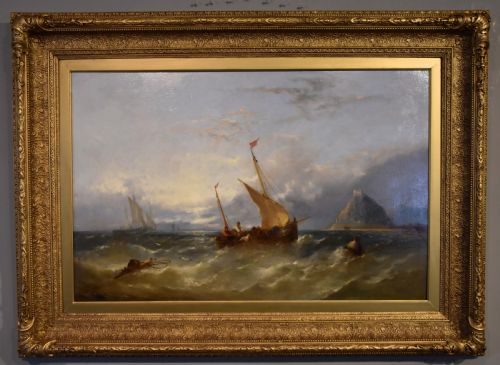
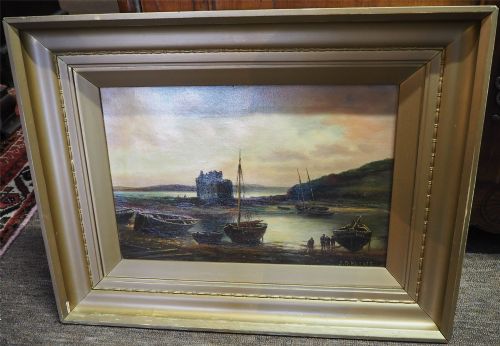
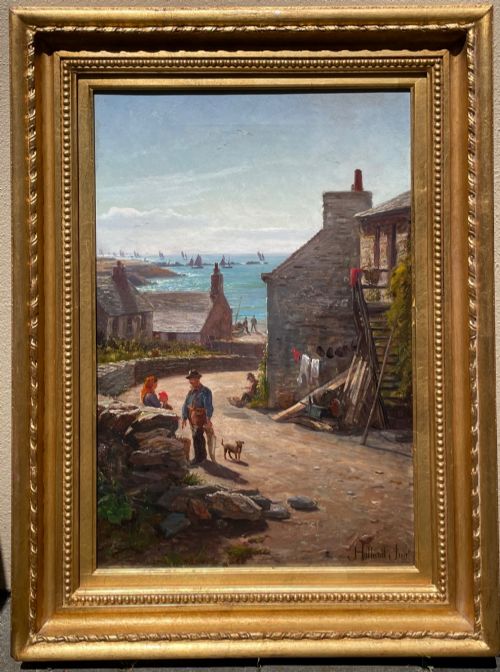
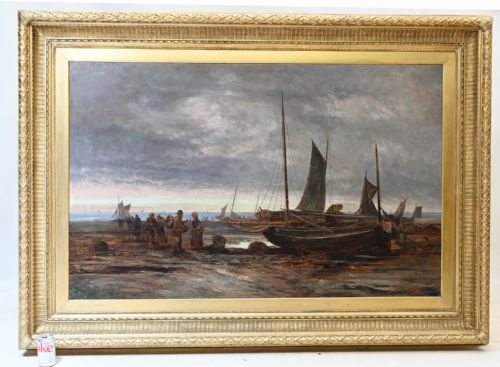
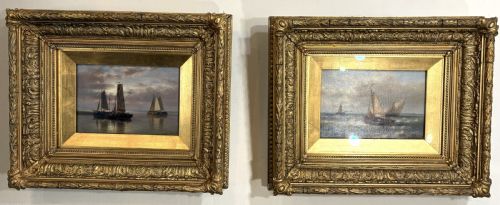
A victorian coastal oil canvas presents marine landscapes, fishing fleets, rocky shores, and harbour scenes painted during the nineteenth and early twentieth centuries. These works record maritime activity, shipwrecks, and coastal villages across Britain and beyond.
The pieces on this page mostly span the Victorian period, encompassing styles from 19th century marine art and realism to Victorian maritime painting. Forms range from intimate harbour views to large scale canvases framed in gilt wood.
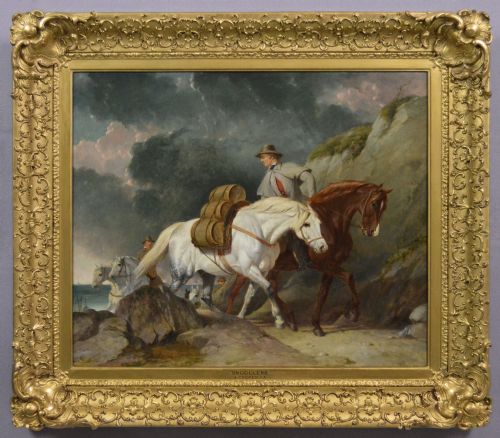
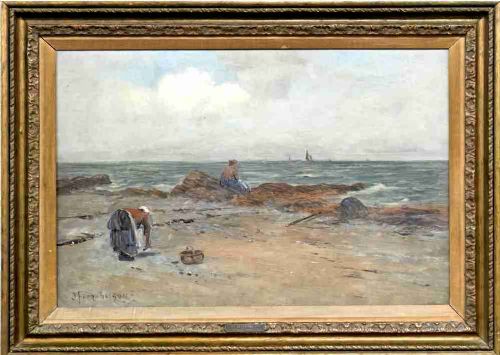
Subjects often include fishing boats off cliffs, oyster pickers on beaches, smugglers on coastal paths, and stormy seas off dramatic headlands. Painters observed local light and maritime conditions with careful realism.
How They Were Made
Artists applied oil paint onto stretched canvas substrates, utilising the medium to build rich textures and deep tones for dramatic seas and skies. Canvases were then housed in wood frames, frequently adorned with gesso and gilt finishes.
Makers layered oil pigments to capture the changing movement of water, the transparency of waves, and the atmospheric haze of coastal weather. Gilt wood and gesso framing completed the presentation, reflecting period framing traditions.
Listings feature oil on canvas paintings set within wood, gesso, and gilt frames, spanning the Victorian era through the early twentieth century.
What Varies in Quality
Quality rests upon the artist's command of light, atmospheric perspective, and the convincing movement of water. Stronger works demonstrate accomplished handling of maritime anatomy, such as the correct rigging of vessels and the natural roll of waves.
The integration of the composition with its original gilt frame also shapes the piece. Superior examples maintain harmony between the canvas and its period gesso frame, whereas lesser works may show unsympathetic later reframing or flat brushwork.
Bernard Benedict Hemy·Thomas Creswick·John Wilson Carmichael·Abraham Cooper·Joseph Farquharson·William Henry Williamson·John Holland·Abraham Hulk·William Edward Webb·Gustave De Bréanski·Stanley Leader·William Greaves·T.S. Wallis·Charles Sim Mottram·George Gregory·William Pitt·William Raymond Dommersen·James Webb·John Douglas Perrett·Claude Thomas Stanfield Moore·Harry Pennell·Alfred Henry Vickers·Sir Edwin Landseer·George Henry Knight
The Victorian Coastal Oil Canvas Glossary
- Oil on Canvas
- A painting medium where pigments bound in drying oil are applied to a woven fabric support stretched over a wooden frame.
- Gesso
- A plaster-like mixture applied to wood frames to create a smooth surface for subsequent gilding.
- Gilt Wood
- Timber that has been coated with gold leaf or a gold-coloured metallic finish, typical of period picture frames.
- Marine Art
- Works of art that focus heavily on the sea, ships, beaches, and coastal environments.
- Sea Stack
- A geological landform consisting of a steep and often vertical column or columns of rock in the sea.
Victorian Coastal Oil Canvas: Frequently Asked Questions
How do I identify a Victorian coastal painting?
Look for subjects depicting 19th-century maritime life, shipping vessels, and coastal topography executed in oil on canvas. Stylistic cues often align with Victorian realism and marine art traditions of the era.
Examination of the canvas weave, stretcher bars, and the construction of the accompanying gilt wood or gesso frame also helps establish the period origin.
What subjects appear in these coastal artworks?
Painters recorded fishing boats near harbours, figures on rocky beaches, shipwrecks during high tides, and serene sunset waterscapes. Scenes frequently feature specific locations such as Morecambe Bay, the Isle of Man, and Cornwall.
Artists also incorporated local commerce, including oyster pickers, smugglers with horses, and merchant shipping navigating coastal waters.
How should I care for an oil on canvas painting?
Keep the canvas away from direct sunlight, high humidity, and extreme temperature fluctuations to prevent the oil paint and canvas substrate from degrading. Avoid touching the painted surface directly.
Dust the gilt frame gently with a dry, soft brush and ensure the painting hangs securely from appropriate wall fixings suited to heavy wood and gesso frames.
Are these paintings signed by the artists?
Many works bear signatures, monograms, or inscriptions by the painters who recorded these 19th-century coastal scenes. Signatures frequently appear in the lower corners of the canvas.
Documentation and attribution sometimes rely on period inscriptions on the reverse of the canvas or stretcher bars, alongside stylistic comparisons.