



Traditional Sailboat Canvas Art
Traditional sailboat canvas art captures maritime history through oil on canvas, bringing historic waterscapes and coastal scenes into your interior.
Traditional Sailboat Canvas Art
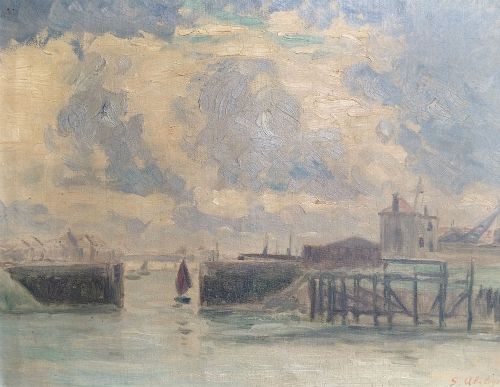
Traditional sailboat canvas art encompasses oil paintings depicting maritime scenes, harbours, and coastal views from the nineteenth and early twentieth centuries. These works record historic shipping, fishing boats, and waterscapes rendered in oil paint on canvas.
You are most likely to encounter Victorian and nineteenth-century maritime paintings, alongside works from nineteen twenty and nineteen forty. Subjects range from Mediterranean shipping and Venetian lagoons to British harbour scenes by named artists.
The objects take the form of framed fine art paintings, often housed in giltwood frames that complement the historical oil on canvas mediums. Each piece offers a window into past maritime life and coastal topography.
What varies in quality
Quality rests in the precision of the brushwork and the artist's ability to render the movement of water and atmospheric light. Superior examples display confident handling of tone and perspective, particularly in complex maritime rigging and architectural details.
The distinction between standard works and finer pieces often lies in the provenance and attribution, with documented artists commanding greater interest. Original framing, such as period giltwood, also influences the integrity of the piece.
Listings feature oil paintings on canvas spanning the nineteenth century, Victorian era, nineteen twenty, and nineteen forty, presented in wood and giltwood frames.
Hendrik Willebrord Jansen·Jane Vivian·George Henry Knight·John Callow·William Edward Webb·Samuel Bough
The Traditional Sailboat Canvas Art Glossary
- Oil on canvas
- Pigments bound in a drying oil applied to a woven fabric support. This combination allows for rich colour depth and blending.
- Giltwood frame
- A wooden picture frame coated with gold leaf or gold paint. These frames provide an ornate border that enhances the painting.
- Maritime art
- Works of art that depict or draw inspiration from the sea, ships, and coastal views. This genre encompasses historical harbour scenes and shipping.
- Impressionism
- A style of painting focusing on the visual impression of the moment, particularly shifting light. Several pieces on this page reflect post-impressionist and impressionist approaches.
Traditional Sailboat Canvas Art: Frequently Asked Questions
What periods do these paintings come from?
The available works primarily span the nineteenth century and the early decades of the twentieth century. Examples range from Victorian marine art to pieces dated nineteen twenty and nineteen forty.
This timeframe captures the transition from traditional maritime painting into post-impressionist interpretations of coastal and harbour subjects.
How should I display a giltwood frame?
Giltwood frames require stable indoor humidity and protection from direct sunlight to preserve the gold leaf and wooden substrate. Hanging them away from heat sources prevents the wood from warping and the gesso from cracking.
Ensure the wall fixings are adequate for the weight of the framed oil painting, as nineteenth-century canvases and wooden frames can be heavy.
Are these paintings signed by artists?
Some works bear signatures or attributions to recorded painters such as John Callow, William Edward Webb, and Samuel Bough. Other pieces remain unsigned while still displaying distinct nineteenth-century stylistic traits.
Attributions are typically supported by stylistic analysis and historical subject matter relating to specific ports or coastal locations.
What subjects feature in these artworks?
The compositions focus on shipping, fishing boats, and harbour views from locations including Venice, Rotterdam, and various British coastal ports. Scenes capture calm lagoons, dramatic seascapes, and bustling maritime trade.
Artists documented both working vessels, such as salmon-netting boats, and leisure craft against coastal city silhouettes.