







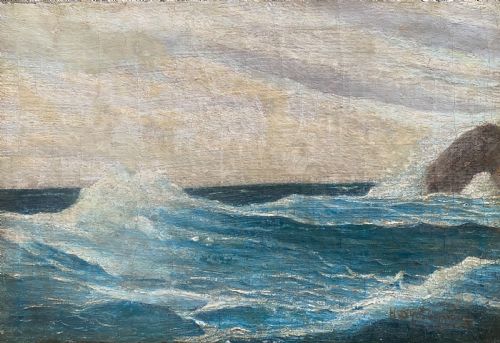
Antique Sea Landscape
When you seek an antique sea landscape, you enter a world where nineteenth and early twentieth century artists captured the changing moods of the coast.
Antique Sea Landscape
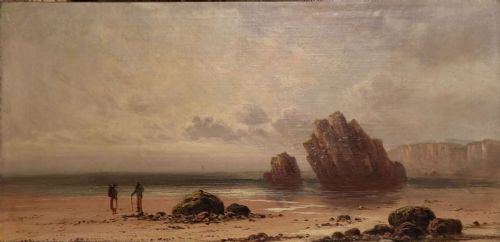
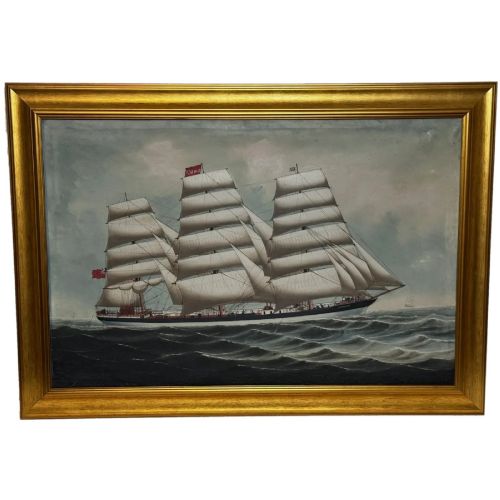
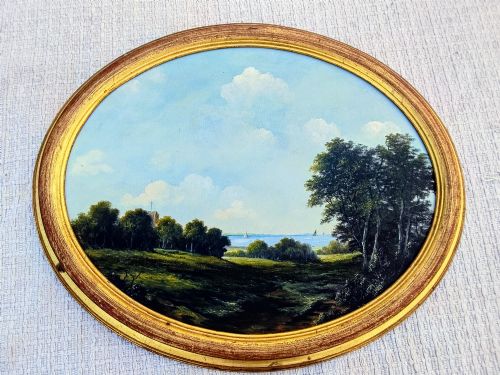
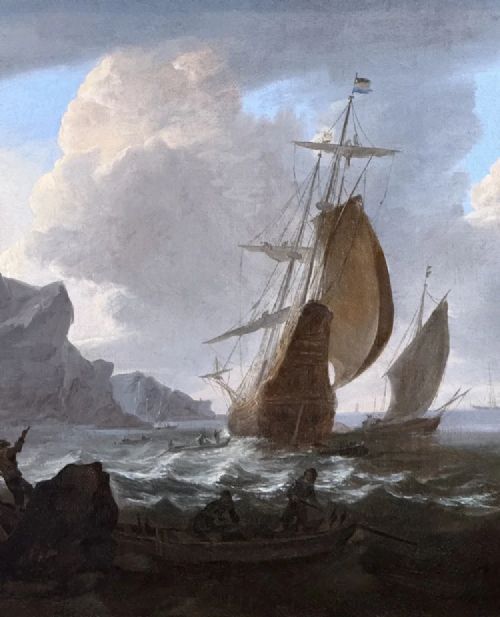
An antique sea landscape combines the rugged textures of the shore with the vast expanse of open water, capturing harbours, cliffs and fishing vessels under changing skies. These works frequently document specific regional locations, from Cornish fishing ports to French coastal towns, reflecting local maritime life and topography.
The pieces available on this page span the nineteenth and twentieth centuries, predominantly featuring Victorian and Edwardian watercolours alongside oil paintings on canvas and board. Buyers will encounter both finished studio watercolours and spontaneous plein air sketches executed directly on the coast.
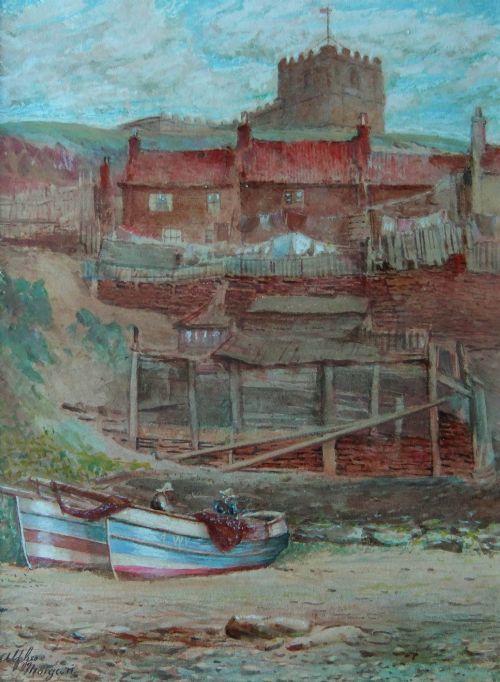
Many examples capture the daily labour of coastal communities, depicting figures hauling seaweed, tending to fishing boats or resting by the harbour wall. Others focus purely on the raw power of the elements, recording stormy seas, rocky sea stacks and dramatic tidal movements.
Materials and Techniques
Artists relied primarily on watercolour pigments applied to textured paper or oil paint handled on stretched canvas and wooden panels to render the translucency of water and the weight of coastal clouds. Watercolours often utilised subtle washes alongside scraping out techniques to highlight crashing foam and breaking waves.
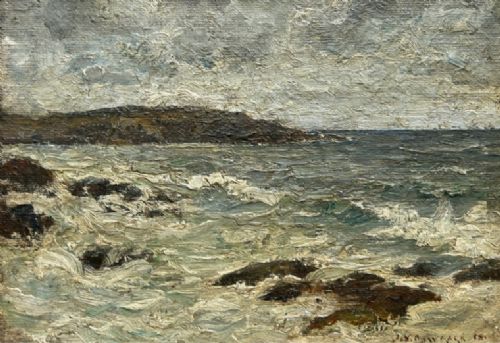
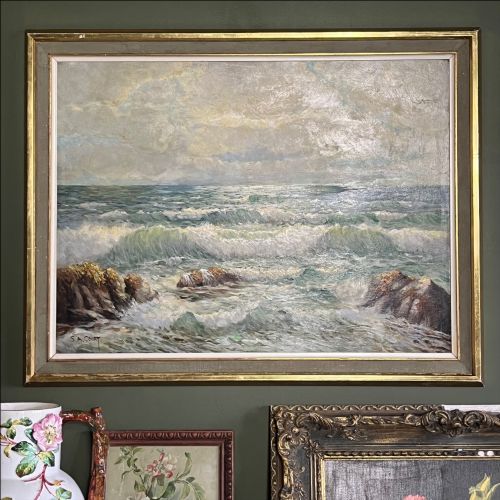
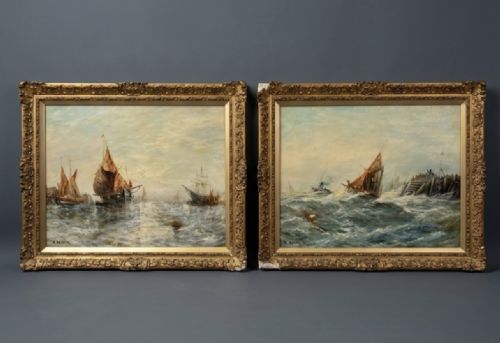
Oil paintings frequently employed thick impasto brushwork to build up the heavy texture of turbulent seas, rocky cliffs and sandy shores. Many of these works were produced outdoors to capture immediate atmospheric changes, while larger studio compositions depended on detailed preparatory sketches.
Listings feature works spanning the nineteenth and twentieth centuries, using oil paint, watercolour pigment and gouache on paper, canvas and wood.
Evaluating Coastal Works
Quality rests upon the artist's command of natural light and atmospheric perspective, distinguishing a flat record from a living scene where water possesses actual weight and movement. Superior pieces capture the exact humidity of sea mist and the shifting illumination of changing weather.
Compositional balance separates master works from minor sketches, particularly in how the artist anchors the viewer's eye between the terrestrial elements of cliffs and harbours and the infinite horizon of the sea. Stronger paintings demonstrate confident brushwork or precise watercolour control that suggests motion without becoming rigid.
James Orrock·William Banks Fortescue·John Moore of Ipswich·George Stanfield Walters·Thomas Bush Hardy
The Antique Sea Landscape Glossary
- Impasto
- Paint applied thickly to a canvas or board, standing out in relief to give physical texture to waves and rocks.
- Plein air
- Painting executed outdoors in the open air rather than inside a studio, allowing artists to capture natural light directly.
- Seascape
- A work of art depicting the sea, coastal views, ships and maritime activity.
- Gouache
- An opaque watercolour paint that provides heavier coverage and brighter highlights in marine illustrations.
- Provenance
- The documented history and ownership trail of an artwork connecting it to its creator or original exhibition.
Antique Sea Landscape: Frequently Asked Questions
What subjects appear in these works?
These pieces typically depict fishing harbours, rocky cliffs, sandy beaches and working vessels operating along British and European coastlines. Artists frequently recorded local maritime industries, including seaweed gathering and harbour trading.
Beyond domestic shores, some works capture continental destinations such as French ports and Mediterranean beaches under various weather conditions.
How do watercolours differ from oils here?
Watercolour paintings on paper offer a translucent quality that excels at rendering coastal mist, pale skies and gentle tidal reflections. They were frequently mounted and framed behind glass to protect the delicate pigments.
Oil paintings on canvas or board provide richer textures and deeper tones, allowing artists to build heavy impasto layers that mimic the churning weight of stormy seas.
How can I date an antique sea landscape?
Dating relies on the costume of any figures present, the style of the vessel rigging, framing materials and any inscriptions left by the artist on the reverse. Victorian works often feature detailed narrative elements of maritime labour.
Later twentieth century pieces tend toward looser impressionistic brushwork and abstracted treatments of light and water.
How should I display coastal art?
These works require placement away from direct sunlight to prevent watercolour fading and oil pigment degradation. Proper wall hanging protects both the fragile paper supports and the original gilt frames often found on nineteenth century canvases.
Maintaining stable room humidity preserves the wooden panels and stretchers underpinning the oil paintings.