

Victorian Circular Centre Table
A victorian circular centre table anchors a room with presence and offers a versatile surface designed to sit proudly in the middle of a space.
Victorian Circular Centre Table
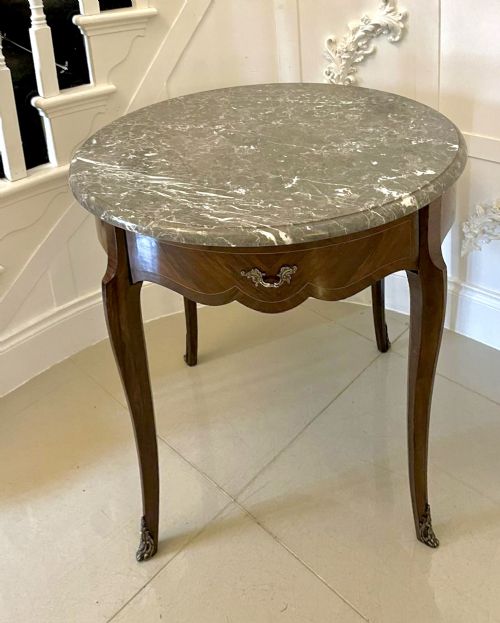
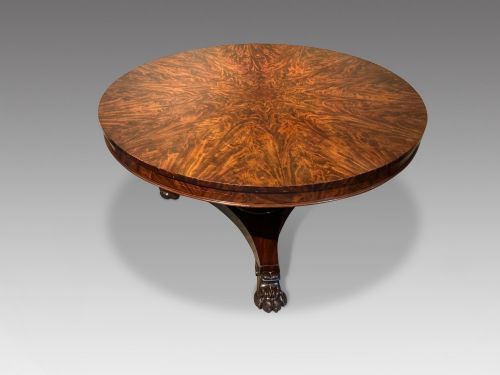
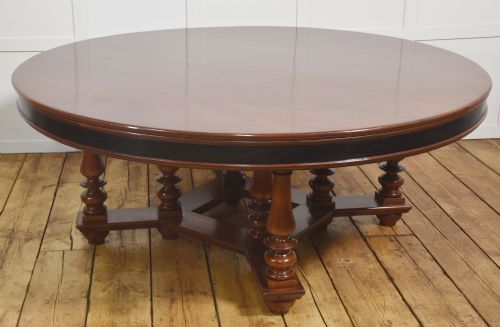
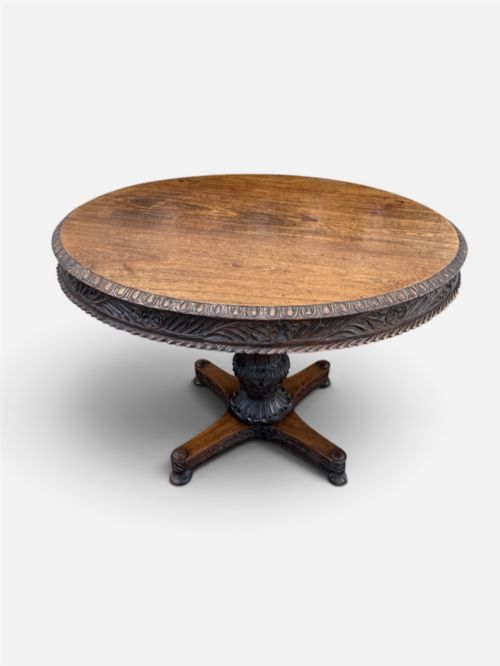
A victorian circular centre table is a freestanding piece designed to be viewed from all angles, frequently encountered in rosewood, mahogany, and walnut across this selection. These tables serve multiple functions within a home, appearing as breakfast tables, dining tables, or library tables depending on their scale and height.
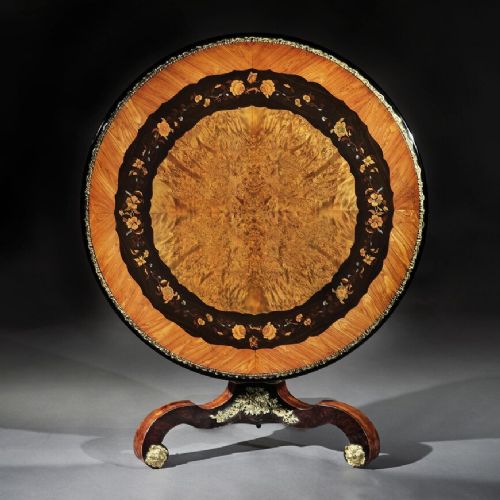
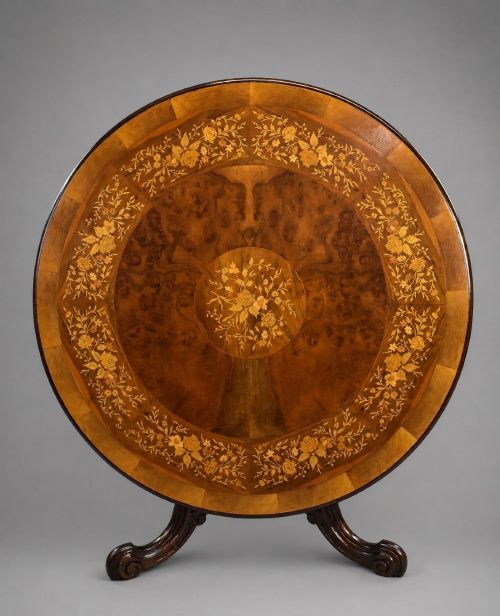
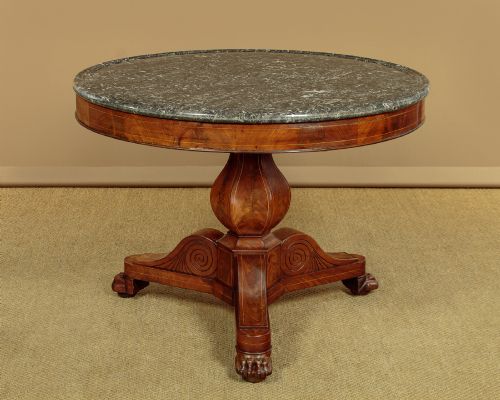
The materials span from rich figured mahogany and burr walnut to exotic woods like calamander and satin birch, often accented with marble tops or marquetry inlay. Regional influences such as Anglo-Indian designs also emerge, alongside French-inspired revival styles featuring decorative marquetry.
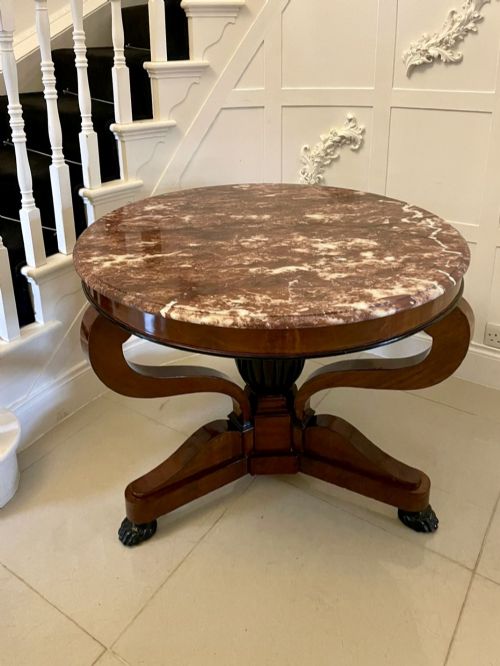
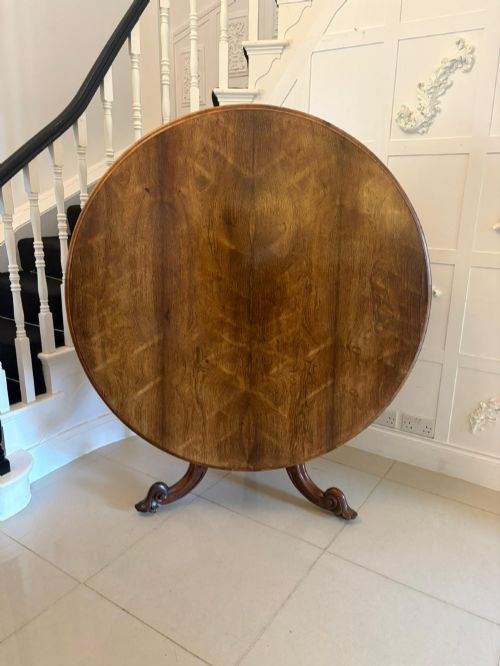
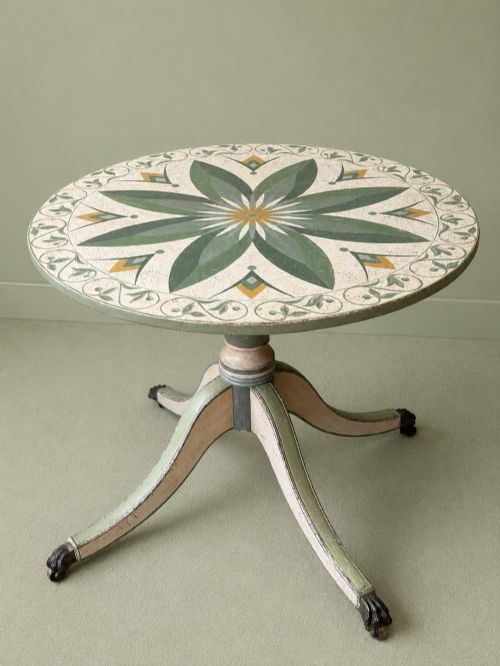
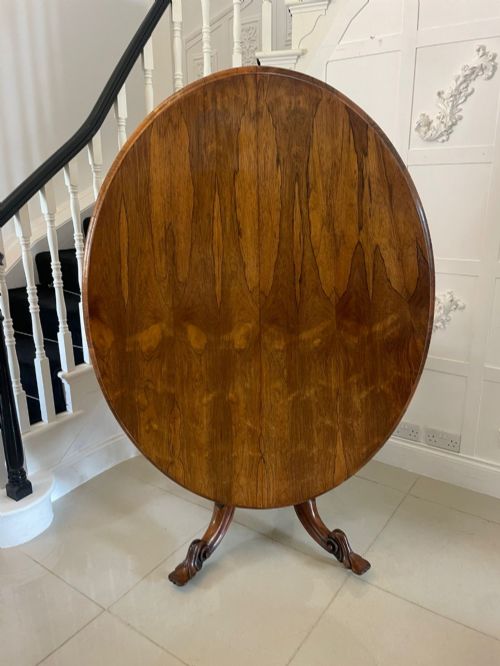
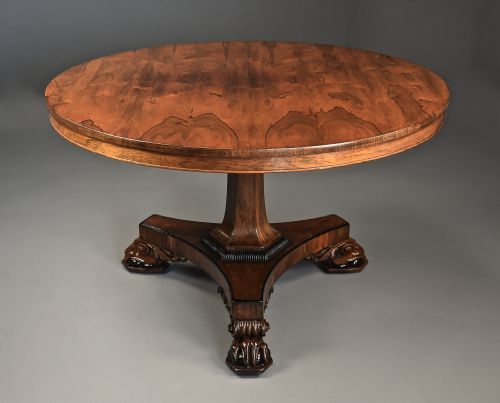
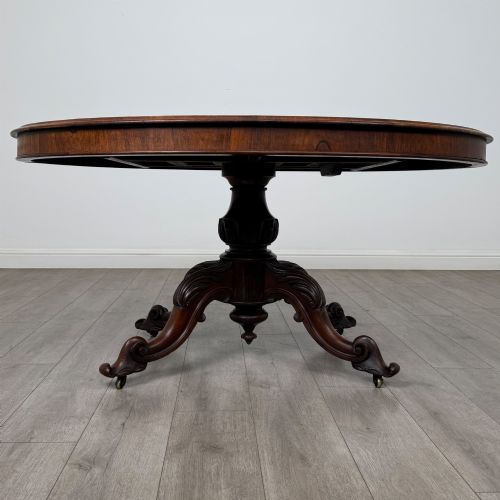
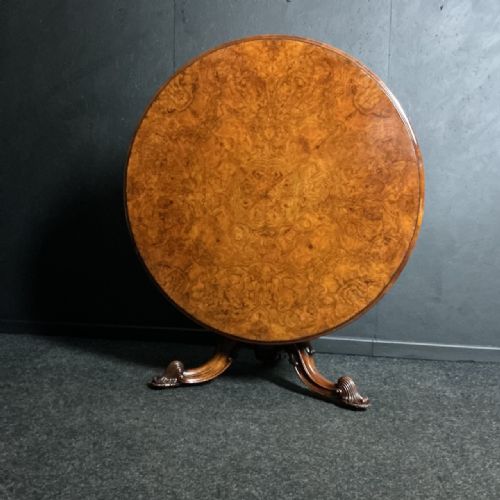
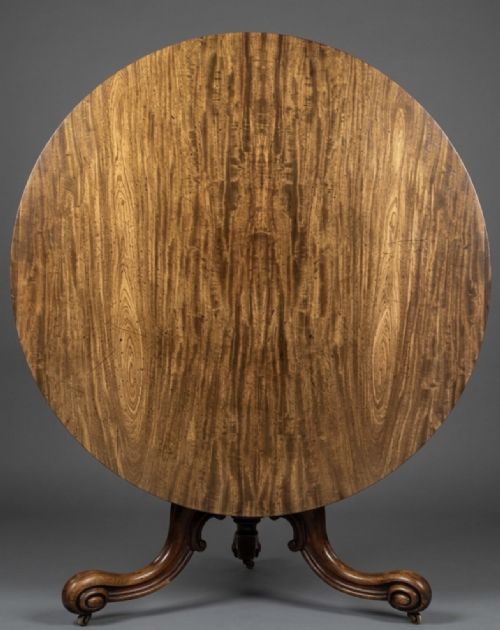
Forms vary from sturdy pedestal bases with tripod supports to heavy pillar columns and swan-supported side tables. Tilt-top mechanisms and snap-top actions are common among the smaller breakfast and occasional variants, allowing the surface to be stowed against a wall when not in use.
How they were made
Cabinet makers utilised dense native and imported timbers, veneering choice cuts of figured mahogany, rosewood, and burr walnut over stable secondary woods to create striking grain patterns on the expansive circular tops. Marquetry inlay added intricate floral or geometric motifs, contrasting lighter woods against darker grounds.
Structural integrity relied on heavy central pedestals, tripod legs, or cabriole supports, frequently weighted with internal bracing or mounted on brass castors for mobility. Marble inserts, particularly specimen marble tops, required precise stone-cutting and fitted wooden rebates to sit flush within the timber rim.
Some tables include swan supports, letting decorative waterfowl bear the domestic weight of your morning tea.
What varies in quality
The distinction between standard examples and the finest pieces rests on the choice of timber veneer and the depth of carving on the base. Highly figured grain, symmetrical book-matching, and elaborate marquetry indicate a workshop of higher standing.
Engineering of the moving parts also defines the upper tier, where tilt-top mechanisms lock securely without play and pedestal joints remain entirely rigid. The presence of specialist materials, such as inset leather surfaces, specimen marbles, or bronze mounts, elevates a table from utilitarian furniture to a high-status commission.
Edward Holmes Baldock
The Victorian Circular Centre Table Glossary
- Tilt-top
- A mechanism allowing the circular table surface to pivot upright on its base when not in use. This clever space-saving feature was especially popular on breakfast and occasional tables.
- Marquetry
- Decorative patterns formed by fitting small pieces of veneered wood into a prepared ground. Artisans used contrasting timbers to create elaborate floral or geometric designs across the tabletop.
- Gueridon
- A small French-style pedestal table designed for holding a lamp, vase, or decorative object. These often feature circular marble tops surrounded by pierced brass galleries.
- Centimetre
- A standard unit of linear measure often used to record the precise diameter of the circular top or overall height of the table. It helps determine whether a piece functions best as a low coffee table or a tall dining surface.
- Tripod base
- A support structure featuring three legs radiating from a central pillar. This configuration ensures the table remains stable on uneven domestic flooring.
Victorian Circular Centre Table: Frequently Asked Questions
How do I use a centre table?
These tables are designed to sit freestanding in the middle of a room rather than pushed against a wall. They provide a practical surface for lamps, books, or flowers while creating a natural focal point.
Larger versions easily accommodate dining chairs for meals, whilst smaller tilt-top variants can be folded flat and moved aside when floor space is needed.
How do I date a victorian table?
Dating relies on observing the prevailing timber choices, construction methods, and stylistic influences present in the piece. Earlier nineteenth-century examples often favour heavy rosewood and bold pedestal columns, while later decades introduce lighter oaks, walnut, and eclectic revival styles.
Tool marks underneath the top and the type of secondary wood used in the framing also offer clues to the era of manufacture.
Can I use one for dining?
Many circular tables from this period were specifically built as dining or breakfast tables, offering generous proportions and sturdy pedestal bases. The absence of corner legs allows diners to sit comfortably around the entire circumference without obstruction.
Checking the height of the apron underneath ensures adequate clearance for modern seating before placing chairs around the piece.