
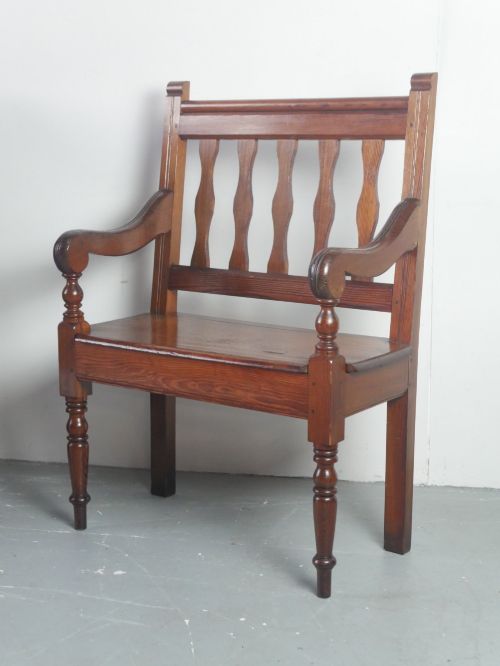
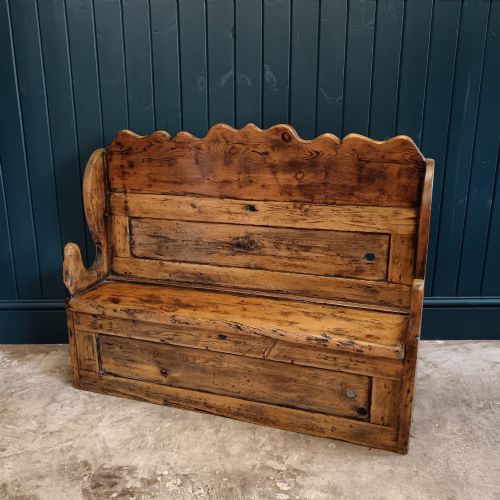
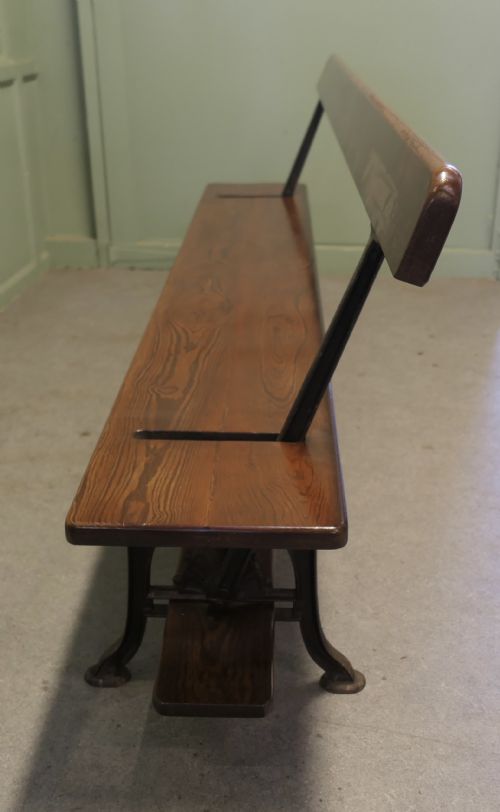
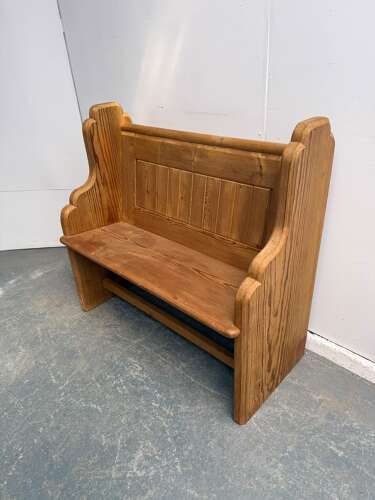
Victorian Church Seating
Victorian church seating brings sturdy architectural timber and devout ecclesiastical design into domestic hallways, chapels and gardens.
Victorian Church Seating
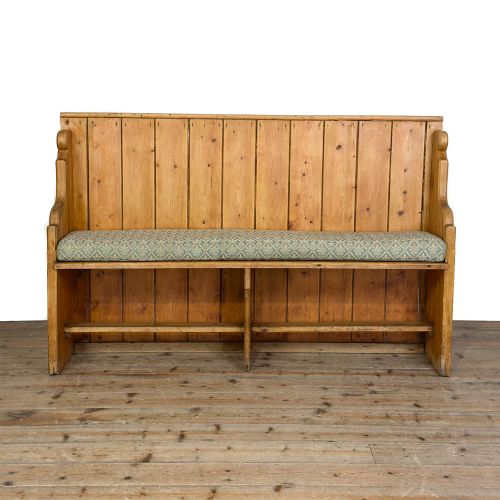
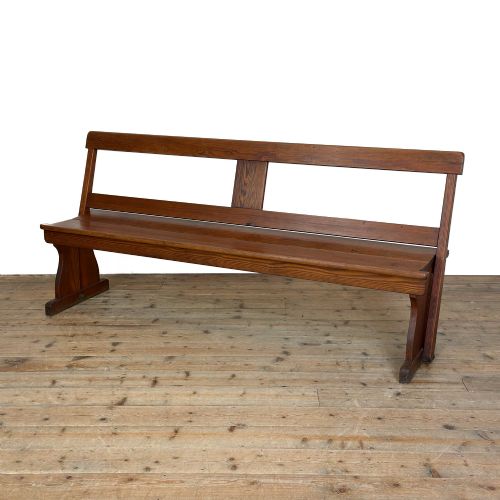
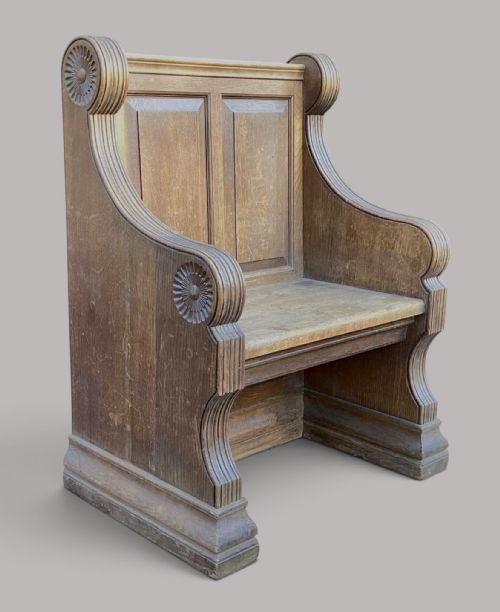
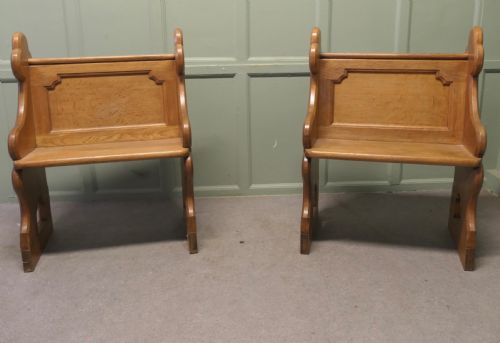
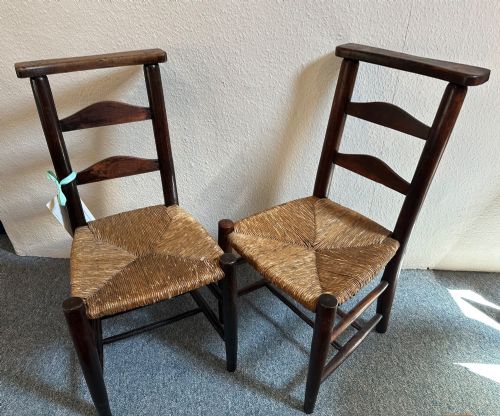
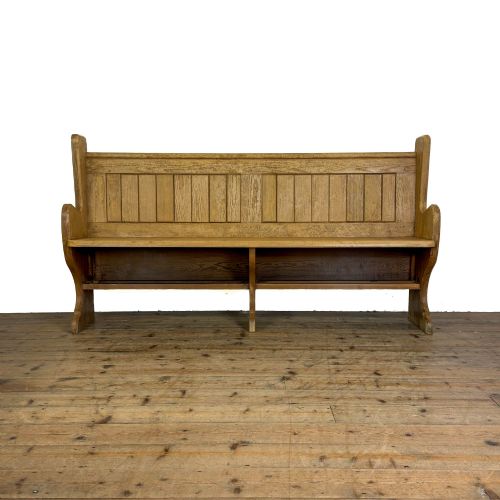
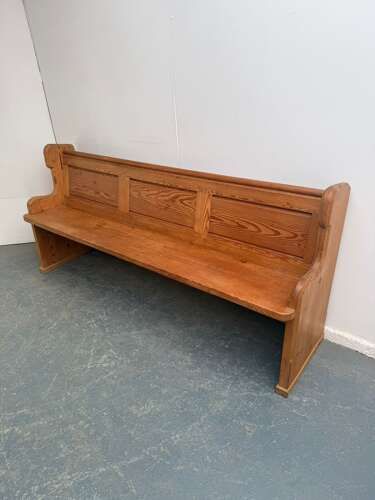
When you search for victorian church seating, you encounter long pews, individual chapel chairs, prayer desks and architectural settles. These pieces originate primarily from the nineteenth century, bearing the heavy influence of the Gothic Revival movement upon ecclesiastical furnishings.
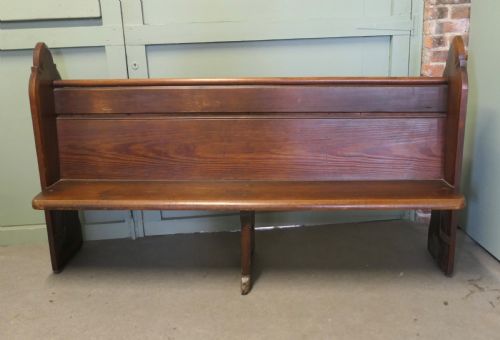
The most common forms on this page are pine and pitch pine pews alongside oak hall benches and prayer chairs. Many pieces retain direct provenance from specific churches or cathedrals, linking functional ecclesiastical seating to particular houses of worship.
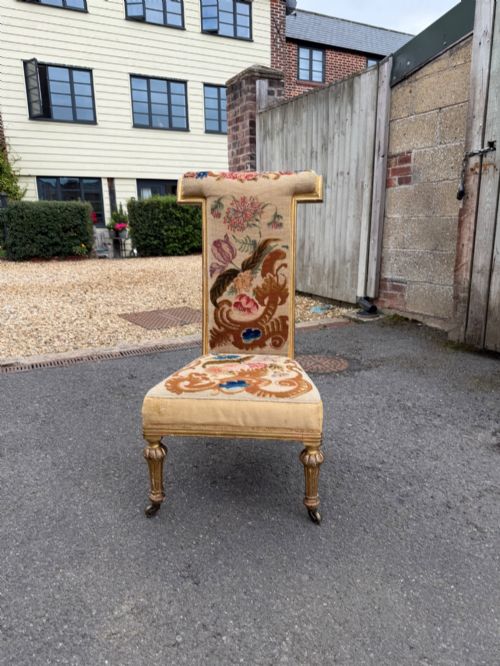
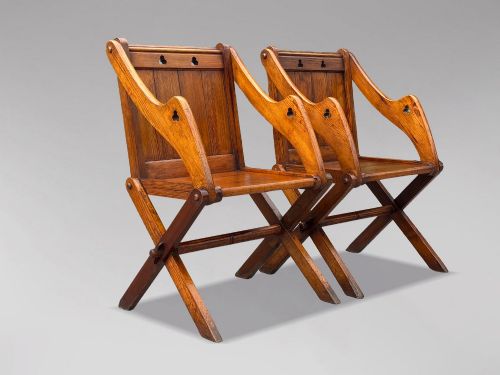
Beyond standard pews, the selection includes specialised forms such as Glastonbury armchairs, prie-dieu prayer seats with velvet or needlepoint upholstery, and organ benches. These variations reflect the diverse liturgical and functional demands of nineteenth-century institutions.
Materials and Construction
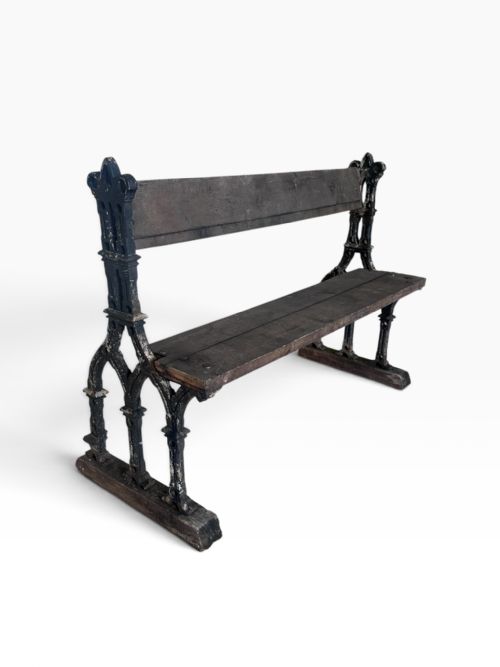
Makers utilised dense native timbers, predominantly solid pine, pitch pine and oak, alongside structural additions of cast iron and brass. These woods were chosen for their durability under heavy daily use in public buildings.
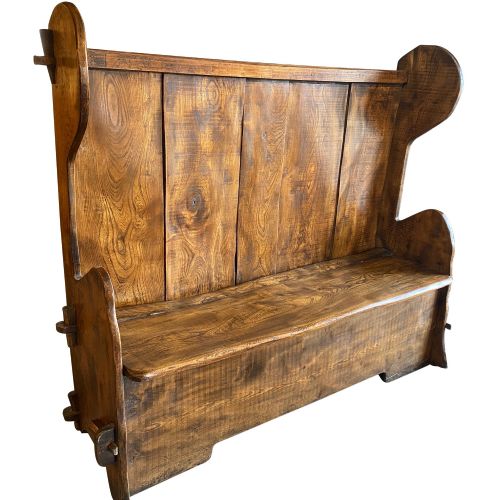
Joinery methods rely on solid construction techniques, incorporating box settles with integrated storage, flip-over mechanisms on transport benches, and architectural carving. Surfaces often display waxed finishes that highlight the natural grain of the pine and oak.
Listings feature nineteenth-century ecclesiastical pieces constructed from pine, oak, pitch pine, cast iron, and brass.
Factors of Quality
Quality rests in the architectural integrity of the timber frame and the presence of original ecclesiastical markings or provenance. Pieces salvaged directly from named cathedrals or churches carry greater historical significance than unprovenanced vernacular pews.
The refinement of the carving separates standard utilitarian pews from high-status Gothic Revival chairs and thrones. Crisp detail in the woodwork and intact original upholstery materials like green velvet or needlepoint elevate the standing of prayer chairs and armchairs.
The Victorian Church Seating Glossary
- Pew
- A long wooden bench with a high back, designed for communal seating in churches and chapels. These typically utilise solid pine or pitch pine construction.
- Prie Dieu
- A small devotional chair featuring a narrow shelf or rest at the top for kneeling and praying. These often incorporate upholstered elements such as velvet and needlepoint.
- Glastonbury Chair
- An ecclesiastical armchair characterised by an X-form underframe and sloping arms, inspired by medieval design. Examples are commonly fashioned from English oak.
- Settle
- A wooden bench with a high solid back and enclosed sides to block drafts, frequently incorporating a storage box beneath the seat. They served practical domestic and ecclesiastical functions.
- Gothic Revival
- An architectural and decorative style popular during the nineteenth century that revived medieval pointed arches and vertical lines. This aesthetic defines much of the seating listed here.
Victorian Church Seating: Frequently Asked Questions
How do I use a church pew at home?
Church pews and benches fit neatly into hallways, along dining tables, or against living room walls to provide substantial linear seating.
Their narrow depth allows them to sit flush against walls without taking up excessive floor space in domestic interiors.
What is a prie-dieu chair?
A prie-dieu is a specialised prayer chair designed with an upper ledge for resting elbows during devotions.
These pieces often double as compact desk chairs or decorative accent seats in traditional settings.
How do I identify pitch pine?
Pitch pine displays a dense, heavy grain with prominent resin canals and a rich amber tone under wax finishes.
It feels noticeably heavier and harder than standard white pine used in later furniture.
Where were these pieces originally made?
These items were manufactured in nineteenth-century workshops and joinery yards to furnish churches, cathedrals and chapels across Britain.
Some pieces bear direct stamps or engraved plaques linking them to specific religious foundations.