
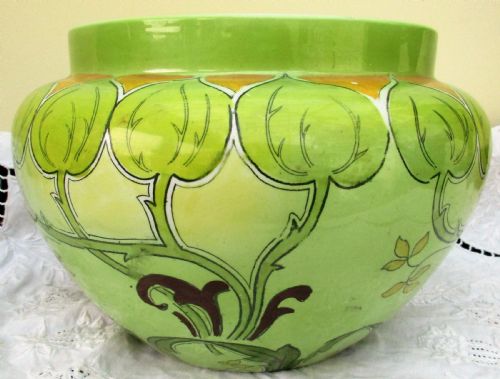


Victorian Ceramic Cachepot
These Victorian ceramic cachepot pieces bring nineteenth-century planting indoors with robust earthenware bodies and rich glazes.
Victorian Ceramic Cachepot
A Victorian ceramic cachepot functions as an ornamental outer container designed to hold a potted plant inside domestic rooms. These pieces appear across nineteenth-century and early twentieth-century periods, spanning English potteries and continental workshops.
The selection on this page centres on earthenware, stoneware, and porcelain forms that cross between jardiniere and planter styles. Makers rendered these pots in styles running from strict neoclassical lines through to flowing art nouveau curves and naturalistic fern motifs.
How they were made
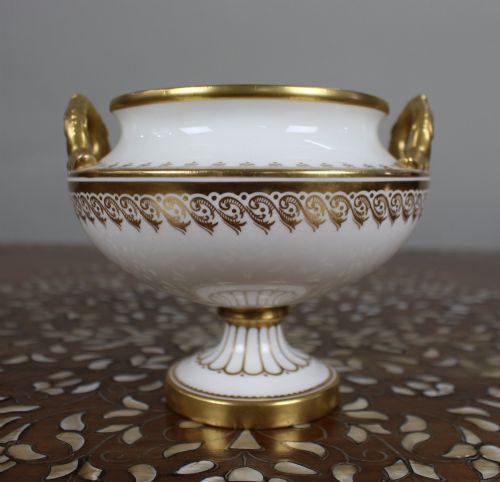
Potters shaped these vessels primarily from earthenware and stoneware bodies, often adding applied relief decoration, handles, or feet before firing. Surface work frequently combines coloured glazes, enamel pigments, and targeted gilding or gold leaf.
Specialised techniques such as slip trailing, jasperware moulding, and salt glazing define the distinct textures found across these pieces. Hand-painted details and blush ivory grounds complete the finish on finer factory-produced examples.
Several Victorian pieces take the form of swimming swans and rustic fences, proving that nineteenth-century botanists loved a theatrical flower pot.
What varies in quality
Quality rests in the crispness of the moulded relief and the depth of the glaze, where factory standards dictate the distinction between standard production and exhibition pieces. Hand-painted ornamentation by named artists introduces a level of individual artistry distinct from standard transfer prints.
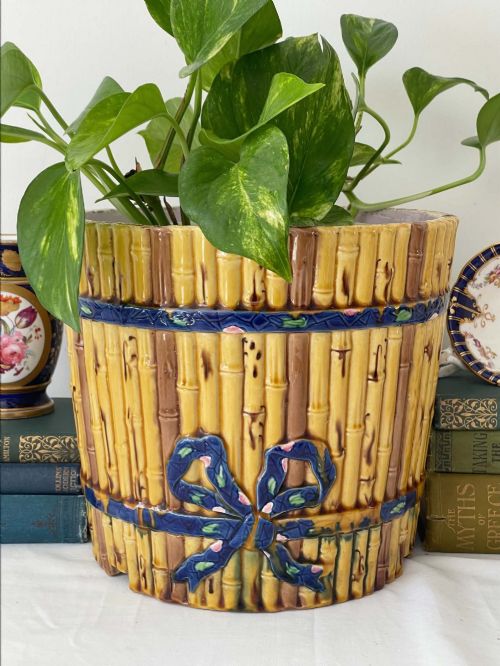
The weight of the ceramic body and the precision of the firing contribute to the overall presence of the vessel. Potteries known for majolica or specialist stoneware achieved sharper botanical and figural details that elevate the piece.
Minton·Doulton Lambeth·William Adams and Sons·W A Adderley·Royal Doulton·Royal Worcester·Wedgwood·Coalport·Linthorpe Pottery
The Victorian Ceramic Cachepot Glossary
- Cachepot
- An ornamental pot used to hold a flowerpot and catch drainage water. The term literally translates from French as hiding pot.
- Jasperware
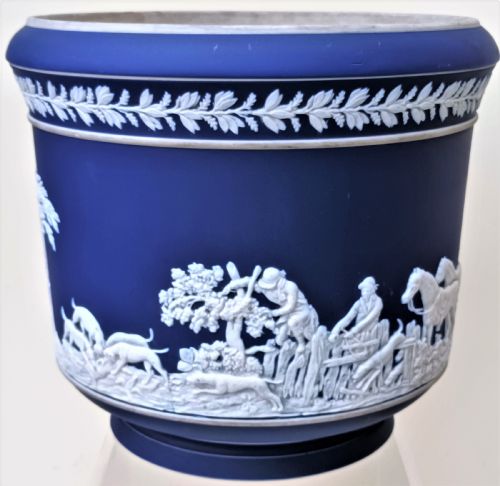
- A type of fine stoneware developed by Josiah Wedgwood characterised by a matte ground and contrasting white cameo reliefs. It is frequently found in shades of blue.
- Majolica
- A type of earthenware coated with an opaque tin-lead glaze and decorated with coloured metal oxides. This technique produces vibrant, glossy surfaces popular in Victorian tableware and planters.
- Slaterware
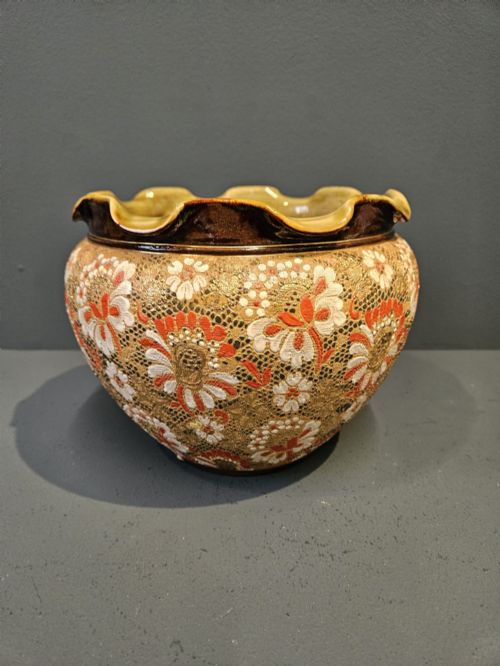
- A textured ceramic finish pioneered by Doulton featuring impressed lace patterns on rough clay bodies. It often incorporates metallic bronzing or gilding.
- Jardiniere
- A large ornamental pot or stand for plants, usually designed to sit on the floor or a heavy pedestal. They share a close functional overlap with cachepots.
Victorian Ceramic Cachepot: Frequently Asked Questions
Can I plant directly into a cachepot?
These Victorian vessels were primarily designed to conceal utilitarian plant pots rather than receive soil and water directly. Using an inner plastic or terracotta pot protects the interior glaze and porous ceramic body from moisture damage.
Placing a small saucer inside the base helps catch stray water and prevents prolonged dampness against the antique ceramic. This traditional method keeps the interior intact while allowing safe removal for watering.
How do I date a ceramic cachepot?
Dating relies on maker marks, impressed factory ciphers, and registration diamonds stamped into the unglazed base during manufacture. Stylistic shifts from neoclassical symmetry to art nouveau asymmetry also provide reliable chronological markers.
Comparing glaze types, such as blush ivory or majolica, helps narrow the production window to specific decades within the nineteenth and early twentieth centuries.
What is the difference between a cachepot and a jardiniere?
A cachepot is traditionally a smaller indoor pot designed purely to hide an ordinary flower container. A jardiniere often describes a larger, heavier vessel intended to stand alone as a decorative centrepiece.
In marketplace listings, these terms frequently overlap as makers applied both descriptions to similar vessels produced throughout the Victorian period.
Where should I display my cachepot at home?
These pots suit tabletops, sideboards, and windowsills where their glazed surfaces catch natural light. Pairing them with trailing foliage or ferns highlights their nineteenth-century botanical ornamentation.
Heavier stoneware and majolica examples look best on sturdy wooden furniture or plant stands that complement their substantial weight and earthy tones.