




Floral Glazed Stoneware Vessel
These floral glazed stoneware vessel examples are robust ceramic containers brought to life by botanic glazes and enamel details, prized for rich colour and enduring utility.
Floral Glazed Stoneware Vessel
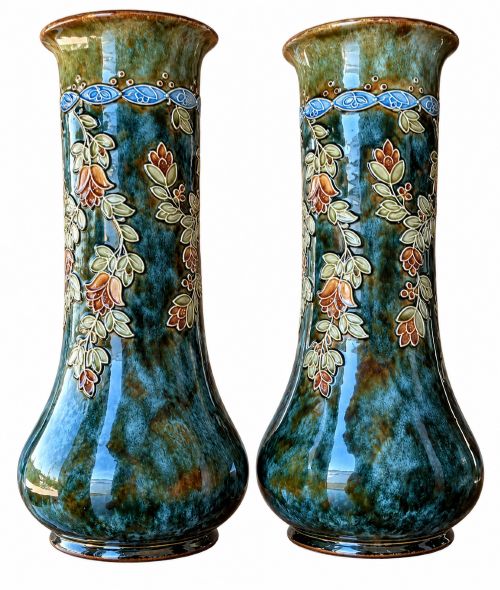
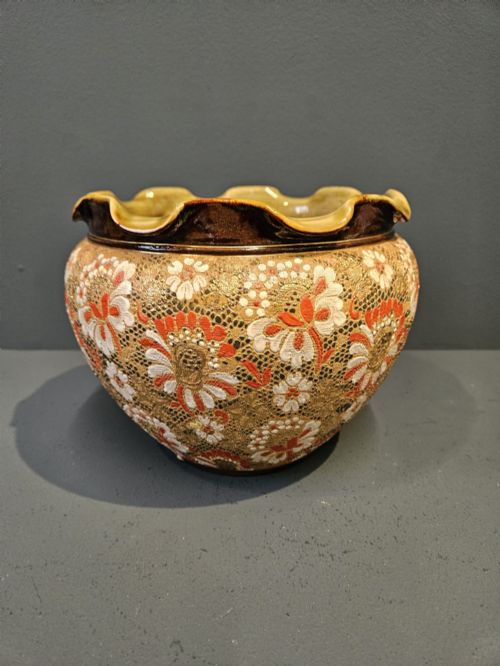
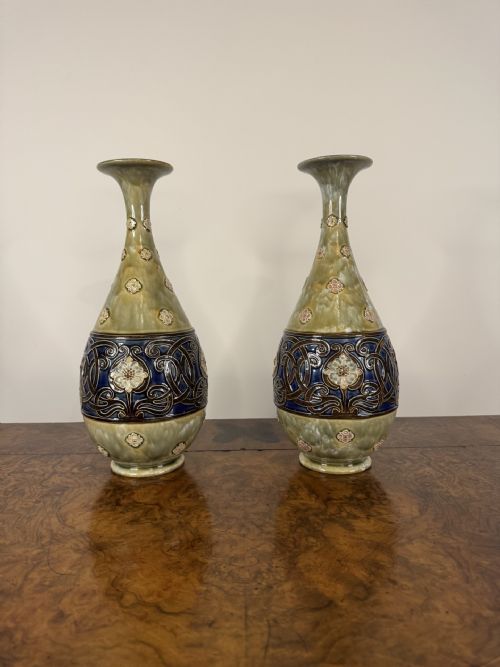
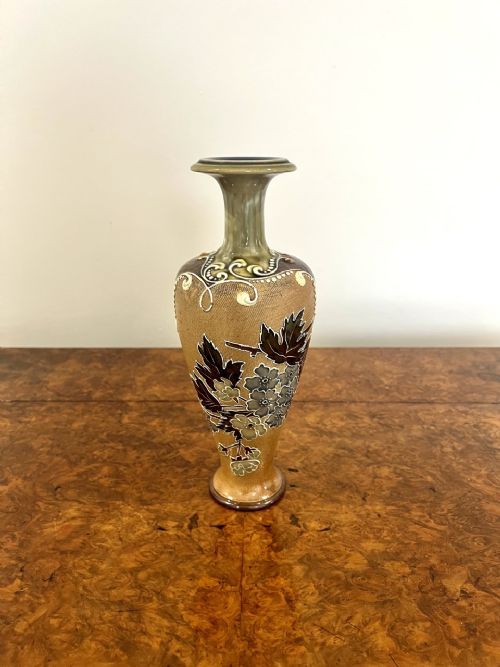
A floral glazed stoneware vessel is a heavy ceramic piece created to hold flowers or stand alone as a decorative object, spanning periods from Victorian times through Art Nouveau and the Arts and Crafts movement. Buyers looking at this page encounter robust utilitarian forms shaped into baluster vases, jardinieres, and loving cups.
The most common examples on this page are robust vessels originating from the workshops of Doulton Lambeth, alongside continental pieces such as Mettlach pottery from around eighteen ninety. These items often showcase botanical motifs executed in coloured glaze and enamel upon a dense stoneware body.
Forms vary from slender baluster profiles to wide jardinieres and twin-handled loving cups, each reflecting the design priorities of late nineteenth and early twentieth century makers. Their thick walls and vitreous finish make them resilient objects suited to holding water or standing as decorative centrepieces.
Materials and construction
The foundation of every piece is dense stoneware fired at high temperatures to create a vitrified, non-porous body that resists moisture and wear. Makers built these vessels by throwing clay on a wheel or shaping it in moulds before applying surface decoration.
Coloured glazes, enamels, and occasional touches of gold leaf were applied to the raw or salt-glazed surface, often depicting floral and plant motifs characteristic of Art Nouveau and Arts and Crafts design. Hand-painted details by studio artists added individual character to the fired ceramic base.
Some loving cups were made large enough to require two hands, proving that Victorian toasts involved serious ceramic lifting.
Assessing quality and finish
Quality in these pieces rests upon the crispness of the modelled ornament and the depth of the glaze firing. Superior examples display precise control over reactive glazes and intricate painted botanical details by named artists rather than plain factory production.
The distinction between standard output and finer work lies in the hand-finishing of the surface relief and the complexity of the botanical patterns. A well-executed vessel shows balanced proportions, clean definition in the moulded or incised floral motifs, and a rich, even glaze distribution.
Royal Doulton·Doulton Lambeth·Louisa Wakely·Mettlach Pottery·Eliza Simmance
The Floral Glazed Stoneware Vessel Glossary
- Stoneware
- A dense, hard ceramic fired at high temperatures until the clay body vitrifies and becomes impermeable to liquids. This material forms the durable core of these heavy vessels.
- Baluster
- A vase shape with a rounded lower body that tapers into a narrower neck and flared rim. This classic silhouette provides stability for tall floral arrangements.
- Jardiniere
- A large ornamental pot designed to hold potted plants rather than cut flowers. These heavy ceramic planters often sit on tables or pedestals.
- Enamel
- Opaque vitreous paint applied over the glaze or clay body and fired to a glossy finish. It provides bright spots of contrasting colour on the stoneware surface.
- Art Nouveau
- A design style from the late nineteenth and early twentieth centuries inspired by natural organic forms, whiplash lines, and plant motifs. It heavily influences the decoration on these vessels.
Floral Glazed Stoneware Vessel: Frequently Asked Questions
What is a floral glazed stoneware vessel?
It is a heavy ceramic container fired at high temperatures and decorated with plant motifs, coloured glazes, and enamel. These pieces range from tall baluster vases to wide jardinieres.
They were produced during the Victorian, Arts and Crafts, and Art Nouveau periods by makers such as Doulton Lambeth and Mettlach. Their dense bodies make them durable items for domestic display.
How were these vessels used originally?
These pieces served practical roles in late nineteenth and early twentieth century homes as containers for cut flowers, large house plants, or decorative loving cups for communal toasts. Their waterproof stoneware bodies handled moisture easily.
Beyond simple utility, they acted as decorative interior ornaments reflecting contemporary tastes for naturalistic design. Their substantial weight suited them for placement on heavy sideboards and tables.
How do I date these ceramic pieces?
Dating relies on maker marks, stylistic indicators such as Art Nouveau plant tendrils, and recorded periods ranging from eighteen eighty to nineteen ten. Earlier Victorian examples often feature simpler profiles.
Later pieces from the turn of the twentieth century incorporate more fluid organic lines and named artist signatures. Comparing the stamped factory marks helps place the piece within a specific decade.
How should I clean my stoneware vessel?
Cleaning requires only warm water and a soft cloth to remove dust from the glazed surface. Avoid harsh abrasives that might scratch the enamel or gold leaf details.
Because the stoneware body is vitrified and non-porous, it holds water safely for fresh flowers without seeping. Regular gentle wiping preserves the rich sheen of the original glaze.