

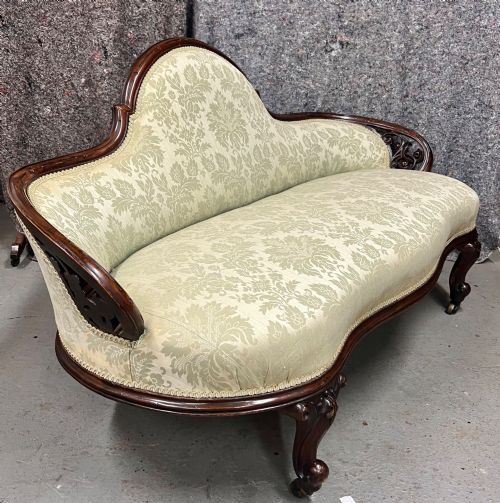
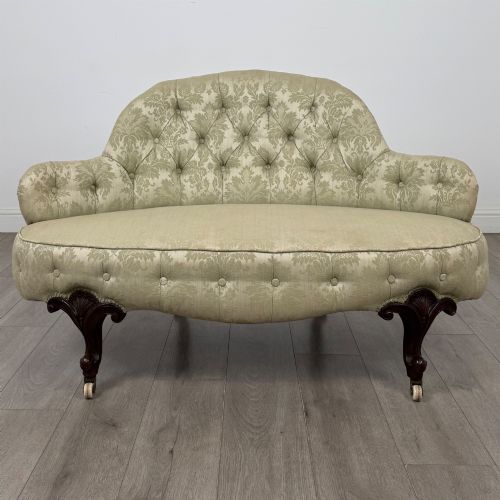
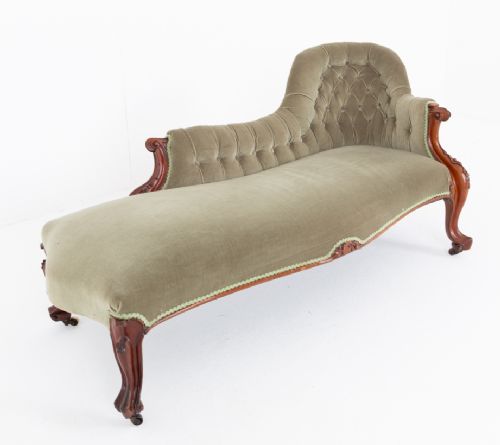
Victorian Carved Settee
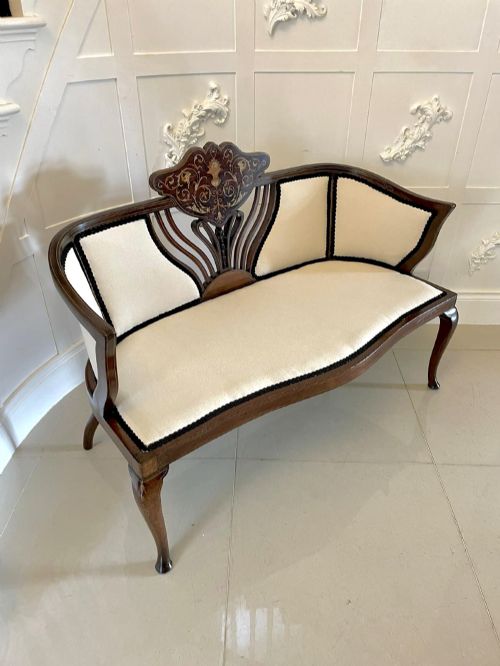
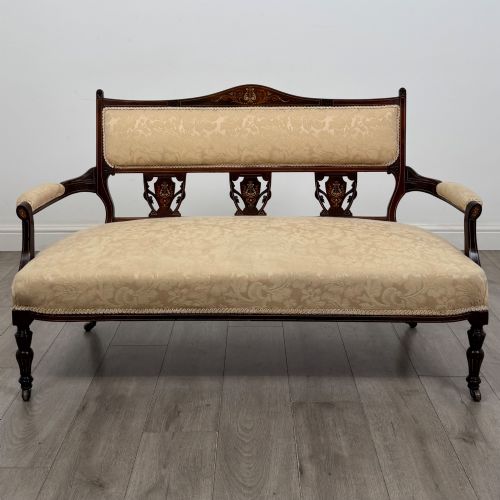
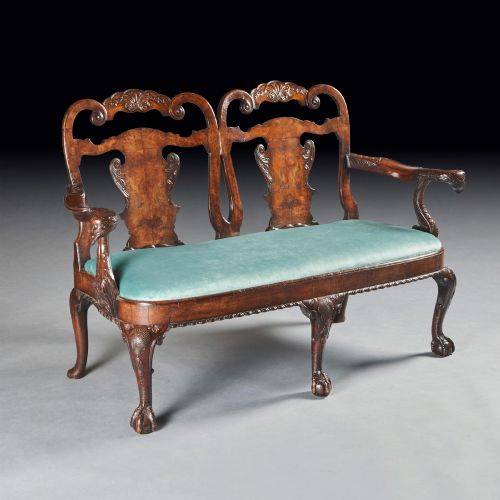
When you search for a victorian carved settee, you are looking at solid timber frames shaped with deep relief scrollwork and upholstered in rich fabrics from the nineteenth century.
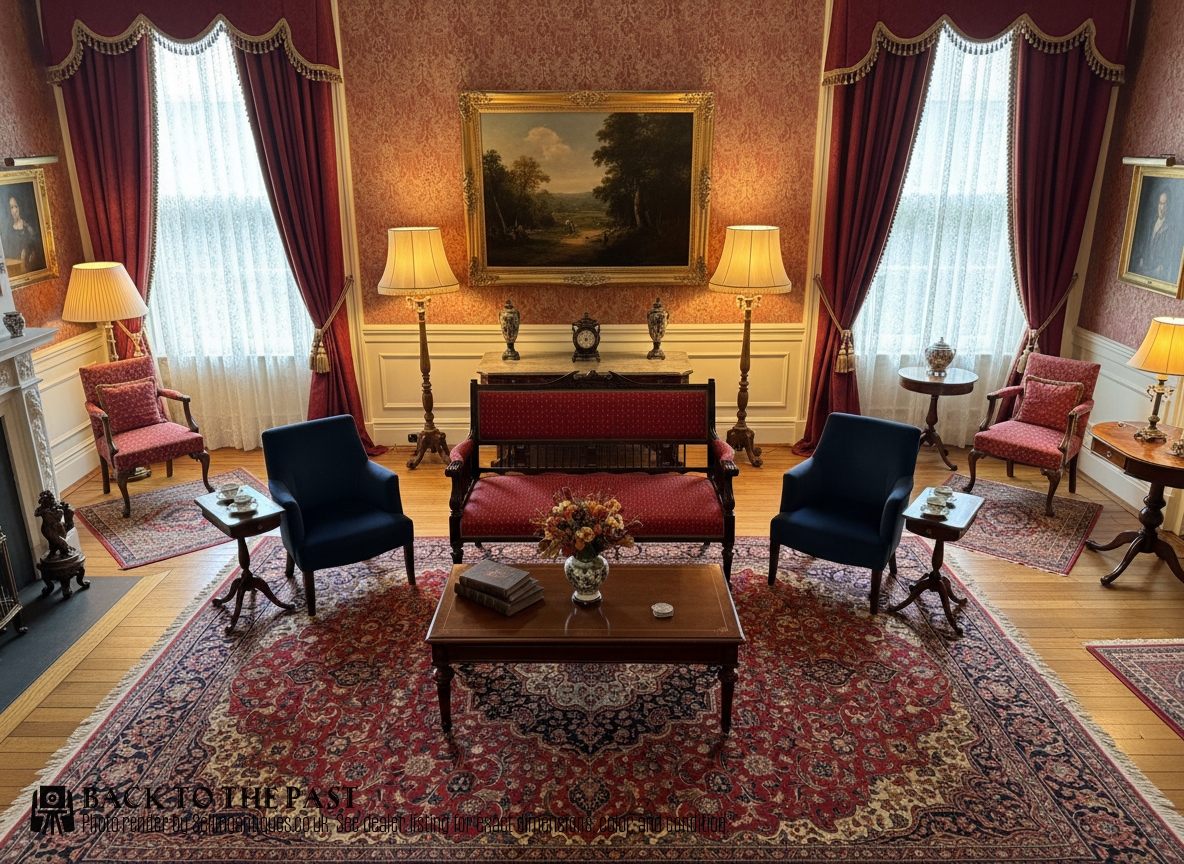
Victorian Carved Settee
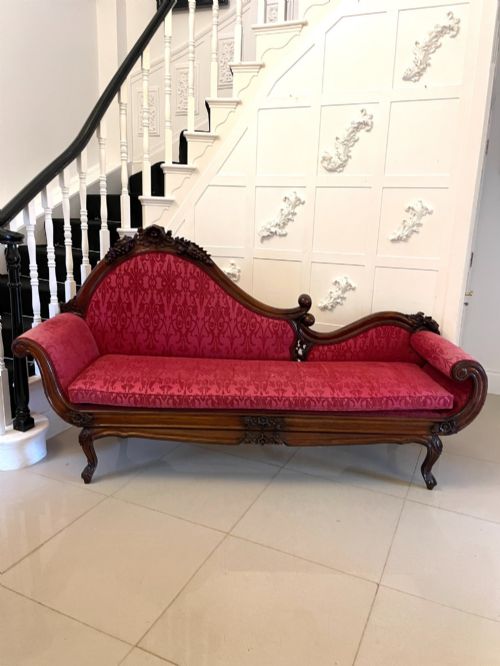
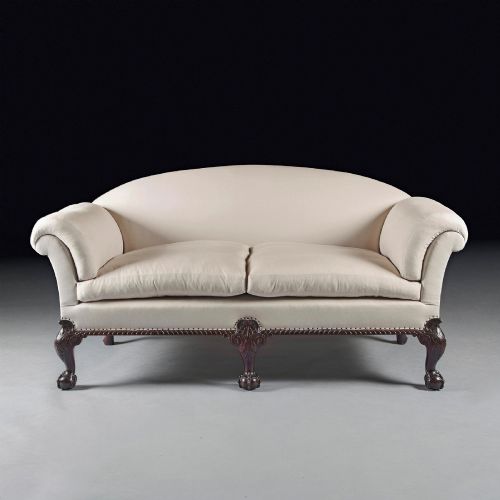
A victorian carved settee encompasses a range of nineteenth century upholstered seating forms, from double spoon-back sofas and salon suites to single-ended chaise longues and window seats. These pieces originate from various decades across the century, reflecting shifting domestic fashions from early robust mahogany frames to later intricate walnut designs.
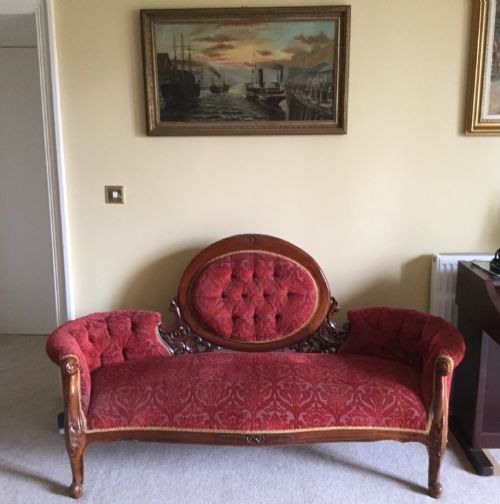
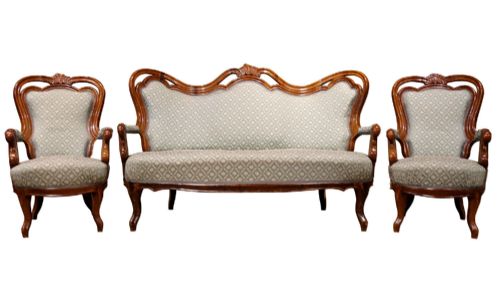
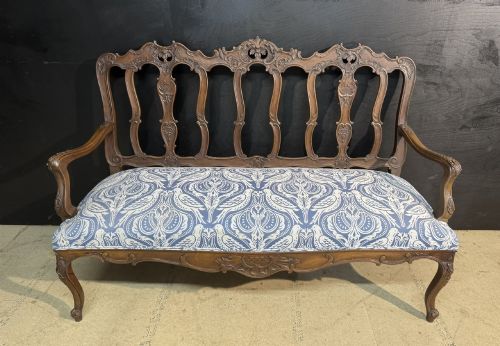
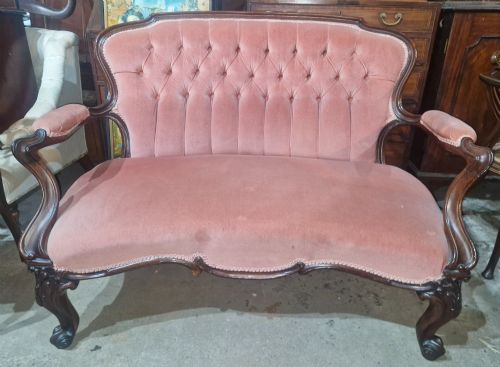
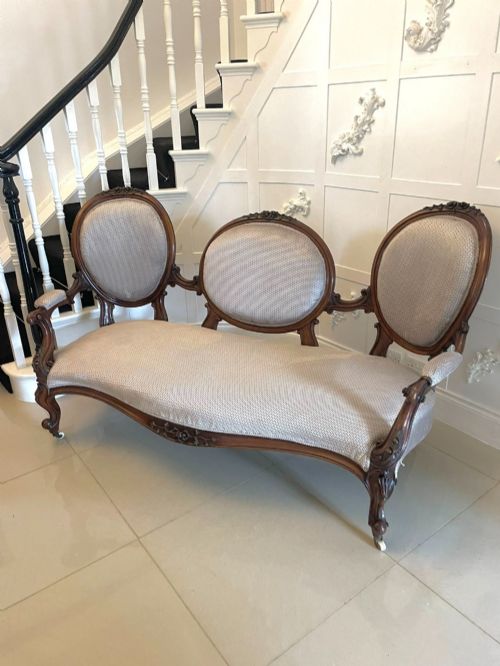
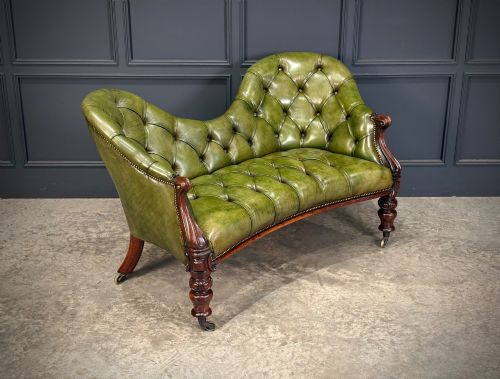
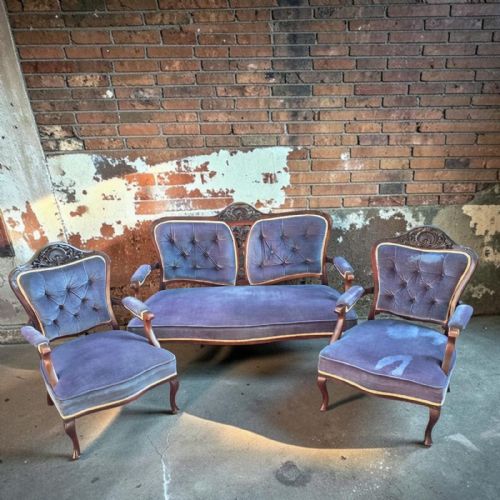
The version most commonly met on this page is the walnut or mahogany framed settee featuring carved scroll ends, open wooden show-frames, and buttoned upholstery. These multi-seater couches and day beds served formal drawing rooms and parlours, often arriving as part of larger matching salon suites.
Makers and regional styles introduce further variety, with pieces showing influences from French rococo revivals to Anglo-Indian colonial craftsmanship and Irish workshop traditions. Buyers encounter everything from compact love seats to large ornate couches designed for country house drawing rooms.
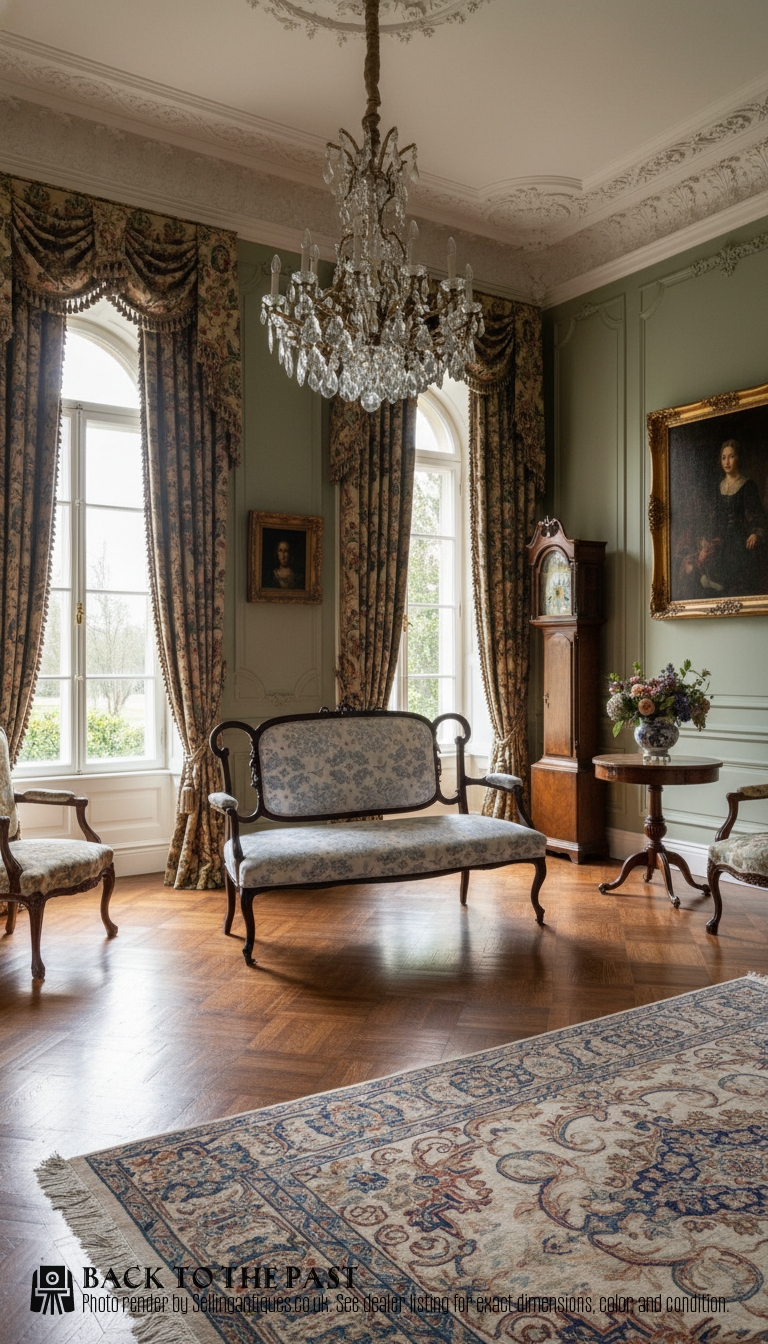
How they were made
The structural foundations rely heavily on dense hardwoods such as mahogany, walnut, rosewood, and occasional oak, chosen for their strength in supporting elaborate manual carving. Timber frames were constructed with traditional joinery before craftsmen applied detailed floral, foliate, and scroll motifs directly to the show-wood crest rails and arms.
Upholstery methods combined traditional sprung bases with horsehair or comparable stuffing, finished using deep buttoning, brocade, velvet, leather, or woven upholstery fabric. Brass castors frequently fitted to the forelegs allowed heavy timber frames to move across carpets without damaging flooring.
Victorian Carved Settee Retail Price Guide 2026
Typical asking prices for victorian carved settee among the pieces listed under this phrase on Sellingantiques today, from the lower quarter to the upper quarter. They describe what is for sale here now, not the wider market.
Listings feature walnut, mahogany, rosewood, and oak frames paired with velvet, leather, and brocade upholstery.
What varies in quality
The depth and crispness of the timber carving separate standard production from superior examples, where artisans spent significantly more time undercutting floral and scroll details by hand. Heavy walnut and rosewood frames with balanced proportions command greater appreciation than simpler mahogany or oak alternatives.
The integrity of the original show-wood frame combined with sympathetic upholstery restoration defines the overall standard. Pieces retaining their original buttoned leather, silk velvet, or brocade display the maker's initial ambition more clearly than modern replacements.
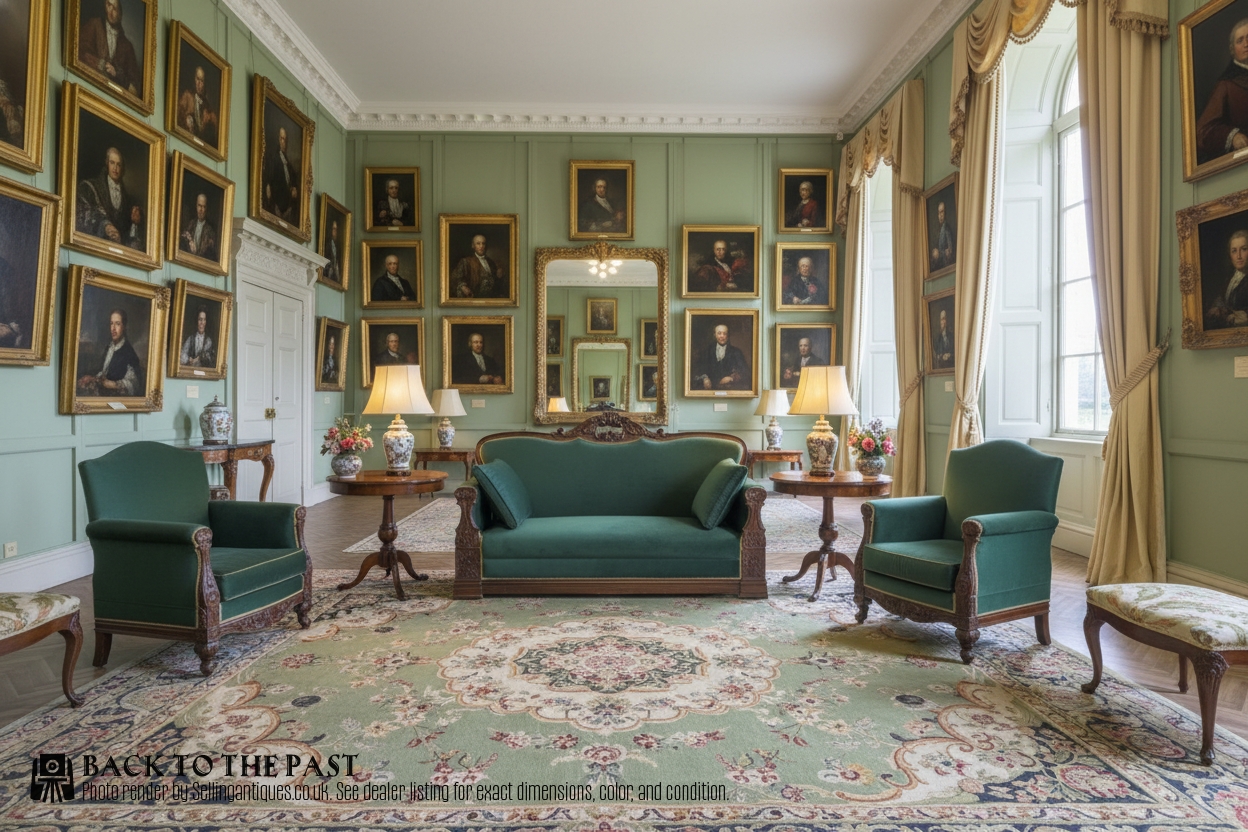
Howard and Sons·H. Goodall and Sons·Butlers of Dublin
The Victorian Carved Settee Glossary
- Settee
- A long upholstered seat with a back and arms, designed for multiple persons. These domestic forms formed the centrepiece of nineteenth-century drawing rooms.
- Chaise Longue
- An upholstered long chair or day bed allowing a person to recline with support at one end. Examples frequently feature a single carved scroll back.
- Button Back
- An upholstery technique where depressions are formed in the padding by stitching buttons through to the frame in a diamond pattern. This method keeps internal stuffing firmly distributed.
- Show-Wood
- The exposed polished wooden sections of a frame left visible around the upholstered portions. Craftsmen carved these areas to display the grain and colour of walnut or mahogany.
- Salon Suite
- A matched set of seating comprising a settee alongside matching armchairs and occasional chairs. These suites unified nineteenth-century parlour decoration.
Victorian Carved Settee: Frequently Asked Questions
How do I place a settee in a modern room?
These nineteenth-century seats work effectively as focal points in living spaces or large hallways, contrasting against neutral walls and contemporary furniture.
Their substantial timber frames and rich fabrics provide texture, making them practical for daily seating when paired with suitable floor clearance.
Were these pieces originally part of matching sets?
Many nineteenth-century couches were produced alongside matching armchairs and side chairs to form coordinated salon suites for formal drawing rooms.
Individual settees also survived independently as standalone items for smaller parlours and bedrooms.
How do I identify the period of a carved frame?
Earlier nineteenth-century examples often utilise dense rosewood or heavy mahogany with restrained classical lines, whereas later decades favour intricate walnut rococo revival curves.
Inspect the joinery and carving style under the frame to determine whether the work aligns with mid or late Victorian production methods.