




Victorian Carved Serving Tables
These victorian carved serving tables are sturdy dining room timber pieces designed to display food and hold silver, offering substantial presence and rich historical character.
Victorian Carved Serving Tables
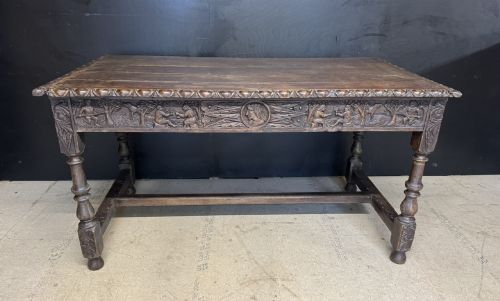
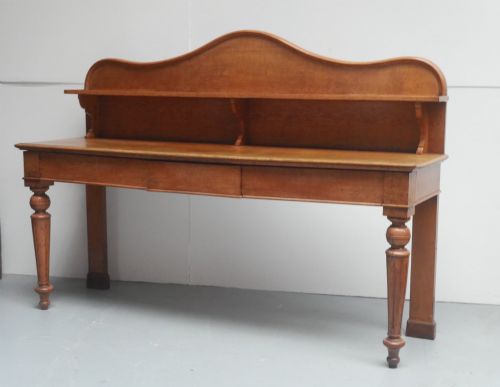
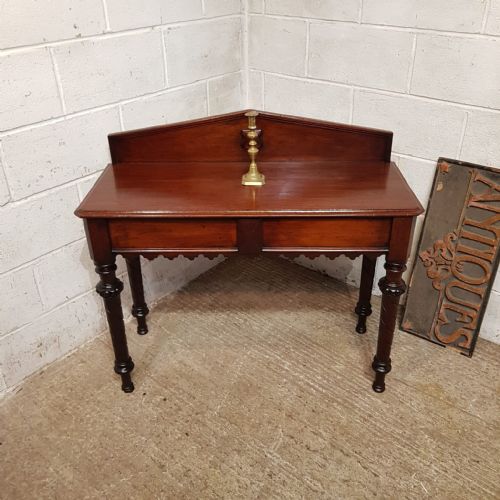
When you search for victorian carved serving tables, you encounter substantial dining furniture designed for hosting and display. These items bridge the gap between heavy practical sideboards and decorative console tables, emerging primarily from the nineteenth century in various regional timbers. The version you are most likely to meet on this page is a mahogany or oak structure featuring carved ornamentation, standing alongside walnut buffets and butler trays on stands.
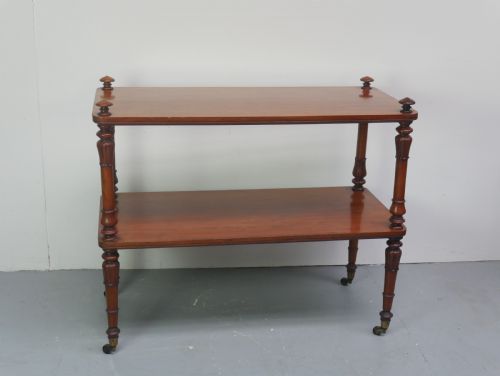
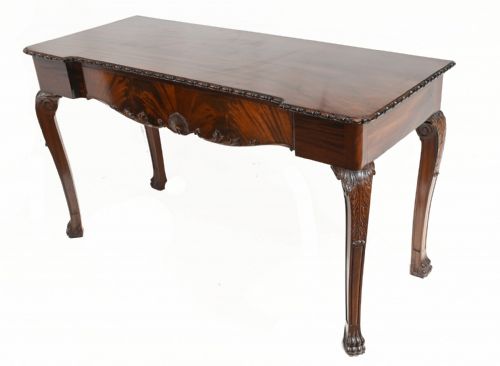
The forms span several distinct stylistic revivals, incorporating Gothic details, Chippendale mannerisms, and Irish design traditions. Alongside conventional serving tables, the listings include related dining room pieces such as dumb waiters, tiered sideboards, and console tables. These pieces served domestic households by holding dishes, cutlery, and serving vessels during large meals.
Materials and Construction
Makers built these serving tables using dense native and imported hardwoods, predominantly mahogany and oak, with occasional examples in walnut and pollard oak. These timbers provided the structural strength required to bear heavy silver dishes and stacked serving platters during large Victorian dinners.
Woodworkers applied hand-carved ornamentation directly to the solid timber frames, incorporating motifs from Gothic Revival and Chippendale styles. Joinery relied on traditional mortise and tenon methods, producing rigid table frames capable of supporting large marble or timber tops without sagging.
The furniture styles represented include Gothic Revival, Chippendale Manner, Anglo-Indian, and Irish Regency designs.
Judgement of Quality
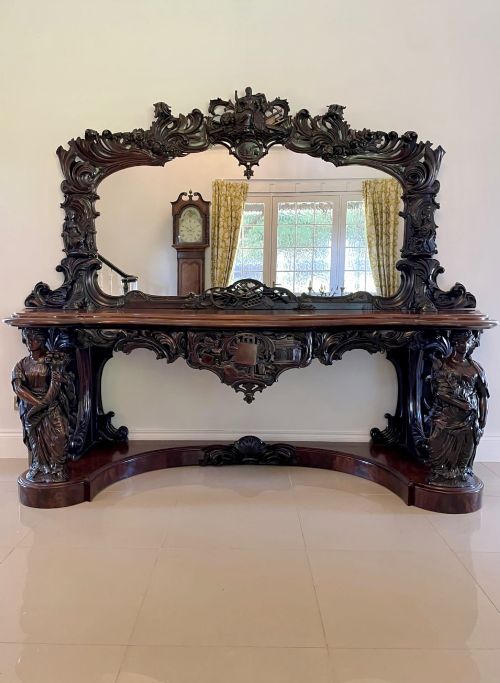
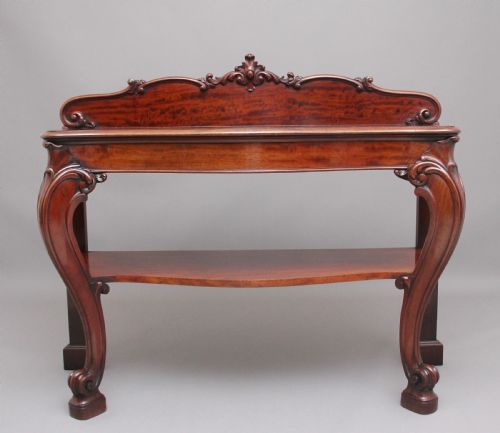
The distinction between ordinary and exceptional serving tables rests on the depth and execution of the timber carving. Superior examples display crisp, hand-chiselled detailing across legs, aprons, and mirror backs, executed with anatomical or botanical precision.
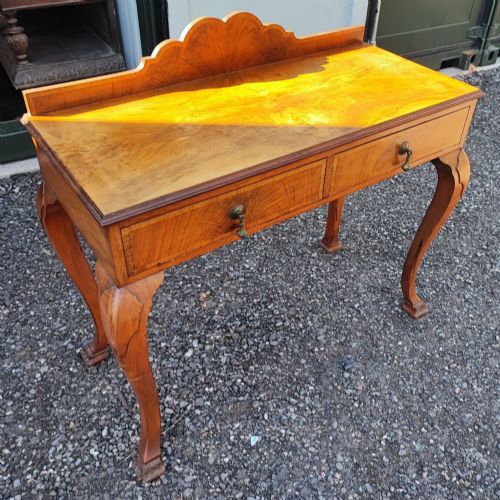
Selection of figured timber significantly elevates a piece, with master cabinetmakers choosing book-matched mahogany or pollard oak veneers and solid planks. The integration of secondary materials, such as brass hardware or marble inserts, further separates standard workshop production from exhibition quality pieces.
Gillows·Robert Strahan And Co·Tiffany And Co
The Victorian Carved Serving Tables Glossary
- Buffet
- A dining room piece used for food service and storage, often featuring tiered shelves or enclosed cupboards below. These items appeared frequently in nineteenth-century dining rooms alongside standard serving tables.
- Dumb waiter
- A tiered serving stand fitted with revolving or stationary circular shelves for holding dishes without servants present. They allowed diners to help themselves to courses during private meals.
- Console table
- A table designed to stand flat against a wall, frequently supported by decorative brackets or legs. Many share architectural profiles with serving tables of the period.
- Butler tray
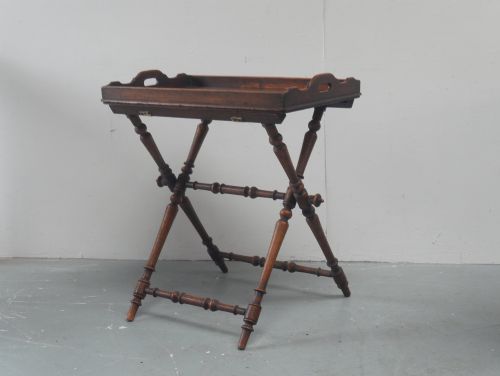
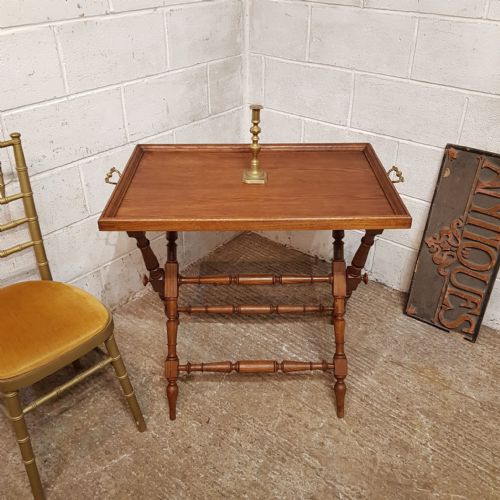
- A portable wooden tray with hinged or fixed sides, typically placed upon a folding X-frame stand. They functioned as flexible serving surfaces in Victorian households.
- Gothic Revival
- An architectural and decorative style drawing on medieval ecclesiastical forms, featuring pointed arches and heavy tracery. This aesthetic influenced the carved ornamentation on numerous oak serving tables.
Victorian Carved Serving Tables: Frequently Asked Questions
What is a Victorian serving table?
A Victorian serving table is a heavy timber dining room console used for presenting dishes and storing serving ware during meals.
These pieces typically feature substantial carved wood construction in mahogany or oak, often incorporating stylistic elements from Gothic or Chippendale revivals.
How do I use one today?
These tables function well as sideboards in modern dining spaces or as display consoles in entrance halls.
Their generous timber surfaces provide practical space for lamps, books, and decorative objects while adding nineteenth-century architectural character to a room.
Are butler trays considered serving tables?
Butler trays on stands serve a similar domestic function to larger serving tables by providing portable surface area for drinks and food.
They offer a more compact alternative to stationary sideboards while maintaining period timber construction.
How do I distinguish oak from mahogany pieces?
Oak serving tables typically display pronounced growth rings and a coarser grain structure, frequently associated with Gothic or country house styles.
Mahogany tables generally exhibit a smoother, reddish-brown grain capable of taking crisp, intricate carved details associated with formal dining rooms.