
Victorian Canterbury Rack
When you search for a victorian canterbury rack, you are looking at nineteenth-century furniture designed to keep newspapers, sheet music and periodicals orderly.
Victorian Canterbury Rack
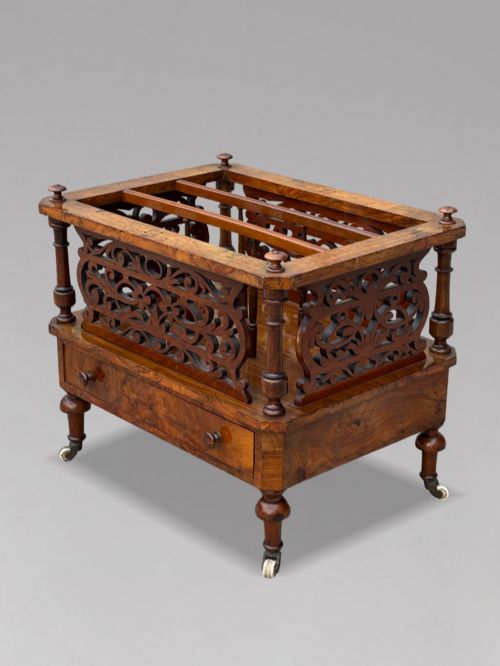
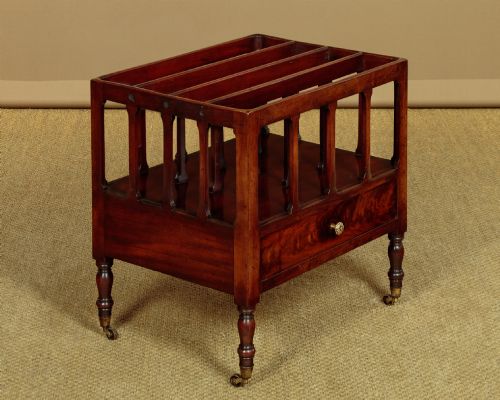
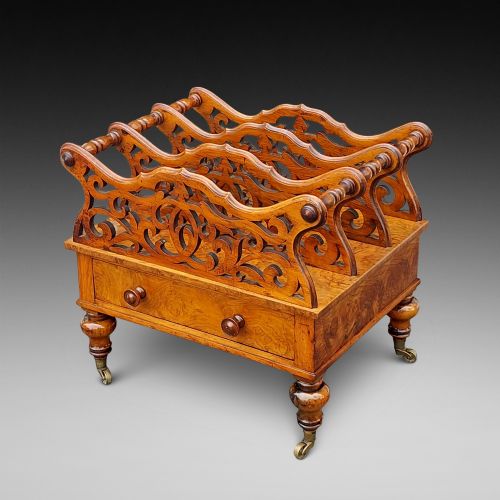
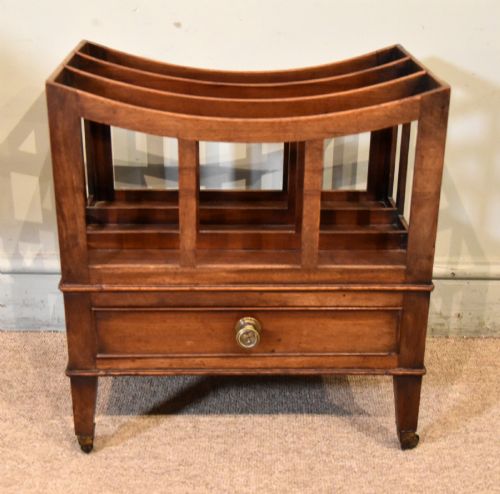
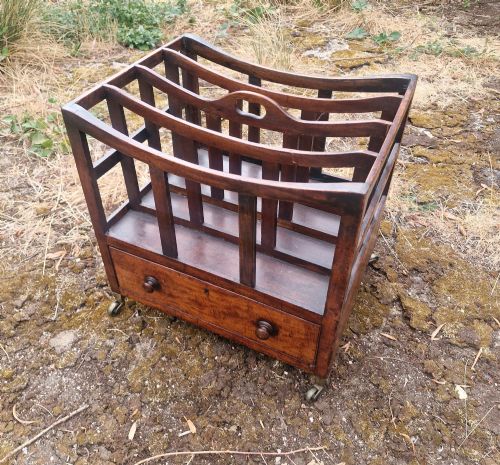
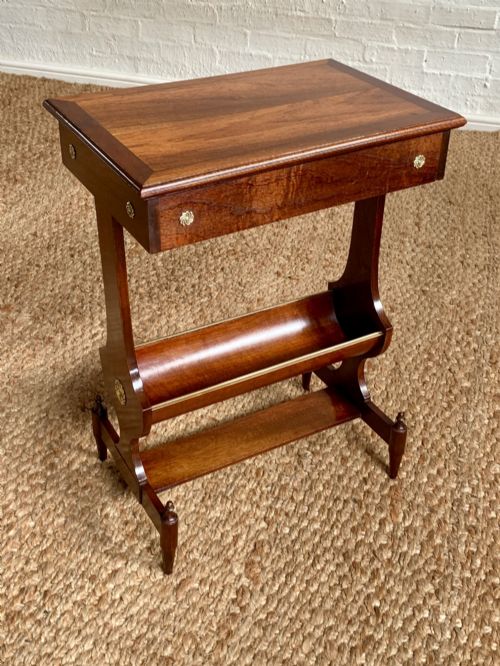
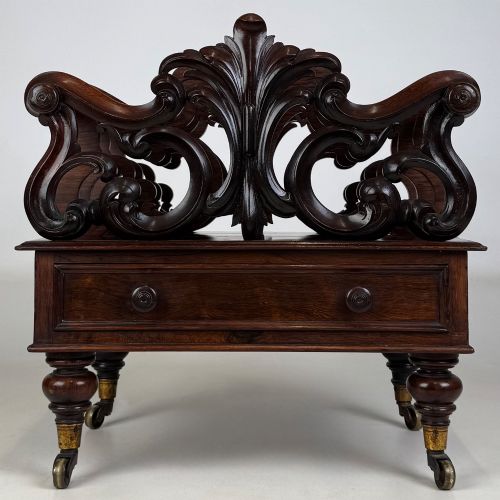
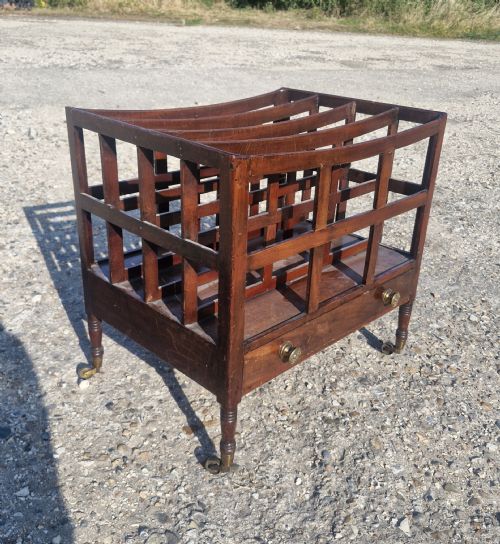
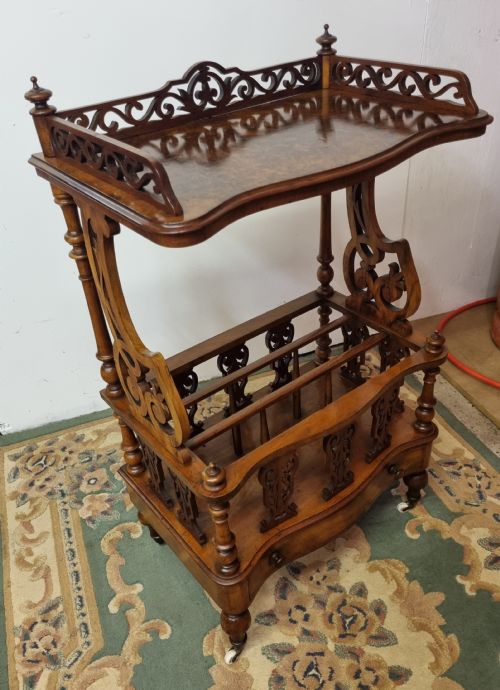
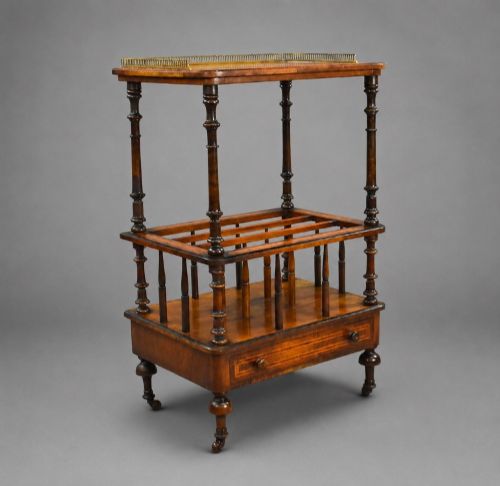
A victorian canterbury rack combines partitioned vertical divisions for reading materials with a low stand, frequently incorporating a drawer at the base or standing on turned legs with castors. The version met most often on this page is the walnut or mahogany tier piece dating from the mid-nineteenth century, built with slatted or pierced divisions.
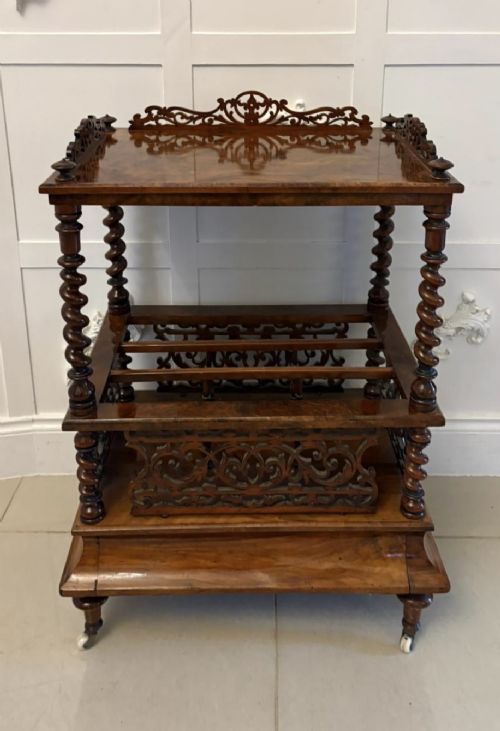
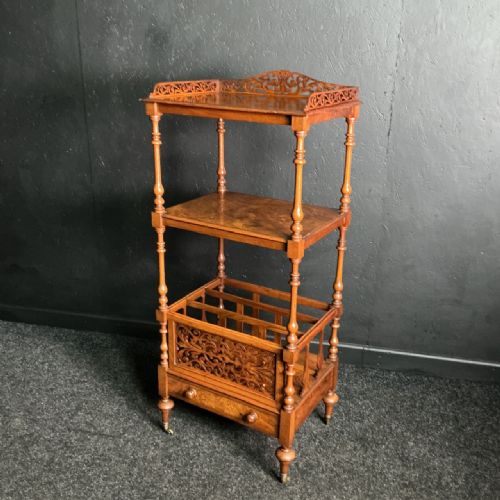
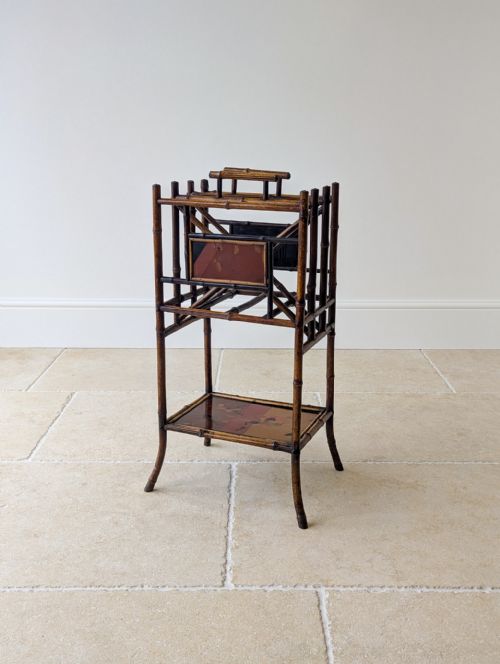
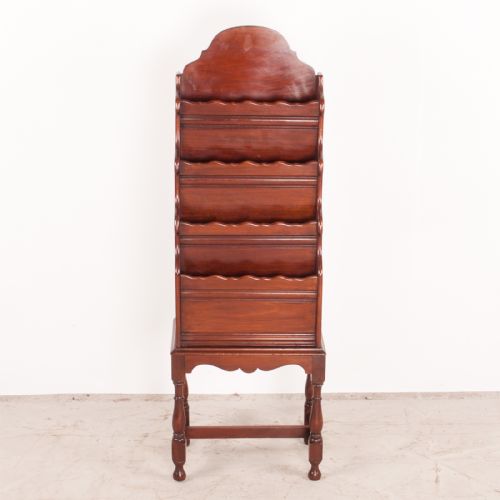
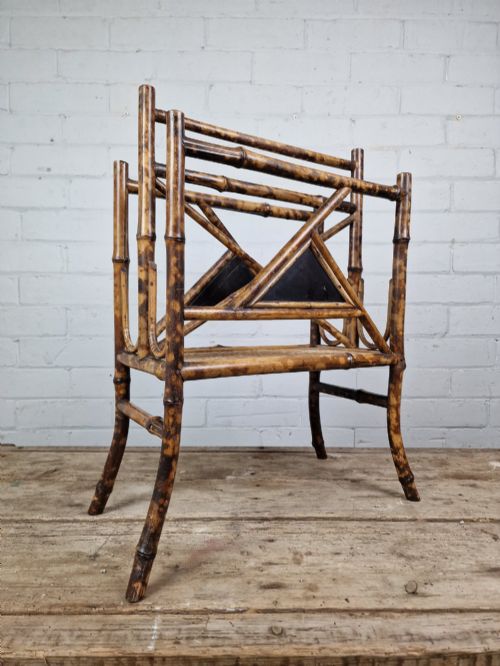
Makers adapted the form across the period, producing variations that combined the rack with a side table, a whatnot or a music stand. Alongside traditional timber models, examples from the later decades utilise bamboo or brass to serve the same domestic function.
How they were made
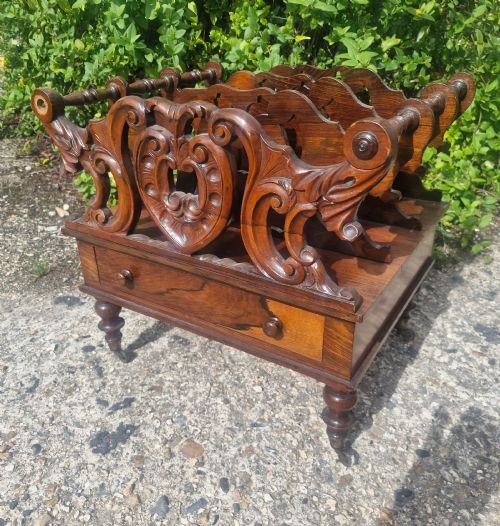
Cabinetmakers constructed these pieces primarily in rich timbers such as burr walnut, mahogany and rosewood, often applying marquetry inlay or brass fittings to enrich the framework. Slatted divisions were carefully joined to the base, while pieces influenced by the Aesthetic Movement utilised bamboo or ebonised wood.
Structural elements like turned spindles, fretwork panels and ceramic castors reveal the joinery methods typical of nineteenth-century workshops. Drawer linings and secondary woods corroborate the period of manufacture.
Periods represented across the inventory range from Regency and William IV through high Victorian to Edwardian and Arts and Crafts.
What varies in quality
The choice of timber grain defines the visual merit of a piece, with figured burr walnut and rosewood occupying the upper tier of the range while plainer fruitwood or standard mahogany sit lower. The crispness of carved details, inlay work and turned spindles separates standard production from exceptional cabinetmaking.
Proportion and structural complexity influence desirability, particularly where a design integrates a drawer, shelves or a revolving mechanism rather than relying on a simple slatted frame.
Edwards and Roberts
The Victorian Canterbury Rack Glossary
- Canterbury
- A low stand with partitions for holding sheet music, newspapers or magazines, developed in the late eighteenth century and popular throughout the Victorian era.
- Whatnot
- An open set of freestanding shelves used for displaying ornaments or holding books, frequently combined with a canterbury base.
- Marquetry
- Decorative patterns formed by inserting pieces of contrasting veneer into a solid wood background to create ornamental motifs.
- Ebonised
- Timber treated with a dark finish to imitate expensive ebony, a technique favoured during the Victorian period.
- Spindle
- A thin, turned piece of wood used structurally or decoratively to form the vertical partitions of the rack.
Victorian Canterbury Rack: Frequently Asked Questions
What is a canterbury rack used for?
Originally designed to hold sheet music near a piano, these stands evolved to store newspapers, periodicals and journals in the Victorian drawing room.
They kept reading materials tidy and close to hand while sitting neatly beside armchairs or tables.
How do I tell a walnut canterbury from rosewood?
Walnut displays a lighter, warmer brown tone often featuring rich figuring or burr patterns across the flat surfaces.
Rosewood presents a much darker, heavier appearance with distinct reddish or purplish grain variations.
Did Victorians use bamboo for these stands?
Bamboo became popular during the later decades of the nineteenth century, driven by an interest in Japanese design and the Aesthetic Movement.
These pieces brought a lighter, exotic texture into domestic interiors compared to traditional heavy timbers.
How do I style a canterbury in a modern room?
The compact footprint allows the stand to function effectively beside a sofa or desk as a practical holder for magazines and books.
The warm tones of the timber introduce historical character and texture into contemporary living spaces.