

Victorian Burr Walnut Loo Table
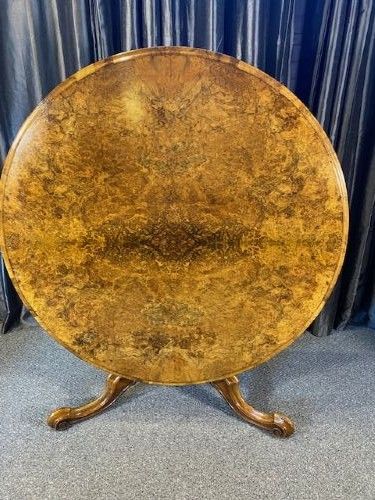
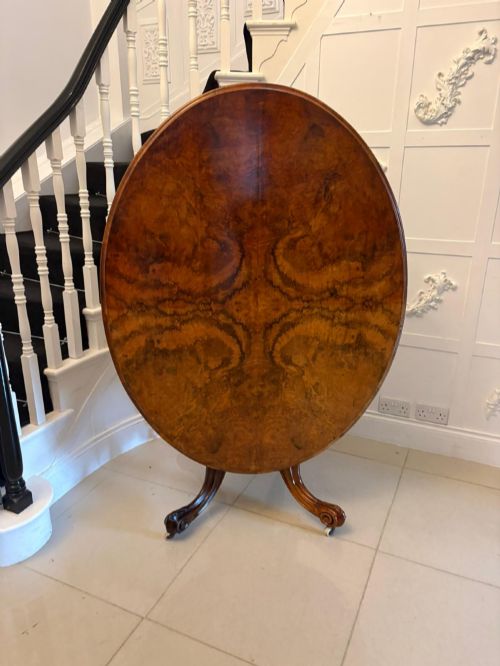
A victorian burr walnut loo table is a grand parlour centrepiece designed for evening card games and social gatherings.
Victorian Burr Walnut Loo Table
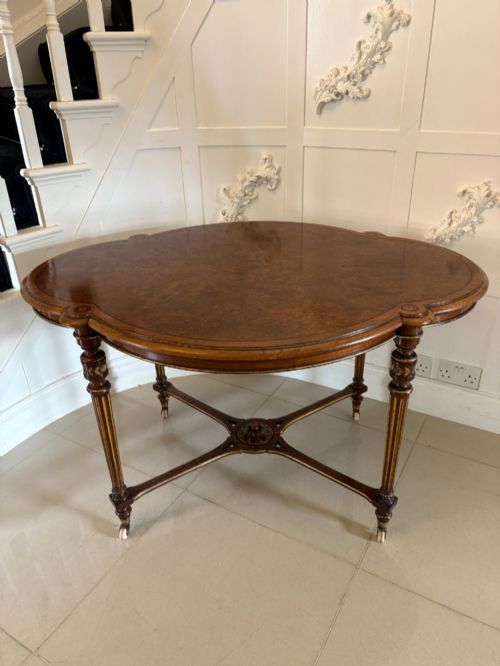
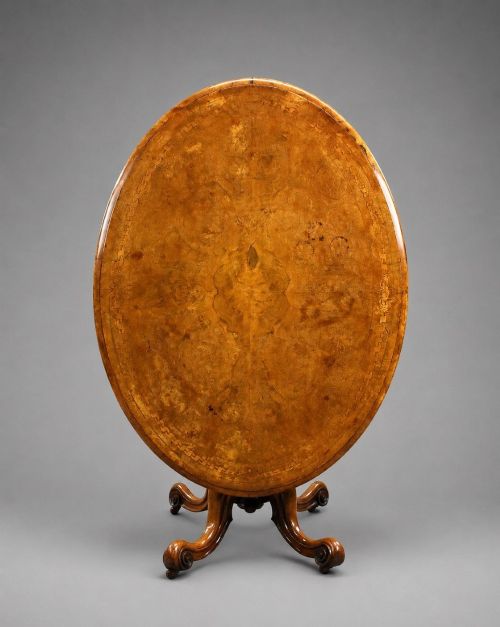
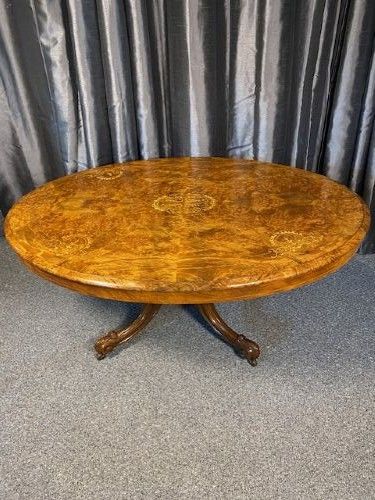
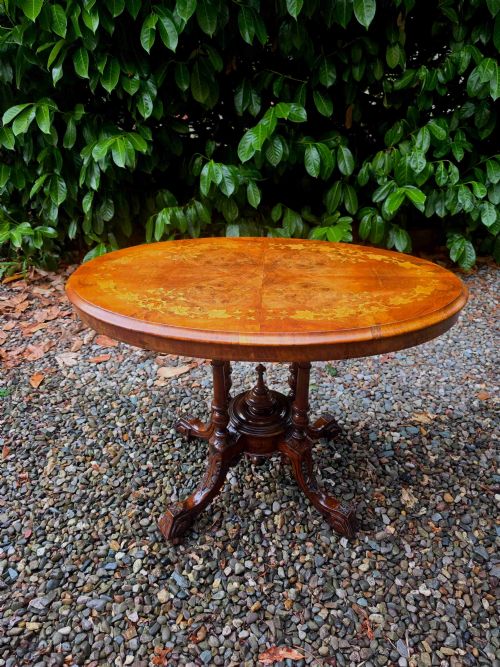
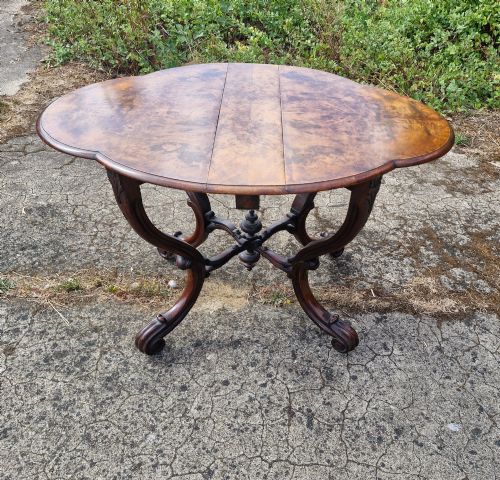
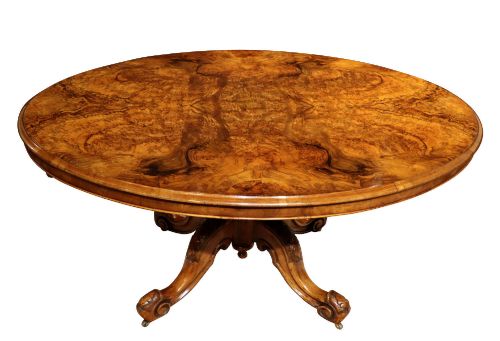
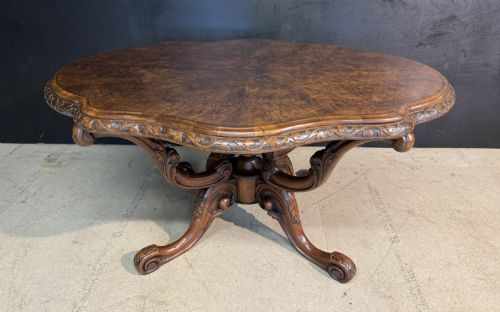
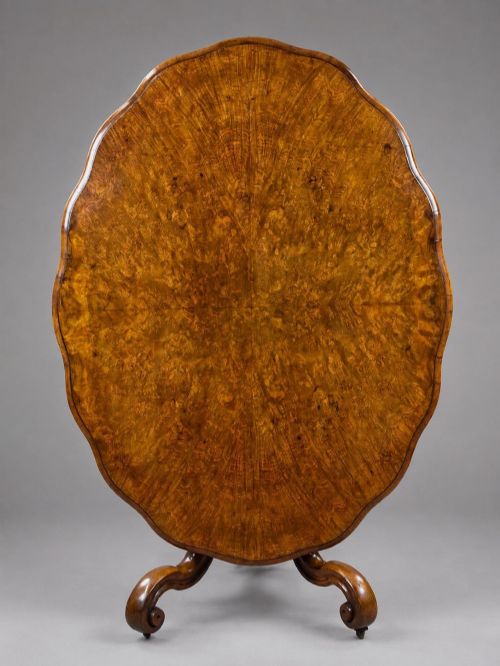
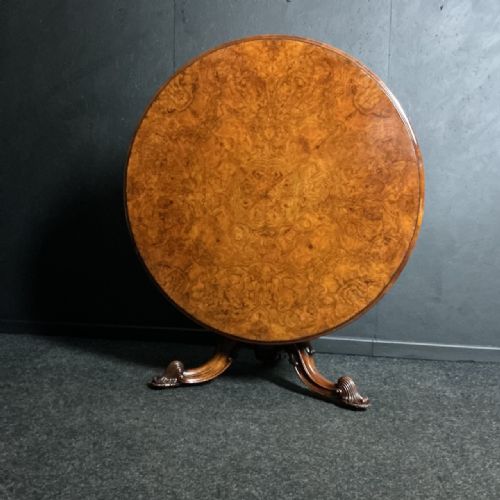
A victorian burr walnut loo table typically takes an oval or round shape designed to sit proudly in a nineteenth-century drawing room.
The evidence shows these walnut tables appearing frequently across the Victorian period, particularly around eighteen-fifty to eighteen-eighty.
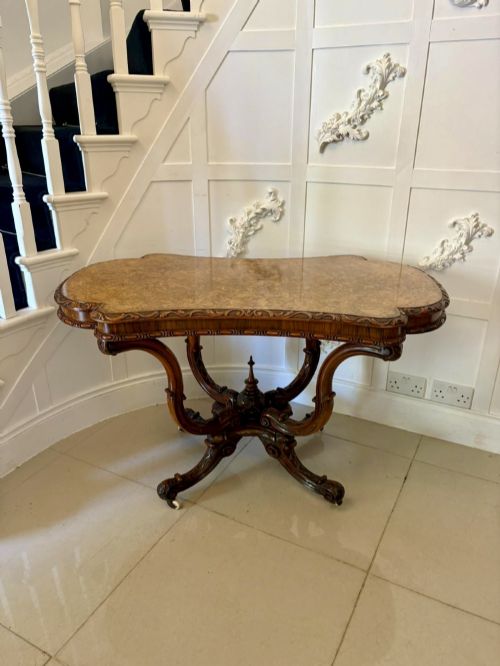
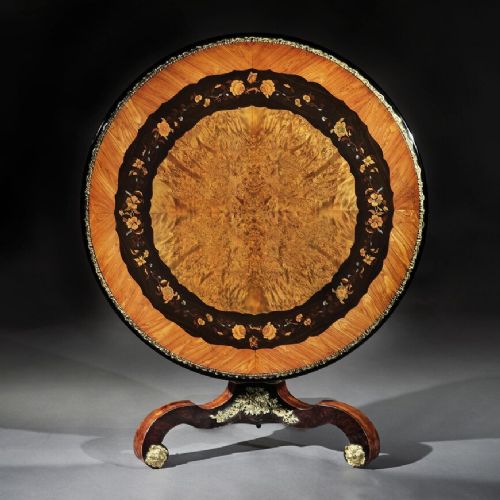
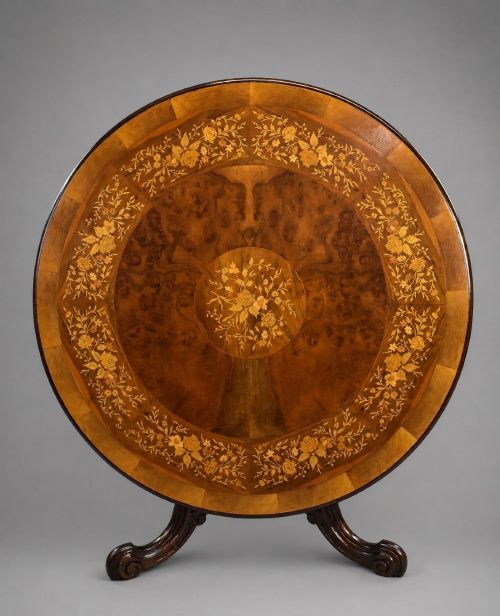
Common variations include tilt-top mechanisms, marquetry inlay, and carved quadrapod bases supporting the central column.
Materials and construction
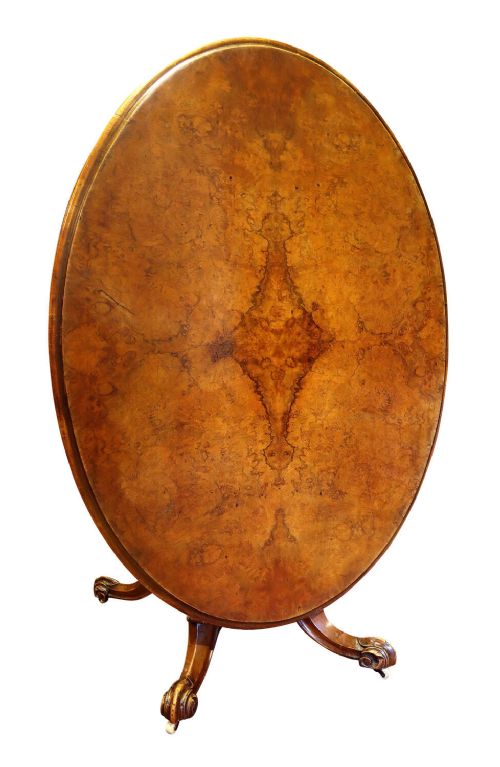
Cabinetmakers utilised burr walnut veneers applied over solid timber carcases to achieve rich, swirling grain patterns on the table tops.
Inlay work incorporated boxwood, fruitwood, and various contrasting woods to create floral or geometric marquetry motifs.
Many examples incorporated a hinged tilt-top mechanism, allowing the table to rest vertically against a wall when not in use.
The archive records circular, oval, and octagonal formats supported predominantly by carved quadrapod column bases.
Judging the standard
The intricacy and precision of the marquetry inlay and the choice of highly figured burr walnut veneer distinguish superior examples from plain ones.
Carving depth and definition on the central pedestal and leg supports reflect the skill of the original workshop.
Edward Holmes Baldock
The Victorian Burr Walnut Loo Table Glossary
- Loo table
- A large Victorian card and social table. The name derives from loo, a popular nineteenth-century card game.
- Tilt top
- A hinged table top mechanism. This allows the surface to swivel vertically for compact storage.
- Burr walnut
- Wood grain with knot growths. It produces complex, swirling patterns highly prized for furniture veneers.
- Marquetry
- Decorative wood inlay. Craftsmen assemble contrasting veneers to form pictorial or geometric patterns.
Victorian Burr Walnut Loo Table: Frequently Asked Questions
What is a loo table?
A loo table is a large nineteenth-century occasional table designed for social gatherings and card games played during the evening.
These tables typically feature large circular or oval tops supported by a central carved pedestal and sturdy legs.
Why do these tables tilt?
The tilting mechanism allowed Victorian households to pivot the heavy wooden top into a vertical position.
This clever design saved valuable floor space in drawing rooms when the table was not needed for daily use.
How do I date a burr walnut table?
Dating relies on examining the construction methods, leg styles, and secondary timbers used beneath the polished surfaces.
Pieces originating from the mid to late nineteenth century often display specific revival styles and mechanical innovations.
Are these tables suitable for modern dining?
Many larger oval examples easily seat multiple people for dinner or serve as striking central library tables.
The tilt-top function also makes them practical for flexible living spaces where furniture arrangements change.