


Walnut Snap Top Table
A walnut snap top table is a versatile antique that tilts for easy storage when not in use, offering warmth and practical charm.
Walnut Snap Top Table
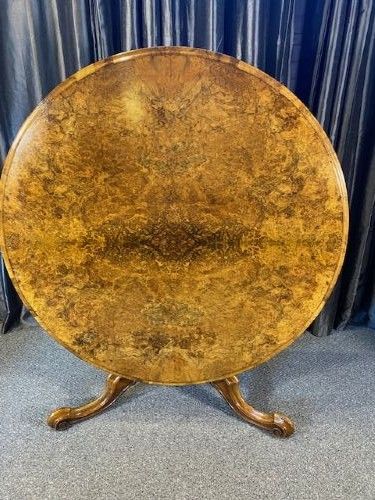
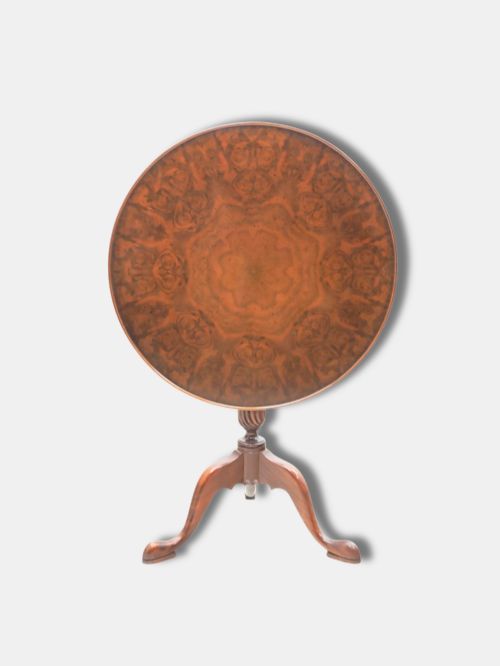
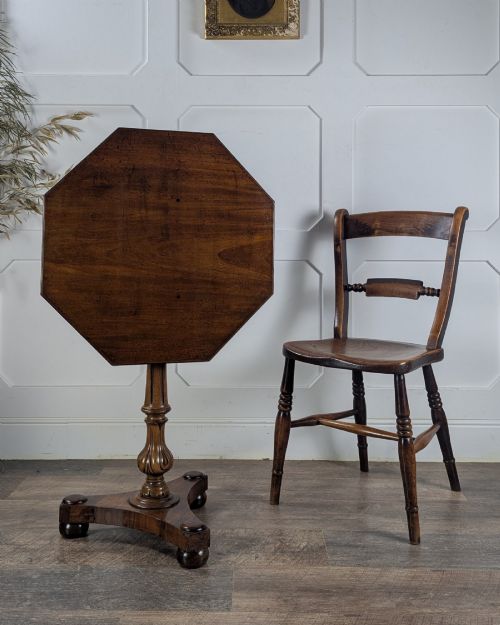
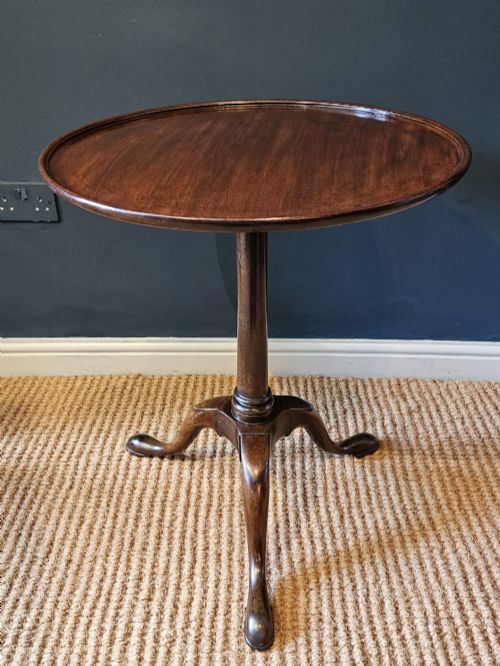
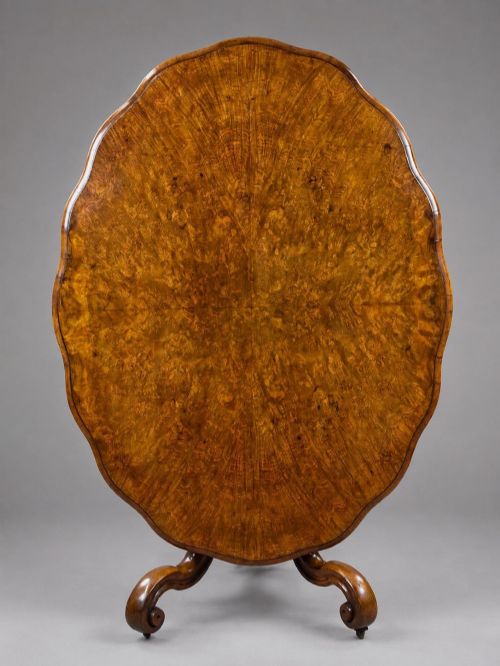
A walnut snap top table combines rich timber with a clever pivoting mechanism that allows the top to fold vertically. These pieces appear in forms ranging from compact occasional tables to substantial Victorian loo and breakfast tables.
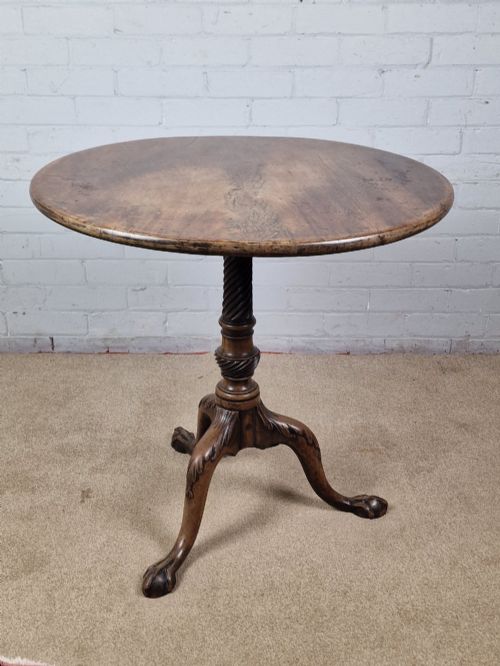
The evidence shows periods stretching from the eighteenth century through the Georgian era and deep into the Victorian epoch, with occasional twentieth-century revivals. You are most likely to encounter Victorian burr walnut examples or Georgian tripod designs on this page.
Origins span English workshops alongside Continental and Irish pieces, reflecting diverse regional cabinet-making traditions. Their uses varied from tea service to central room display, making them both functional furniture and decorative centrepieces.
What varies in quality
The choice of timber creates the primary distinction in quality, with richly figured burr walnut and deep red walnut commanding attention. The crispness of the carving on the tripod legs or pedestal base further separates standard pieces from exceptional ones.
The integrity of the snap mechanism and the flatness of the timber top dictate the piece's structural success. Superior examples maintain a tight, wobble-free lock when horizontal and a smooth pivot when tilted.
Swiss Black Forest examples bring an unexpected woodland charm to the walnut table family through carved animal motifs.
The Walnut Snap Top Table Glossary
- Snap top
- A table top attached to a hinge and catch mechanism that allows it to tilt vertically against the pillar. This clever design saved valuable floor space in smaller historic rooms.
- Tilt top
- An alternative term for a snap top table where the surface pivots on its central column. It ensures the table can be tucked flat against a wall.
- Burr walnut
- Timber taken from the gnarled growth of a walnut tree, showing intricate, swirling grain patterns. It was sliced into thin veneers for decorative table tops.
- Tripod table
- A small occasional table supported by a pillar above three splayed legs. This construction ensured stability on uneven floors.
- Loo table
- A large Victorian card and social game table, often featuring an oval or circular walnut top with a tilting mechanism. These served as grand centrepieces in nineteenth-century drawing rooms.
Walnut Snap Top Table: Frequently Asked Questions
What is a snap top table?
A snap top table is an occasional or dining table featuring a hinge mechanism beneath the surface. This allows the top to tilt flat when not in use.
Historically, this design saved space in parlours and drawing rooms by letting the furniture rest against a wall.
How do I date a walnut table?
Dating relies on observing the leg styles, timber choice, and construction methods. Georgian examples often feature slender tripod legs and rich red walnut.
Victorian pieces frequently utilise burr walnut veneer, heavier pedestals, and occasional marquetry inlay. Comparing the underneath hardware also reveals the period.
How should I care for burr walnut?
Burr walnut veneer requires protection from direct sunlight and excessive heat to prevent fading and cracking. Regular dusting with a soft, dry cloth preserves the polished finish.
Applying high-quality beeswax occasionally nourishes the historic timber without harming the delicate grain.
Can I use a tilt top table daily?
These tables handle everyday use well, provided you treat the pivoting mechanism with care. Placing them away from heavy traffic areas prevents accidental bumps against the tilted top.
Their sturdy pedestals make them reliable for holding lamps, books, or tea sets.