

Circular Walnut Table
A circular walnut table brings warmth and proportion to a room, offering practical surface space across periods from Georgian dining pieces to Art Deco coffee designs.
Circular Walnut Table
When searching for a circular walnut table, buyers encounter a diverse selection spanning the Georgian, Victorian, and Art Deco eras. The surviving pieces range from compact lamp and wine tables to large pedestal dining tables and low coffee tiers.
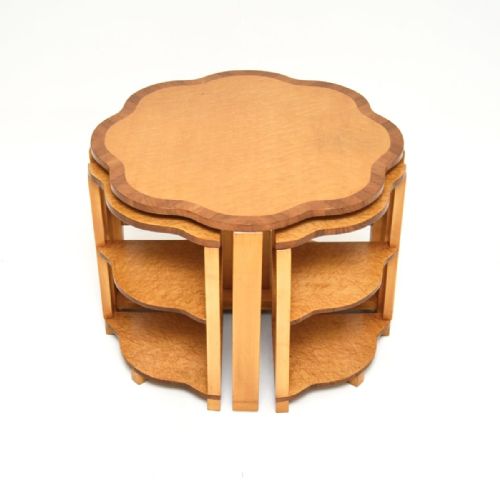
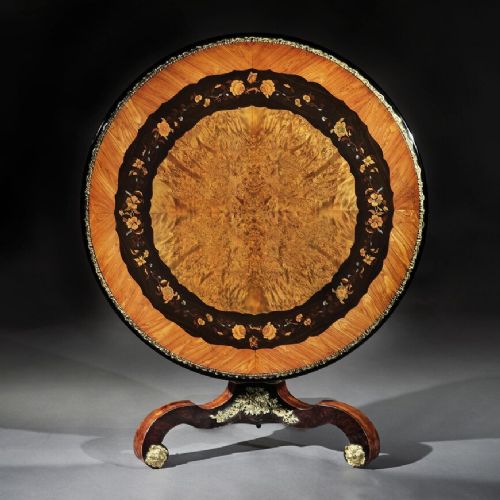
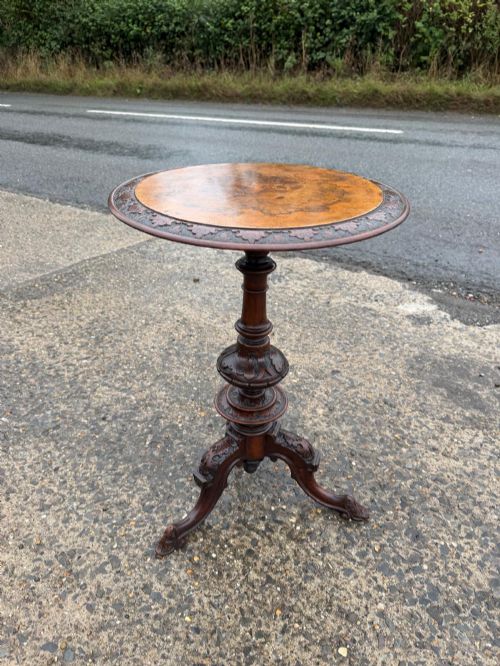
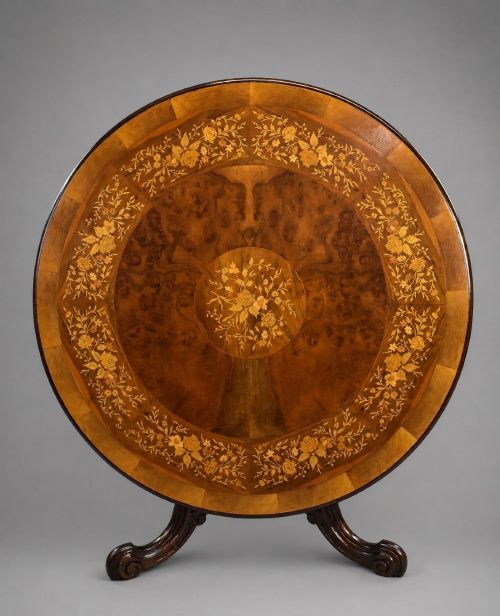
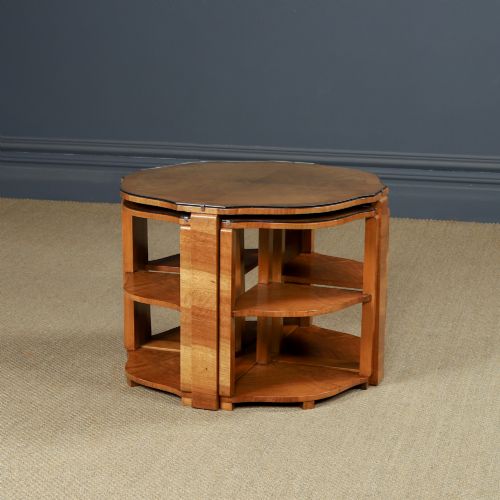
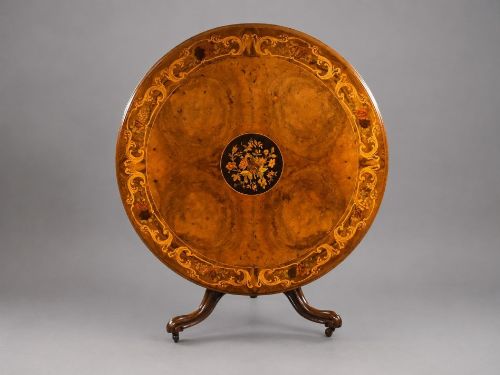
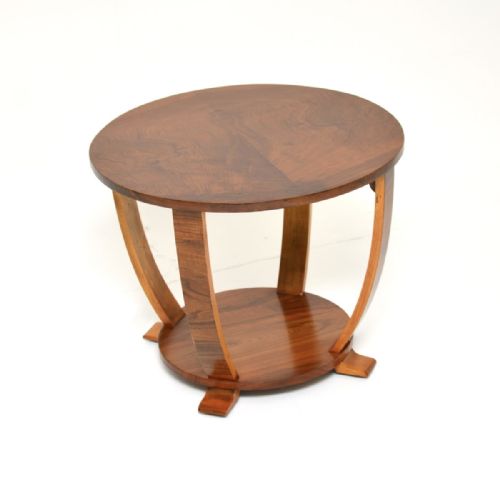
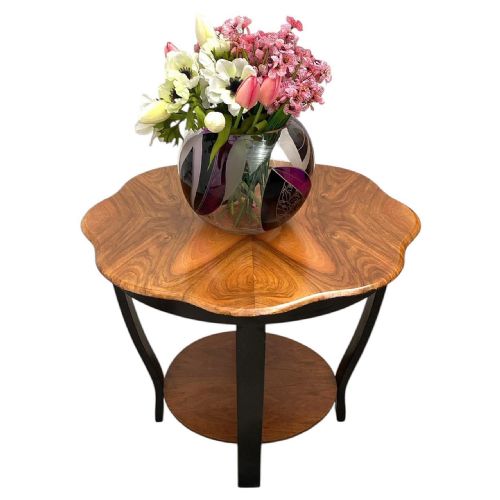
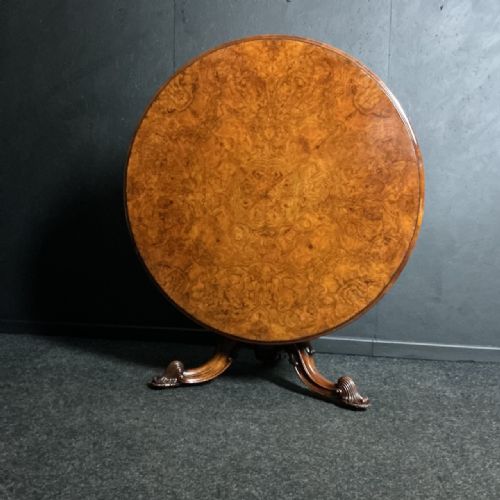
Victorian examples frequently showcase burr walnut veneer and marquetry inlay upon tripod or pillar bases, often designed as breakfast or centre tables. Meanwhile, 1930s pieces lean towards streamlined coffee and occasional forms utilising figured walnut veneers alongside maple.
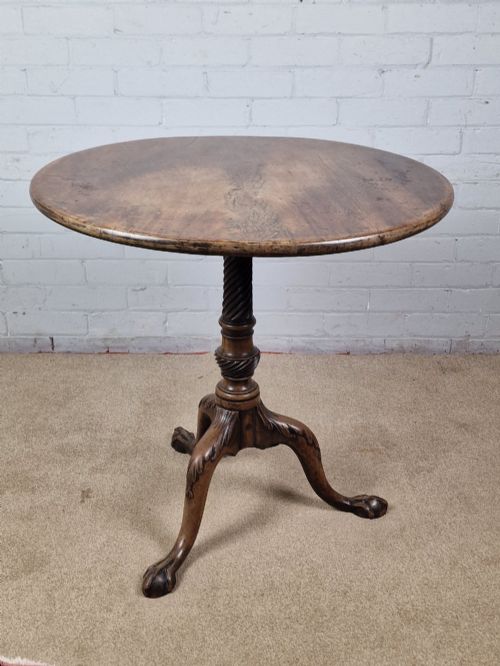
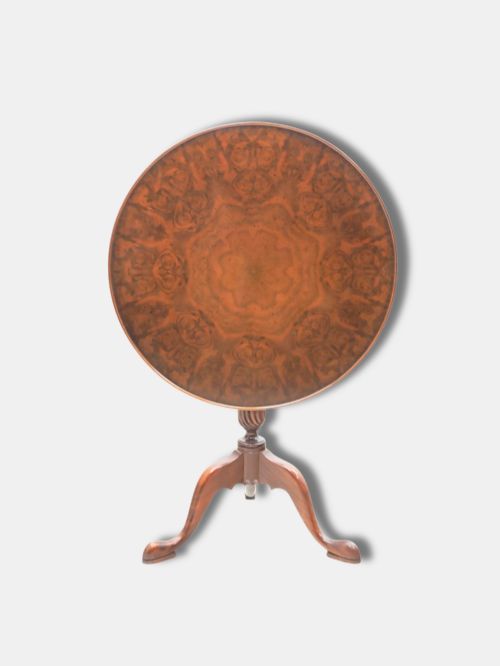
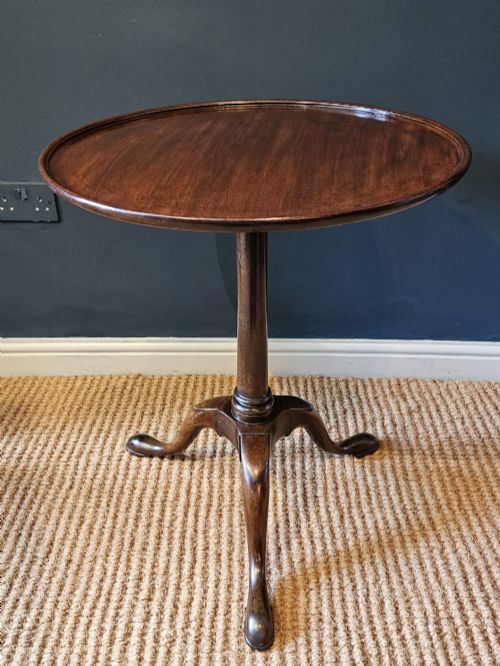
Earlier Georgian and 19th-century specimens appear as tilt-top designs, tripod tables, and occasional variants in solid or veneered walnut. These historical domestic items fulfilled specific daily functions, from serving tea and holding lamps to dining and needlework.
Materials and construction methods
Cabinetmakers utilised walnut and burr walnut for its distinctive grain patterns, frequently applying finely figured veneers over secondary timbers to create decorative table tops. Marquetry and inlaid contrasting woods appear across Victorian and 19th-century centre tables.
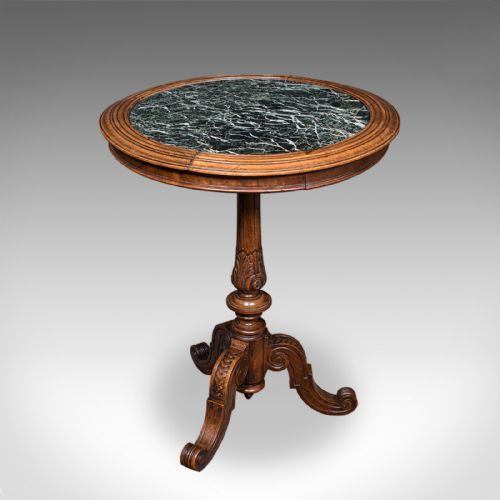
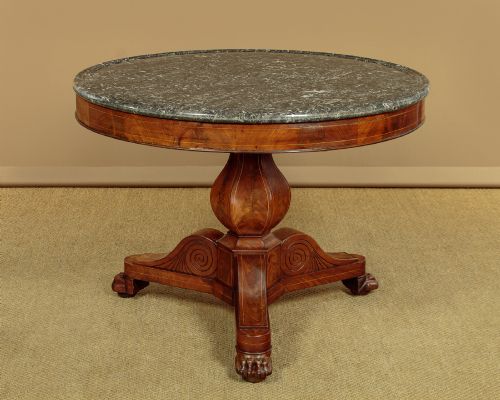
Tripod bases and pedestals often incorporated turned central columns supported by carved legs, while tilt-top mechanisms allowed tables to be stored flat against walls when not in use. Selected pieces integrate brass hardware, marble inserts, or leather writing surfaces into the primary wooden structure.
Circular Walnut Table Retail Price Guide 2026
Typical asking prices for circular walnut table among the pieces listed under this phrase on Sellingantiques today, from the lower quarter to the upper quarter. They describe what is for sale here now, not the wider market.
Listings span multiple eras from 18th-century Georgian and Victorian pieces to 1930s Art Deco designs, utilising solid walnut, burr walnut veneer, marble, and brass.
Distinctions in construction and design
The degree of refinement in the wood selection and the complexity of the marquetry inlay determine the visual standing of individual pieces. Master craftsmen aligned grain patterns symmetrically across circular tops, whereas simpler production methods relied on standard veneer matching.
Structural stability in the central pillar and the smoothness of tilt-top or pedestal mechanisms distinguish higher grades of manufacture. The crispness of hand-carved details on tripod legs and the integration of secondary elements like secret drawers further separate standard workshop output from exceptional examples.
Edward Holmes Baldock·Harry and Lou Epstein·Gillows
The Circular Walnut Table Glossary
- Burr walnut
- Timber harvested from tree growths that produce intricate, swirling grain patterns. Cabinetmakers sliced these burls into thin veneers for decorative table tops.
- Marquetry
- The art of applying pieces of veneer to a structure to form decorative patterns or pictures. Victorian examples often display floral motifs in contrasting woods.
- Tilt top
- A tabletop mounted on a hinge mechanism that allows the surface to pivot vertically. This allowed tables to be stored against walls when not in use.
- Tripod base
- A pedestal support resting on three feet or legs. This configuration provides stability on uneven floors.
- Gueridon
- A small ornamental round table supported by one or more columns. The form originated in 17th-century France and reappeared in later periods.
- Centre table
- A piece finished on all sides designed to stand free in the middle of a room rather than against a wall.
Circular Walnut Table: Frequently Asked Questions
What rooms suit a circular walnut table?
Smaller occasional, lamp, and wine tables fit beside seating in sitting rooms or serve as bedside surfaces. Larger pedestal and dining versions anchor central spaces in dining rooms and libraries.
The curved outline softens linear room layouts and improves circulation around furniture groupings.
How do I identify a Victorian walnut table?
Victorian pieces frequently feature rich burr walnut veneers, elaborate marquetry inlay, and central pedestals resting on carved tripod bases. Many examples from this era were built as breakfast, centre, or games tables.
Secondary woods and traditional joinery methods help confirm the nineteenth-century production period.
Were Art Deco walnut tables used for dining?
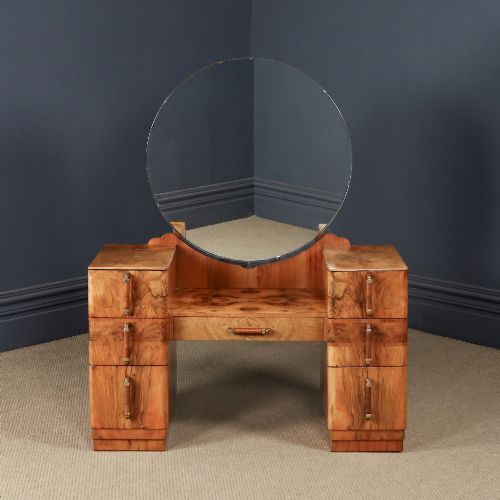
Art Deco pieces from the 1930s generally skew towards coffee tables, nesting sets, and occasional or dressing tables rather than formal dining formats. Designers favoured figured walnut and maple combinations with clean geometric lines.
These low and multi-tiered formats reflect changing domestic habits of the interwar period.
What is a tilt-top table used for?
Tilt-top tables served as versatile furniture that could be moved aside when floor space was required. The pivoting mechanism allowed the decorative top to face outward while stored against a wall.
In daily use, the top locked horizontally to hold lamps, books, or tea services.