

Victorian Burr Walnut Drawers
Victorian burr walnut drawers bring rich, figured grain and nineteenth-century cabinet-making into a room.
Victorian Burr Walnut Drawers
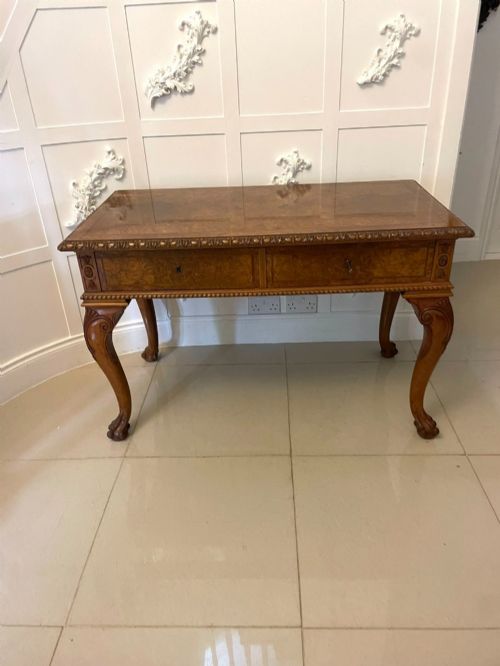
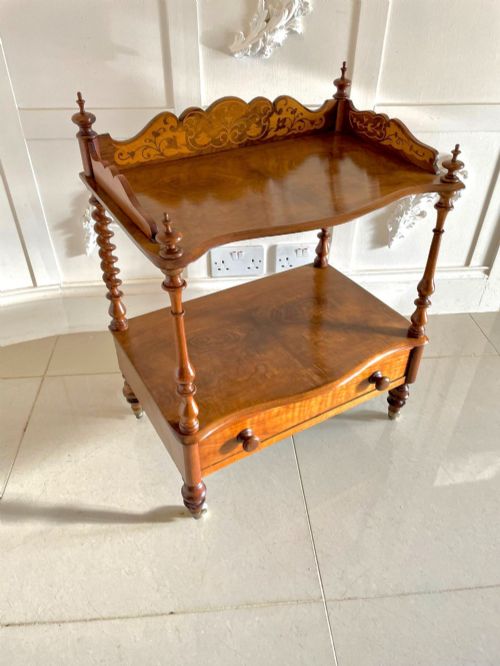
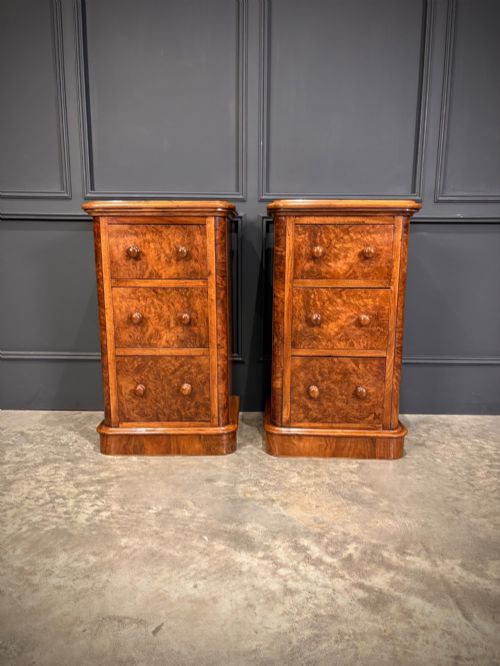
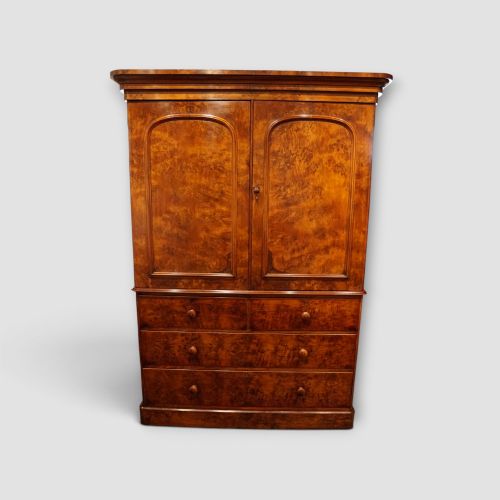
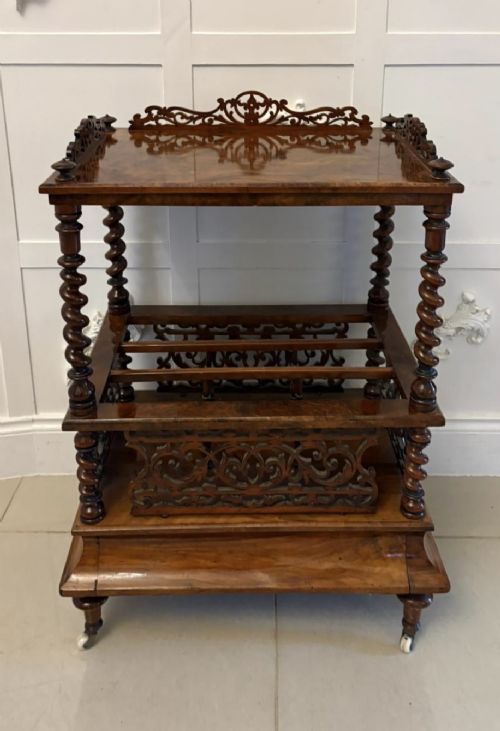
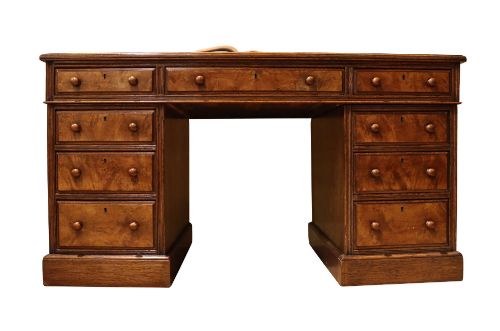
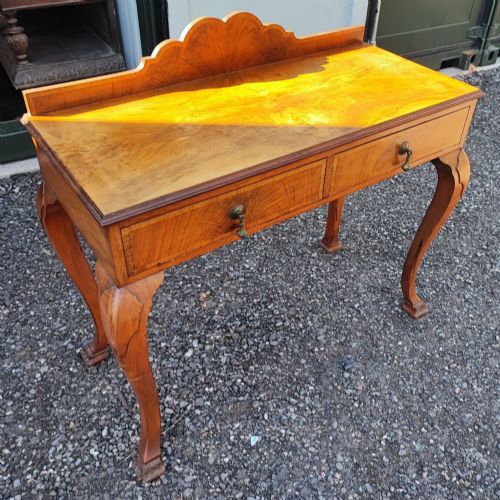
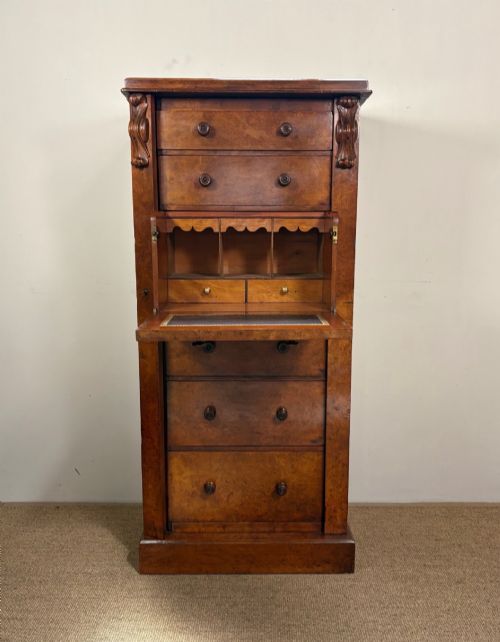
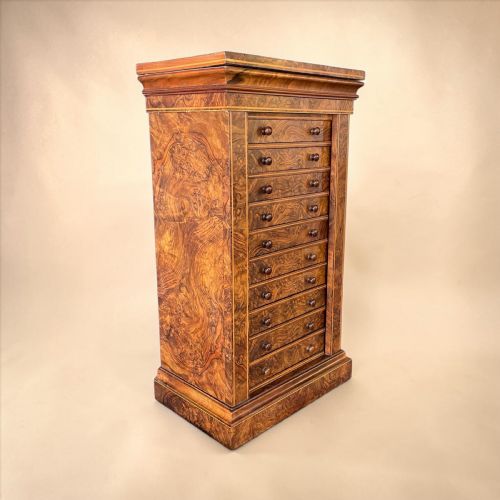
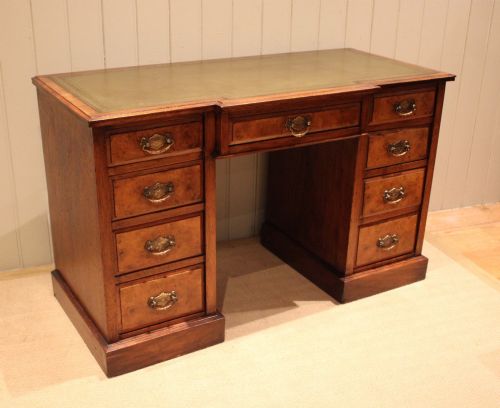
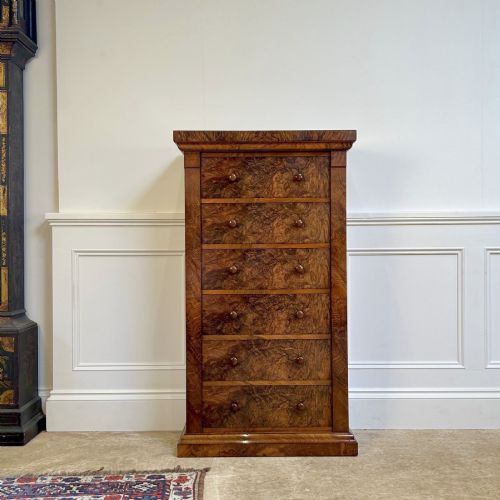
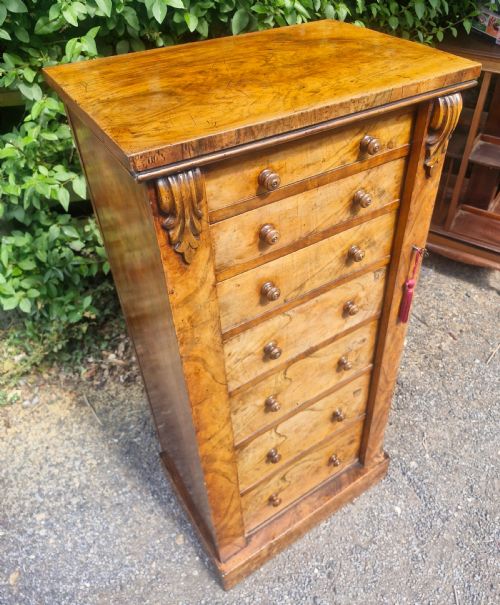
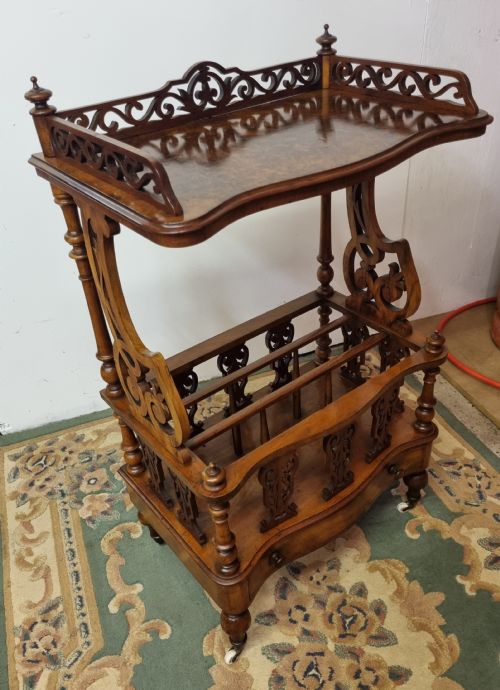
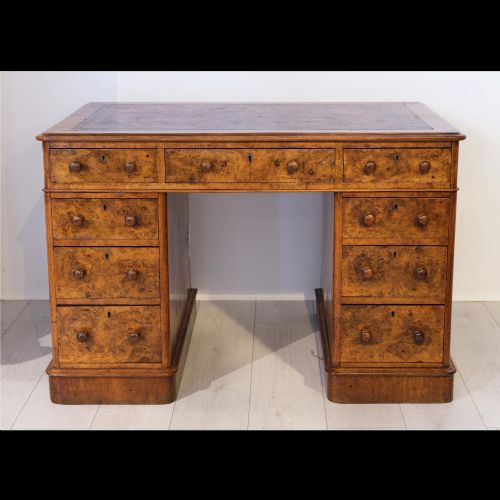
Victorian burr walnut drawers encompass a variety of forms, from standard bedroom chests and bedside cabinets to compact Wellington chests and fitted writing desks. Chests of drawers dominate the selection, often appearing in traditional multi-drawer configurations alongside specialised pieces like pedestal desks and Davenport desks.
The material dates predominantly from the middle to late nineteenth century, aligning with the Victorian era and the height of walnut's popularity in British furniture design. Pieces range from straightforward utility items to elaborate pieces incorporating inlaid details and marble tops.
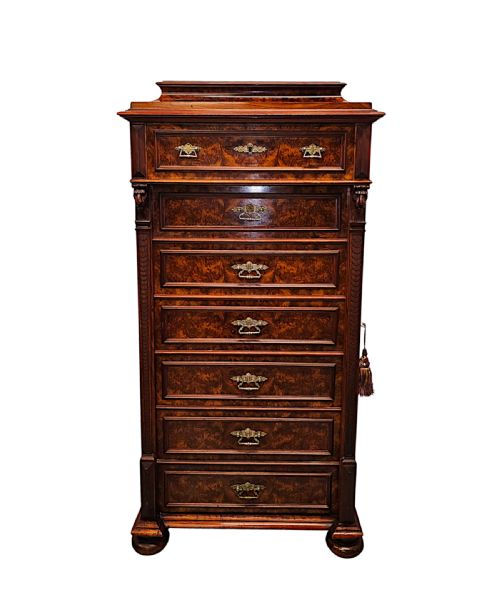
Buyers will encounter both dedicated drawer units and larger multifunctional furniture items featuring integrated banks of drawers. These vary in scale from tall upright Wellington chests to low bedside pairs designed to flank a bed.
Materials and construction
Makers constructed these pieces using solid pine or oak carcases as a stable foundation for decorative veneers. Highly figured burr walnut veneer was then applied to the exterior surfaces to create the characteristic swirling grain patterns.
Secondary timbers such as mahogany often appeared in drawer linings and internal dividers, while brass, ormolu, and leather provided functional and decorative hardware. Drawer construction typically relied on hand-cut dovetails to ensure lasting strength.
Many Victorian writing slopes hide secret compartments behind dummy drawers, designed to outsmart prying eyes and wandering hands.
Distinguishing quality factors
Quality rests heavily on the selection and bookmatching of the burr walnut veneer across the front of the piece. Superior examples display symmetrical, unbroken grain patterns that flow evenly across multiple drawer fronts.
The crispness of internal drawer construction and the choice of secondary woods also separate standard production from high workshop output. Integrated locking mechanisms, such as those by Bramah, and refined brass or ormolu mounts indicate elevated craftsmanship.
Gillows·Gillow and Co·Shoolbred and Co·Holland and Sons·Wylie and Lochead·Heal and Sons·Dennis Kirkham
The Victorian Burr Walnut Drawers Glossary
- Burr walnut
- A veneer sliced from the gnarled growths of a walnut tree. This wood yields dense, swirling patterns highly prized for decorative furniture facades.
- Wellington chest
- A tall, narrow chest of drawers secured by a hinged vertical locking flap on one side. This design originated in the nineteenth century for secure document storage.
- Davenport desk
- A compact Victorian writing desk featuring a sloping top and drawers accessed from the side. It typically incorporates a stationery compartment on the upper surface.
- Dovetail
- A traditional interlocking joint used in drawer construction. Hand-cut dovetails indicate older, finer cabinet-making standards.
- Ormolu
- Gilded bronze ornamentation applied to furniture. This technique frequently appears on French-influenced Victorian commodes and cabinets.
Victorian Burr Walnut Drawers: Frequently Asked Questions
How do I clean burr walnut?
Dust surfaces regularly with a soft, dry cloth to prevent dirt accumulation. Avoid modern silicone sprays and harsh chemical polishes that can damage antique finishes.
Apply a microcrystalline wax periodically to nourish the wood and protect the veneer from drying out. Buff gently with a clean cloth to maintain a natural, subtle sheen.
What is a Wellington chest?
A Wellington chest is a tall, narrow set of drawers secured by a locking side pilaster. This hinged wooden bar fastens over the drawer edges to lock the entire stack simultaneously.
Originating in the nineteenth century, these cabinets provided secure storage for papers and valuables in studies and bedrooms. Their vertical proportion makes them ideal for tighter spaces.
Where should I place a Davenport desk?
A Davenport desk works well in a living room or study as a compact writing station. Because the back is often finished, many examples can sit away from the wall in the centre of a room.
Ensure the piece avoids direct sunlight and strong heat sources like radiators. Walnut veneer is sensitive to extreme temperature shifts and prolonged light exposure.
How do I date Victorian furniture?
Examine the construction methods, secondary timbers, and overall style cues to estimate the period. Hand-sawn drawer linings and early brass hardware often point towards the earlier decades of the nineteenth century.
Maker stamps, registration marks, and retailer labels can provide more precise chronological markers. Comparing the form to documented cabinet-maker catalogues helps narrow down the decade of production.