



19th Century Secretaire Chest
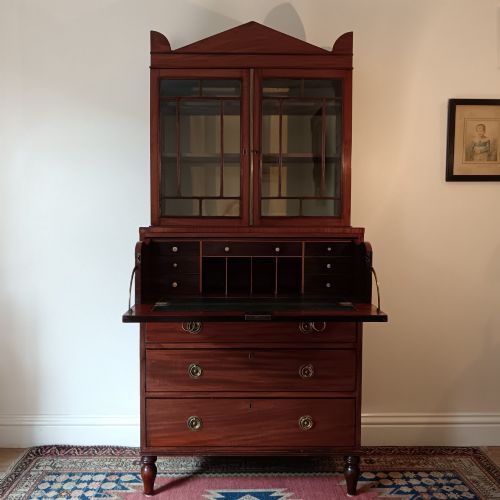
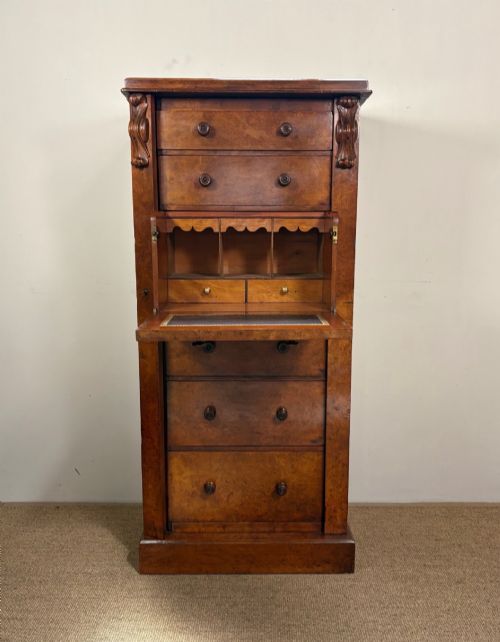
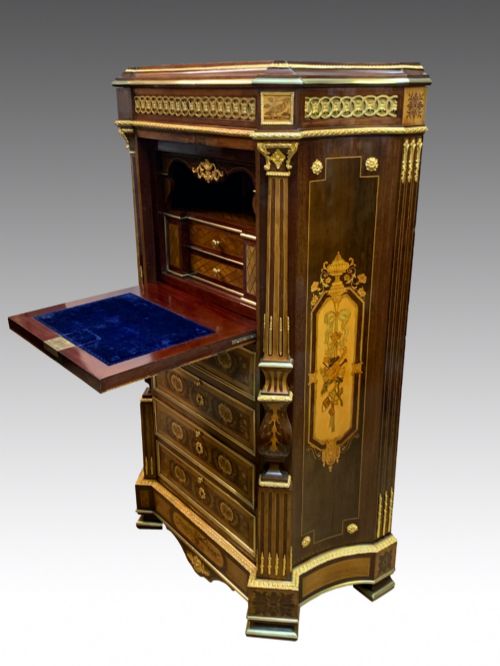
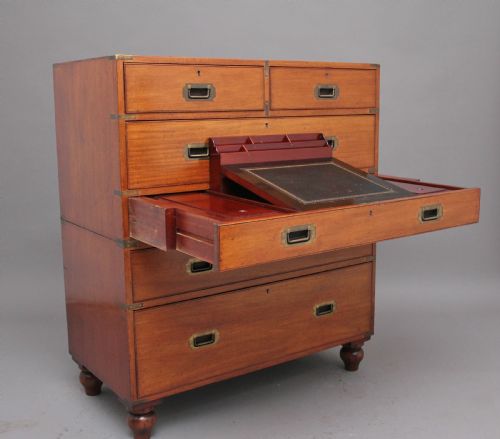
When you open a 19th century secretaire chest, the top drawer pulls down to reveal a fitted writing surface and pigeonholes.
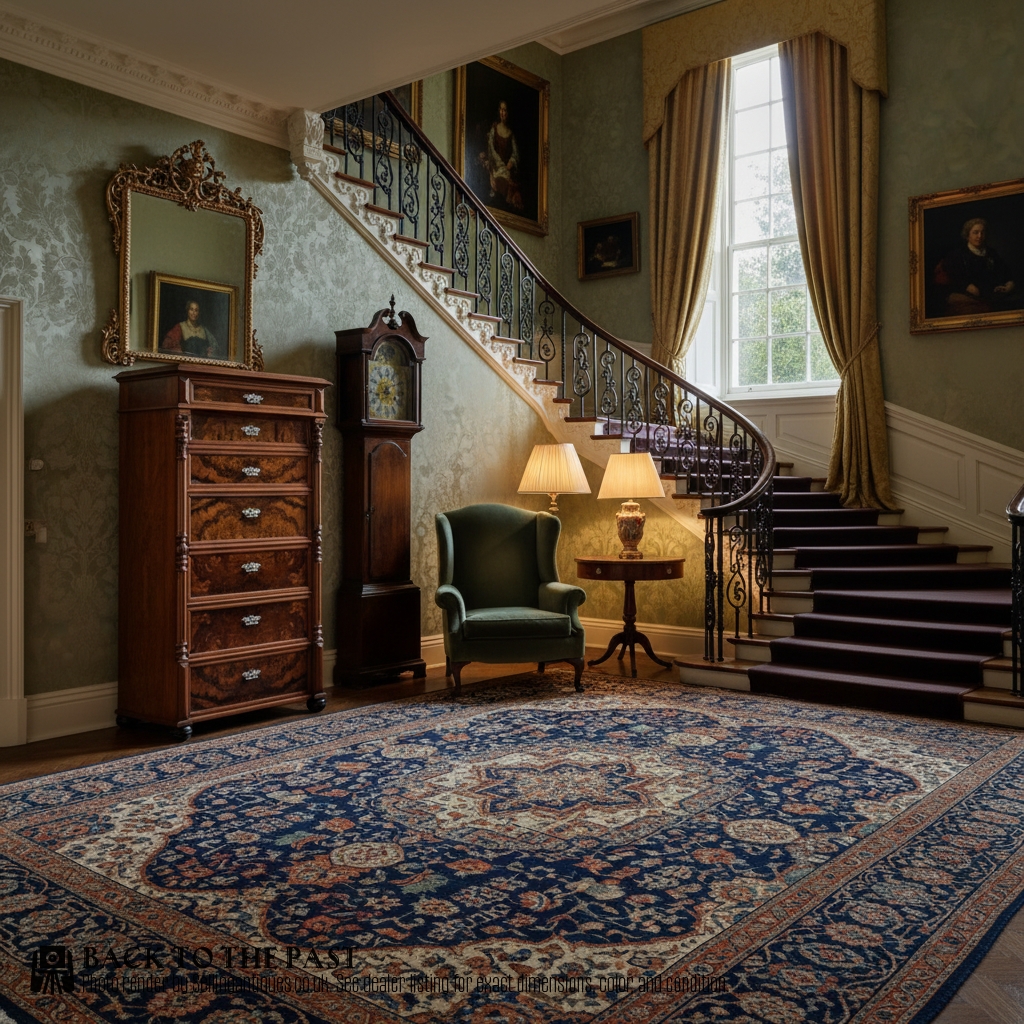
19th Century Secretaire Chest
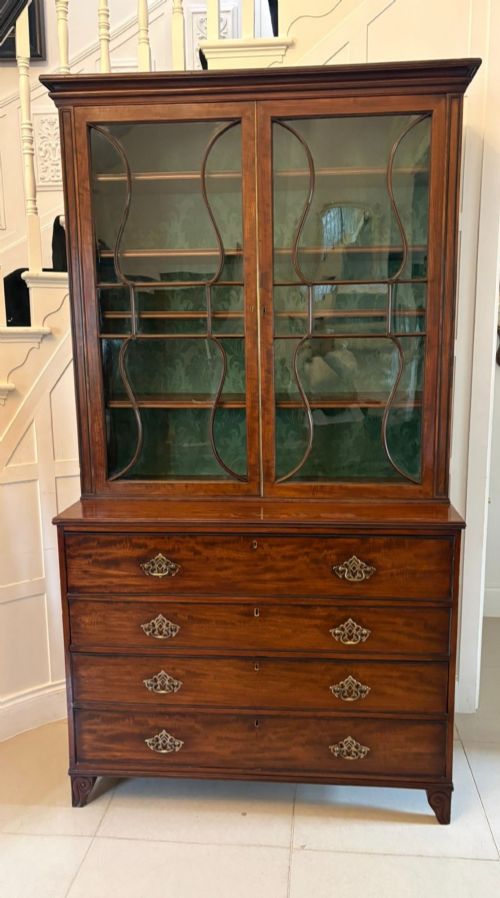
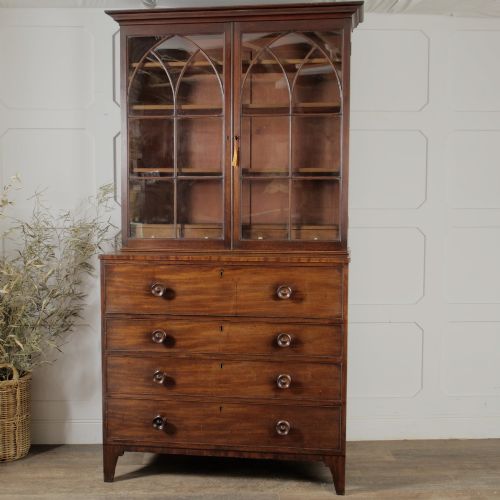
A 19th century secretaire chest combines the outward appearance of a standard set of drawers with the hidden utility of a desk. The topmost drawer is structurally engineered to drop forward on quadrant hinges or brass arms, disclosing a fitted interior of small drawers and pigeonholes.
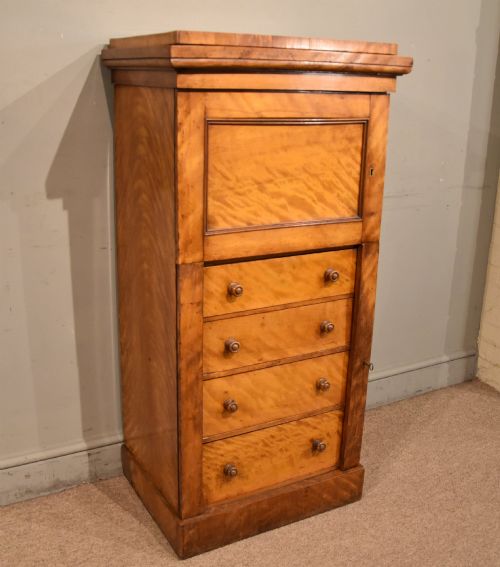
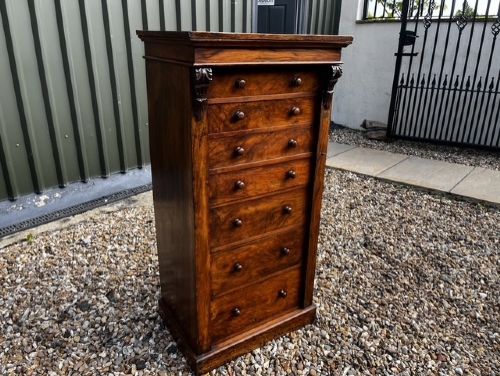
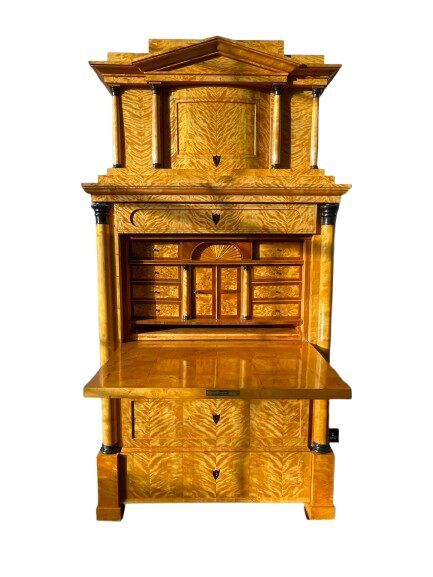
Most examples found in these records date from the Georgian, Regency, and Victorian periods, manifesting either as tall chest forms, compact Wellington chests, or modular military campaign pieces. Mahogany remains the predominant primary timber, accompanied by walnut, birch, and camphor wood.
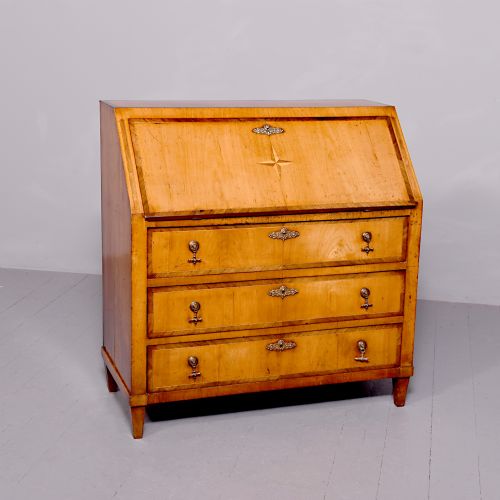
The hybrid furniture form served domestic and travel needs alike, allowing homeowners to manage correspondence without dedicating a room entirely to a standalone desk. Buyers encounter everything from British campaign brass-bound boxes to continental Biedermeier upright secretaires.
Materials and Construction
Cabinetmakers constructed carcass frames using dense hardwoods like mahogany, rosewood, and oak, often applying figured veneers such as flame mahogany, burr walnut, or curl birch to the primary facade. Drawer linings typically consist of secondary timbers like pine, joined with hand-cut dovetails that indicate the work of skilled joiners.
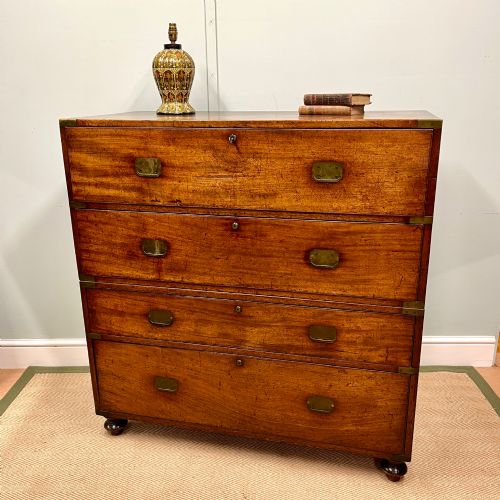
Metal hardware plays a functional and structural role, particularly on military campaign models where flush brass drop handles, corner brackets, and binding straps protect the edges during transit. Brass locks and leather inserts tooled with gilt tooling provide the final operational details for the writing compartments.
Listings feature woods including camphor wood, rosewood, walnut, and mahogany across nineteenth-century forms.
Factors of Distinction
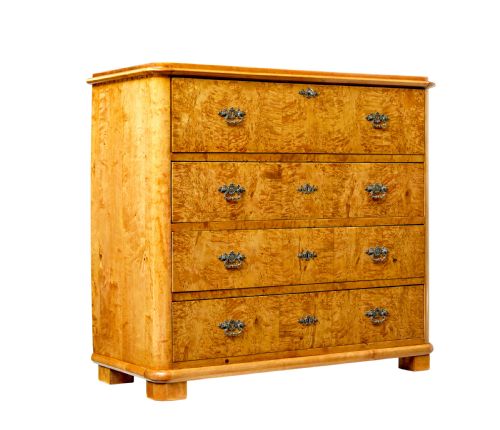
Quality rests heavily on the selection of timber veneers and the precision of the interior fittings. Pieces displaying symmetrical flame mahogany or figured birch across every drawer front demonstrate a higher grade of material planning by the cabinetmaker.
The complexity of the interior mechanism sets finer examples apart from utilitarian versions. Superior desks incorporate hidden compartments, secret release springs, miniature drawers with cockbeaded edges, and finely carved pigeonholes rather than plain softwood dividers.
George Oakley·Maison Krieger·Gillows of Lancaster
The 19th Century Secretaire Chest Glossary
- Secretaire
- A piece of furniture incorporating a writing drawer with a drop-down front. It conceals a cluster of small compartments for letters and stationery.
- Wellington chest
- A tall, narrow chest of drawers secured by a single hinged locking stile on the right side. This locking bar fastens over the edge of all drawers simultaneously.
- Campaign chest
- Modular furniture built in sections with recessed brass handles and corner brasses for military transport. The pieces separate into upper and lower halves to ease moving.
- Cockbeading
- A narrow convex moulding applied to the edges of drawer fronts. It protects the softer end grain and frames the drawer opening cleanly.
- Biedermeier
- A Central European style emphasising clean architectural lines and warm blonde woods like birch. Ornamentation remains minimal, relying instead on the grain of the timber.
19th Century Secretaire Chest: Frequently Asked Questions
What is a secretaire chest?
A secretaire chest is a dual-purpose case piece that looks like a standard set of drawers from the outside. Its distinguishing feature is a clever top drawer that drops open to form a writing desk.
Inside this fold-down flap, users find an arrangement of small drawers, pen slots, and pigeonholes. Once closed, the writing area disappears completely behind the drawer front.
How do campaign secretaire chests work?
Campaign secretaire chests were built for British military officers on the move, constructed in two or more stackable sections. The brass corners and flush handles prevented the wood from snagging during rough transport.
The secretaire drawer formed part of the upper tier, allowing an officer to write dispatches in temporary tents or quarters. Side carrying handles and screw-in feet completed the portable design.
How do I identify a Wellington chest?
A Wellington chest stands taller and narrower than standard drawer units, usually featuring seven graduating drawers. Its key identifier is the vertical locking flap on the right side.
Swinging this locking stile outward and turning the key secures every drawer at once. The secretaire variant substitutes one of the middle drawers for a drop-front writing surface.
Which woods were used?
Mahogany served as the primary wood for British pieces throughout the Georgian and Regency eras. Cabinetmakers utilised flame and figured varieties for decorative impact on drawer fronts.
Continental workshops favored birch, walnut, and ash, particularly within Biedermeier and Swedish designs. Camphor wood and padouk appear frequently on campaign models destined for or sourced from export markets.