
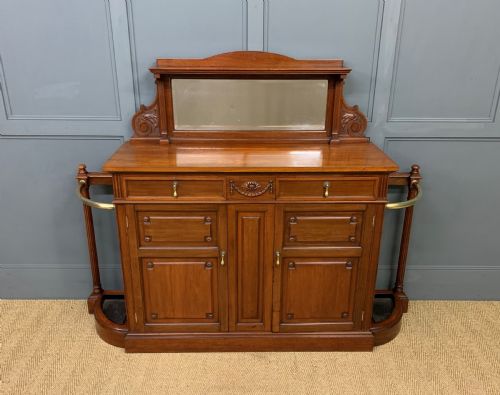
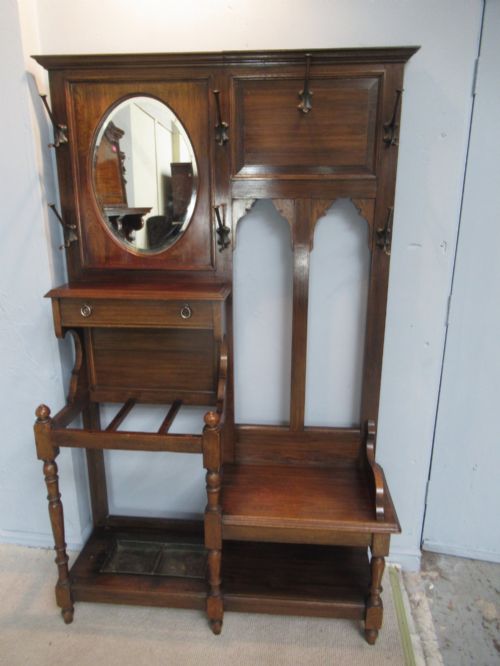
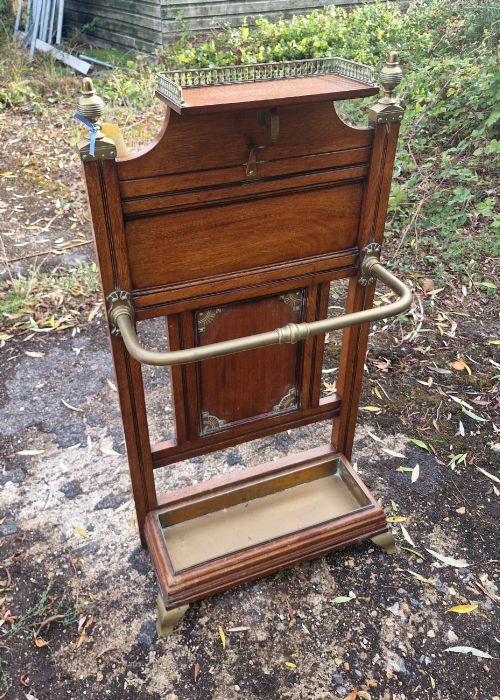
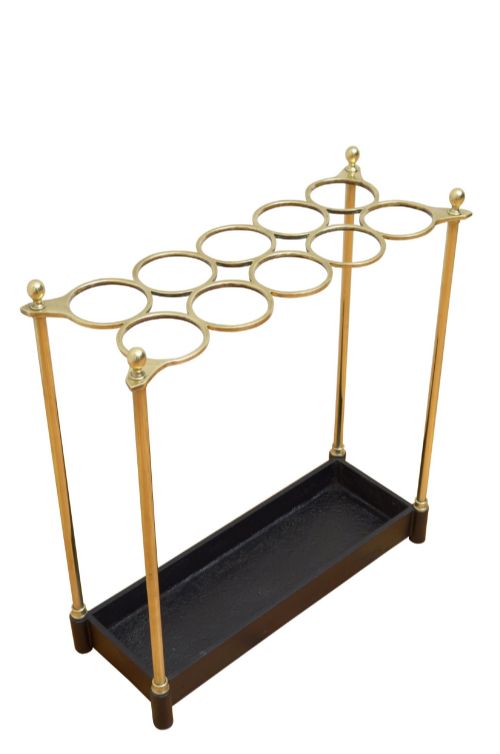
Victorian Brass Umbrella Stand
A victorian brass umbrella stand brings weight and polish to a hallway, holding wet walking gear with the substance of the nineteenth century.
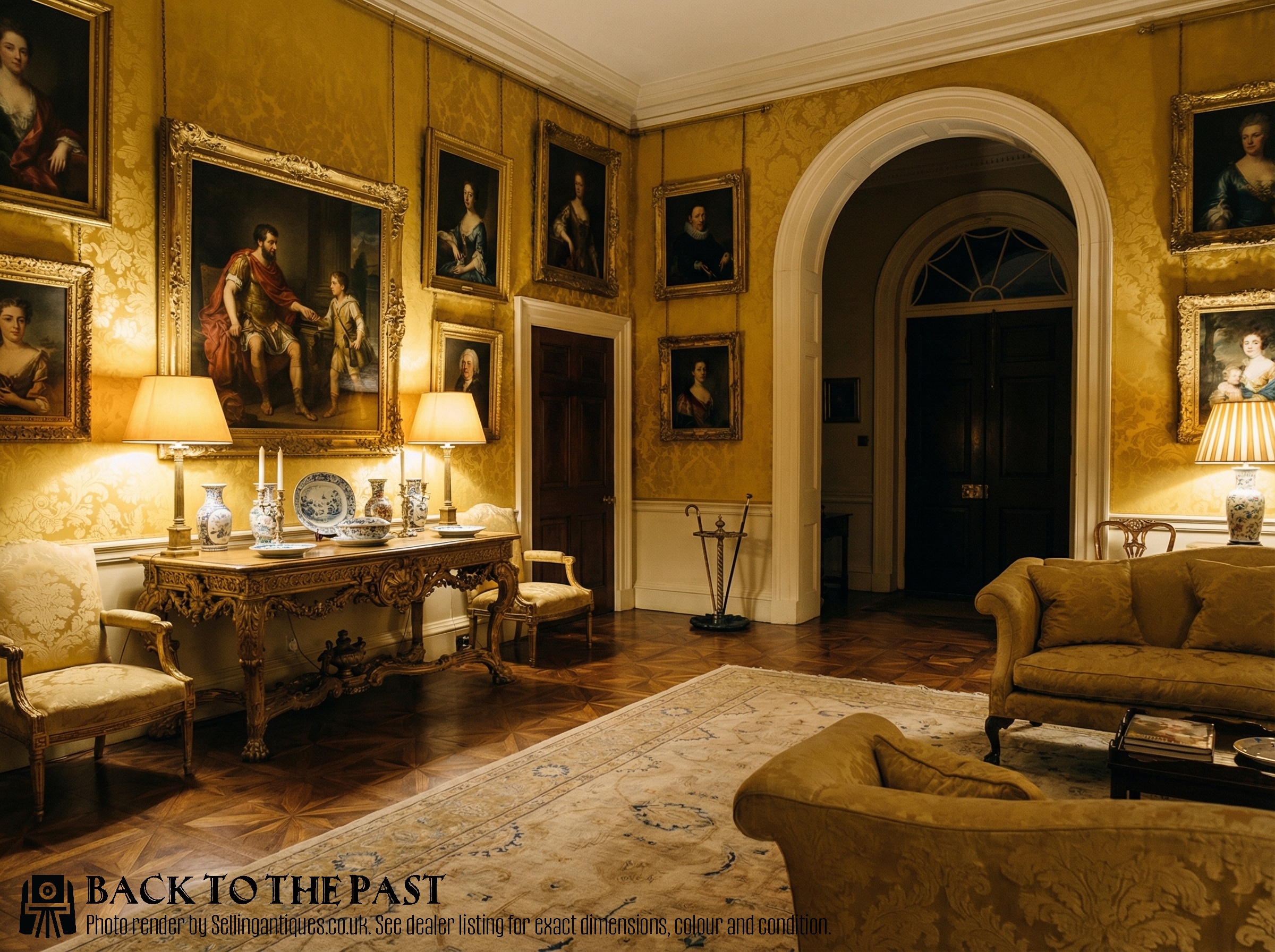
Victorian Brass Umbrella Stand
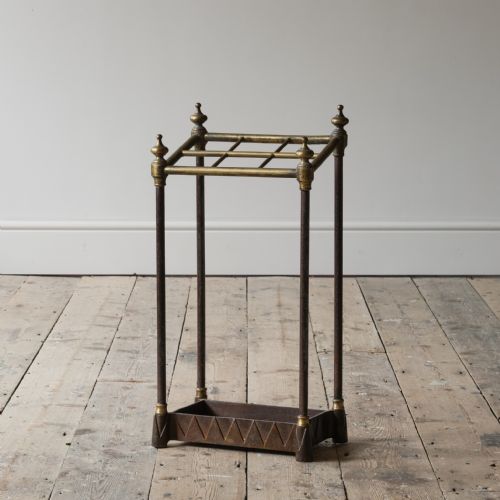
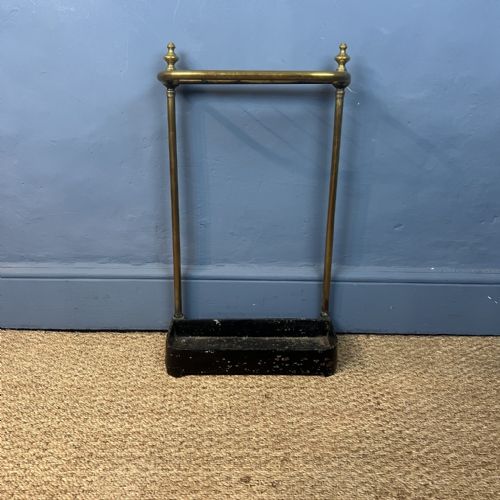
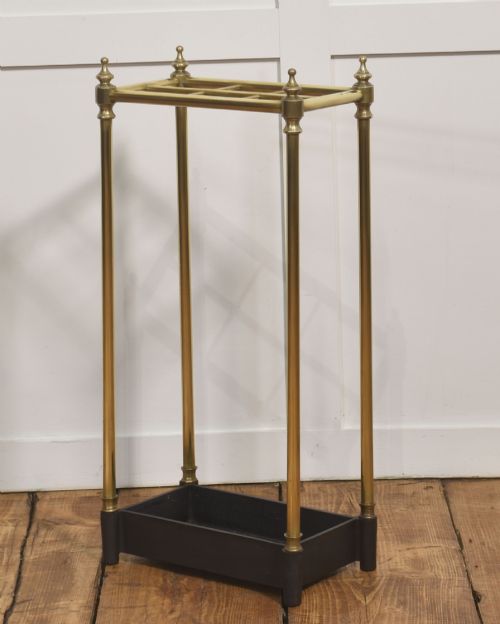
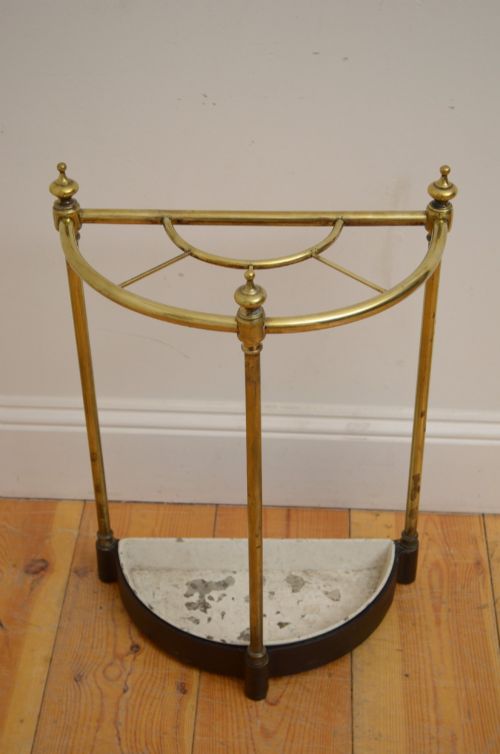
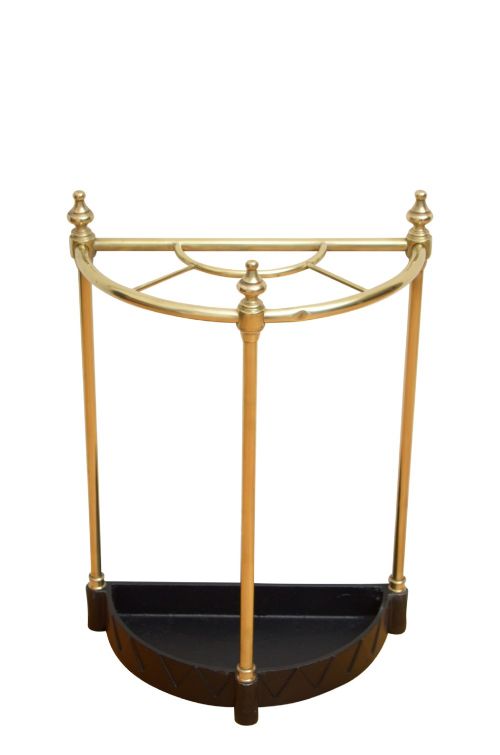
A victorian brass umbrella stand is a hall furnishing designed to hold walking sticks, canes and wet umbrellas upright in the entrance of a house. The most common examples seen here combine a gleaming brass frame with a heavy cast iron base to prevent tipping when loaded.
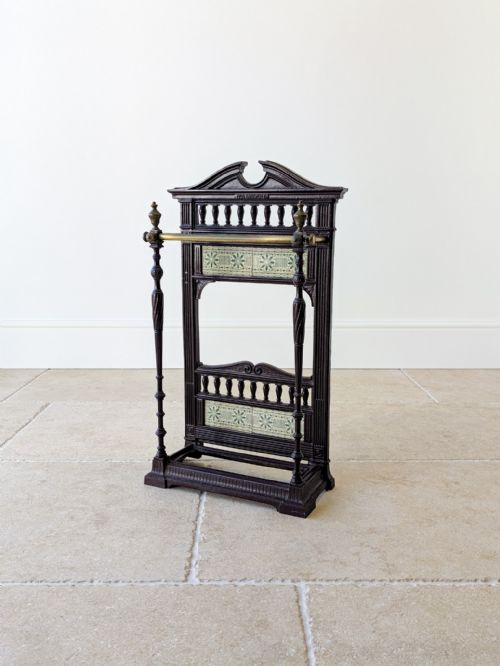
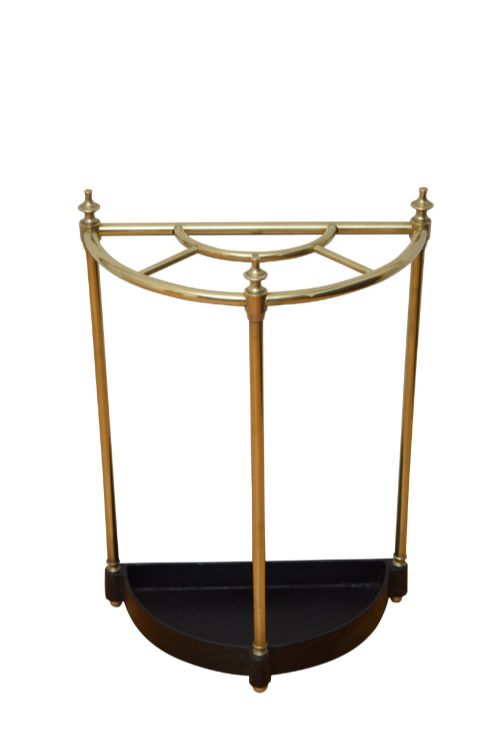
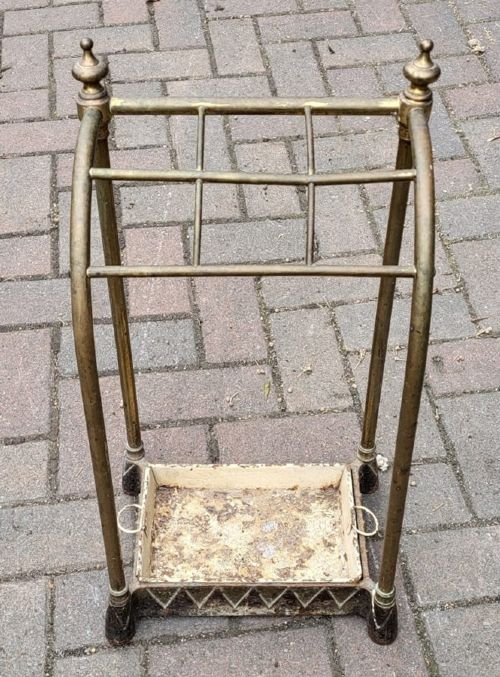
Makers produced these stands in various shapes, from semi-circular demi-lune forms that fit snugly against a wall to cylindrical barrels and segmented racks. They appear frequently in Victorian and Edwardian styles, alongside occasional pieces from the Aesthetic Movement.
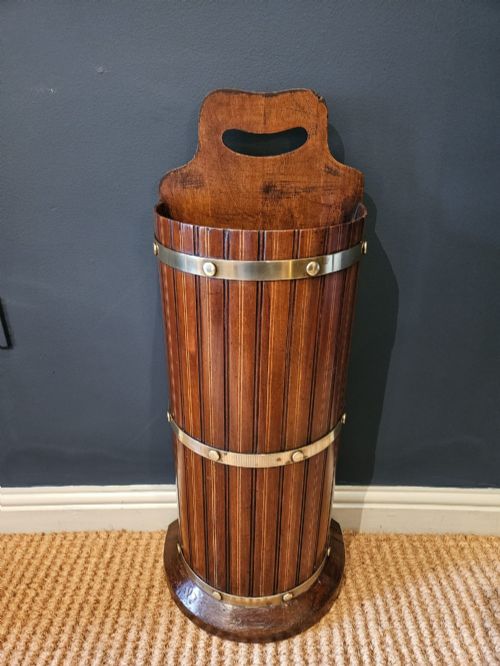
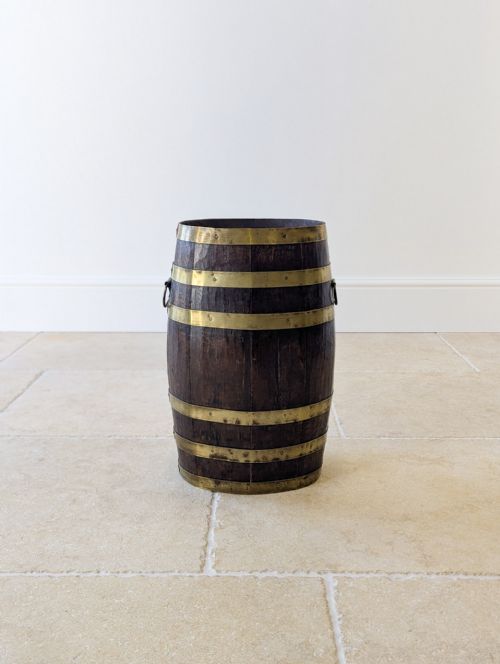
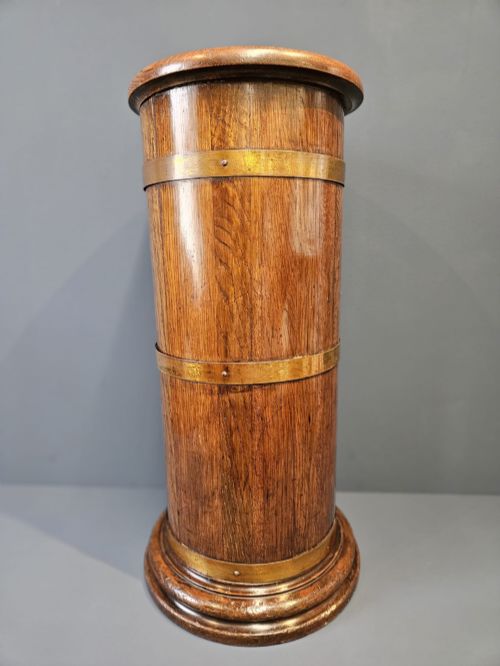
Beyond the standard domestic hall stand, variations include coopered oak barrels banded in brass and combinations incorporating mahogany or steel. Buyers looking for these objects will find both plain utility pieces and heavily decorated designs featuring ball finials or cast relief patterns.
How They Were Made
Makers combined cast iron for heavy ballast bases with formed sheet and tubular brass for the upper frameworks that separated the canes. Many examples utilised heavy brass bands to secure coopered oak staves, uniting timber and metal for robust daily use.
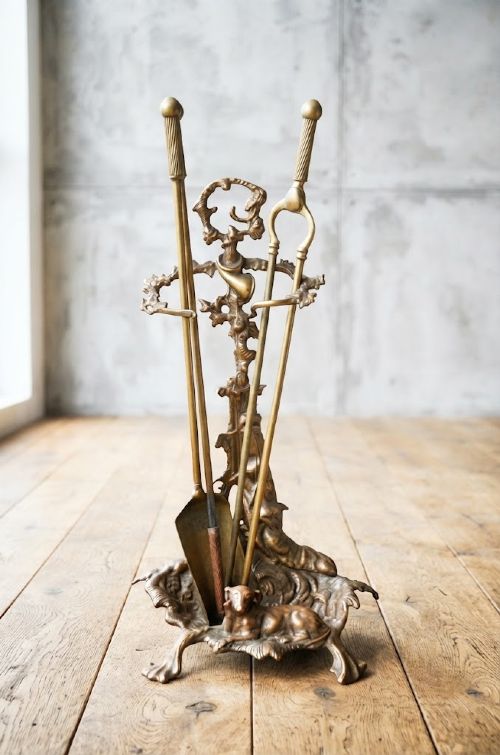
Decoration relied on casting, stamping and turning, with makers applying decorative ball finials, patent marks and relief motifs directly into the metal. The drip trays beneath were typically formed from pressed iron or brass to catch water without rusting through the floor.
Construction methods prioritised stability and drainage, ensuring the damp tips of umbrellas rested safely above the removable collection tray. Joints were secured with threaded bolts and rivets capable of withstanding the heavy weight of iron and wet wood.
Victorian Brass Umbrella Stand Retail Price Guide 2026
Typical asking prices for victorian brass umbrella stand among the pieces listed under this phrase on Sellingantiques today, from the lower quarter to the upper quarter. They describe what is for sale here now, not the wider market.
Listings demonstrate that brass frequently pairs with cast iron and oak, creating sturdy frames designed for heavy daily use in entrance halls.
What Varies In Quality
Quality rests in the casting thickness and the rigidity of the brass framework, separating robust country house pieces from lighter commercial variants. Superior examples maintain tight joints and retain their original heavy drip trays rather than later replacements.
The refinement of the decorative details marks the distinction between standard hall furniture and pieces designed by notable workshops. Crisp casting on the iron bases and substantial gauge brass tubing indicate higher production standards from the period.
Coalbrookdale·Thomas Jeckyll·Shoolbred & Co.
The Victorian Brass Umbrella Stand Glossary
- Demi-lune
- Having a half-moon shape designed to sit flat against a hallway wall. This configuration saves valuable floor space in narrow Victorian entryways.
- Coopered
- Built from wooden staves bound together with metal hoops, much like a traditional barrel. Oak was frequently used in this construction method.
- Drip tray
- A shallow metal basin placed at the base to catch water from wet umbrellas. These trays are often removable for easy emptying.
- Finial
- A decorative ornamental crowning element, often in the shape of a ball, fitted to the top corners of the brass frame.
- Segmented rack
- A divided upper framework that keeps walking sticks and umbrellas separated from one another. This prevents tangled handles and protects the canes.
Victorian Brass Umbrella Stand: Frequently Asked Questions
Where were these stands placed?
Victorian households positioned these pieces directly in the entrance hall or vestibule. This allowed residents and visitors to deposit wet umbrellas and walking sticks immediately upon entering the house.
Placing them near the front door protected interior wooden floors and carpets from rainwater. They served as both a practical utility and a welcoming feature for guests.
How do I clean the brass?
Cleaning depends on the level of polish you prefer to maintain on the metal frame. Many collectors prefer to leave a dark, aged patina that shows the true age of the piece.
If you choose to brighten the brass, use a mild, non-abrasive metal polish applied with a soft cloth. Take care to avoid getting cleaning agents onto any adjoining oak or cast iron sections.
Are the drip trays original?
Many surviving stands retain their original pressed metal drip trays, which fit snugly into the lower iron base. Because these trays caught standing water, rusted examples were often replaced over the decades.
A matching fit and appropriate period wear help indicate that a tray has belonged to the stand for its entire lifetime.
Did they hold walking sticks too?
Walking sticks and canes were everyday accessories for Victorian ladies and gentlemen. Consequently, the upper dividers were spaced to accommodate narrower walking canes alongside bulkier umbrellas.
Many period titles reflect this dual purpose, describing the objects as stick and umbrella stands interchangeably.