
Victorian Brass Paraffin Lamp
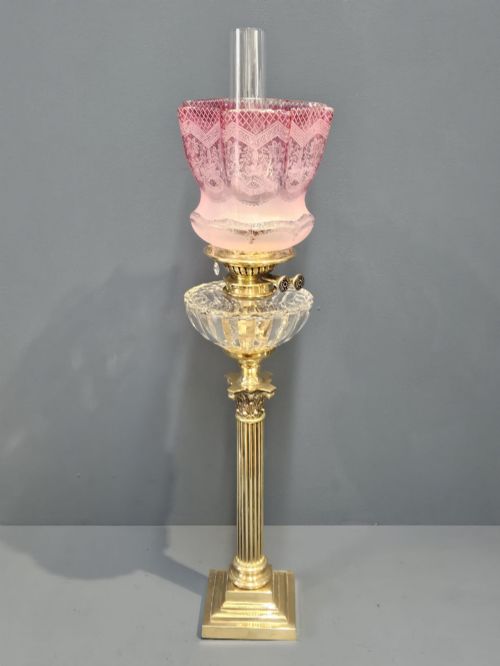
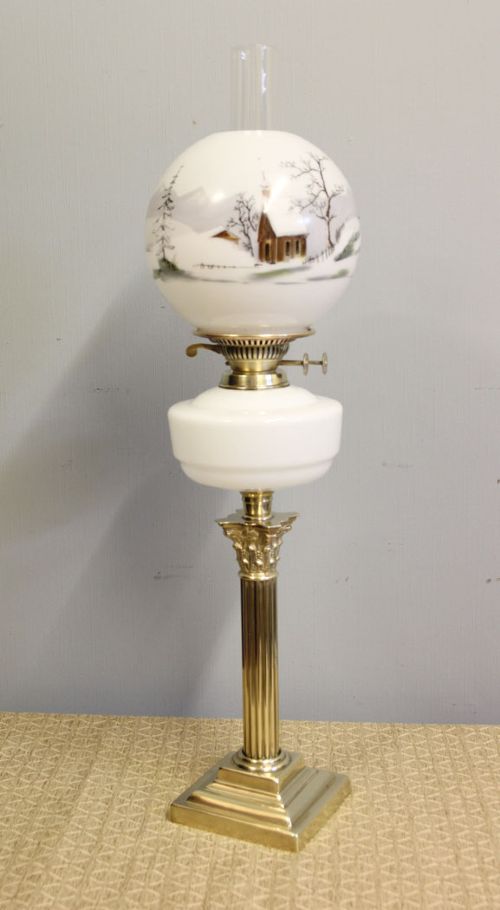
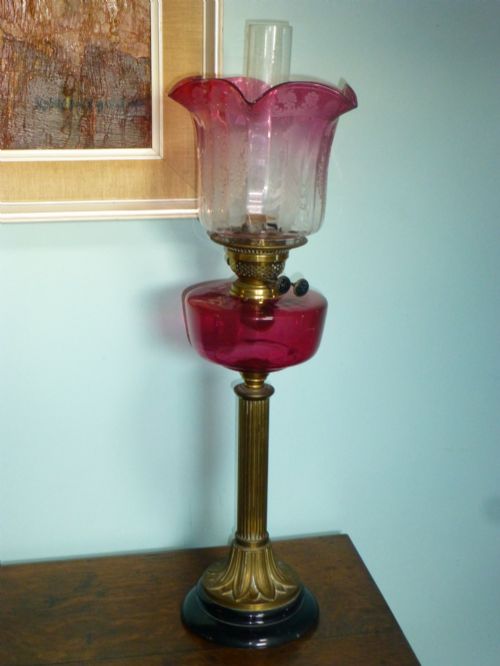
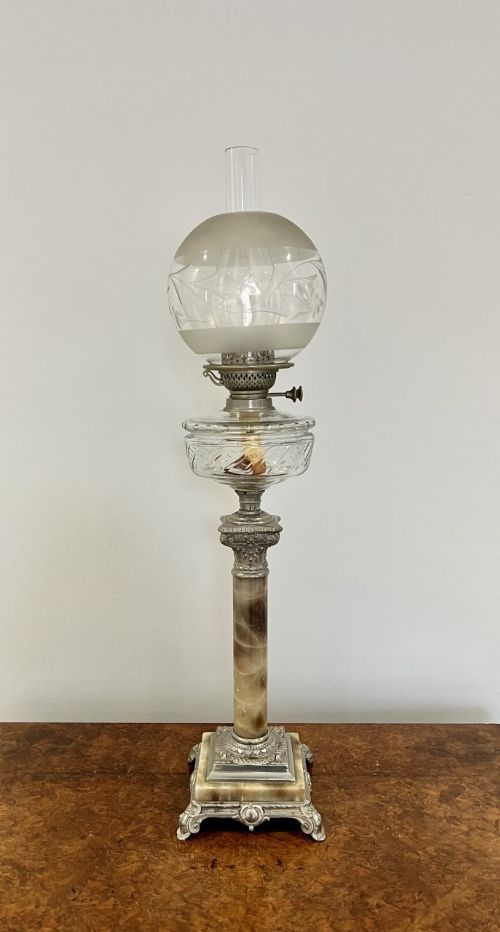
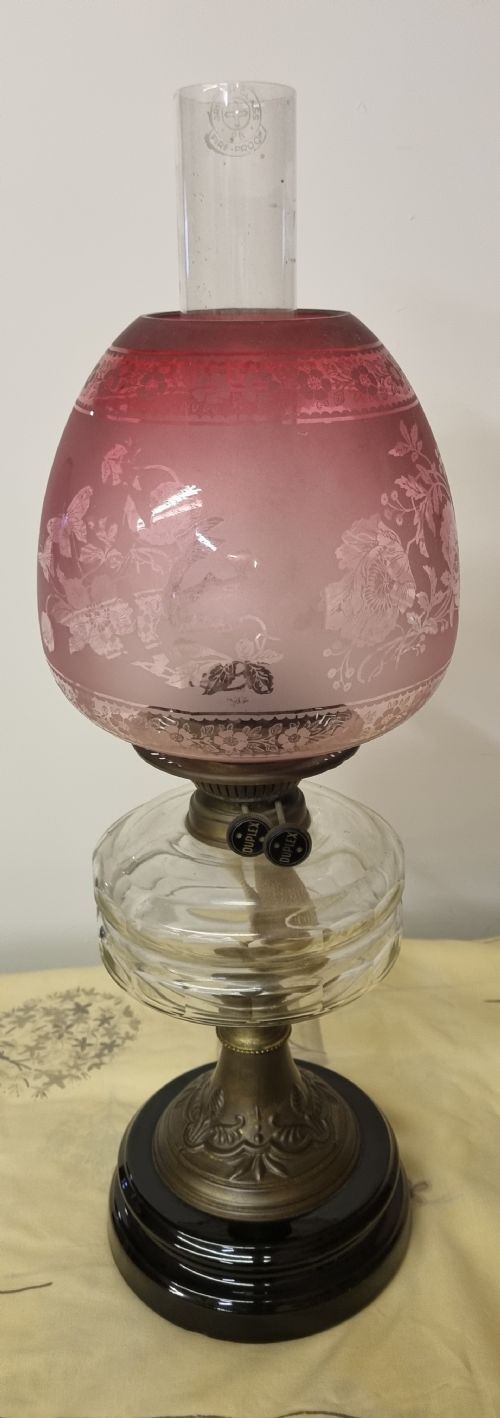
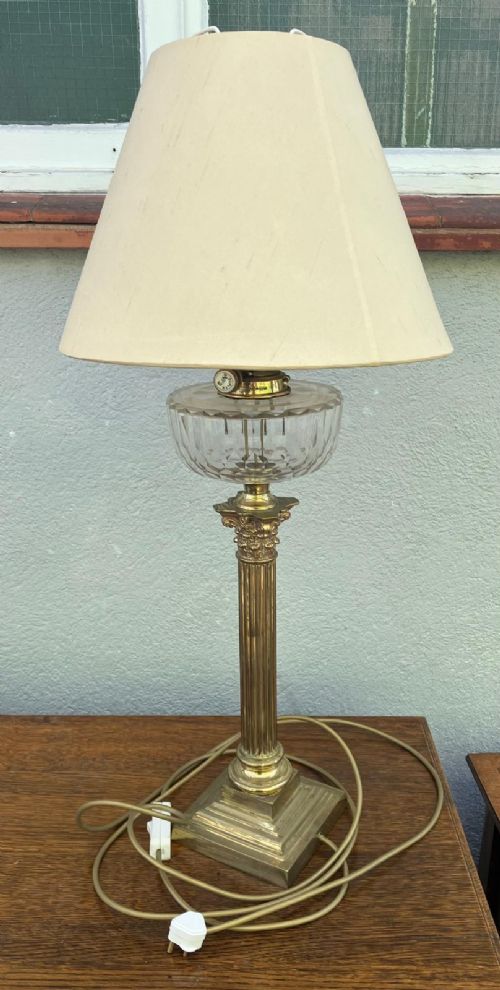
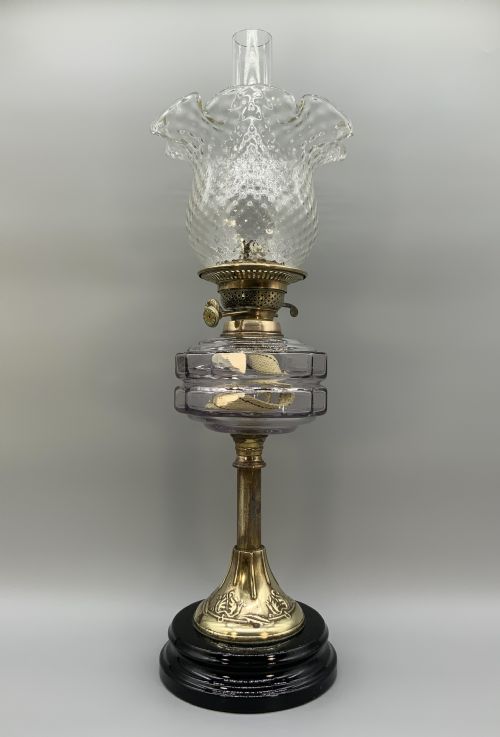
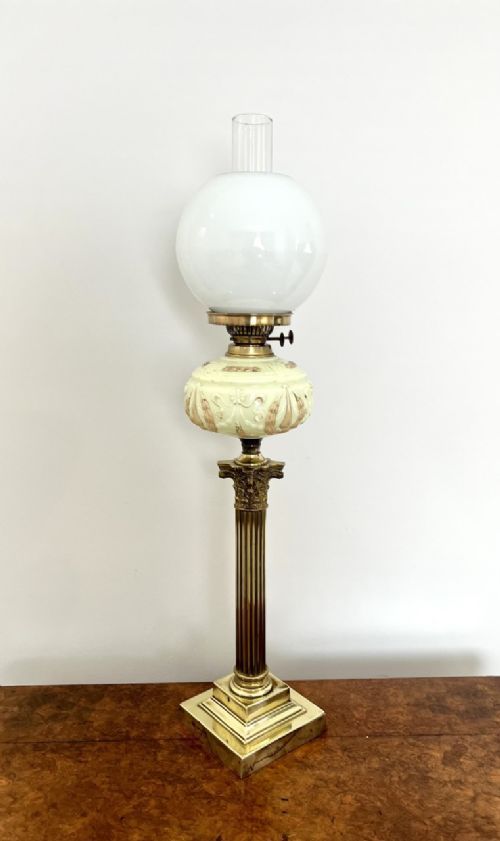
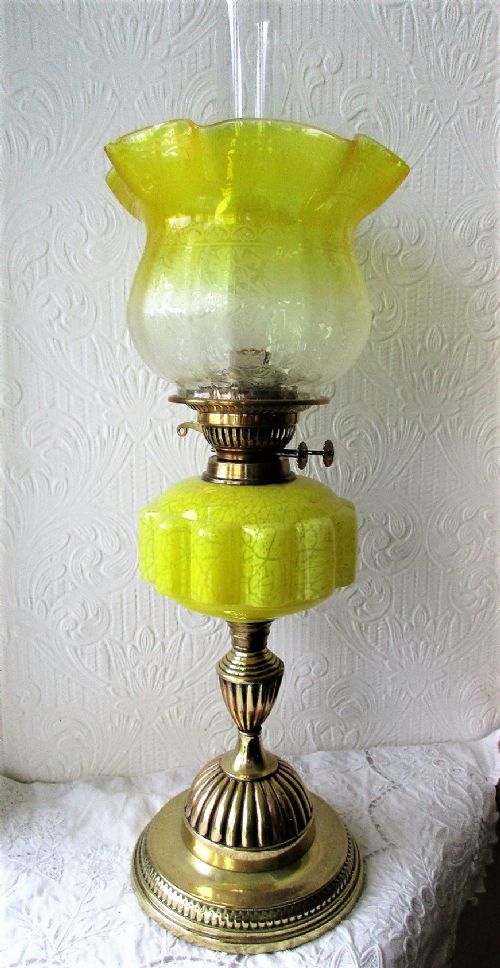
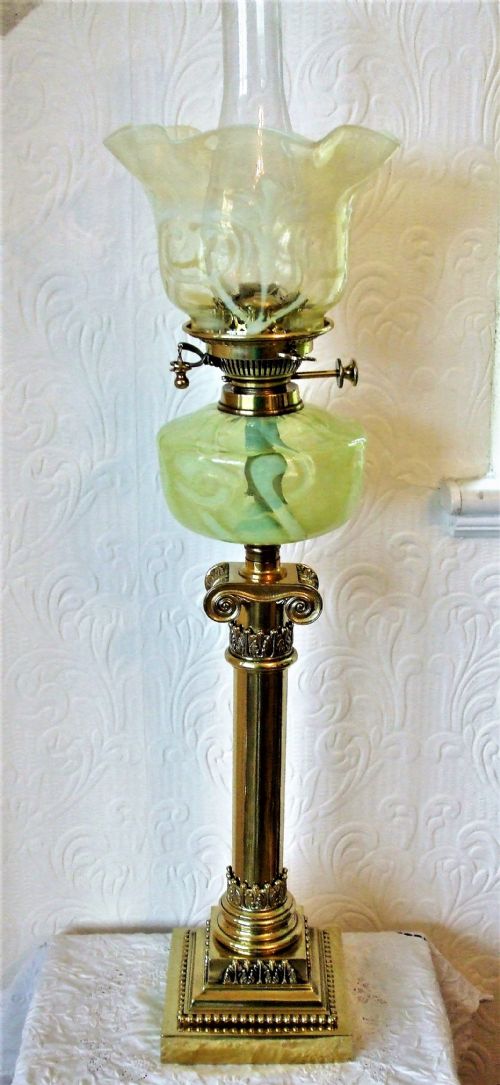
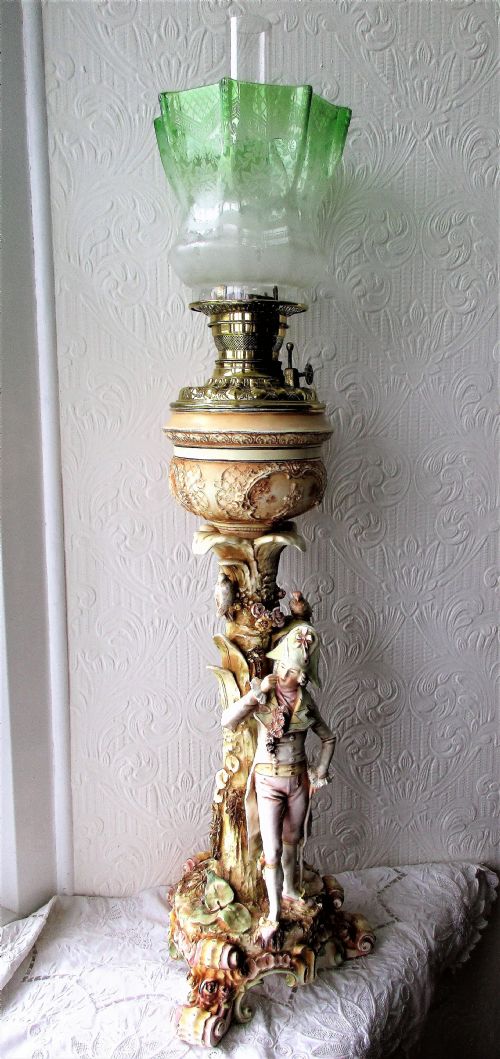
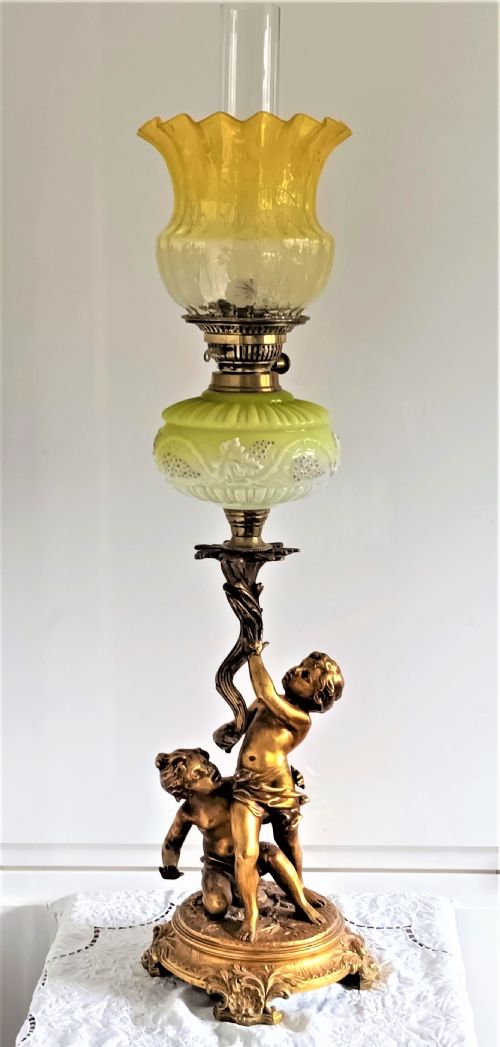
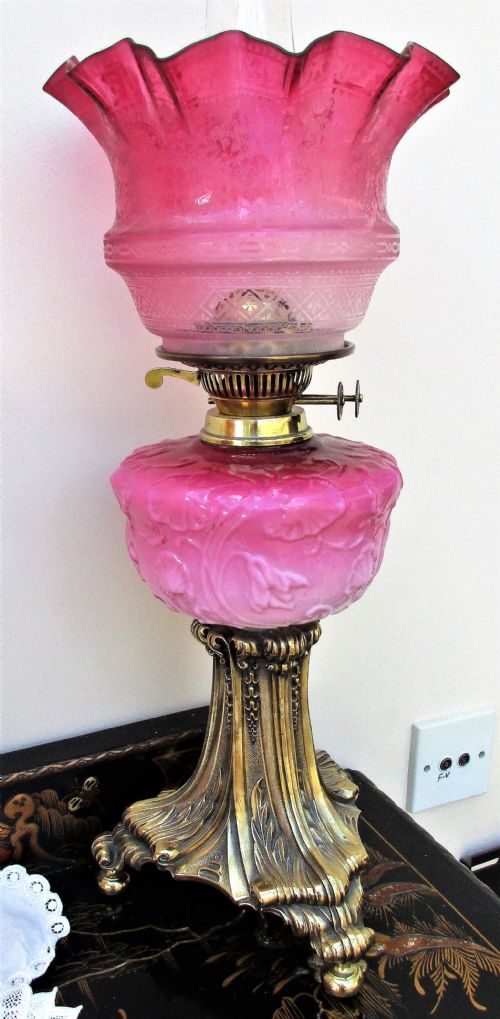
These Victorian brass paraffin lamp examples bring warm historic character and functional period lighting to a room through solid brass columns and coloured glass.

Victorian Brass Paraffin Lamp
When you search for a victorian brass paraffin lamp, you encounter lighting fixtures designed to burn oil for illumination before widespread electrification. These domestic items take the form of table lamps, ceiling lights, and column stands produced across the nineteenth and early twentieth centuries.
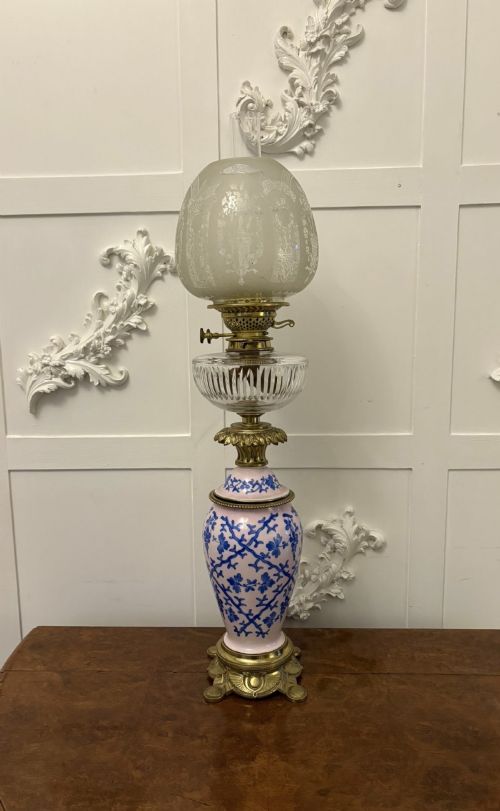
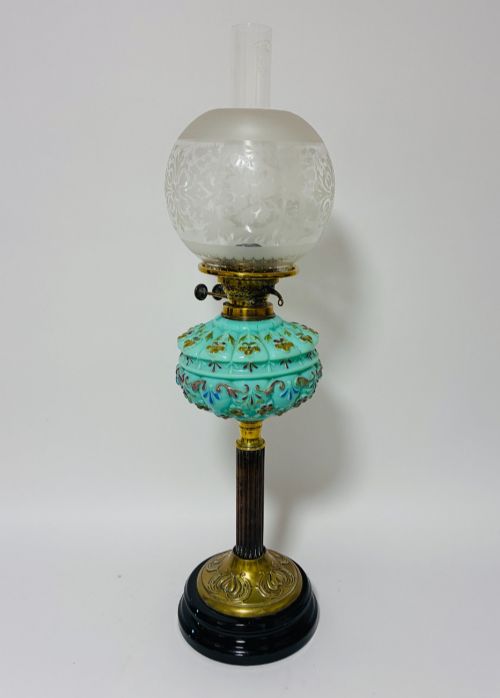
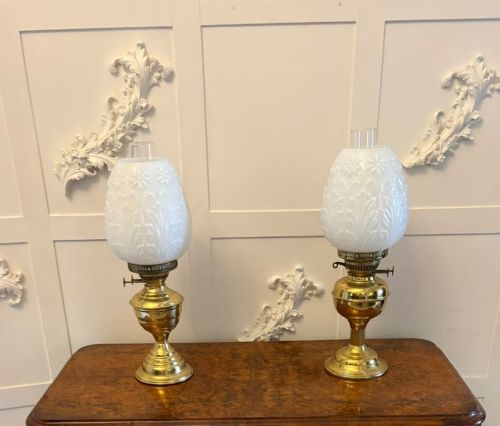
The specimens most commonly met here combine heavy brass bases with contrasting fonts and shades made from glass or ceramic. Standard configurations range from simple table burners to large architectural columns with coloured glass reservoirs.
Originating largely in English workshops and factories, these pieces reflect the Victorian and Edwardian domestic interior. Makers utilised diverse stylistic influences including Neoclassical Revival, Art Nouveau, and Chinese Export designs.
What varies in quality
The distinction between ordinary and superior pieces rests on the weight of the cast brass, the precision of the column fluting, and the presence of named burner mechanisms. Elaborate architectural orders like Corinthian capitals alongside hand-painted cranberry or opaline shades elevate the standing of an object.
Proportion and material integration define the overall standard, where matched fonts and original glass shades demonstrate superior manufacturing over later replacements. Finer examples incorporate signed mechanisms and detailed ceramic or figural inserts.
Listings feature periods spanning from the 1860s through the Edwardian era, predominantly utilising brass, cranberry glass, and opaline glass.
Hinks·Taylor Tunnicliff·Wild And Wessel
The Victorian Brass Paraffin Lamp Glossary
- Paraffin lamp
- A domestic lighting device that burns paraffin oil through a cotton wick to produce light. These items became central to nineteenth-century household illumination.
- Duplex burner
- A double-wick mechanism designed to yield a brighter flame than single-wick alternatives. This fitting appears frequently on larger table models.
- Font
- The reservoir container that holds the paraffin oil beneath the burner. Fonts are often fashioned from cranberry glass, opaline glass, or painted porcelain.
- Corinthian column
- An architectural column style featuring ornate acanthus leaf capitals adapted for lamp standards. This classical motif remains common in brass lighting.
- Opaline glass
- An opaque white glass variant used extensively for lamp shades to diffuse light softly. It provides a striking visual contrast against polished brass.
Victorian Brass Paraffin Lamp: Frequently Asked Questions
How do I operate a paraffin lamp?
Operation involves filling the glass or metal font with paraffin oil and allowing the cotton wick to absorb the liquid before lighting. Adjusting the wick height via the brass thumbwheel controls the size and stability of the flame.
Care must be taken to trim burnt wick edges regularly to ensure an even burn and prevent smoke. Modern users typically treat these functioning items as decorative statement pieces rather than primary light sources.
What is a duplex burner?
A duplex burner uses two parallel wicks housed within a single gallery to generate increased illumination compared to standard single-wick designs. This mechanical setup became standard on larger Victorian table lamps.
Identifying marks on the brass thumbwheels often indicate the original manufacturer of the burner mechanism. These dual-wick systems required wider chimneys to manage the increased heat output.
How do I clean brass safely?
Cleaning requires a soft cloth and mild soapy water to remove surface dust without disturbing the historic patina. Abrasive polishes should be avoided on antique metalwork to preserve the original surface character.
Glass shades and porcelain fonts can be washed separately in lukewarm water using mild detergent. Thorough drying prevents moisture damage to any remaining metal fittings or painted details.
Can I convert these lamps to electricity?
Conversion involves running an electrical cord through the central column without altering the exterior historic appearance of the brasswork. Many owners choose this method to display fragile glass shades safely in modern homes.
Professional wiring ensures the fixture meets current safety standards while retaining the original burner and collar components. The modification remains entirely reversible for collectors who prefer original setups.