
Antique Glass Kerosene Lamp
An antique glass kerosene lamp brings warm, period illumination to a room through coloured fonts, paired shades, and structured metal columns.
Antique Glass Kerosene Lamp
An antique glass kerosene lamp is a functional table or oil lamp designed to burn liquid fuel through a wick, housed within a glass or ceramic font mounted on a sturdy base. The pieces gathered under the search phrase antique glass kerosene lamp span the Victorian and Edwardian eras, stretching from the mid-nineteenth century into the early twentieth century.
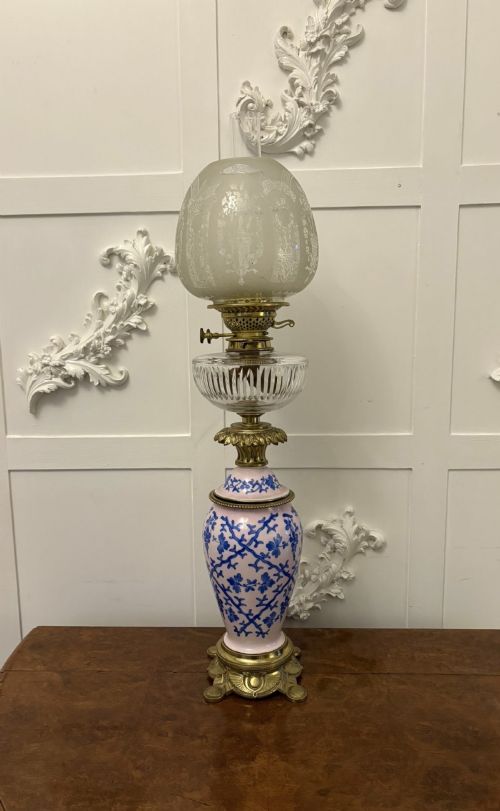
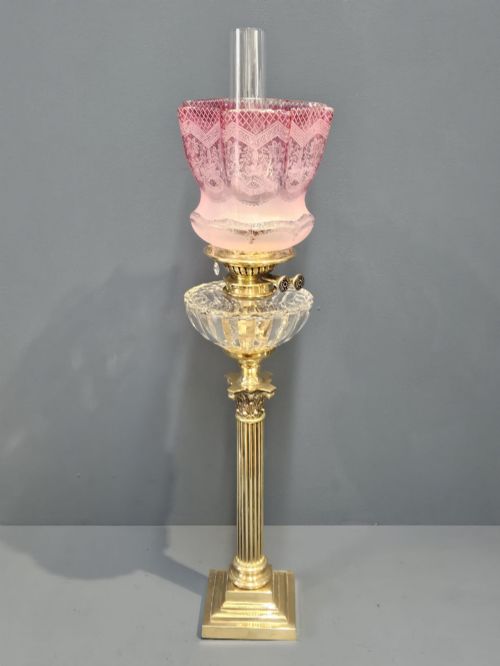
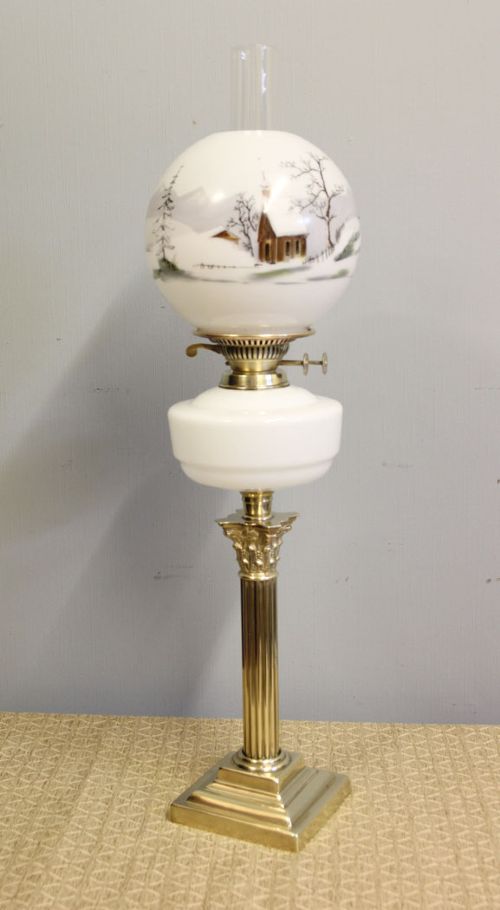
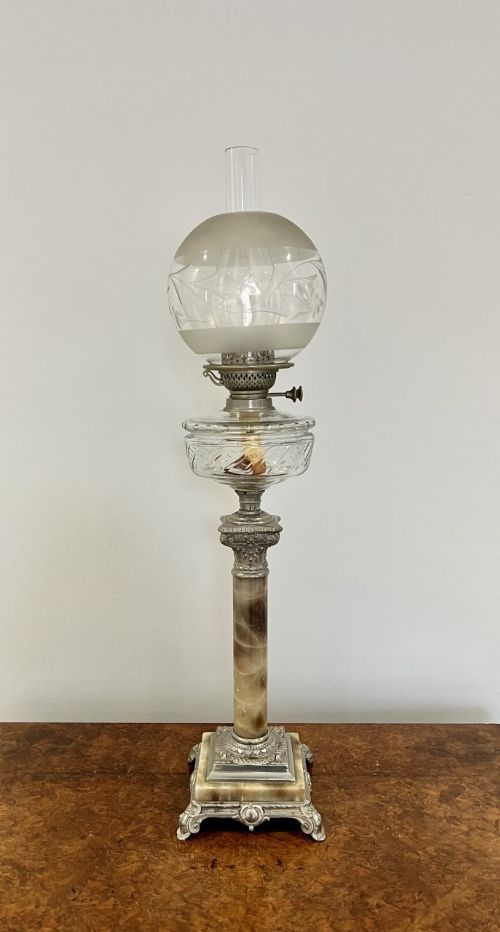
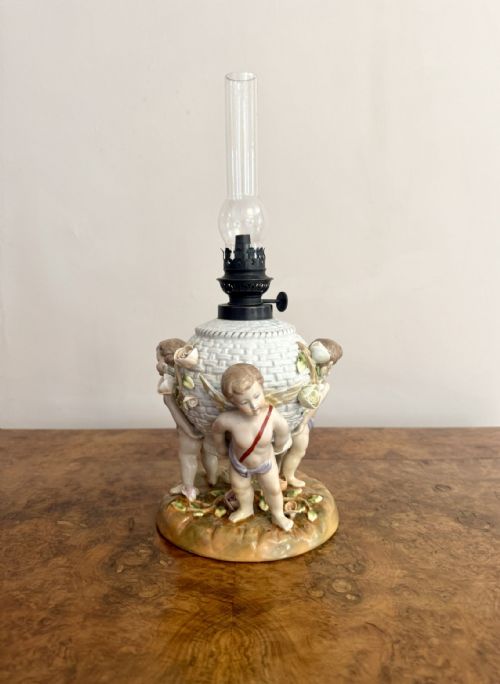
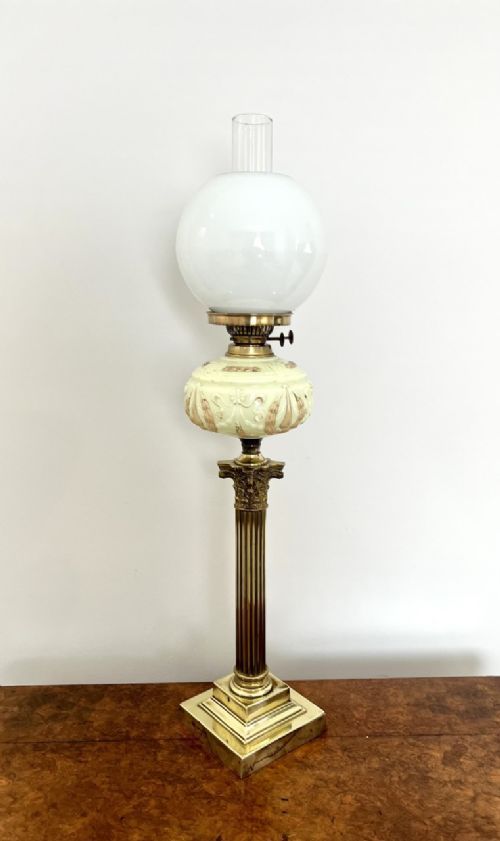
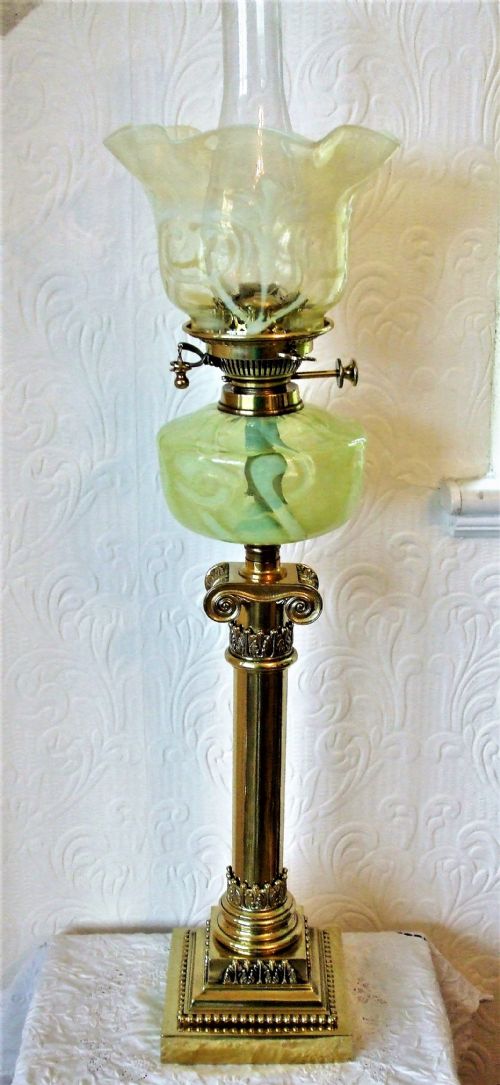
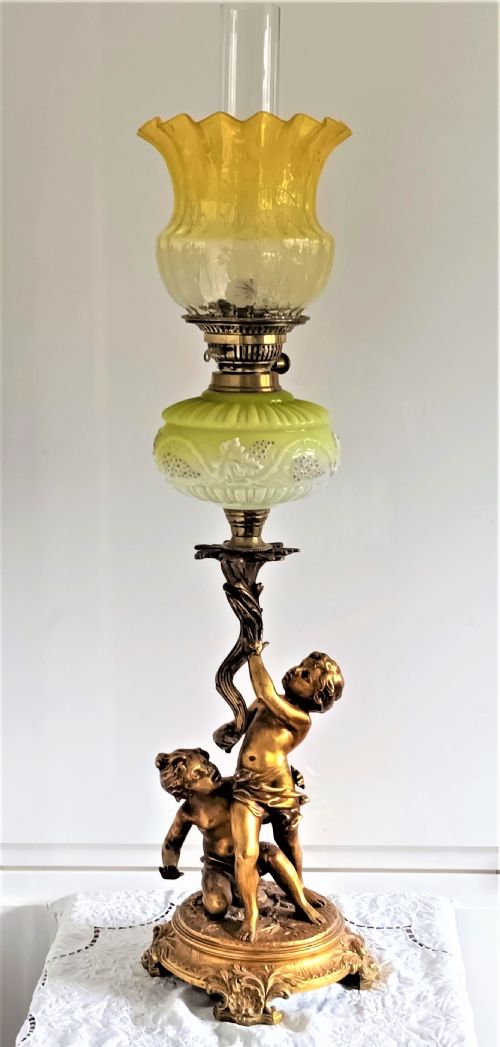
You are most likely to meet Victorian and Edwardian examples featuring brass columns, ceramic bases, and coloured glass components. Common forms include Corinthian and Ionic column designs, alongside figural and duplex burner models equipped with matching glass shades.
The materials and styles reflect domestic lighting trends of the period, moving from heavy Victorian rococo and neo-classical revivals towards sleeker Edwardian and art-nouveau forms. These domestic objects combined mechanical burners with decorative glass fonts and hand-painted or etched glass shades to brighten parlours and drawing rooms.
Materials and Construction
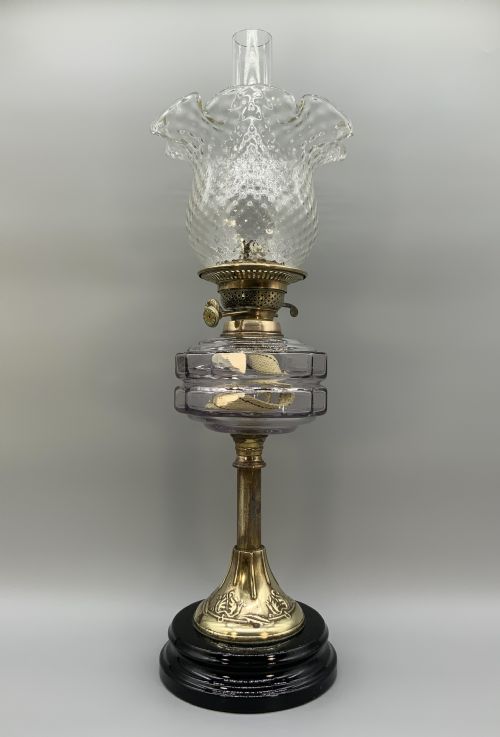
Makers constructed these lamps using combinations of brass, copper, and silver plating for the structural columns and burner assemblies. Brass formed the rigid support columns, such as Corinthian and Ionic orders, which screwed securely into weighted bases of black glass, ceramic, or metal.
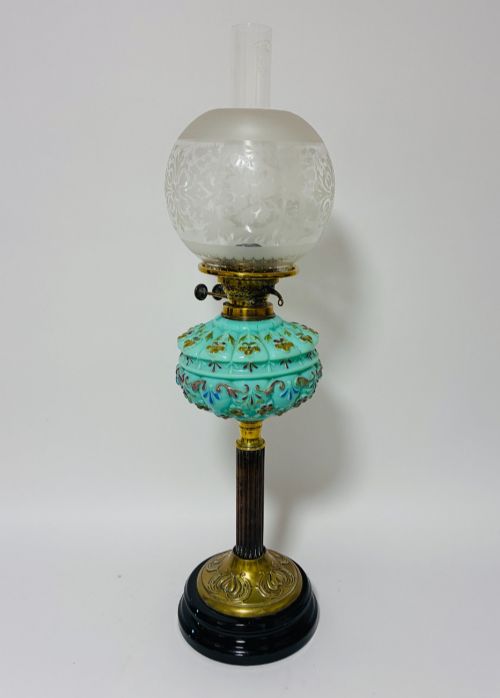
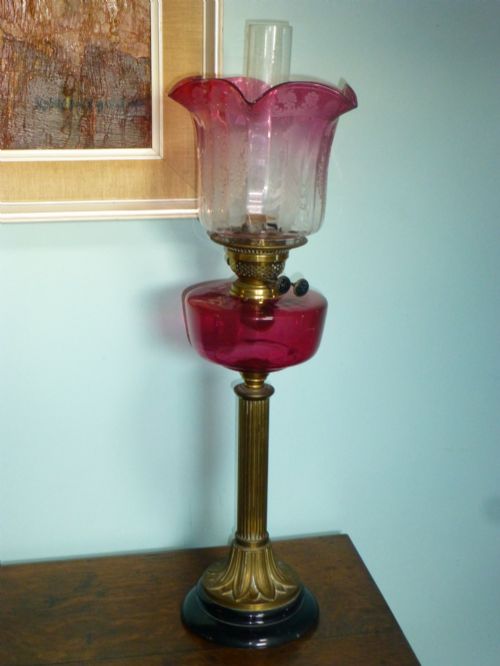
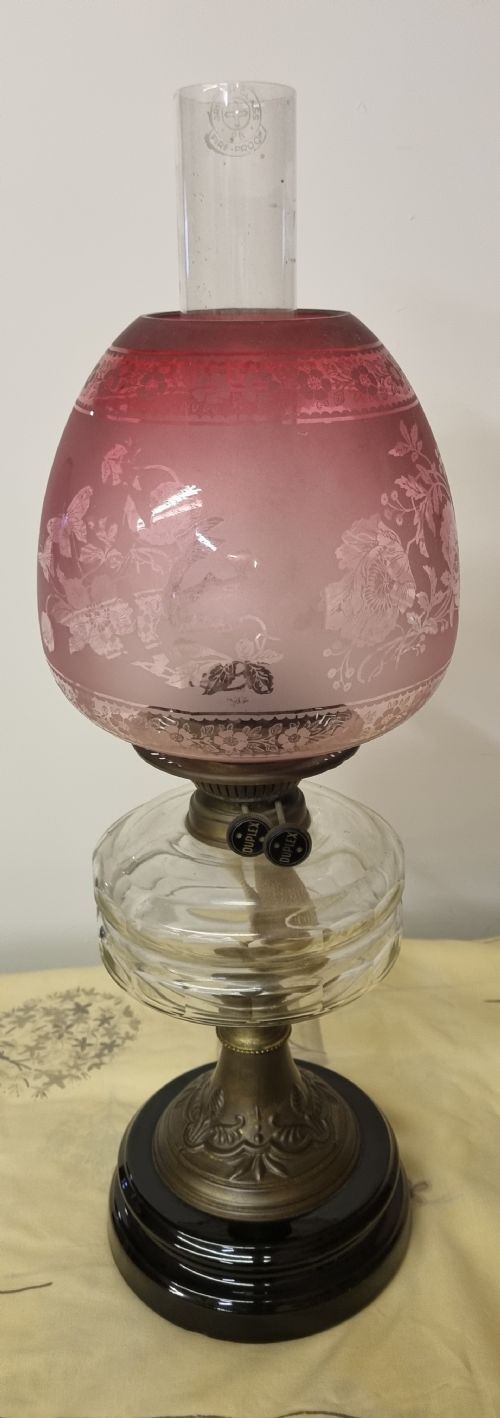
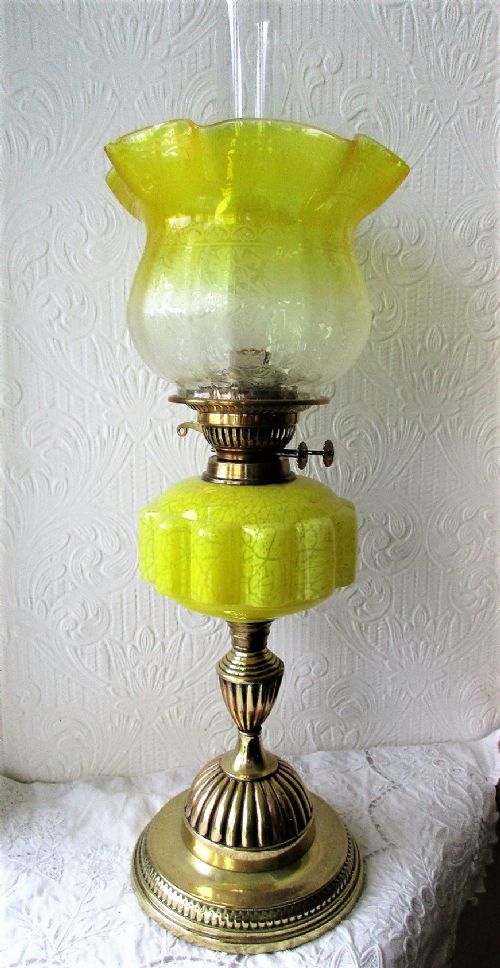
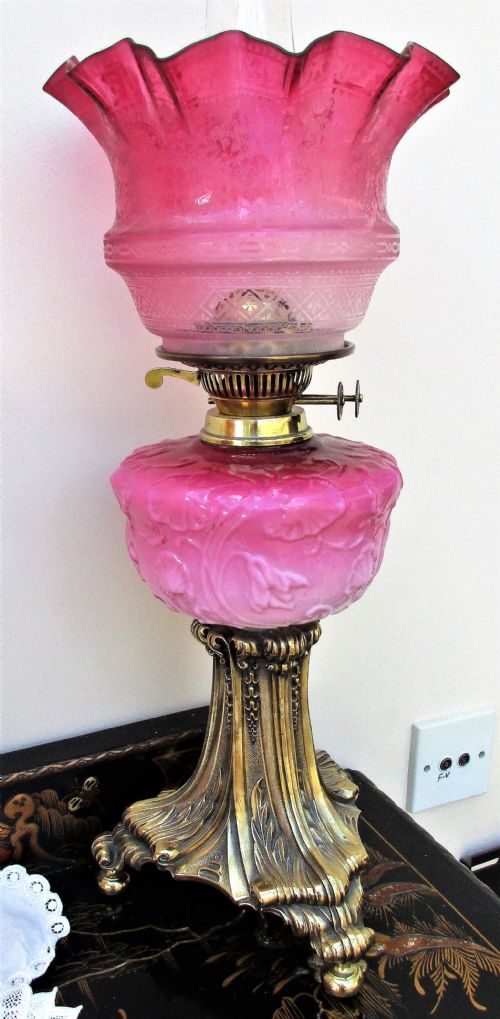
Fonts and shades utilised blown, pressed, and cased glass techniques, frequently employing cranberry glass, opaline glass, clear glass, and pink crystal. Artisans added hand-painted motifs, gilt decoration, and chemical etching to the glass surfaces to create patterned tulip shades and winter scenes.
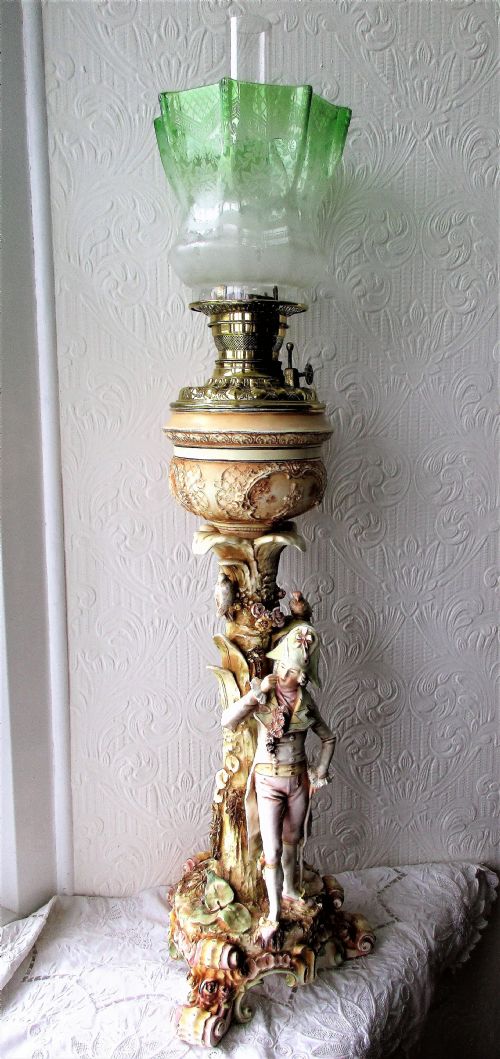
Porcelain and ceramic elements, including figural bodies and glazed fonts, were often sourced from specialised European potteries and combined with twin-burning duplex brass burners. The metal burner mechanisms allowed precise control of the cotton wick via thumb wheels, anchoring the glass chimney and shade above.
Some Victorian models combined illumination with warmth by doubling as pulpit oil lamp heaters.
Assessing Quality and Execution
Quality rests in the weight and substance of the materials, separating solid cast brass columns and heavy cased glass fonts from lighter, pressed metal alternatives. Superior examples display crisp casting detail in metal capitals and well-defined fluting along the supporting columns.
The artistry of the glass components marks another division in the range, where hand-blown cranberry glass, intricate hand-painted floral motifs, and deep chemical etching outshine plain moulded glass. Matching original fonts and shades demonstrate a higher degree of preservation and decorative intent.
Mechanical complexity and maker attribution elevate certain pieces, particularly twin-burning duplex burners and signed mechanisms from known makers like Hinks. The integration of porcelain figures, such as Sitzendorf elements, with quality brass and glass components indicates a more ambitious workshop production.
Hinks of Birmingham·Sitzendorf·Goldsmiths and Silversmiths Company
The Antique Glass Kerosene Lamp Glossary
- Font
- The oil reservoir of the lamp, typically formed from coloured, cut, or clear glass, porcelain, or brass. It sits atop the base or column to hold the liquid fuel.
- Duplex Burner
- A double-wick mechanical burner assembly that produces a brighter flame than single-wick variants. These mechanisms often bear maker stamps and require wider chimneys.
- Cranberry Glass
- A rich red-pink transparent glass created by adding gold chloride to the molten batch. It appears frequently in Victorian lamp shades and fonts.
- Opaline Glass
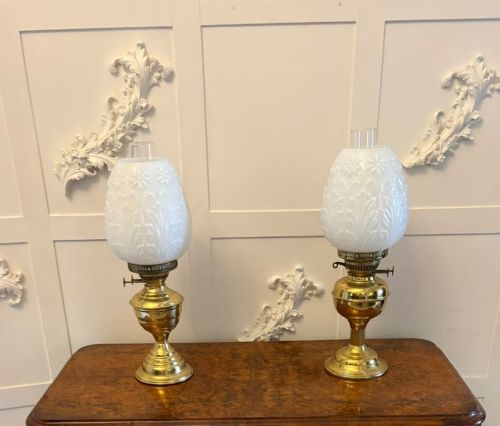
- An opaque, milky-white glass used for lamp shades to diffuse the harsh light of the burning fuel evenly across a room.
- Corinthian Column
- A classical architectural column style featuring ornate, acanthus-leaf capitals adapted by makers to form the stems of tall table lamps.
Antique Glass Kerosene Lamp: Frequently Asked Questions
Can I still burn kerosene in these lamps?
Most collectors choose to display these pieces unlit as decorative objects rather than functional lighting. If you intend to burn fuel, inspect the burner mechanism, wick condition, and glass integrity thoroughly first.
Ensure the font contains no hairline cracks that could leak flammable liquid, and fit a clean cotton wick of the correct width for the specific burner gallery.
How do I date an antique oil lamp?
Examine the style of the metal column, burner patents, and glass manufacturing techniques to establish a broad period. Victorian pieces often feature heavier neo-classical motifs and rich cranberry glass, while Edwardian examples lean towards slender brass and opaline combinations.
Look for stamped maker names, patent numbers on the brass thumb wheels, and registration marks moulded into the glass or metal components for more specific chronological clues.
Were shades and fonts originally sold together?
Makers frequently offered matched sets where the glass shade echoed the colour and decorative theme of the font. Cranberry fonts paired with cranberry shades and matching etched tulip designs were standard factory combinations.
Over the decades, shades and bases were often interchanged by previous owners, making married sets common across the antique market today.