

Victorian Brass Mounted Desk
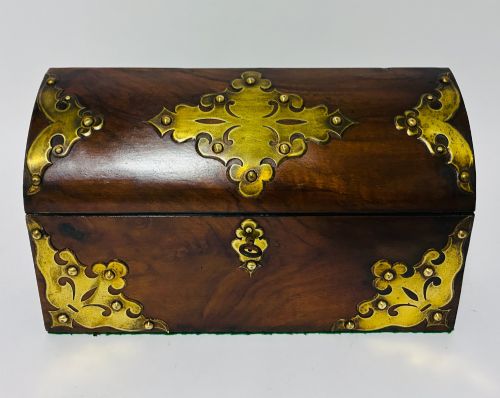
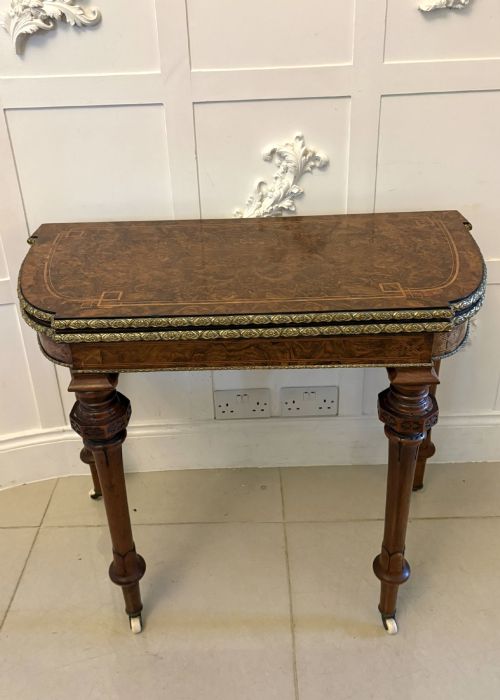
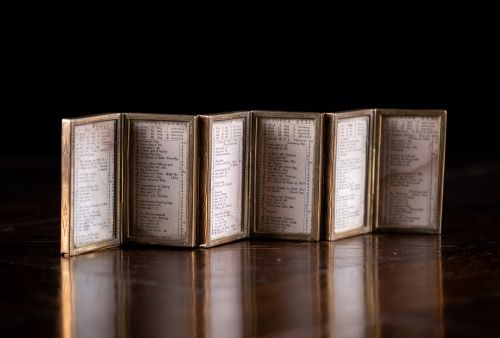
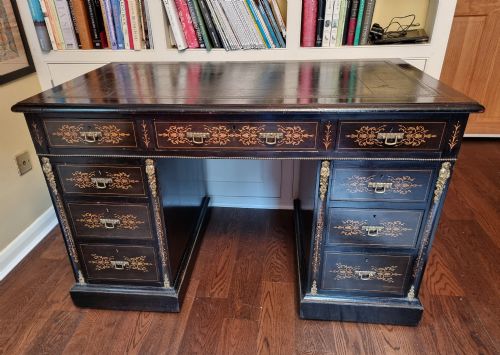
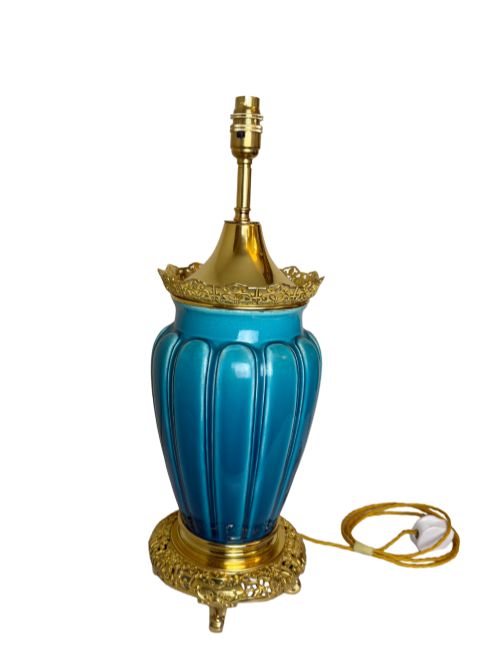
These pieces of a victorian brass mounted desk bring substantial nineteenth-century presence and refined metalwork to a working interior.
Victorian Brass Mounted Desk
Buyers seeking a victorian brass mounted desk encounter a variety of forms spanning full pedestal writing tables, campaign desks, and smaller correspondence boxes or stationery cabinets. The selection relies heavily on nineteenth-century craftsmanship, drawing from periods like the 1850s, 1860s, 1880s, and 1890s.
Pedestal desks and writing tables form the larger scale pieces found here, often equipped with inset leather tops and secure brass banding. Alongside these sit campaign styles in teak, mahogany, and camphor wood, built for travel with recessed brass handles and corner brackets.
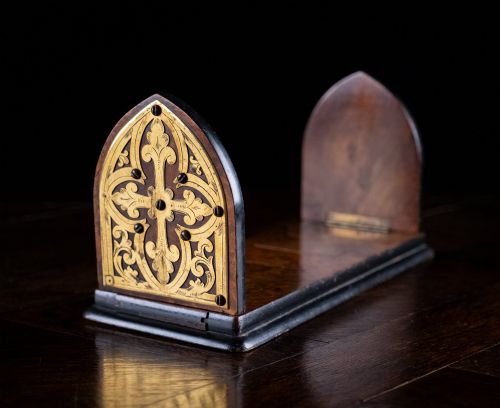
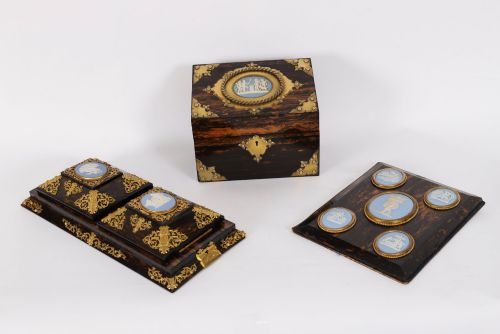
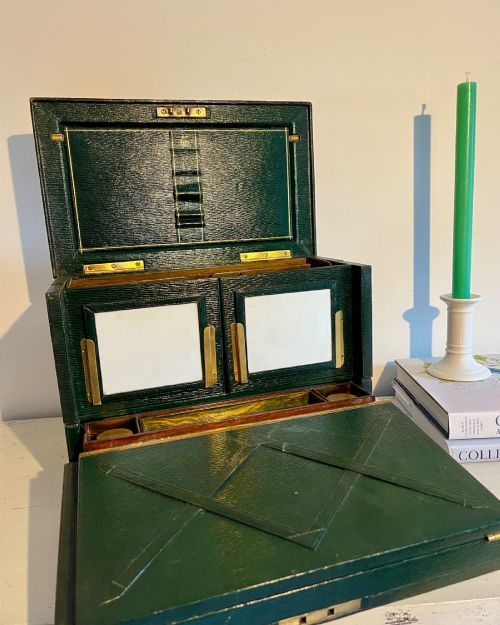
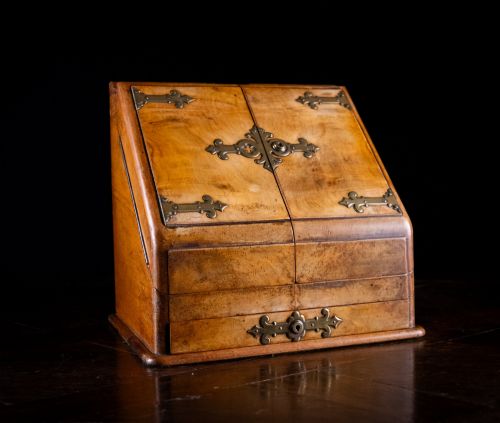
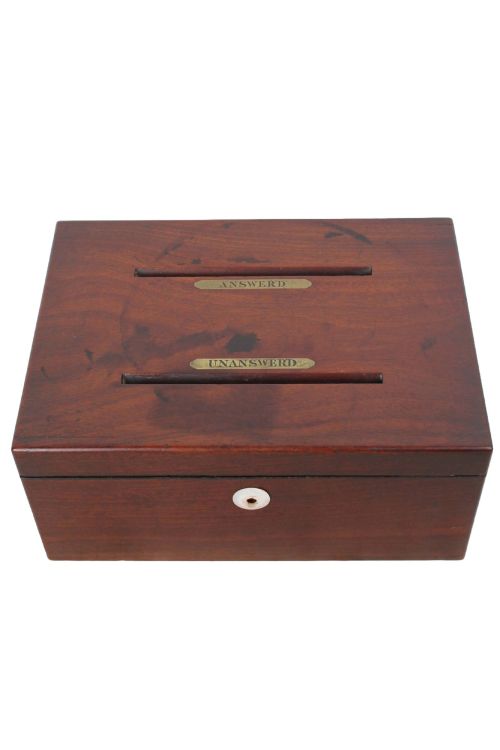
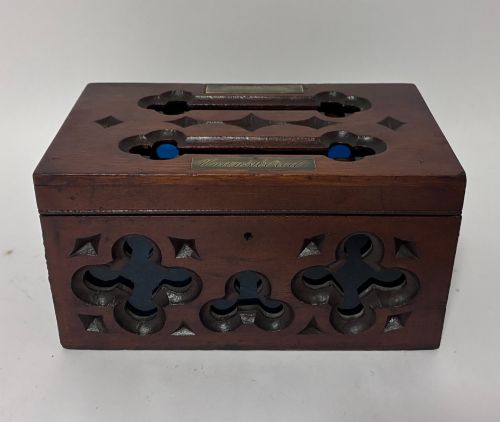
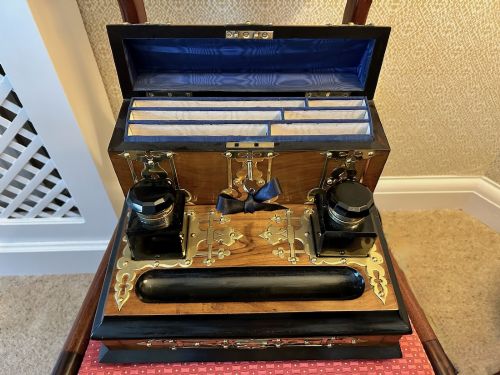
Smaller desk accessories appear frequently under this banner, including burr walnut and mahogany stationery boxes, ormolu mounted desk stands, and folding writing slopes. These items incorporate the same characteristic brass mounts seen on larger library furniture.
Materials and construction methods
Cabinetmakers utilised rich timber veneers such as burr walnut, mahogany, rosewood, and amboyna over solid wood carcases, often incorporating intricate marquetry inlay alongside the primary grain. Oak and teak appear particularly in military campaign pieces designed for structural endurance during transport.
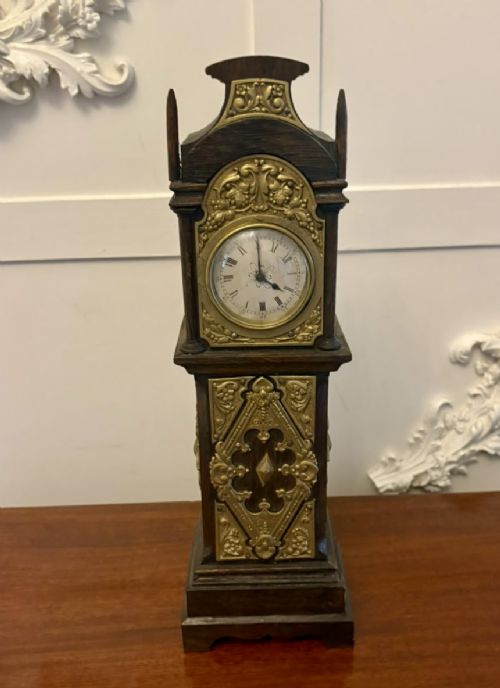
Brass formed the primary metal for corner braces, strapping, escutcheons, and hinges, supplemented by gilt bronze or ormolu mounts on pieces influenced by French revivals. Glass, leather, and porcelain frequently accompanied the metalwork, appearing as inset writing surfaces, inkwell inserts, or decorative plaques.
The listings span multiple nineteenth-century decades from the 1850s through to 1900, incorporating French revival styles alongside campaign furniture.
Separating top tier pieces from the rest
Quality rests significantly on the selection of timber veneers, where heavily figured burr walnut or carefully matched mahogany displays superior visual depth. The integration of the brass mounts also dictates standard; flush-fitting hardware and finely chased ormolu indicate superior workshop execution compared to simpler cast components.
Maker attribution distinguishes the finest items, with documented firms demonstrating greater precision in internal drawer construction, dovetailing, and lock mechanisms. The preservation of original leather writing surfaces, matching keys, and complete internal fittings elevates an example above altered or heavily restored equivalents.
Edwards and Roberts·Bertram and Sons
The Victorian Brass Mounted Desk Glossary
- Campaign desk
- A portable form of writing furniture designed to dismantle or fold easily for military transport, typically reinforced with brass corners and recessed handles.
- Ormolu
- Gilded bronze applied as decorative mounts, feet, or handles, frequently found on pieces influenced by French styles.
- Stationery box
- A tabletop desk accessory featuring fitted compartments and sloping doors to hold letters, envelopes, and paper.
- Escutcheon
- A protective metal plate surrounding a keyhole, usually made of brass to match other hardware on the furniture.
- Dovetail
- A traditional interlocking woodworking joint used in drawer construction that provides high tensile strength without relying on metal fasteners.
Victorian Brass Mounted Desk: Frequently Asked Questions
What is a campaign desk?
A campaign desk is a portable writing piece built for military officers on the move, constructed in sections with brass corners and recessed handles.
These items were engineered for durability and simple dismantling during nineteenth-century relocations.
How do I care for burr walnut?
Burr walnut requires stable room humidity and protection from direct sunlight to prevent veneer splitting and fading.
Occasional application of appropriate wax polish maintains the timber grain and nourishes the historic surface.
What are ormolu mounts?
Ormolu mounts are finely cast and gilded bronze ornaments attached to the exterior of furniture for decorative effect.
They appear frequently on pieces influenced by French nineteenth-century design trends.
Are these desks suitable for daily work?
These desks serve modern workspaces well, provided the writing height and knee clearance accommodate daily computer or paper use.
Many examples feature durable leather inserts that withstand regular writing tasks.