







Ecclesiastical Oak Lectern
An ecclesiastical oak lectern brings the quiet gravity of historic chapels and churches directly into domestic interiors.
Ecclesiastical Oak Lectern
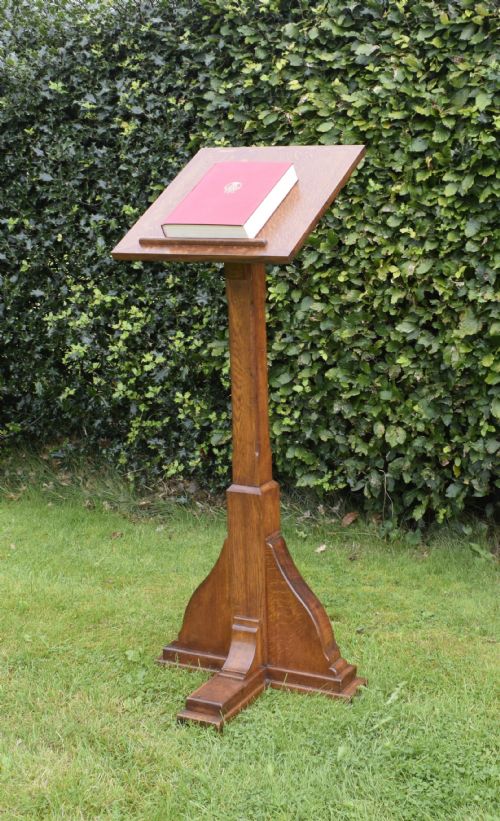
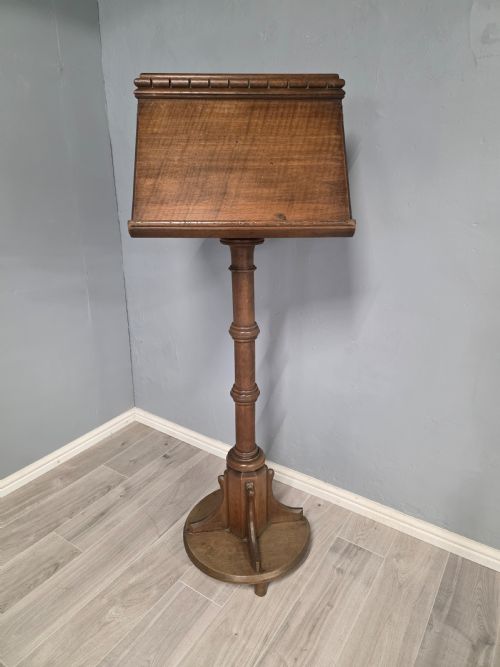
An ecclesiastical oak lectern is a heavy, architectural stand designed for holding sacred texts, prayer books, or bibles in a church or chapel setting. Buyers searching this phrase will find a variety of forms ranging from floor-standing church pulpits and reading stands to smaller prayer desks and table-top book rests.
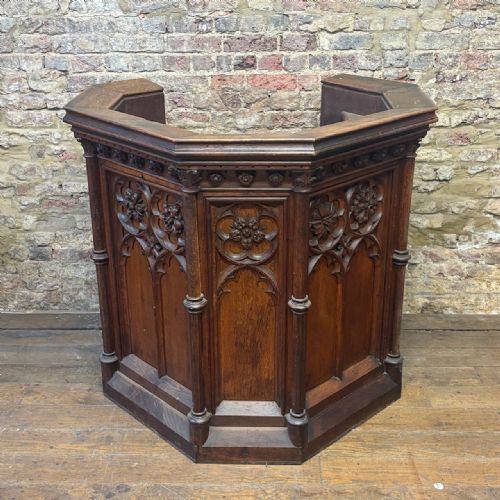
The versions most frequently met on this page date from the Victorian period through to the early twentieth century, with notable examples stretching back to the eighteenth century. They display strong influences from Gothic Revival, Arts and Crafts, and Baroque design traditions, often featuring carved woodwork and brass details.
How they were made
These pieces are built predominantly from solid oak, sometimes combined with pine or highlighted with brass work and gilt. Workshops utilised traditional joinery methods to support the substantial weight of large prayer books and bibles.
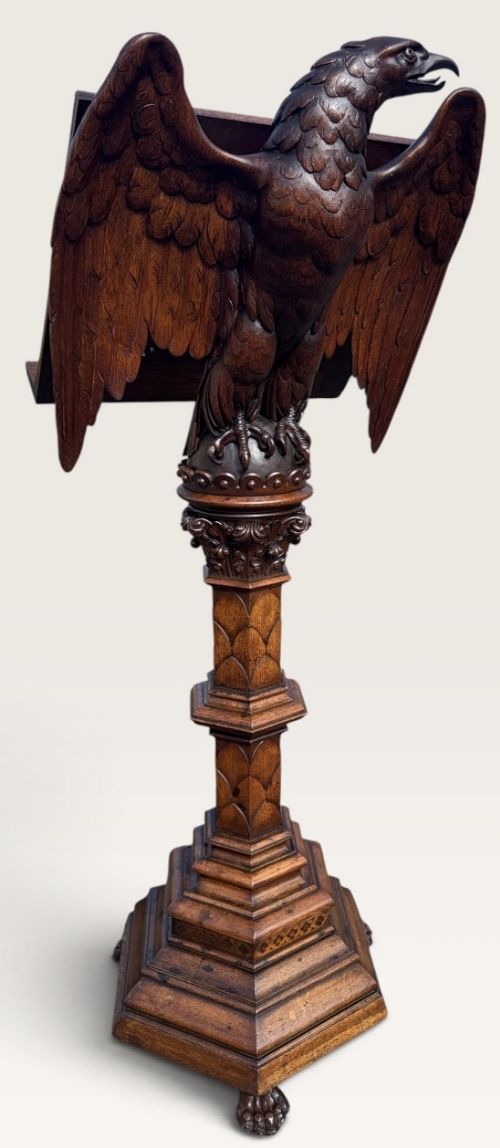
Carving is the defining decorative technique, producing detailed motifs, architectural tracery, and powerful figural representations such as eagles with outstretched wings. The surfaces receive finishes that emphasise the natural grain and deep colour of the timber.
Listings span the eighteenth century, the Victorian era, and the Edwardian period, constructed mainly in oak with occasional pine and brass.
What varies in quality
The standard of carving sets the finest examples apart from simpler utilitarian pieces, particularly in the anatomical detail of figural sculptures like eagles or the crispness of Gothic tracery. Bold execution and balanced proportions distinguish professional ecclesiastical commissions from later or more basic workshop output.
The integration of secondary materials, such as heavy brass work and substantial framing timbers, contributes to the overall presence and structural integrity of the object. Pieces that retain their original surfaces and authentic period character command greater attention from collectors.
The Ecclesiastical Oak Lectern Glossary
- Gothic Revival
- An architectural and decorative style drawing inspiration from medieval design, featuring pointed arches, trefoils, and heavy carved ornamentation. This aesthetic dominates nineteenth-century ecclesiastical furnishings.
- Prie Dieu
- A French term for a prayer desk or kneeling chair designed for private devotion. These compact items often incorporate storage space for devotional books.
- Brass work
- Metal components incorporated into furniture for hinges, book rests, or decorative mounts. In church furniture, polished brass often provides a bright contrast to dark timber.
- Tracery
- Architectural stonework style translated into woodwork, forming openwork patterns in screens, panels, and lectern stands. It creates geometric complexity in Gothic designs.
Ecclesiastical Oak Lectern: Frequently Asked Questions
What is an ecclesiastical oak lectern?
An ecclesiastical oak lectern is a sturdy wooden stand built to hold service books or bibles for reading aloud during religious ceremonies.
They were traditionally positioned in the chancel or nave of a church before finding their way into domestic studies and libraries.
How were they used in churches?
ClERGY and readers used these stands to support heavy volumes at a comfortable height during services and prayers.
The sloping book rest ensured the text remained visible to the congregation while freeing the speaker's hands.
How do I clean oak furniture?
Dust the timber regularly with a soft, dry cloth to prevent the buildup of particles in the carved recesses and joints.
A light application of traditional beeswax can nourish the wood and maintain its subtle sheen without creating a greasy film.
Can I use a lectern at home?
These sturdy stands make striking architectural focal points in a study, library, or hallway for displaying large books or artwork.
Their substantial weight and historic character require a room with enough space to accommodate their architectural presence.