



Victorian Brass Monocular
These victorian brass monocular pieces and related optical instruments offer precision engineering and period charm that appeal to any serious collector.
Victorian Brass Monocular
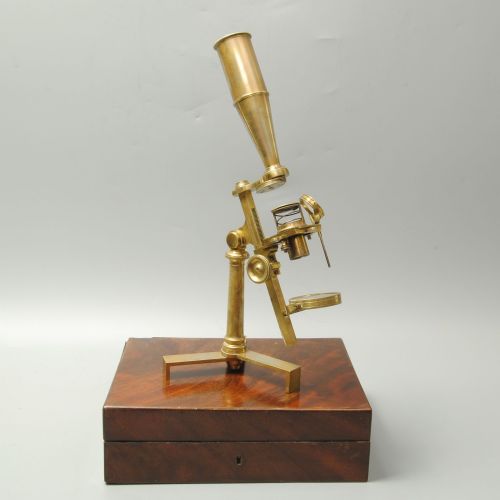
When you search for a victorian brass monocular, you are looking at optical and scientific instruments primarily spanning the nineteenth century. The selection includes pocket spyglasses, marine telescopes, and various forms of microscopes.
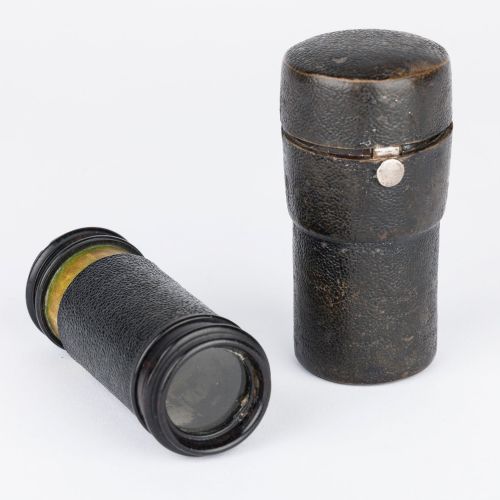
You are most likely to meet portable spyglasses and multi-draw telescopes housed in brass, often paired with leather or wood casings. These items reflect the utilitarian elegance of nineteenth-century science and maritime navigation.
Materials and construction
Makers fashioned these pieces predominantly from polished brass combined with glass lenses, utilising timber such as mahogany, fruitwood, and oak for instrument boxes or cane shafts. Leather casing also appears frequently to protect portable spyglasses during travel.
Construction techniques involve precise metal-working for sliding draw tubes and fitted wooden cabinetry designed to secure delicate optical components during maritime and field use.
Materials documented across the collection include brass, glass, leather, wood, mahogany, cast iron, nickel, and oak.
Markers of fine quality
The distinction between ordinary and superior examples lies in the crispness of the maker's signature, the smoothness of the draw action, and the clarity of the surviving glass optics. Signed pieces from established opticians command greater attention from discerning collectors.
Quality also shows in the integrity of secondary materials, such as finely grained mahogany cases, unblemished leather wraps, and robust brass castings that maintain tight tolerances over decades of use.
Ross of London·H Hughes & Son London·Newton & Co·Chadburn Brothers of Sheffield
The Victorian Brass Monocular Glossary
- Monocular
- An optical instrument for magnified viewing with one eye. These handheld devices are typically compact and portable.
- Draw
- A sliding tube section of a telescope or spyglass. Multiple draws allow the instrument to collapse down for pocket storage.
- Terrestrial telescope
- An optical device configured to produce an upright image for viewing land-based subjects rather than stars.
- Drum microscope
- A scientific instrument featuring a cylindrical main body mounted on a stable base. This form was popular during the nineteenth century.
Victorian Brass Monocular: Frequently Asked Questions
What is a victorian brass monocular?
A victorian brass monocular is a portable single-tube optical device used for magnification during the nineteenth century. These instruments range from small opera glasses to field spyglasses.
They reflect the period's advancements in precision manufacturing and portable scientific equipment, constructed primarily from polished brass and glass.
How were these optical instruments used?
Owners utilised these devices for maritime navigation, theatre viewing, and scientific study in the field or the library. Their portability made them essential tools for officers, travellers, and naturalists.
Many examples include protective leather wraps or fitted wooden cases to withstand regular transit and outdoor conditions.
How do I care for brass optics?
Keep brass instruments in stable, dry environments to prevent tarnishing and lens degradation. Avoid harsh chemical cleaners on the metal surfaces.
Glass lenses should be cleaned gently with appropriate optical cloths to preserve the delicate coatings and historical glass integrity.
How are periods identified?
Makers often engraved their business names and addresses directly onto the brass draw tubes or barrels. Stylistic cues and material choices also help narrow down the date of manufacture.
Mechanisms evolved from simple single-draw tubes to complex multi-draw configurations housed in mahogany or wrapped in leather.