


Victorian Spyglass
A victorian spyglass is a portable optical instrument designed for distance viewing, combining practical field utility with tactile nineteenth-century craftsmanship.
Victorian Spyglass
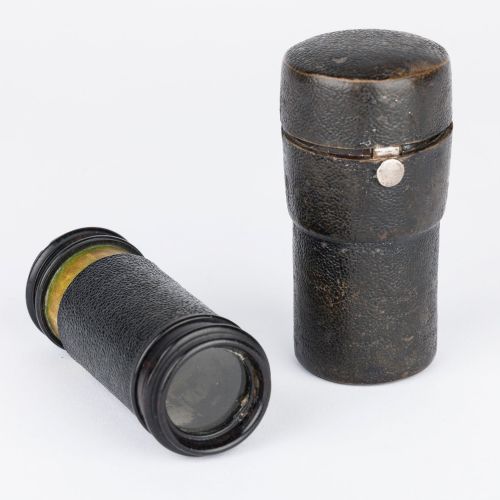
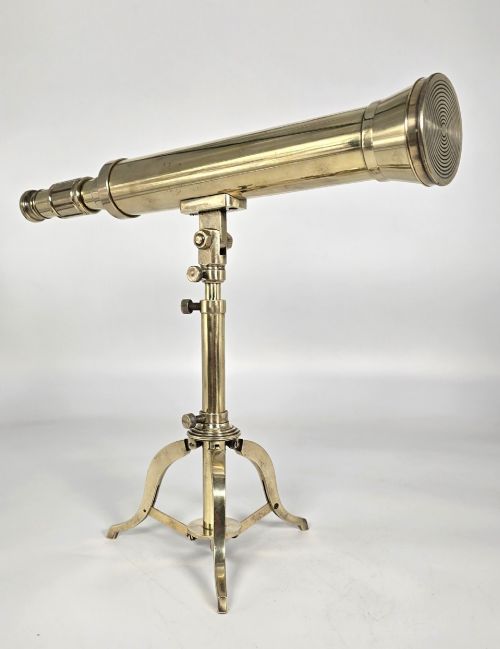
When you search for a victorian spyglass, you encounter compact optical instruments originally utilised for navigation, military campaigns and marine observation. These extendable devices range from pocket-sized pocket spyglasses to larger tabletop telescopes and walking cane combinations.
The version you are most likely to meet on this page is the multi-draw brass telescope, often sheathed in leather or mahogany and dating from the middle to late nineteenth century. Such instruments bridge the gap between scientific apparatus and everyday gentleman's accessories.
The selection encompasses specialist formats including officer of the watch telescopes, marine models and library variants. They reflect the era's preoccupation with exploration, cartography and precise terrestrial viewing.
Materials and construction
The foundation of these instruments is turned brass, utilised for the sliding draw tubes, main barrels and objective cell mounts. This metal provides the necessary rigidity and weight to keep the internal glass lenses in alignment.
Outer bodies frequently feature hand-stitched leather wraps, polished mahogany or fruitwood sections, and occasionally bone or nickel plating. These materials offer a secure grip in maritime environments while protecting the metal beneath.
The optical path relies on precision-ground glass lenses arranged to magnify distant terrestrial objects. Joint sections are precisely fitted to allow smooth extension without compromising the focal stability of the system.
Some Victorians preferred their optical aid disguised as a walking cane, allowing a discreet peer at the scenery during afternoon strolls.
Assessing quality and execution
Quality in these optical instruments is determined by the clarity of the glass lenses and the mechanical precision of the draw tubes. Smoother extension and sharper image resolution distinguish superior workshop production from standard utilitarian gear.
The presence of signed maker inscriptions engraved on the draw tubes elevates an instrument's standing. Maker signatures indicate a higher grade of London or regional scientific instrument production.
Material selection and protective casing also mark the grade of the piece, with cased sets and fine leather or wood bindings representing more ambitious commissions rather than basic military issue.
Ross of London·Steward of London·Newton and Co·L Casella London·Chadburn Brothers of Sheffield·S and B Solomons·Dollond·Davis of London
The Victorian Spyglass Glossary
- Draw tube
- A sliding cylindrical section of a telescope that collapses into the main body or extends to focus the instrument. Multiple draws allow a long focal length to compress into a pocket-sized format.
- Terrestrial telescope
- An optical instrument configured to produce an upright, non-inverted image for viewing land-based objects. This setup typically incorporates erecting lenses within the draw tubes.
- Objective lens
- The primary glass element at the front of the telescope that gathers light from the subject. Its diameter dictates the light-gathering power and overall bulk of the instrument.
- Marine telescope
- A robust viewing instrument designed for use at sea, frequently featuring protective leather sheathing to withstand salt air and moisture. These often take the form of officer of the watch patterns.
- Monocular
- A compact optical viewing scope designed for use with a single eye, sharing lens principles with larger telescopes. They often appear in smaller opera-glass configurations.
Victorian Spyglass: Frequently Asked Questions
How do I use a multi-draw spyglass?
Gently pull all the sliding brass sections outward until the tube is fully extended to its operational length. Hold the instrument steady and adjust the final draw section slowly until the distant subject comes into sharp focus.
Keep the lenses clean using a soft cloth and avoid touching the glass surfaces directly with your fingers. When finished, collapse the sections carefully in reverse order before storing.
Can I use these antiques for actual viewing?
Most nineteenth-century optical instruments remain functional for viewing daytime terrestrial scenes at a distance. The glass lenses gather light adequately, though fields of view differ from modern coated optics.
Treat the historical glass with care and avoid exposing the instrument to bright direct sunlight sources. Periodic gentle cleaning of the exterior brass and leather helps preserve their operational condition.
What is the difference between a marine and library telescope?
Marine telescopes are built for portability and harsh conditions, frequently featuring leather or wood grips and multi-draw designs that collapse down for deck use. They prioritize rugged handling and quick deployment.
Library telescopes are heavier instruments often mounted on folding tabletop brass tripods or stands. They are intended for stationary indoor observation rather than carrying on a voyage.
How should I store and display my spyglass?
Display the instrument either fully collapsed on a flat surface or mounted securely on a compatible tabletop stand if fitted with one. Keep the piece away from damp environments and extreme temperature fluctuations to protect the wood and leather elements.
If the spyglass includes a fitted wooden storage case, resting the instrument inside protects the exterior finish from dust and accidental impacts.